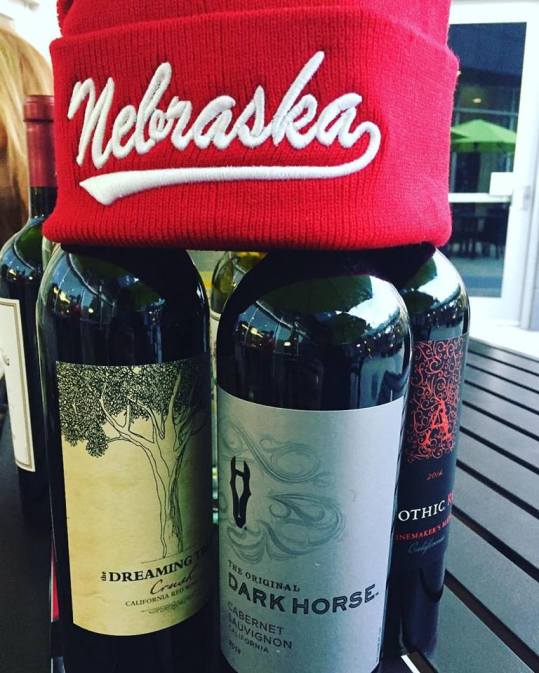
This month, I have been dropping knowledge about savory red wines with Fiachra as we dive into our self-stocked Wine (Ad)vent calendar (this one was sold out). Each day leading up to December 25th, our household is celebrating the end of 2016 by unwrapping a bottle of vino for #WINEvent. Each wine was selected with a particular story in mind, and we share this tale and our thoughts the wine selection with each other (and sometimes friends who drop in). Want to learn more about the bottles sampled? Check out our 2016 #WINEvent Flickr album or listen to our daily stories/wine reviews via SoundCloud. It’s our way to send off and put a cork in 2016, as we’re sort of done with this year.
Do you know who is also OVER 2016? The #3Wedu ladies! Join us as we put a cork in 2016 with our final podcast on Wednesday, December 14th at 3 pm PST // 5 pm CDT // 6pm EST. Episode No. 12 may offer a few reflections, NO regrets, and our future musings for the Women Who Wine in Edu. Join us for the candid conversations and, as always, BYO-Wine (or festive beverage of choice)! We are looking forward to chat and cheers with you to send off 2016, and discuss what lies ahead for the new year. Come join the banter and comradery here:
Follow the chatter on Twitter: @3Wedu & Hashtag: #3Wedu
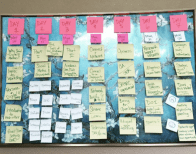
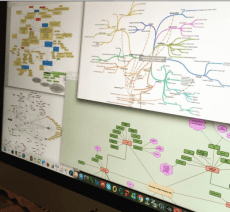
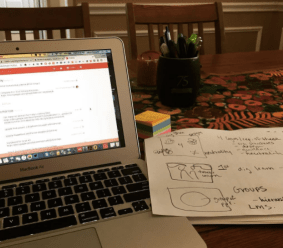
Do you ever doodle to figure out an idea? Do you sketch out a concept to make sense of it? Have you every created a Post-It Note wall montage on a wall to map out a project? Is there a whiteboard where you have a series of equations or problems you are working through? If so, then visualizing research and related works might be for you!
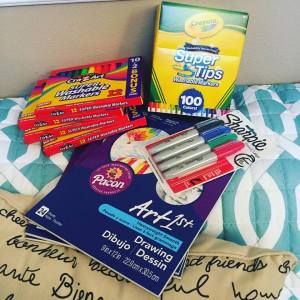
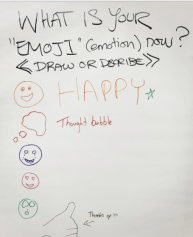
For the last workshop I facilitated, I opted to go low-tech to in order allow for reflection and discussion about our digital spaces and places. Sometimes analog processing with markers provides instigates creativity or creates an opportunity for deeper thinking. Drawing or concept mapping is a process I often use to plan programs/events, design websites, draft course curriculum, and more. I find these visualizations helpful for gathering thoughts, linking concepts ,and facilitating group/team processes.
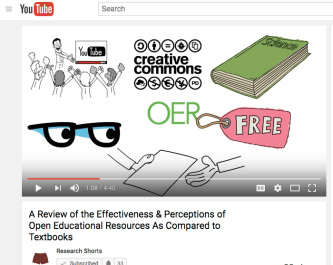
Much to my surprise, my research role with The Digital Learning and Social Media Research Group has moved beyond your typical scholarly practice, such as literature review, data collection, data analysis, and academic writing, to include a visual design to share research. I thank/blame George for the opportunity to dig into valuable research to identify findings and implications by creating a short script and putting these audio narrations to animated format on the Research Shorts YouTube Channel[If you’re not subscribed, you should!].
In a recent Research Shorts video, we scripted and produced Hilton’s (2016) recent article review of OER and college textbooks choices (highlighted in George’s post). Although this is an open access publication, we hope this video visualization extends beyond the typical scholarly audience and reaches other campus stakeholders in higher education who are thinking about these learning resources. You can view this video here:
For the Research Shorts video creation process, I have been scripting and storyboarding academic articles (of mine and others) to explain the implications and applications of these studies in a few short minutes. This work has made me think more about how I include visuals in my own scholarly practice, specifically to identify the “so what” or key points for my own initiatives. I typically map out works-in-progress, lesson plans, course designs, and meetings I will be facilitating or hosting by using a visual map or plan. From my experiences, visualizations for research and work projects have helped myself and my research collaborators:
Ideate and brainstorm for developments/project planning
Filter and itemize relevant results for literature reviews
Map out concept for a research plan and work initiatives
Connect the dots between theories and relevant published research
Organize a research pipeline and project workflows for effective project management
Highlight key implications based on research results
Develop better images or visuals for conference presentations and/or posters
Showcase information through a new communication method or medium
Can lead to new insights for yourself and your audience/stakeholders — offer access to publications or complex work designs
Capture the “what’s the point” for organizational leaders for published reports
Pitch research implications/findings as an executive summary in meetings
Beyond creating a video to share visual research on YouTube, I am also considering what images or graphs I put into my own academic publications. Our written text can tell the story of our research; however, diagrams, images, or graphs can create meaning to our academic manuscripts, reports, and planning documents. What does the aesthetics of science look for you? Have you put much thought into how you visualize traditional research publications, like conference proceedings or journal articles? What support your academic writing beyond the text? Do you give much consideration to these in your writing? If so, please share.
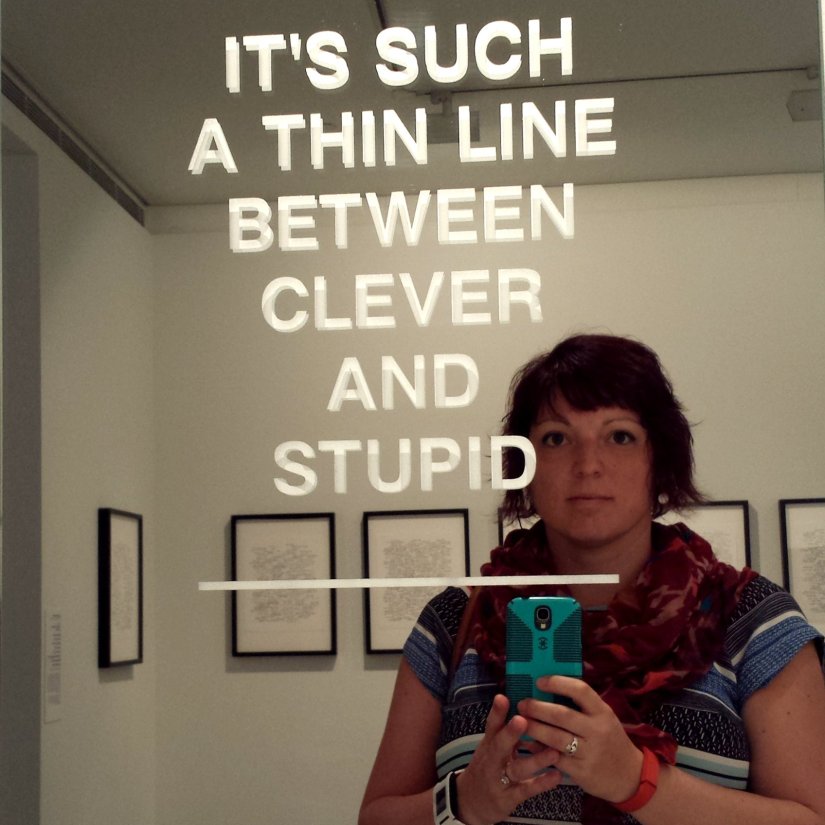
In my last blog post, I asked if you have thought about your digital self and what it means to be a “resident” in various spaces and places online. This is a common question I pose and ponder with higher ed colleagues and friends I work with, connect with online, meet face-to-face, and now as I collaborate on research looking at Networked Communities of Practice. When it comes to digital participation there is no right or wrong. That being said, sometimes I think of this quote from the Sydney MCA as our lives continue to evolve online:
Last year, the TED Radio Hour podcast featured TED speakers who dug into what it means to be digital and connected in its two-part episode, Screen Time, Part I and Part 2. The segments dive into how the digital version of ourselves are impacting who we are. There is one quote, in particular, that resonated with me from Jon Ronson’s segment in Part 2:
“The way we are defined on social media, on the Internet, and on Google has become more important than who we actually are as people.”
Ronson’s TED talk presents ideas he writes about in his book So You’ve Been Publically Shamed. His segment “How can our real lives be ruined by our digital ones?” discusses how the online self is impacting our offline self. With the recent US election, there are no shortages of examples of tasteless social media shares and volatile toned posts displayed online. The election is not the cause of this behavior; however, these type of actions and interactions within the higher ed community online are disheartening. If you are presenting your actual self online (and not an anonymous profile/account) the expression “in real life” or “IRL” no longer applies. What we do inside the screen does impact our life beyond the screen. What happens digitally and on the Internet IS IN REAL LIFE(exit distance worker soapbox rant for now).
Maybe it is also time for some reflection and perhaps a candid discussion about our digital self and our online communities. Thanks to two online communities — #SAchat and #AcAdv — we’re going to get real and talk these issues in higher ed in these upcoming Twitter Chats:
#SAchat TOPIC:
Personal and Professional Identity on Social Media & Online
Thursday, December 1, 2016 for the DAYTIME #SAchat from 12-1 pm CDT; Follow @The_SA_Blog on Twitter
Let’s discuss what it means to “grow up” professionally online and offline in higher education. What motivates you to interact, engage, and share? What social networks and hashtags do you connect with for your work in student affairs and higher ed? Has being online impacted what you do professionally or personally? Share with us about your own digital identity development, specifically how it influences who you are and your work on campus.
MOD for the DAYTIME #SAchat (12/1/6); TOPIC: Personal and Professional Identity on #SocialMedia & Online [Chat Transcript ARCHIVE]
#AcAdv Chat TOPIC:
Learning Online With And From A Community of Peers
Tuesday, December 6, 2016 for the #AcAdv Chat from 12-1 pm CDT; Follow @AcAdvChat on Twitter
Let’s have a conversation about how online networks and digital spaces support your professional and personal well-being. Where do you learn online? What communities contribute to your work and success in #higher ed? Tell us how these networked communities offer resources, share ideas, and offer care for you, your professional role, and your personal growth.
MOD for the #AcAdv Chat (12/6/16); TOPIC: Learning Online With & From A Community of Peers [Chat Transcript ARCHIVE]
If you work in higher education and care about these issues, please join in on one or both discussions on Thursday (12/1) and next Tuesday (12/6). We look forward to hearing what you have to say on the topics…Twitter Chat soon!
Why do practitioners in higher education, student affairs, and students services always go to the “tool” question first? Why do we want to know what’s “hot” with the digital, social technologies? Is it easier to think about a specific app, device, or platform? Why don’t we ask about the challenges or issues the technology is solving? A wise supervisor once told me: Study problems, not things. The “thing” I’m thinking about are technology tools and platforms.
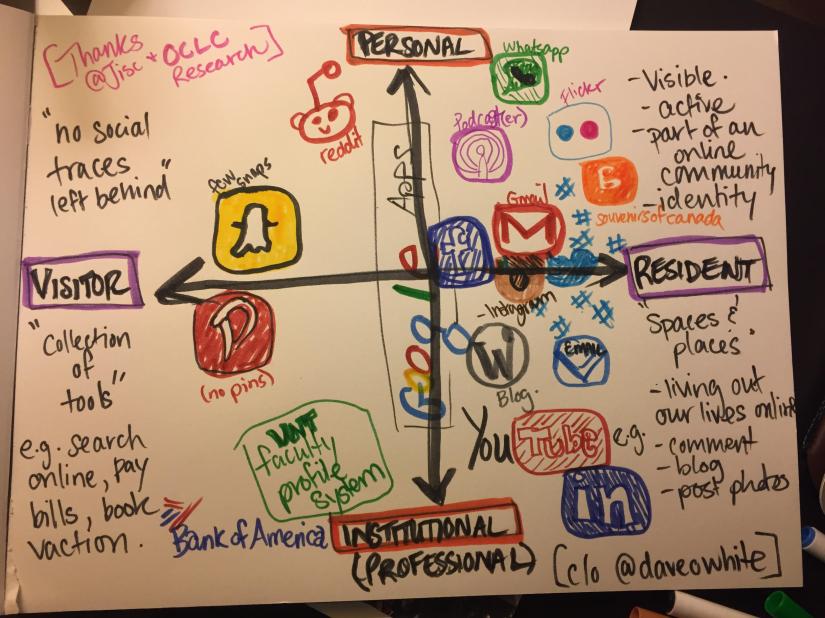
I am more interested how our campus stakeholders engage and interact with social and digital tools. What is their motivation and how are these online networks being utilized? Perhaps we should challenge professionals in higher education to start thinking about their own presence. I think it’s a good idea to reflect on our own contributions and social traces we are leaving in digital spaces and places [Hence why Paul & I are are studying just that: https://networkedcommunityofpractice.wordpress.com/] . I really like the Visitors & Residents Continuum (White & Le Cornu, 2011) concept, which is also shared by Dave White (and colleagues from OCLC & Jisc) via a few resources and videos. Visitors tend to leave no social traces in the digital world. If you are Resident you are visible, active, and leave a part of you online in many spaces and places. If you have not heard of this concept, here’s a quick overview of the mapping process for visitor and resident in a personal and institutional (professional) context:
I think more thought and reflection into HOW and WHY we use these online networks and digital apps are needed. Here’s a start of my own visualization of my visitor and resident spaces & places — more will be added this afternoon during my NCSL Professional Workshop:
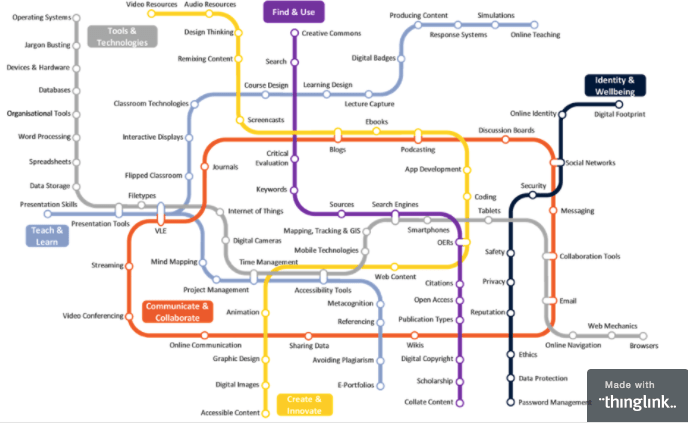
Have you mapped your own V-R continuum lately? It’s an interesting process to think about and visualize. If so — please share and/or blog about it! To further this idea, what are the digital skills we need to hone within higher education? Here are a few suggestions organized on a metro map around digital skills:
This digital skills framework map was a solid start, but it definitely needs to be added to – what are your thoughts on this topic? How are you engaging and interacting with these spaces and places? What do we need to learn and bring to campus when it comes to digital understandings of self? How are you thinking about your resident vs. visitor self online? Show and share!
Every individual has a responsibility in an organization to enhance the understanding of the value of women leading, create structures to help women overcome gender barriers they may experience, and identify strategies to support women’s progress along their leadership path. Women bring heterogeneity that can benefit the workplace. To avoid groupthink and bring more diversity to our organizations, we need to consider putting more women into leadership roles to improve performance and productivity. Each of our higher education institutions has an organization culture that can empower or limit women’s ability to lead at various levels. These cultures consist of assumptions and values (see Schein’s model of organizational culture) that are sometimes decades old. Many times organizational structures have been developed by men and their actions potentially inhibiting women leading in various ways.
The #3Wedu: Women Who Wine in Educationwill be trying a new format and location as we join host our podcast and keynote panel today (November 7th) from 3:25-4:55 at the University of Nebraska-Lincoln IT Leadership Conference. In an effort to share our panel discussion we hope to stream this session via YouTube LIVE and, of course, we will do our best to keep the Twitter backchannel banter going here: #3wedu.
Through changing our behaviors, activities, communication, and environments, we can potentially alter the culture with these micro level modifications. Implementing practices to facilitate the growth of women leaders while creating an embracing culture that is pertinent for leadership development. Let’s talk about it. This isn’t a women’s issue; this is everyone’s issue.


 techKNOWtools
You must be logged in to post a comment.