#AcWri, OpenAccess

SPARC Addendum & Author Rights for Publishing #OpenAccess

As part of the international open access week last fall, I attended the #SPARC Addendums and Author Rights Workshop facilitated by Kris Helge from the UNT Libraries. As an author and editor for a journal, this session reminded me about the critical stakeholders and expectations for the scholarly publishing process and the need to consider my own author agreements before signing away my work. I am fortunate enough to work and study at an institution who supports Open Access,and #OpenAccess publications.

I am also excited that other academic journals (e.g. JALN) are joining the #OA movement; however there are a number of peer-reviewed, academic publications who hold traditional publisher agreements and copyright limitations close to their heart. If you are an academic, scholarly author, or early career researcher and you have NOT heard about SPARC … then this blog post is for you!

mainheader

After a brief review of copyrights and “traditional publishing agreements,” the workshop reminded me about of the importance of reading author agreements CAREFULLY and THOROUGHLY. A number of authors and early career researchers are just excited to get the chance to publish, that they rarely considering they are agreeing to transfer ALL OF THEIR COPYRIGHTS TO THE PUBLISHER. As researchers, we need to value our intellectual property and have a conversation with the publisher and inquire if any of the publishing agreement is negotiable.

Cue the SPARC Addendum

SPARC. or the Scholarly Publishing and Academic Resources Coalition, advocates for collaboration among authors, publishers, and libraries to correct imbalances found in the academic publishing system.

For a more balanced approach for author and publisher agreements you might want to consider the SPARC Addendum. This is a FREE, legal document that modifies the publisher’s agreement and allows authors to keep specific copyrights related to intellectual property (e.g. articles).  The author is able to retain their desired publishing rights with limited restrictions, and the publisher retains non-exclusive rights to publish and distribute your work. Overall, it allows authors to consider the access of their research, placement of writing into an electronic repository, and get the proper attribution when your work is utilized.

Want to know more about SPARC and #OpenAccess publishing resources? Check them out :


Reference:

Helge, K. (2012, October 24). SPARC Addendums and Author Rights Workshop. 2012 International Open Access Week @ UNT.


AcAdv, nacada

#UNT InHouse: Portrait Gallery

A couple weeks ago I was featured in the UNT InHouse Portrait gallery for my one of many hats I wear on campus. Here’s a bit more about the Portrait Gallery and my interview for the online publication:

It’s not possible to know everyone on a big, busy campus. So InHouse periodically publishes Portrait Gallery features to help us learn about our colleagues and their contributions to the university’s success. Send suggestions for Portrait Gallery subjects by email to InHouse with “Portrait Gallery” in the subject line.

Portrait Gallery: Laura Pasquini, Academic Counselor
Laura Pasquini helps students find an academic home as a mentor for undeclared majors. She’s also the first UNT representative to be chosen for the Emerging Leader Program with The Global Community for Academic Advising.  

What is your official title, and how long have you been at UNT?

I am an academic counselor and instructor for the Office for Exploring Majors in Undergraduate Studies and I have been working at the University of North Texas since June 2009.

What is your background?

I have been supporting students as an academic advisor/counselor with major or career decision-making since fall 2003. I have been fortunate to support a variety of student populations at Niagara University, Miami University, University of Toronto Scarborough, University of Texas Arlington and UNT. Before joining the new office for exploring majors team, I was an academic advisor with the College of Business Advising Office.

What will you do as a mentor?

I was selected as a mentor for the Emerging Leader Program with The Global Community for Academic Advising for the 2012-2014 class. As a mentor, I will collaborate with other advising professionals and faculty within the association from other institutions. I will help emerging leaders develop their connections to the advising profession, encourage leadership opportunities, assist colleagues in working toward their professional goals and give back to the professional association that has helped me thrive personally and professionally.

Has any of your experience at UNT helped you prepare for this position?

Both as an academic advisor in the College of Business and in my current role, I have been fortunate to connect with students, staff and faculty to support my own personal and professional development. As a former executive officer and member of the University Counselors Advisors Network, I was able to collaborate, learn, and connect to a wide variety of ideas that will enhance my mentoring. Most recently, I had the opportunity help coordinate the Spring 2011 Advising Retreat, the UNT Advising Conference and the Advisor Spring 2012 training day. I appreciate interacting with and learning from a variety of staff and faculty who love working with students on a daily basis.

Are you the first UNT representative to be a mentor for the Emerging Leader Program?

I am the first person at UNT to be an ELP Mentor; however Carol Pollard, senior counselor in the College of Music, was part of the inaugural ELP cohort in 2007-2009 as an Emerging Leader.

What do you do as an academic counselor for undecided majors?

The Office for Exploring Majors supports students in their journey to learn more about their major/career options. As a counselor, I help support students who are undecided, undeclared and uncertain about their degree options. We often work with new students who want to learn more about their academic choices; however we frequently work with students who want to change their major or transition to another path. I enjoy providing academic/occupational resources and information to empower our students to make choices, and support them in their exploration.

What commonalities/differences do undeclared majors share?

Our undeclared/undecided students are very intelligent, bright and interested in a number of options. These students often have too many choices and are undecided to allow some time to explore majors, meet faculty, understand degree requirements and discover more about their own interests. Over the last year, I have come to really appreciate the interest and enthusiasm that our students bring to the First Year Seminar, during workshops, or  counseling.

Do you have success stories?

A recent one would be with Lisandry Ortiz, who was in my First Year Seminar class Fall 2011.

Lisandry came into the class with different ideas about her major/career from her family, friends and others. During the course of the semester and in her first year, Lisandry went out to interview professionals, research occupational trends, and tried out a few classes to help her find her direction that would be best for her. She was interested in Biology, English, Creative Writing, Journalism, Kinesiology and Rehabilitation Studies with a double minor in Kinesiology and Addictions.

Although she had a challenging second semester at UNT, Lisandry managed to stay on top of her studies and credits the connections to friends and resources from the first year seminar class.

I am happy to say that Lisandry has earned junior class standing and has officially declared Rehabilitation Studies as her major with the College of Public Affairs & Community Service.

Along with her academic progress, Lisandry is working on campus as a housing ambassador in Maple Hall and she is now an Office for Exploring Majors Student Ambassador who will support undecided students with their major/career journey.

#phdchat, ATPI, PhD, Professional Development, Reflections

ATPI Doctoral Portfolio Reflection

This weekend will involve the usual researching, writing, and editing of projects – however I have one more item to polish up before it’s time to be thankful in the U.S. – my doctoral portfolio.

For the Applied Technology & Performance Improvement Doctorate (ATPI) program, the doctoral portfolio is a new requirement for us young, budding scholars. Rather than sit in a room for two 8-hour days or respond to a set of questions over a period of time, ATPI doctoral students will need to complete our departments Ph.D. portfolio to officially become a Doctoral Candidate and move forward with dissertation work. Some students in our program are still opting to take the comprehensive exam route while they still can, only because the requirements include research, teaching, and service scholarship experience that is akin with academics who might be seeking tenure/promotion. I think that this portfolio makes sense, professionally it helps to document my PhD Journey and encourages students to gain scholarship experience before being launched into a dissertation or even the academic job search.

Here are the ATPI Doctoral Portfolio Requirements [DRAFT] that I have been using to guide my portfolio development. {I say draft as this document is subject to change since our department will have myself and another student defend in December for the 1st time.}

I promise to share my ATPI doctoral portfolio, after I review it and put the finishes touches on it. I learned a great deal from our “dry-run” on Friday, and I was reminded about some of the key things to highlight in my 15-minute presentation. I am also pleased to say that I will be sharing my digital PhD journey (blogging, tweeting, and then some) with my doctoral committee for my portfolio defense. My faculty advisor and another committee member thought it would be valuable to discuss my philosophy and experience as an open educator/scholar/researcher.

In thinking about how to “show case” some of this, I am looking through my blog for musings and what I have been up to over the last 3 years of my doctoral course work. So far my TechKNOW Tools Wordle reflects this:

TechKNOW Tools Blog Wordle

I also know that my digital footprint can be found in my Google Docs (or now Drive), YouTube channel, Dropbox, shared on my SlideShare account, posted on my Flickr account in photos, and even among my 23, 926 tweets (good thing I auto-send these into Delicious with hashtags for easy searching). Time to mine my own digital data, review what I’ve created, and compile my professional development and scholarship.

Grad Students & PhD Friends: How do you track your progress? Professional development? Teaching, service, and research scholarship? Please share!

#phdchat, Learning Technologies, LPQ

Announcement: Learning and Performance Quarterly First Issue Published & Call For Submissions for Issue No. 2

THE LEARNING AND PERFORMANCE QUARTERLY (LPQ), 1(1) FIRST ISSUE IS NOW PUBLISHED!

Thank you to the number of authors, reviewers and editors who helped contribute to the first open, access online Learning and Performance Quarterly journal. Please read and share with colleagues and researchers who might be interested:

Learning and Performance Quarterly, 1(1)

CALL FOR PAPERS: LPQ, 1(2)

The Learning and Performance Quarterly (LPQ) is currently accepting submissions for the second issue. Deadline for submissions is Friday, June 15, 2012 at 11:59 pm CSTSubmission of manuscripts can be made online through the LP Quarterly website via the Open Journal System.

TYPES OF MANUSCRIPTS ACCEPTED

Research Papers :

Papers that are concerned with the various approaches to learning and performance impact. These papers should discuss the literature related to the approach employed and include a measure of the learning and performance impact of the approach employed.

Case Studies:

Case studies that highlight a particular learning, training, performance or instructional setting in which learning and performance resources were used to address a particular challenge. They present a discussion of the challenge from current literature, what was done to solve or explore it, and the results of the project. They often offer suggestions for others interested in addressing similar challenges.

Concept/Theory Papers:

Papers that present new concepts or contribute to existing theory for learning and performance. This should offer a discussion of the literature related to the concept/theory along with a discussion of the major issues for future research needed to validate the concept/theory.

Book Reviews:

Book reviews of publications 2011 or later will be accepted to highlight a issues and resources relevant for learning and performance and offer a suggested solution or direction. The position is supported with both a logical argument and a review of the pertinent literature. Preference will be given in the review process to book review essays that comment on two or more related books.  Book review essays should not exceed 3,800 words and should include city, state, publisher, and year of the book’s publication.  An abstract of 150 words or less and keywords are required for book review essays.  Reviews of single books should not exceed 1,900 words.  At the beginning of the text please include title, author, publisher, city, date, and page numbers of the book(s) under review.

The deadline for submissions is Friday, June 15, 2012 at 11:59 pm CST. For detailed submission guidelines and instructions on how to make a submission please visit Author Guidelines.

CALL FOR LPQ REVIEWERS

Interested in reviewing articles for the LPQ Journal? The LPQ journal is looking for reviewers to conduct peer reviews and evaluations of submissions.

Please identify your reviewing interests, substantive areas of expertise, and preferred research methods when completing the LPQ journal registration online.

We look forward to receiving your submissions. Please pass this post onto other colleagues and researchers who might be interested in publishing, reviewing or editing for the Learning and Performance Quarterly journal.

Thanks!

Laura Pasquini & Jeff Allen, Founding Editors

Learning and Performance Quarterly

Like us on Facebook

Follow us on Twitter @LPQuarterly

Email: LPquarterly@gmail.com

Higher Education, Learning Technologies, Web Design

Backward Design with TED-Ed

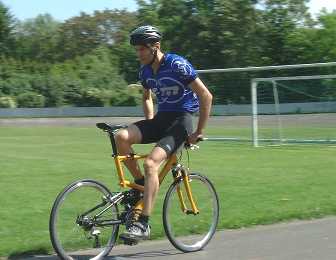
Beginning with the end in mind. This is the philosophy of instructional design method backward(s) design.  A few weeks back Kevin Guidry shared his thoughts on backward design, and it got me thinking about how I approach my curriculum and lesson plans.

Image c/o <http://www.recordholders.org/images/backwards-cycling1.jpg>

For the Office for Exploring Majors, I am currently reviewing/updating modules for our first-year seminar class – UGST 1000. The goal is to offer an “engaged” format (we cannot use the term blended or hybrid, but there will be mixed components of online, in-class and active requirements) for Fall 2012.  Last semester our department offered a couple of sections of the NextGen course; however, the class focus was on “well-being.” Since our office t works with undecided students, the engaged sections for Fall 2012 will need to be directed towards major/career exploration and academic success.

Image c/o <http://kids.esc13.net/curriculum/3stages.gif>

In reviewing the current curriculum, it was apparent that a backward design approach would be the most effective method for this instructional design project. In Understanding by Design, Wiggins and McTighe (2005) identify three key stages for  backward design:

  1. Identify desired results (learning outcomes) – What should your learners know, understand, and be able to do?
  2. Determine Acceptable Evidence (means to assess if learners have learned) – How will you know if learners have achieved the desired results, achieved those learning outcomes, or met the standards? What is the evidence of learner understanding and proficiency?
  3. Plan learning experiences and instruction – What will be the procedures or methods to reach these outcomes? This includes a definition of knowledge; definition of skills and procedures learners need to master; definition of materials; and definition of learning or instructional activities.

Here is an example of an engaged learning module that I will include for the Time Management unit. This session will have the backward design steps and one of three classes that students will be required to complete outside of the in-class meeting time.

1. Learning Outcome(s)

Learners will be able to:

(a) identify the differences between tasks, objectives, and goals.

(b) create a smart and effective to-do list of tasks.

(b) assess their weekly schedule to identify how time is being utilized.

(c) select priorities, understand where time is lost, and accurately adjust for effective time management.

2. Evidence of Learning

Learners will demonstrate their understanding of learning by:

(a) drafting a to-do list of tasks for the day/week and identify 5 top priorities.

(b) mapping out a one week schedule of their activities to identify where their 168 hours are allocated.

(c) creating a visual representation of how the 1 week period time is accounted for in terms of activities and responsibilities.

 (d) writing a 250 word minimum blog post/online journal about their 168 hours and weekly schedule. This reflection will include the visual representation of 168 hours, account for time wasted, and offer ideas how to effectively manage time to balance their schedule.

3. Learning Experiences & Instruction

This section of the time management unit will be housed online. We have some modules created on Blackboard Learn; however, I thought I would also create a mock up on the new TED-Ed website. This is a rough draft of a module (to be edited) I designed by “flipping the video” from YouTube into a lesson. [Side note: there are already a number of lessons available for educators to use for the experience section of lessons. Instructors can use the same module or “flip” it.]

TED-Ed | Time Management: How to Write a To-Do List & Know Where Your Time Goes

College Success – Chapter 2: 2.3 Organizing Your Time

References:

Beiderwell, B., Tse, L., Lochhaas, T.J., & deKanter, N.B. (2010, August). College success. Flatworld Knowledge. Retrieved from http://catalog.flatworldknowledge.com/catalog/editions/54

Wiggins, G. & McTighe, J. (2005). Understanding by design (2nd ed). NJ: Prentice Hall.