#HEdigID, Reflections

#HEdigID Chat No. 11: 2018 – A Year In Review & Reflection

The end of the year (and semester for higher ed professionals) is nigh. This time of year can often bring closure, wrap-up of projects, and a time for reflection on what has happened in the last 12 months. There are no shortage of “best of” lists that circulate online to share media, music, and more. I can’t believe 2018 is over — time flies when you’re in the work grind. Over the next week or two, I am going to take pause to think about what has happened, what I’ve accomplished, and where life might take me next before I start 2019. It’s easy to just let the end of year pass by and even to hibernate until 2019, but I think it’s time to take stock of connections, contributions, creations, and more.

To kick things off, I’m going to moderate the LAST monthly Higher Ed Digital Identity (#HEdigID) chat  in 2018 with a similar theme. How did this past year go for you? What happened? Or, maybe even, where did the year go? Let’s review and reflect together! Prompted by my doodles I reflect with and my monthly #GetToWorkBook goal progress notes, I thought I’d see who might be interested in a collective conversation about their own year-in-review collectively.
Let’s talk it out and share how the goals from our professional and/or digital lives, specifically:

  • The 2018 Wins: Share your accomplishments, accolades, highlights, awards, and points of professional pride. #HumbleBrags
  • What’s In-Progress: Goals, projects, designs, and developments you are still working on now (or over the winter break). #GitRDun
  • The Let It Go! List: Goals, projects, tasks, & maybe even digital activities or workflows you plan to leave behind with 2018.
  • The 2019 “TO DO” List: What are you looking forward to in 2019? Are you planning to start a new projects Collaborate/Conspire with a colleague? Revitalize an old goal? Learn something new? Take on a new challenge? What’s on the horizon for your work and digital self in the new year?
  • #TreatYoSelf: How will you take a break, find self-care, and reward yourself for the efforts from 2018?

To get things started, I opened up a Twitter poll for #HEdigID Question 1 the other day. The voting for this poll is still open — if you’d like to cast your vote. Let me know how you are feeling about 2018. Where’s your head at? What’s your initial thoughts about how the past year has personally, professionally, and/or digitally for you?

https://platform.twitter.com/widgets.js

To prepare for this conversation around open ed practices, here is a bit more information to review before the upcoming #HEdigID Chat:

#HEdigID Chat TOPIC: 2018: A Year in Review & Reflection
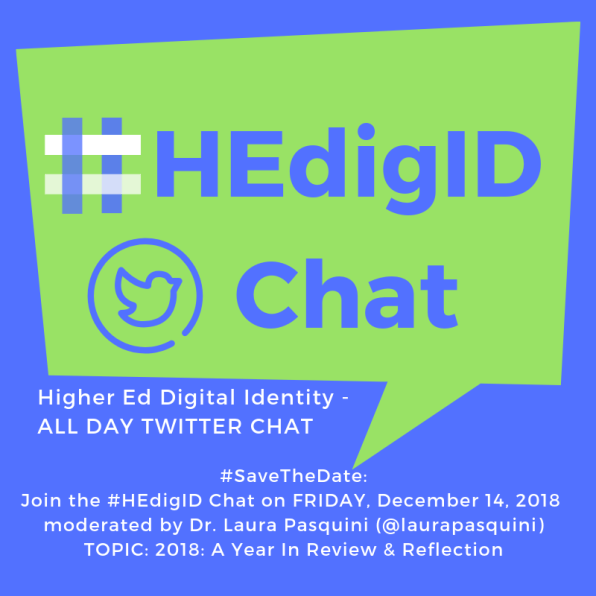
This SLOW chat can be found on Twitter AND in an open Google doc. You can tweet your response to questions with the hashtag #HEdigID. OR even ask a few of your own to share how you’re starting to think about 2018 in review. Join us for this DAY-LONG reflection and sharing on FRIDAY, December 14th (in all global time zones).  Also, you can respond, ask questions, and add resources to this OPEN Google doc for the chat RIGHT NOW: http://bit.ly/hedigid11

Here are a few QUESTIONS to get you thinking about your own year in review for this #HEdigID ALL-DAY discussion:

  1. In thinking about your “2018: Year in Review,” how are you currently feeling? Just taking a pulse here for Friday’s (Dec. 14) #HEdigID chat: VOTE on Twitter https://twitter.com/laurapasquini/status/1072938007332818944
  2. List Your 2018 Wins: What are a few of your highlights from this past year? Boast to share your accomplishments, memories, new connections, or collaborative projects you were involved with in 2018.
  3. Still In Progress (Or Time To Let Go): What goals or projects might have sat “on the back burner” in your professional life that you did not get to in 2018? Also, what goals/projects are still “in development” or stalled that perhaps it’s time to let them go?
  4. Made You Think: What is one (1) game changer (e.g. unexpected event, information, or experience) that has shifted your priorities for how you think about your digital, professional self in #highered for 2019? This might be a change in habit, move on/off a platform, or way you share online.
  5. Taking Pause: How will you unwind, unplug or digitally detox to take a break during the holiday season and/or #highered winter break? Share how you will reset & regroup for self-care or to #TreatYoSelf
  6. The 2019 “To Do” List: What are you looking forward to in 2019? Are you planning to start a new projects Collaborate/Conspire with a colleague? Revitalize an old goal? Learn something new? Take on a new challenge? What’s on the horizon for your work and digital self in the new year?

Join the discussion and share your year in review & reflections:

  • Answering the questions by tweeting your response with the hashtag: #HEdigID

  • Responding anonymously or with your own name in IN this OPEN Google Doc: http://bit.ly/hedigid11

  • Use any of these questions to draft your own personal reflection and response (e.g. blog post, video, audio, drawing or offline discussion)

#HEdigID

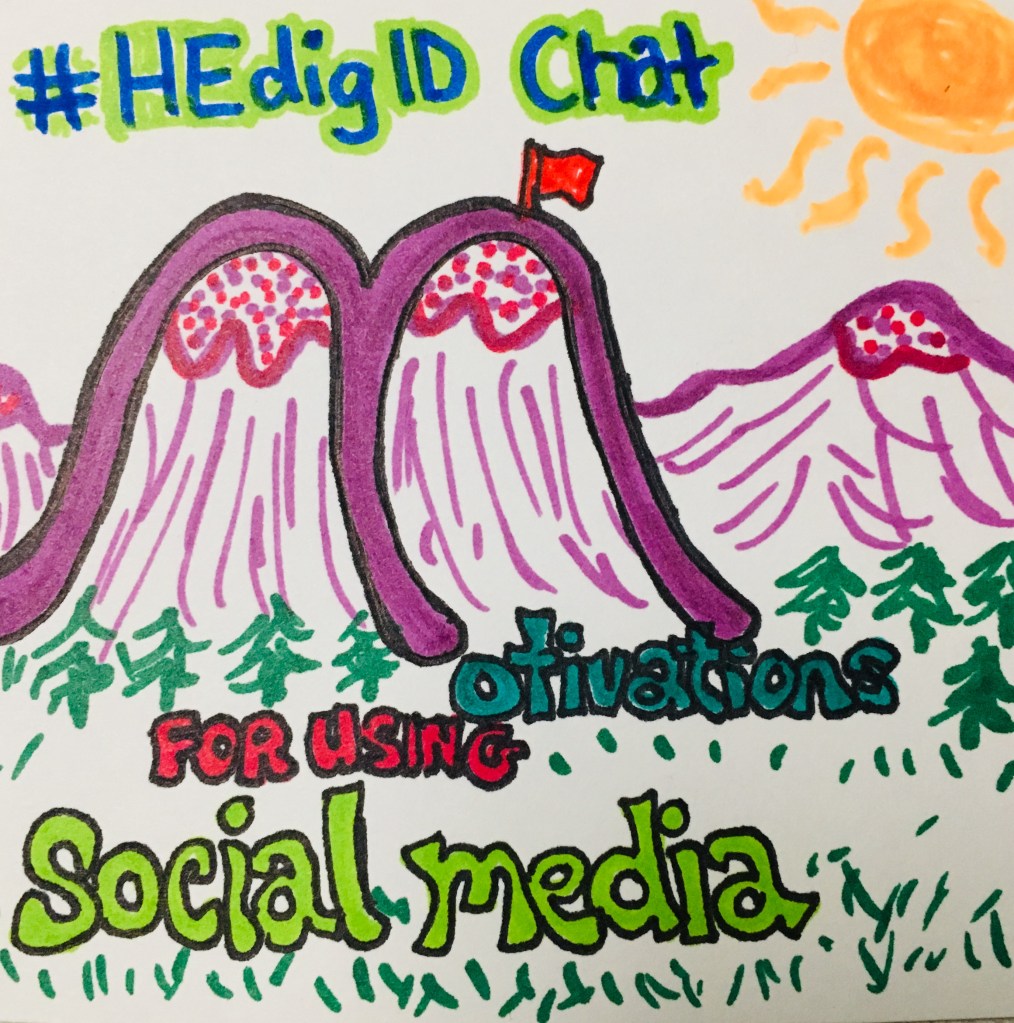
#HEdigID Chat No. 10: Motivations for Using Social Media with @hapsci

Remember back in 2008 (or before), when your colleagues may have said social media is “just a fad” and it’s probably not something we shouldn’t really concern ourselves with in higher education? We know that THIS is not the case. This social, digital medium has flourished and spread to touch all aspects of our lives on and off campus. Maybe you signed up for an account on Facebook to stay in touch with college/university friends. You might regularly search for D.I.Y. and “how to” videos on YouTube (or post your own) to learn how to do something. Or perhaps you joined Twitter to follow a conference hashtag and stay in touch with the backchannel conversation. Finally, you may be capturing and sharing more photos with your smartphone to post these on Snapchat and/or Instagram to stay in touch with loved ones. These are just the few of may ways we are all motivated to be active and use social media.

I know that our news and information streams mention social media platforms. I can’t recall a day where I haven’t read, heard, or seen social media discussed in the news or been the primary information source delivering the news. Finally, there has been an increased amount of news ABOUT social media on issues such as privacy, personal data collection, politics, and more. Social media is a daily presence at our finger tips, screens, and in our conversations (offline and online). This was not the case just over a decade ago.

Most of us are using social media each and every day — but have you ever stopped to think — WHY??? What first motivated you to sign up for any social media account? What keeps you logging into your account to scroll, read, post, comment, share, and more online? And how are you currently using social media in your personal AND professional life? These are just a few of the many questions I have about motivations for using media in a social way. And, I know (thankfully) I am not alone in this inquiry. There are a growing number of colleagues who are curious about how social media connects us and what encourages us to log on and participate in these social platforms.

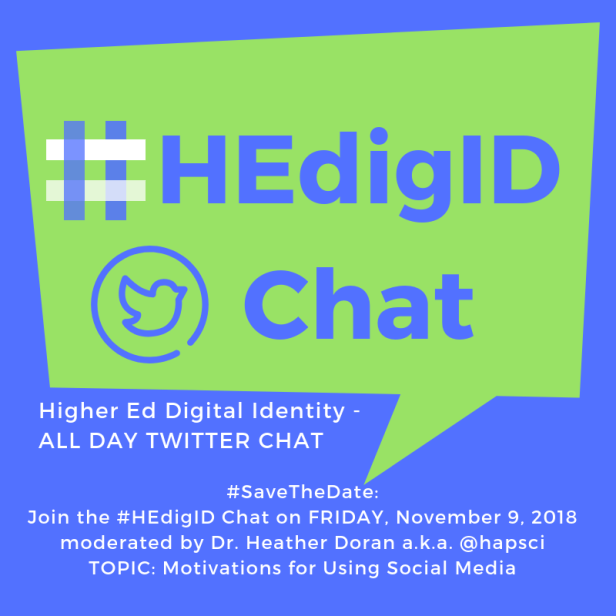
I’m excited to welcome guest moderator (MOD), Dr. Heather Doran (a.k.a. @hapsci), who will be facilitating the next all-day Higher Education Digital Identity (#HEdigID) chat this FRIDAY, NOVEMBER 9th to discuss this #HEdigID Chat TOPIC “Motivations for Using Social Media.”

Heather is a public engagement manager and who is interested in how the public can connect with research and researchers through social media. Dr. Doran has been active on Twitter and a frequent blogger since 2009. In 2015 she was awarded a travel fellowship from the Winston Churchill Memorial Trust to explore how scientists and the public can connect on social media. For this Heather visited the USA, Canada, China and Japan. You can read what she got up to at www.heatherdoran.net or https://www.wcmt.org.uk/users/heatherdoran2015

Dr. Doran is interested in chatting about the different reasons why people in higher education use social media. For personal reasons? For part of your job? Let’s discuss how your motivations for using social media impacts and influences you professionally and personally in your daily life. To prepare for this conversation around open ed practices, here is a bit more information to review before the upcoming #HEdigID Chat:

#HEdigID Chat TOPIC: Motivations for Using Social Media

This SLOW chat can be found on Twitter with the hashtag starting on FRIDAY, November 9th (which might be November 8th in other global time zones) with the hashtag #HEdigID. Also, feel free to  start sharing your answers NOW within this OPEN Google doc: http://bit.ly/hedigid10

To get you thinking ahead, here are a few of the QUESTIONS you will see appear on Twitter and in an open Google doc for the FRIDAY (November 9th) #HEdigID ALL-DAY discussion:

  1. Why (and maybe when) did you start using social media?
  2. What motivates you as someone in higher ed to continue to use social media professionally for the work you do?
  3. What do you find most difficult about using social media these days?
  4. Has using social media as a professional in #highered met your expectations? Why or why not?
  5. What do you find social media most useful for in your role in higher education?
  6. What was the most insightful piece of advice or tip someone offered you (or you gave) for getting started with social media?

Join the discussion and share your motivations for using social media by:

  • Answering the questions by tweeting your response with the hashtag: #HEdigID

  • Responding anonymously in IN this OPEN Google Doc: http://bit.ly/hedigid10

  • Use any of these questions to draft your own personal reflection and response (e.g. blog post, video, audio, drawing or offline discussion)
 

UPDATE WITH TRANSCRIPT 11.12.18:

Podcast, Professional Development, Training & Development

Pod Save Higher Ed: Resources For Podcasting

This month, I have found myself sharing more and more about how we can think about social, digital tools to tell our stories in higher ed. There are many ways to share our experiences and highlight the amazing things students, staff, and faculty are working on at and beyond our institutions. I have found podcast hosting/producing to be a very rewarding experience to support my own learning and development. There is no shortage of knowledge I have not learned from podcast guests, the research of topics, and the notes for each episode  I have hosted – thanks @BreakDrink & #InVinoFab podcast!

Digital storytelling has the potential to cultivate agile learning and kick start creativity in our college/university pedagogical practices and research projects. With a growing population tuning into podcasts (at least 44% have listened to a podcast, and 26% are monthly listeners in the US in 2018), this storytelling medium is on the rise. Podcast creation and listening has increased for a variety of reasons: access and portability to listen on a variety of devices, a way to fill the daily/work commute, the growth of smart speakers, and the increasing mention of new and interesting fiction and nonfiction series that have reinvigorated podcast listening (thanks, Serial, Season 1).

Podcasts offer both information and entertainment outlets for listeners to tune in anywhere, anytime they want. This on-demand, audio content allows the media to be streamed or downloaded, and offers listeners a way to participate in the slow web movement.  Instead of a quick like, comment, or post we typically experience on social media or online, podcasts provide a longer form, intimate experience and connection with the hosts and ideas shared. This longer media format often offers deeper insights, showcases personality and personal styles, and helps to interpret current projects and experiences from this audio narrative. With a wide variety of creative formats (e.g. interviews, commentary, panels, storytelling, etc.), podcast episodes can vary in time, style, and approach. The audio medium of the podcast lets you decide the frequency, distribution, and how you will produce the topic. Additionally, you can include resources for listeners to access further information through episode details, resources, show notes, and transcripts.

I think MORE of my college and university colleagues should consider exploring podcast creation to share personal stories, thoughts, and reflections on the work we do. For higher ed, the podcast medium allows for hosts/producers to extend knowledge to a campus community, academic discipline, and practitioners who want to engage deeply on specific topics, ideas, trends, and/or issues. To plant the podcast production seed, I thought I’d share a few podcast planning/development resources I’ve been curating from a recent workshop I facilitated, called Pod Save Higher Ed. Here is the podcast planning and brainstorm resource guide to be downloaded (as a PDF file) shared under a Creative Commons license:

https://doi.org/10.6084/m9.figshare.7228223.v1

I wish I had a quick “how to,” accessible guide to for higher ed podcast hosting and producing when I first started in 2010 (as Jeff and I lamented about in a past BreakDrink episode). This is a quick OVERVIEW of useful curated podcast resources, tools, tutorials, and suggestions I hope will help you if you are currently podcasting and/or considering to start your own podcast:

http://bit.ly/podsavehighered

There are SO many ways to produce a podcast these days. This open document is a space to SHARE and LEARN about HOW higher education professionals create, make, produce, and host their own podcasts:

http://bit.ly/behindthepodcast

Take a LISTEN to podcasts for and created by higher education professionals who want to share resources, ideas, and aspects about their own work:

http://bit.ly/higheredpodcasts

The time for higher ed professionals, practitioners, graduate students, researchers, instructors, administrators, and more to gain a share of the podcast ear. Higher ed hosts and producers, it’s time to raise our mics and let our tales be told through podcasts. Go ahead and launch the podcast you have always dreamed of creating now! I hope to listen to your pod story soon, @LauraPasquini

p.s. Be sure to share your podcasting story and let others know how/why you started your own podcasts OR how podcasts help you in your professional life in higher ed: #PodSaveHigherEd

Reference:

Pasquini, L. A. (2018). Pod Save Higher Ed: A Resource Guide To Inspire Storytelling & Podcast Making in Higher Education. figshare. Retrieved from https://doi.org/10.6084/m9.figshare.7228223.v1 and http://bit.ly/podsavehighered

mentor, mentoring, Research

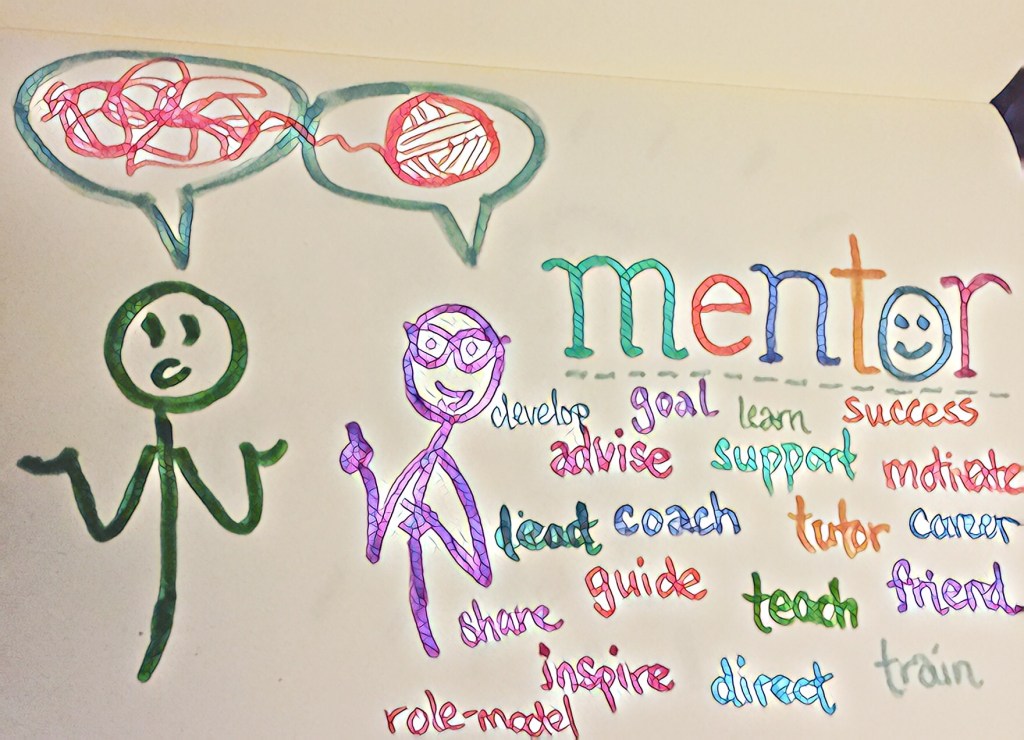
How Were You Mentored as a Doctoral Student? Tell Us About It!

Mentoring of doctoral students is varied and diverse depending on the degree, discipline, and institution. I know that mentoring happens informally and formally from peers, professors, colleagues, and more. Sometimes it is from a faculty advisor or supervisor; however, more often then not we meet professionals, practitioners and other scholars who offer some form of personal/professional mentoring while completing a terminal degree. In thinking back to my graduate school experience, there was definitely a tribe of mentors who supported my professional development, research and career plans. From my departmental ATPI Research/Writing Group and LPQ Journal editing on campus to digital networks like #phdchat, many #edtech colleagues, my @BreakDrink podcasting family, the @AcAdvChat community, and MANY more, who mentored me formally and informally during my Ph.D. journey.

HOW were YOU mentored as a doctoral student or in your terminal degree program?

  • What sort of mentoring experiences did experience in your Ph.D., Ed.D., or M.F.A. program?
  • Who did you seek out to build formal or informal mentoring relationships?
  • How did you “stay in touch” or connect with these mentors from a distance, if they were not on campus?
  • How did these individual, group, or peer-to-peer mentoring experiences impact your own career development and professional growth?
  • OR if you feel like you didn’t really have opportunities to be mentored formally/informally, tell us what you WOULD have liked during and post-graduate degree?

Exploring the Impact of Mentoring for Doctoral Students

If you have some answers to any or all of the above questions, consider helping one of my own doctoral scholars with her research project. We are curious to learn about the nature and dynamics of mentoring relationships, specifically HOW they impact students in terminal degree programs. This might include mentoring experiences outside of the faculty advisor/supervisor role and even beyond campus. Mentoring experiences we know often occur from conference attendance, academic meetings, professional organization involvement and within your own or other disciplines of scholarship/work

The goal of this research is to understand how doctoral students experience mentoring during and after the completion of their terminal graduate degree programs in both face-to-face and distributed environments. There are a variety of campus stakeholders and professionals who form a collective of mentoring experiences for individuals who are pursuing a terminal degree. With a variety of career paths post-degree, we want to know how doctoral students establish, communicate, and sustain mentoring relationships that support their personal and professional development. We want to know more about these mentoring relationships through the shared narratives of doctoral students who are currently in-progress and/or who has recently completed (in the last 2-5 years) a terminal graduate degree (e.g. Ph.D., Ed.D., M.F.A, etc.).

We would love to know how technologies shape and support these mentoring relationships? This might be to stay in touch, communicate, share on social networks, or even exist within digital learning environments. With the opportunity to connect to scholars and practitioners beyond geographic boundaries, it is now possible for graduate students to establish mentoring relationships with other scholars, peers, and professionals from afar. How are these doctoral scholars finding resources, support, and kinship within peers in online networks? What type of mentoring opportunities have doctoral learners found either formally or informally to reach their personal and professional goals? Are there mentoring groups, peer-to-peer, or professional experiences that have guided their early career decisions and/or direction?

To volunteer for a 30-minute interview for this study, please complete this form: https://unt.az1.qualtrics.com/jfe/form/SV_d06SO2d0GL8al6d

To learn more and/or participate in the project, please find further details about this study here: https://ltiwithme.wordpress.com/2018/04/27/exploring-mentoring-relationships/ or contact Laura Pasquini (Laura.Pasquini@unt.edu) or Meranda Roy (Meranda.Roy@unt.edu).

#HEdigID

#HEdigID Chat No. 9: Digital Storytelling in Higher Ed

Telling stories is what makes us human. Homo sapiens have been telling and sharing stories for a long, long time. We love to hear a good tale. Think about the last time you read (books, poems, articles, etc.), watched (e.g. TV, film, documentary, or video game), and heard (e.g. radio, podcast, family member, etc.) a REALLY good story. I’m sure you’re thinking about a story right now and it is making you smile. That’s the art and craft of telling a good narrative.

I have been interested in how we are telling our digital tales and our stories within higher ed for quite some time. Whether it’s creating explainer videos about scholarship with, Research Shorts, bantering with Jeff on BreakDrink, sharing thoughts and experiences on my blog, or interviewing a colleagues on the #InVinoFab podcast — I have learned so much from peer narratives and personal reflections offered online. Integrating digital storytelling into the work we do in higher ed — as staff, faculty or graduate students — requires the application of technology to narrative skill development.

What is digital storytelling? As Bryan Alexander (2017) says: “Simply put, it is telling stories with digital technologies. Digital stores are narratives built from the stuff of cyberculture.” That is, the places where we share photographs, podcasts, virtual reality environments, blogs, video clips, games, novels, writing, Facebook Groups, Twitter chat archives, and more! It may combine the oral tradition of storytelling with visual and sound OR more of new media spaces. Additionally, there are ways to interact, engage, and offer a diverse point of views and opinions on these digital tales. This craft has the ability to unpack narratives and communicate ideas on a topic while taking the the audiences perspective into consideration.

Higher ed professionals could do better at encouraging reflection and meaning making by sharing our own tales of experience. The higher education landscape needs more authentic learning experiences and thoughtful skill development with critical digital pedagogical practices (Alexander, Adams Becker, Cummins, & Hall Giesinger, 2017; Alexander, 2017). How does “digital storytelling” impact career success? How do we apply information literacy or digital fluency our daily work? How are we modelling digital storytelling to the learners we work with? The 2017 NMC Digital Literacy Impact Study (Adams Becker, Pasquini, & Zenter, 2017) revealed that digital storytelling concepts and capabilities were rarely employed in education, and there is a skill-gap in digital with regards to both scholarship dissemination and occupational success. We see more critical thinking and research online, rather than digital creation, making, and production. I think we can do better — it’s time to find our storytelling voice, higher ed! The time to share your story is NOW!

With the proliferation of web-based, mobile, and emerging technologies (e.g. streaming websites, digital/video/audio media, etc.) higher ed professionals have the potential to move from lurking and commenting to making and creating space to lead the conversation. There needs to be more digital making by professionals to model effective digital storytelling. By leveraging technologies and new media, more colleagues (I hope) will have have the ability to share personal stories, document individual experiences and find deeper meaning in our lived professional experiences as we archive these online. There is no one way to tell a story in this evolving landscape — this might be sharing stories through audio, video, text, and visual mediums.  That being said, we have to be fearless enough to SPEAK UP and SHARE OUR STORY as this counts in the professional work we do at our colleges and universities. By working out loud and contributing to digital storytelling, we are able to process knowledge, employ innovative ideas, and disseminate our own initiatives within and beyond higher ed.

For the next Higher Ed Digital Identity (#HEdigID) SLOW (all-day) chat we will discuss what it means to tell our OWN narratives as professionals in higher ed. Join the conversation asynchronously via the hashtag: #HEdigID and/or contribute to this OPEN Google doc of questions: http://bit.ly/hedigid9

Learn more about the #HEdigID Chat and review the QUESTIONS in that will be posted on Twitter and in the Google doc for this ALL DAY discussion on FRIDAY, October 12, 2018:

  1. Is there a story from #highered that resonates with you the most? This could be an article, new piece, book, or personal tale. Please share!
  2. What stories do you think #highered and those outside our colleges/universities should HEAR? What digital stories should WE be telling about the academy?
  3. Who might be your audience for your digital stories about #highered? Tell us about WHO might LISTEN or be interested in your story?
  4. Are you a digital storyteller in #highered (new or experienced) or do you know one? If so, please share where YOU or OTHERS share their narratives online to read, watch, or listen.
  5. If you are just getting started in digital storytelling, what questions, concerns or considerations do you have about telling your own or other narratives in #highered? Tell us about it!
  6. What digital storytelling spaces and places give YOU inspiration about telling your own narrative? Share your STORYTELLING muses, motives, and resources here.

Join TODAY’s (October 12th) discussion on Digital Storytelling in Higher Ed:

  • Tweet your response with the hashtag: #HEdigID

  • Share your answer IN this Google Doc: http://bit.ly/hedigid9

  • Use these questions to draft your own reflection OR response (e.g. blog, video, audio, drawing or discussion)

References:

Adams Becker, S., Pasquini, L. A., & Zentner, A. (2017). 2017 Digital literacy impact study: An NMC horizon project strategic brief. Volume 3.5, November 2017. Austin, Texas: The New Media Consortium.

Alexander, B. (2017). The new digital Sstorytelling: Creating narratives with new media–Revised and Updated Edition. Santa Barbara, CA: ABC-CLIO.

Alexander, B., Becker, S. A., Cummins, M., & Giesinger, C. H. (2017). Digital literacy in higher education, Part II: An NMC Horizon project strategic brief (pp. 1-37). The New Media Consortium.