Collaboration, Conference, Learning, Professional Development, Reflections, Research

Innovation for Learning: Submit Your Ideas for the #OLCInnovate Solution Design Summit

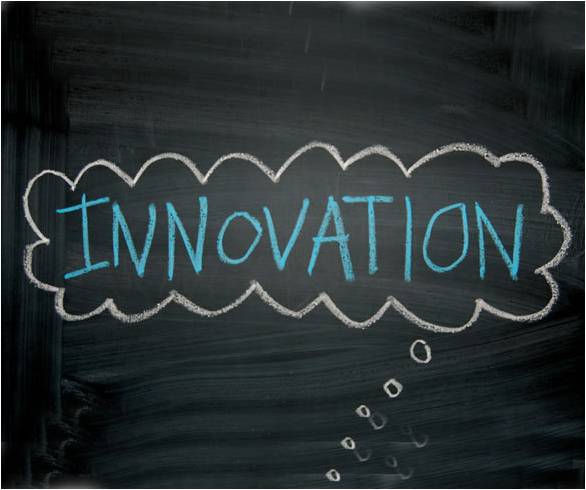
I have been thinking about innovation for a while. What does innovation mean to you? How does “innovation” play into your world of work and learning? The word INNOVATE feels very much like a buzzword when it comes to learning. It may even be as a prime contender found on one of my #edtech bingo cards used for education meetings and conferences. Now the word, innovate, has been placed as a conference title and I agreed to support the planning for this event => Online Learning Consortium (OLC) Innovate. These facts only means I have been reading and reflecting even more about innovation and what this term means. Here are my current ponderings and ideas.
pondering_innovation

Flickr photo c/o Missy Scmidt

A number of organizations are increasingly being influenced or impacted the eagerness to “solve” problems with technology. Last year, George Steele suggested the book, The Innovators, in a conversation about the culture of change in higher education (a HUGE topic I will save for another blog post). This was a well-timed referral and read for me. Isaacson (2014) describes how groups of individuals ingeniously cooperated to innovate in the real world. Say what? Tell me more!

Thinking, designing, and employing innovation for learning is complicated. The story of the collective successes (and failures) of many innovators need to be shared, and continually drafted as there are “far fewer tales of collaborative creativity, which is actually more important in understanding…how today’s technology revolution was fashioned. It can also be more interesting” (Isaacson, 2014, p. 1)

Although The Innovators shares the history of computing, technology, and the Internet, and it really spoke to my inner collaborator and WHY I dabble in the applied inquiry to understand more about online/blended learning technologies and workplace L & D. The collaboration emphasis resonated throughout this text, and I do believe that “no one individual…has truly achieved anything alone.” I concur.

By definition, we always appear to be “innovating” in learning, right? With formal education institutions (K-12 and higher education), professional associations, and learning organizations there seems to be a tension of how to balance innovative ideas or approaches due to structural, pedagogical, and workforce challenges in the real world. We want to be innovative, but sometimes our organizations or “the system” rarely allows this process to unfold with constrictions of our job portfolios/functions, institutional divides, or designated project timelines. As Martin Weller put aptly put it: “the rhetoric for the need for innovation is rarely backed up by practice that will encourage it.” Let’s change that narrative. Why don’t we try to play with a few innovative ideas and concepts together?

For OLC Innovate, there are a few new (I won’t say innovative, just yet) program features that are atypical of a traditional conference format. One of the goals the #OLCInnovate steering committee set out: Let’s have less “talking head” presentations (education sessions, lectures or plenary talks), and more conversations, fun social happenings, places to share, and opportunities to solve REAL problems for online/blended/F2F learning. <<Segue>> THAT being said, here’s a new feature of the #OLCInnovate program I hope you will consider:

The OLC Solution Design Summit (SDS)


Video trailer production credit to Kyle Johnson

The general call for program proposals is now closed (with the peer reviews completed, expect to see the full program online next week); however the call for TEAM Proposals is OPEN for the OLC SDS until February 10, 2016 [Deadline Updated to extend the call for proposals on 1/26/16]. Thanks to the 2015 #et4online unconference banter, the OLC SDS Team (Mike Goudzwaard, Patrice Torcivia, Kyle Johnson, Adam Croom, & Michael Atkisson) decided it was about time to offer a program feature that was less about product and more about process. Together we carved out space in the #OLCInnovate schedule to offer a space for design thinkers, tinkers, and leaders to assemble in order to propose and solve challenges we encounter in learning (in K-12, higher education, and industry-L & D), such as:

As we know innovation takes time and it is a team process. For this CFP we have a broader timeline for this program and we and different expectations for this call for submissions. We are not looking for an end solution. Our team is more interested in WHO is at your interdisciplinary team table and the potential problems you want to work on together. Solutions might appear, but regardless this will be shared opening before, during, and after the #OLCInnovate 2016 conference ends:

Before the Conference

  1. Prospective SDS participants submit a challenge proposal by February 10, 2016: Abstract about the problem, team, and potential solution.
  2. Acceptance notifications will be sent out to teams by February 16th. [Confirm acceptance of your team by 1/22]
  3. Those SDS teams with accepted challenges will submit a solution pitch video for public review on the OLC Innovate 2016 website, by March 11, 2016 (due March 4th).
  4. Experts and OLC Innovate attendees will be invited to view and comment online to provide feedback on the video pitches March 21 – April 1.
  5. SDS teams will meet via an online web conference for 30 minutes to debrief and plan before the with the SDS facilitators in early April, before the #OLCInnovate Conference.

During the Conference

  1. SDS teams participate in a two-part pre-conference workshop session the morning of April 20, 2016. This will involve sharing the challenge and potential solution.
  2. Building on the feedback from the pitch reviews before, the design-thinking workshop on day 1, and comments from the workshop (via educators, edtech experts, researchers, exhibitors, and other SDS teams), you will further develop your challenge statement and solution design “pitch” to present during a concurrent session.
  3. SDS teams will present their solution in a 15-minute (10-minute presentation & 5 minute Q & A) time slot during an OLC Innovate session for all conference attendees.

Post-Conference Winning Team Benefits

  1. The winning SDS team members will each receive a one-year OLC Professional Membership (limited to a maximum of 5 team members). Current OLC members would receive a 1-year extension to their existing OLC Professional Membership.
  2. The winning SDS team members will receive complimentary future OLC 2016 or 2017 conference registration (limited to a maximum of 5 team members, not applicable to OLC Innovate 2016).
  3. The OLC Team will engage the winning team in a conversation of how best to showcase their solution through OLC.  Examples may include a webinar, membership dashboard interaction, OLC social media promotion, etc.

Now that you know the details, I encourage and instigate ALL of you to REVIEW the Solution Design Summit CFP and SUBMIT your team application NOW! Please feel free to share with your colleagues, and instigate innovation among your peers as well. Do you have questions about the OLC SDS? Email our team: sds@onlinelearning-c.org or follow up with either Mike or me. Thanks!

References

Isaacson, W. (2014). The innovators: How a group of hackers, geniuses, and geeks created the digital revolution. New York, NY: Simon & Schuster.
#AcWriMo, Higher Education, K-12, Learning, Learning and Performance, Learning Technologies, Online Learning, Professional Development, Research, Training & Development

What *IS* Innovation? Tell us. The CFP for OLC Innovate 2016 (#OLCinnovate) is OPEN!

What *IS* innovation?

This is the FIRST question the Online Learning Consortium (OLC) co-chairs, Karen VignarePaige McDonald and I, asked each other as we started to organize the *NEW* OLC Innovate Conference (#OLCinnovate). Innovation is a BIG word. It means so many different things, to so many different people. Before putting out the call and promoting the #OLCInnovate conference (happening April 20-22, 2016 in  New Orleans, LA), we thought carefully about who we wanted to join the planning team and how to design a conference experience to live up to the “hype” of the word INNOVATE. This conference was formed to merge the best ideas of blended learning (from #blend15) and emerging technologies for online learning (from #et4online); however we expect this meeting in NOLA — OLC Innovate 2016 — to be SO MUCH MORE! Thanks to our AMAZING #OLCInnovate Steering Committee (Tw-shout outs HERE and HERE) we support to hash out what innovation means for the program tracks, developed thoughtful session types for program delivery/format, and, we hope, this conference will model the learning design we all strive for at our institutions and organizations.

logo_516x227

So WHY should you attend #OLCinnovate 2016? [What’s in it for me? you ask.]

  • Advancing learning requires continuous visionary leadership from all disciplines
  • Connecting with multiple stakeholders (i.e. learners, educators, administrators, trainers, researchers, administrators, faculty, policy-makers, designers, and industry leaders) to strategize about the evolving needs at our institutions and organizations
  • Sharing learning and development ideas for all levels – K-12, higher education, & industry
  • Implementing solution-based approaches to learning design, support, and structure
  • Researching and developing evidence-based practices for learning is now more critical than ever.

Our #OLCinnovate planning team thinks this conference is a great opportunity to bring ideas, perspectives, research, and practices to the table to truly support innovation in education. The program tracks are structured around areas we all face with learning and development in K-12, higher education, and industry:

  • Workforce Innovation – connections from K-12 to higher ed to the workforce, curriculum to meet industry needs, partnerships for learning & work
  • Structural Innovation – systemic challenges, organization of education, learning spaces, partnerships between educators & technology solutions
  • Pedagogical Innovation – course & program approaches, methods, design, assessment models, etc.
  • Challenging Barriers to Innovation – digital divide, OER, Open Access, sharing evidence, ethical research collaborations, opportunities and areas for learning growth
  • Propose Your Own Topic – Tell us what YOU think innovation IS or what is missing!

Extend_OLCinnovate_Dec2

The call for proposals (CFP) is OPEN until November 9 December 2, 2015 

Program Format (Session Types) include:

  1. Conversations That Work – why have a panel, when you can facilitate a discussion on the topic with others in the room? Think of questions, discussion prompts, and ideas you want to chat about for this 45-minute session.
  2. Emerging Ideas – Forget the “traditional poster session” we want you to share your practice, research, and work-in-progress ideas in 10-15 minutes to get ideas, feedback, and suggestions during this networking event with both on-site & virtual attendees.
  3. Innovation Labs – 5-minute chat about the concept/idea; 20-minute demonstration; 20-minute applied skills for learning, technology, research, design, or other.
  4. Research Highlights & Trends – 15-minute presentation on your original research; abstract due in November; final, full paper due January 31, 2016 with the potential to be invited to a special issue of the Online Learning journal.
  5. Workshops – these are interactive 90-minute sessions with valuable take-away learning outcomes for participants (free to all conference participants).
  6. Education Sessions – a 45-minute lecture about an idea/concept with 5-10 minutes for Q & A at the end.

There are a number of helpful tips provided on the CFP page; however if you have questions or needs, I would be happy to support you with your proposal development/submission. It is getting the right PEOPLE and VOICES to the table that adds value to any learning and development experience. Please help us invite of institutional stakeholders from education (K-12 and higher ed), and industry (technology, design, L & D, and corporate training) to #OLCinnovate. Share this blog post with your peers, and tell me who the #OLCinnovate planning team should reach out to or invite. Thanks!

SUBMIT A PROPOSAL FOR OLC INNOVATE 2016!

Upcoming announcements of other #OLCinnovate program features, speakers, highlights, and are coming soon… stay tuned for more updates!

DETA, Online Learning, Research

Developing a Research Model for Online Learning: @UWMDETA Wants Your Feedback!

The National Research Center for Distance Education and Technological Advancements (DETA) has been busy since the DETA Summit at #ELI15. Besides building a framework for inquiry, formulating measures, #DETAToolkits, and establishing research designs and instrumentation, the DETA team has been working on developing a research model for online learning — and they WANT YOUR FEEDBACK!

The DETA team reminds us that the field of distance education research is not new, but we do need to come together to consider how we examine, support, and thrive in online learning:

In distance education, a common language or ground has not yet been established.  Although existing scholarship attempts to establish an identity for teaching and learning on the fringe or margins (see Moore, 2013), such as distance education, there is still much work to be done.  It is common in other disciplines to struggle with finding this common ground as well (e.g., Corman and Poole, 2000).  Yet, unlike many other disciplines that have models illustrative of the phenomenon of interest or research models that guide the design of research, distance education has seen little traction in this area.  A cohesive approach to researching distance education from a transdisciplinary lens is pertinent.        

The lack of common language and work being conducted in disciplinary silos has led to a disregard or lack of acknowledgment of previous developments in the field.  Furthermore, the disconnect many times between the fast moving development of practice and redundant research of already proven practices is less than helpful to developing distance education. 

The function of the proposed online learning research model is “to facilitate cross-institutional distance education research efforts as a strategy for ensuring quality in teaching and learning for all students.”

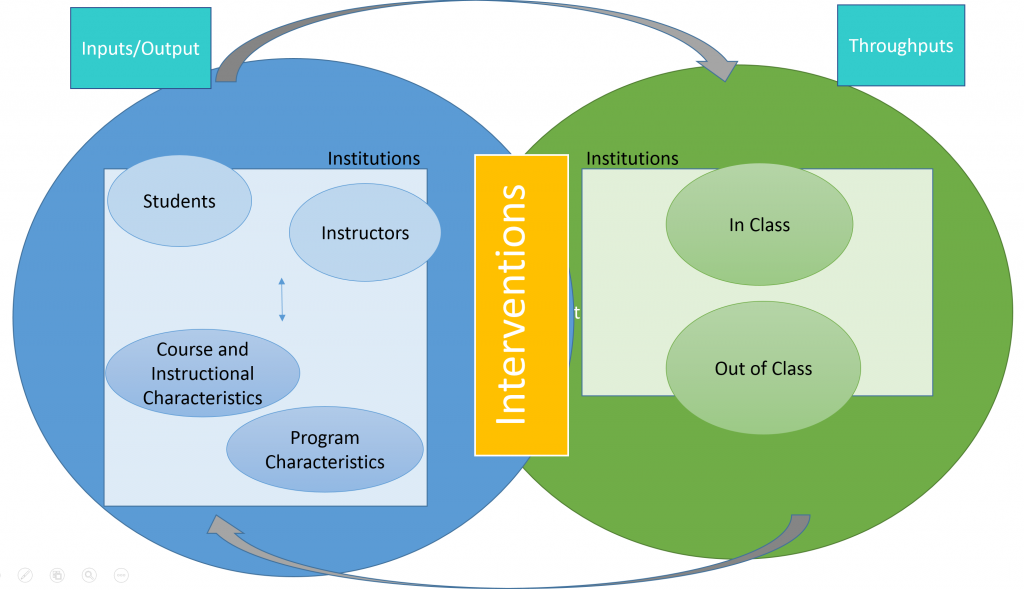
DETA Research Model (Proposed)

The research model document publicly is available online the DETA website for you to view. Please take a gander and comment. Your input will not only help the DETA team, it will also support many of us who research, work, teach, learn, manage, and then some online in higher education. In the proposed research model for online learning four components include (1) inputs and outputs, (2) process, (3) context, and (4) interventions.  I was interested in the three facets that describe the relationship between and among the components of the research model, including:

  1. Cyclical: Learning is conducted in cycles. It might be in a semester system, a certificate program design, or through a series of short courses. In thinking about this, it will also be important to identify attributes of the student, instructor, course, and program that feed into this cycle of learning.
  2. Transactional: Both students and instructors engage and are a part of the learning exchange. The learning process requires efforts and contributions on both end, i.e. design of a course could influence completion rates, learning interactions, course dynamics, and the feedback loop for online learning.
  3. Structurational: As instructors and staff design, develop, and modify online learning the courses, instructional methods, and program characteristics are a direct result of human action, which in turn, facilitate and constrain student interactions in online learning.

For each of these areas, I have made a few notes and questions for the DETA team — but I don’t want to influence your  feedback before you provide your own comments/questions/suggestions  on this research model. Please take a moment to review the proposed research model and complete a very brief FEEDBACK form embedded into this website at the bottom of the page and/or address any questions you have to the DETA Team:

http://uwm.edu/deta/research-model/

References

Corman, S. R., & Poole, M. S. (2000). Perspectives on organizational communication: Finding common ground. Guilford Press.

Moore, M. G. (Ed.). (2013). Handbook of distance education. Routledge.


networkedscholar, Research

Being A Networked Scholar

Using social media and being a networked scholar allows provides you with an online, research presence and connects you to academics inside and outside your field. The power of open, social networks, allows academic to connect to research and researchers across disciplines. Consider all the ways you can collaborate and share in social media. A growing number of scholars have adopted and joined these online scholarly communities to meet other like-minded scholars, solicit for research support, share project progress, and disseminate findings beyond a conference publication or journal article. A core value of open, online networked scholarship is it is “a place where scholars can congregate to share their work, ideas and experiences” (Veletsianos, 2013, p. 648).  There are a number of researcher identification and citation tools connected to social media sites and scholarly metrics. Teaching and research information are being distributed and shared across platforms and communities.

elearn14-digital-scholarship-21-638

“It is a critical time to rethink how research is produced, distributed, and acknowledged.”

(Pasquini, Wakefield, Reed & Allen, 2014, p. 1567).

As I investigate workplace learning and performance, it has been helpful to blog and bounce ideas off on others on Twitter. I have used Mendeley to work on literature reviews, Google+ hangouts for research team meetings, Google documents for collaborative writing/research, searched Academia.edu or ResearchGate to access publications, and posted academic results to SlideShare. These are just a few ways I like to “show my work” and work in the open as a scholar. Being social and online allows me to reflect on my academic teaching and research scholarship experiences, and it has connected me to a great number of academics who I learn and research among.

If you or another academic colleague are thinking about how social media and networks can impact your teaching, research, and service scholarship, then here are a few insights George & I shared via Royal Roads University post on networked scholarship.

Network with colleagues

Higher education faculty and academics are adopting social media in growing numbers. A 2011 survey, for example, found that 45 % of higher education respondents use Facebook for professional, non-classroom purposes. Joining social media networks allows scholars to connect with colleagues, offer resources and discuss issues of professional interest.

Solicit feedback and reflect on your research and teaching

Academics increasingly share their work online, often engaging in activities that impact practice. Academic-focused social networking sites, such as Academia.edu and Mendeley, and general interest sites such as Twitter and SlideShare provide scholars with places to distribute, discuss and expand on their research and teaching.

Reach multiple audiences

In sharing in open social networks, scholars enter into an interdisciplinary territory and often break down barriers between academic disciplines. Not only are the traditional walls of the academy thinner online, but academic work could reach broader audiences, such as practitioners and journalists.

Cultivate your identity as a scholar

Social media and online networks allow scholars to manage their online identity, track their citations, identify their spheres of influence and connect with colleagues. These tools support different ways in which knowledge can be produced, shared, negotiated and acknowledged. Learn more about a few of these tools here and here.

Become more open

Using social media and online social networks means being a tad more open, and that’s good for all of us. Openness is the practice of sharing resources and materials (e.g., syllabi, lectures, research papers) in a way that allows others to retain, reuse, revise, remix and redistribute them. Social media and online social networks often support an ethos of openness, enabling academics to share their work more frequently. A more open approach to scholarship allows knowledge and education to flow more freely and to be used more widely.

What advice do you give early career researchers and academics who are just getting started with social media?

I am not naive to say that being a networked, social scholars does not have any issues. What challenges do you see in being part of the “open” and involved in networked scholarship? Let me know. A follow-up blog post on this particular question and issue to come…

References:

Pasquini, L., Wakefield, J., Reed, A. & Allen, J. (2014). Digital Scholarship and Impact Factors: Methods and Tools to Connect Your Research. In Proceedings of World Conference on E-Learning in Corporate, Government, Healthcare, and Higher Education 2014 (pp. 1564-1569). Chesapeake, VA: Association for the Advancement of Computing in Education (AACE). Retrieved June 1, 2015 from http://www.editlib.org/p/148918.

Veletsianos, G. (2013). Open Practices and Identity: Evidence from Researchers and Educators’ Social Media Participation. British Journal of Educational Technology, 44(3), 639-651.

A version of this blog post is cross-posted on the Royal Roads University website.