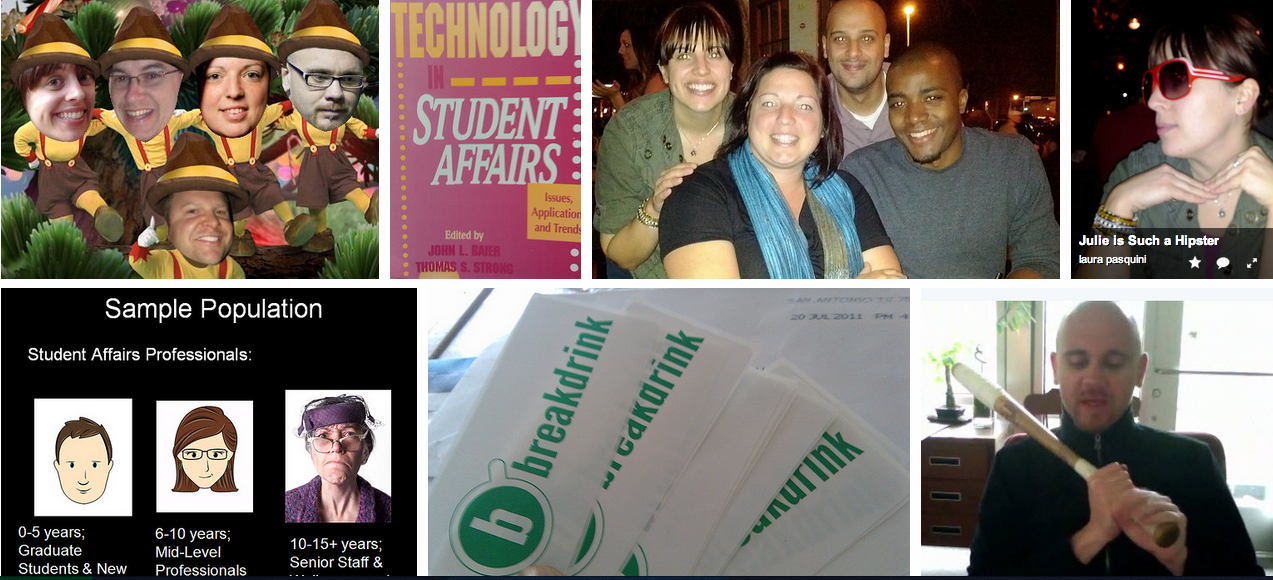
It’s been a while coming, but a couple of days ago Papa BreakDrink, Jeff Jackson, pulled the plug on BreakDrink.com. I am sad to see it go, but I am happy for what it was. This side project brought together a collaborative spirit of sharing and discussion around topics in Student Affairs and Higher Education, specifically “dedicated to providing alternative forms of professional development.” For the experiences, interactions, and laughs – I am fortunate to have had the pleasure. Thanks BreakDrink Family & Campus Tech Connection (#CTCX) listeners/friends. [p.s. There are a number of our shows sitting in the archives should you want to take a listening walk down memory lane or check it out for the first time.]
Category: CTCX
#CTCX No. 71: Tech News, Reddit & Updates
On Monday (10/22/12), the @BreakDrink Campus Tech Connection (#CTCX) discussed the latest technology gadget announcements, privacy on the Interwebz and challenges with Reddit, and diving into social media guidance in an upcoming assessment. Here is the video podcast:
And here are the show notes via Storify for your reading and linkage pleasure.
For those of you interested in giving your #SocialMedia Guidance in Education — please take some time to provide myself and Dr. Tanya Joosten (a.k.a. @tjoosten) feedback and information about “Guiding social media at YOUR institution” in a current survey: https://milwaukee.qualtrics.com/SE/?SID=SV_9HmS8C37kqKWyOh This SURVEY will take about 30 minutes to complete, and will close by Sunday, October 28, 2012 at midnight PST. Thanks!
This blog post is cross-posted at BreakDrink.com
The @BreakDrink Campus Tech Connection #CTCX No. 70: Ginkgotree
#SocialMedia & #HigherEd – Policy vs. Guidance
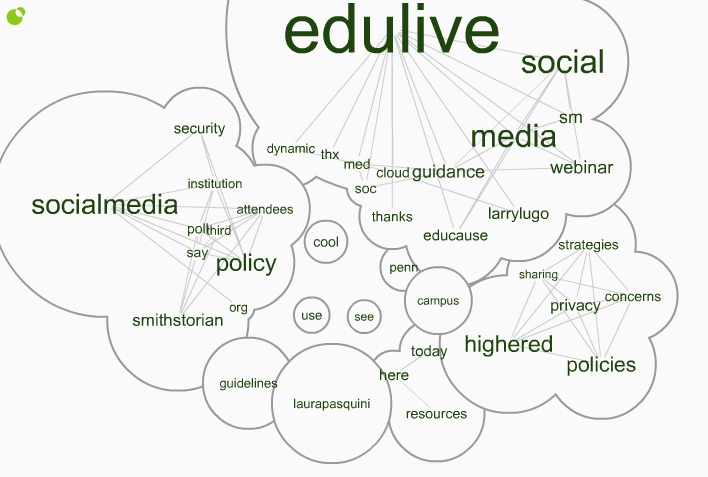
Last week, I attended the free @EDUCAUSE #EDUlive Developing Social Media Guidance in higher education with respect to #Privacy and #Security concerns. The presenters, from the University of Pennsylvania, shared ideas for how to promote safe usage of social media and detailed how to draft guidance for addressing issues in teaching, research, administrative, and other functions.
If you missed the #EDUlive event, you can check out the webinar recording and archives posted on the EDUCAUSE website, Developing Social Media Guidance, and you can also read through the Storify of #EDUlive tweets I collected.
During the webinar, I shared the Social Media: Sharing Strategies, Policies & Privacy Concerns in Higher Education open & shared Google Doc that was 1st created for a @BreakDrink Campus Tech Connection (CTCX) Show in September 2010. This document has been circulated around and curated for a while by myself and high ed professionals and faculty. Since there were a number of social media guidelines/policy examples shared during the webcast, I added them to this doc. For others interested in developing guidelines, I think there are a few solid examples I like in here, and I know that @EricStoller shared some of his favourite #SM guidelines from the list on InsideHigherEd recently as well.
Before diving into creating rules, guidelines or policies for social media, it is important to consider how this emerging technology is being used on your campus. In Chapter 6 of Social Media for Educators, Tanya Joosten (2012) shares her thoughts around institutional considerations for social media policy and practice [which we chatted with Tanya about on #CTCX Episode No. 61 as well]. There are often concerns about the use of social media at educational institutions, since these social and connected resources impact student behavior, online interactions, privacy concerns, and communication practices. When developing a social media policy, Joosten (2012) offers a few helpful suggestions for educators:
- review current technology use at your institution
- do not link policies to specific tools
- revise current student conduct and institutional policies
- use policy to address behaviors and activities, rather than focus on the technology
- learn about FERPA (or FIPPA in Canada) issues and privacy of student information at your campus
- develop best practices on campus for use by students, faculty, and support units
When thinking about the language of policy vs. guidelines, I am partial to establishing guidelines. There are probably already policies that address the actions and outcomes of student, staff, and/or faculty behavior on your campus. I think that it is important to review your home institutional policies and/or guidelines to best understand what is already being “regulated” on campus. It is also helpful to chat with your institutional office who deals with policy development, legal concerns, and/or questions you might have around privacy legislation.
Have you searched the terms “social media+policy” or “social media+guidelines” on your institutional website? Go on. See what shows up. If you find something, then start connecting and collaborating with that unit. If there is nothing to be found, then gather your peers and start the conversation.
References:
Joosten, T. (2012). Social media for educators. San Francisco, CA: Wiley/Jossey-Bass.
Talking Social Justice with the @BreakDrink #CTCX Crew
The @BreakDrink Campus Tech Connection (#CTCX)podcast posse discussed our thoughts on social justice and technology today. If you missed the recent podcast you can take a listen HERE and/or read the show notes that have been Storify-ed. A few of the key themes we touched upon include:
I. How Technology is Created & Used – the global impact & consumerism.
II. BYOD & Social Economic Status for Students on Campus – no student left technologically behind.
III. How Technology Can Support Issues & Causes – how to engage our learners.
Listen to internet radio with BreakDrink on Blog Talk Radio
https://www.blogtalkradio.com/breakdrink
We had many questions about what others in higher education and student affairs thought about social justice and technology:
- Does technology provide our students with tools for revolution or activism?
- What does our technology & consumption mean for our students and educators?
- Who has access to technology on campus?
- Are we really contributing and engaging in the global community with a RT or Like?
- How can we have better collaborative and collective modes of technology paired with social justice actions at our institutions?
We just touched the tip of the talks for what it means for technology & social justice.
What got me thinking further was an interesting presentation by @maymaym (Meitar Moscovitz) at the 8th Public Anthropology Conference titled “Dreaming of Compassion”. This talk discusses how the internet now affords social changes and issues to come together and be valued beyond cultural, geographical, economic, and political boundaries to the entire human race in our connected realities.
“In the network economy, the more plentiful things become, the more valuable they become.” Kevin Kelly
This principle of “the more, the merrier” brings into question of how we value of different relationship types in the social network and how our objectives can be intertwined with others social pursuits and needs in the world. Similar social networks provide both connections and shared intelligence. There is a great amount of power that can be influenced and perpetuated in a collective organization. A few examples we discussed include:
Open Ideas http://www.openideo.com/
Ideavibes http://www.ideavibes.com/
And I also think there are a few good resources shared by Dr. @courosa for education & action for social justice+technology.
Since social networks and viral activity have the ability to spreads news and information at an accelerated rate, it is possible that online action can start an actual reaction. The question we put back out there is to find out how other educators engage learners to move their connections of goodness beyond a RTs or Like, and put it into action?


You must be logged in to post a comment.