#3Wedu, Podcast, wine, women, WomenWhoWine.edu

The #3Wedu Podcast No. 6: Gender Equity Issues

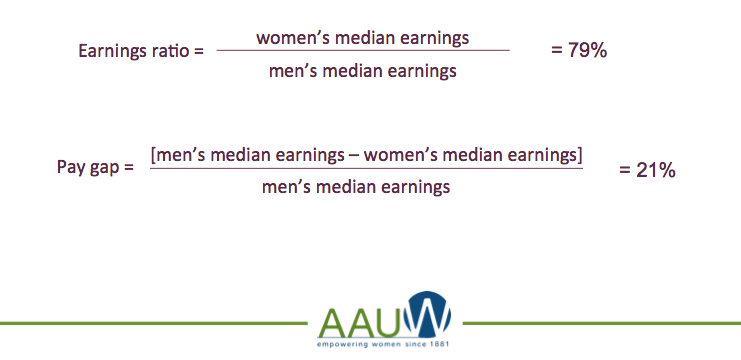
There are differences women encounter in the world of work. Women face a pay gap in nearly every occupation.”The pay gap has barely budged in a decade. At the current rate, the gap won’t close for more than 100 years” (Hill, 2016). Not only are financial opportunities unequal, so are additional expectations related to roles, presence, appearance and more. How we are valued and compensated are issues we need to address within higher education, and related funding areas (e.g. consulting, grants, etc). Let’s do something about this AAUW 2014 statistic!

79_percent

This Wednesday (6/18) the #3Wedu Podcast we bring up issues and areas faced with gender equity. In particular, equity with physical appearance (e.g. dress, standards, and expectations) and finances (e.g. salary, consulting, and funding opportunities).  We’re looking forward to welcoming our Boxed Wine Rant guest(s): Cali Morrison (@calimorrison) and Megan Raymond (@meraymond) from WCET to share about an upcoming #3Wedu Panel/Mixer event coming to you this fall. Please tune in LIVE for the broadcast tomorrow 3 pm PST // 5 pm CDT // 6pm EST:

Here is the direct Google+ Hangout ON AIR Event page for the live event where you can post comments or ask questions. Per usual, we also offer an open our Google Doc for show notes http://bit.ly/3Wedu6 and to share relevant articles and resources from the show.   

Do you tweet? Be sure to use the podcast hashtag: #3Wedu for those who tweet along the backchannel, and you can now follow the @3Wedu Twitter Account as well!

If you are interested in staying connected to be up-to-date on The #3Wedu Podcast and events — just  let us know!  Complete the #3Wedu Community form here: https://3wedu.wordpress.com/community/

Reference:

Hill, C. (2016, Spring). The simple truth about the gender pay gap. American Association of University Women.  Retrieved from http://www.aauw.org/research/the-simple-truth-about-the-gender-pay-gap/

This blog post is cross-posted at the NEW #3Wedu Podcast site!

AcAdv, AdvTech, StudentAffairs

Supporting Learners with Technology: Perceptions and Practices of Technology in Advising

It is a critical time to assess how campus stakeholders are employing digital resources to scaffold learners beyond the course curriculum and learning environments. A growing number of colleges and universities want to advance how they offer student support using technology outside the “classroom.” This campus change is impacting more student success and academic advising programs as they consider the best technology to provide advising content and service delivery for learner-centered approaches. By researching technological trends and challenges, conducting campus-wide assessments, and establishing strategic plans, higher education stakeholders can effectively integrate technology into student support practices to align with individual advising objectives and to further the goals of the institution.

#advtech

Surveying Institutional Perceptions and Practices on Advising
 To understand the impact technology has on student support and practice The Global Community for Academic Advising (NACADA) association, specifically the NACADA Technology in Advising Commission sponsors semi-regular surveys for the NACADA membership (e.g. 2002, 2007, and 2011). In 2013 a new survey instrument was designed to capture data, specifically to identify how higher education advising staff and senior administration employ technology to support their practices. A total of 990 respondents completed the survey; however 65% identified as an academic advisor/counselor. The other respondent’s role on campus included advising administrators (22%) and faculty (4%).

Key findings from this study:

  • Top 3 advising technologies: desktop computers, campus storage networks, & Wi-Fi
  • Technology tools/platforms the institution wants advisors to use: learning management systems (46%) and laptops (40%)
  • Technology tools/platforms utilized by advisors: 24% use scanners and 23% use social networks (e.g. Twitter and Facebook).
  • Advisors communicate with technology (daily) primarily with: other academic advisors/counselors (86.35%) and students (89.88%).
  • Advisors less frequently use technology to communicate with: academic administrators (58.08%), faculty (47.22%), & student affairs administrators (37%).
  • Daily advising practices include: e-mail (99%); face-to-face interactions (91%); locally installed word processor, spreadsheets, etc. (80%); phone (73%) and Facebook (30%).
  • Less frequently used advising technology (< 2%): licensed video-conferencing (e.g. Adobe Connect, Wimba, Zoom), retention software, photo-sharing websites, and podcasts.

Overall, we found the advising community communicates with campus stakeholders across their institutions and to stay connected to professional peers outside the institution:

  • 70-90% think advising technology supports information distribution on campus, and sharing knowledge and maintaining connections within higher education.
  • 24% indicated that advising technology tools do not help with communication and student scheduling.
  • 80-92% believe advising technology helps them work faster and more efficiently, produce higher quality work, store advising information, simplifies the academic advising administrative processes, and contributes positively to their academic advising role.

Technology Needs to be Location-Free, Build Rapport, and Use Current Systems

When asked what their “ideal technology in advising practice” to support students and advising functions, respondents wanted advising technology to:

  • Be integrated into current systems and existing campus technologies.
  • Create opportunity and access for student support and advising regardless of physical location, time, etc.
  • Help build an advising rapport, make connections, and support communication.
  • Support transparent knowledge sharing and degree completion information.
  • Scaffold effective online and blended models of academic advising.
  • Address the needs and challenges related to advisor and learner preferences and/or practices for student support/services.
  • Capture the holistic view of the student learning experience, which is essential to enhance academic advising practices and institutional outcomes.

It is imperative that campus decisions about technology and learning also include design and delivery methods that are inclusive of academic advising needs. From this research, it there is both a need and desire to improve front-line advising and student support practices in higher education using technology. Beyond soliciting input during the technology purchasing and implementation phase, institutions need to consider HOW student support is organized and ASSESS current advising practices and models.

To integrate or update technology for advising, our institutions will need to also consider how they will provide additional support, offer advisors training, and create job aids or resources to scaffold technology use for the students, staff, and faculty user experience. In the efforts to expand this research and distribute this knowledge for higher education technology for advising, the survey instrument, data, and white paper (also shared on Academia.edu) from this study are shared by the researchers with a Creative Commons license. Thanks for the support of the NACADA #AdvTech Commission, and co-author George Steele.

Reference:
Pasquini, L. A., & Steele, G. (2016). Technology in academic advising: Perceptions and practices in higher education. figshare. Retrieved from https://dx.doi.org/10.6084/m9.figshare.3053569.v7

Note: A version of this blog post was also shared on the NACADA Blog and the WCET Blog. In the coming months, I look forward to working with research collaborators on an updated version and replication of this study.  

mentor, mentoring

Thank Your Mentor Day!

Happy THANK YOUR MENTOR Day! January, with January 17, 2016 being International Mentoring Day, was proclaimed National Mentoring Month by President Obama. This mentoring campaign is targeted at supporting youth and mentoring IRL (#MentoringIRL).

miyagi_mentorAlthough my youth is behind me, I can definitely say a number of people helped to get me where I am today. A mentor can listen, teach, guide, and coach. Can you think about the mentor(s) in your life? Where would you be today had it not been for their support?

Here are a few simple ways the National Mentor Campaign suggests to THANK your mentor:

  1. Contact your mentor directly to express your appreciation;
  2. Express your gratitude on social media; (#MentorIRL)
  3. Pass on what you received by becoming a mentor to a young person in your community;
  4. Make a financial contribution to a local mentoring program in your mentor’s honor; and,
  5. Write a tribute to your mentor for posting on the Who Mentored You? website.

You can download a Thank you card from the Campaign Marketing Materials page.

As a thank you to all the mentors who have supported me and the mentees I have learned from, it would be only fitting to introduce this research study on this topic; however now I am interested learning how mentoring supports professionals and the field they work in:

Exploring Mentoring Programs in Professional Learning Organizations

Have you been part of a mentoring experience? Tell us about it. I am grateful for the informal and formal mentoring experiences, and I would not be interested in this study if it weren’t for the formal mentoring programs I have been a part of (shout out to ACPAgrow & NACADA ELP).  If you have any formal or informal mentoring experiences, please take a few minutes to share by filling out this survey:

http://bit.ly/ExploringMentoring

More about the research study: https://techknowtools.wordpress.com/mentoring/

Open Education, OpenAccess

Open Access Beyond #OAWeek: Reading Round-Up

Last week (October 19-25, 2015) was International Open Access Week (#OAweek) with the overarching goal for accessible scholarship, research, and educational content.
oalogo

Did you know about #OAweek? How did you mark or celebrate being open? In my efforts to play catch up and support open access, open educational resources (OER), open data, and openness for collaboration, here’s a rundown post about the latest happenings around OPENnness.

The Welcome Trust celebrated 10 years of Open Access and to mark #OAweek the Electronic Frontier Foundation (EFF), marked the week of open access by highlighting Collaboration in the Open:

“Open access is the practice of making research available online, for free, ideally under licenses that permit widespread dissemination. This year’s theme for Open Access Week is ‘open for collaboration’ …both in academia and beyond—enables a kind of collaboration that can scale very quickly.

When research is closed, no one can access it unless they (or, more often, the institutions where they work or study) can afford expensive journal subscriptions or online libraries. When research is open, anyone can access it, study it, and use it, regardless of their budget or institutional affiliation.

Open access also opens the door to a type of collaboration that wouldn’t exist otherwise. Authors that publish their research in an open access journal—or deposit it in an open access repository after publication—invite others to use it and transform it in ways that they might not have even imagined. The work can become part of a larger project, expanding the body of public knowledge even more.”

If you have not read Martin Weller‘s book, The Battle for the Open, this might be a good time to download your OPEN COPY to understand the growing issues and obstacles we face in the world of openness and higher education. [Here’s a previous plug and my take on the book.]
Screen Shot 2015-10-27 at 3.48.09 PM

To honor #OAweek (belated) I present you an OPEN round-up of reads I’ve wrangled from this past month (and perhaps beyond) about open access (publishing, learning, resources, data, repositories, etc). I’m sure I’ve missed a few things, so please share other articles, resources, and updates about the open in the comments. Cheers!

Making Open Access work: Clustering analysis of academic discourse suggests OA is still grappling with controversy.

Stephen Pinfield discusses this article: “to provide an overview of one of the most important and controversial areas of scholarly communication: Open Access publishing and dissemination of research outputs. It identifies and discusses recent trends and future challenges for various stakeholders in delivering Open Access (OA) to the scholarly literature.”

Check out the Free online #webinar on The Impact of Open Education @Edtechie via @Ignatia Webs

This free webinar, which is being promoted by the ALT Open Education Special Interest Group, will explore findings of the OER Research Hub, which has been investigating the impact of open educational resources. btw, the OER Research Hub is a source of wonderful, innovative OER-work, really worth exploring!

Opening Up Open Access: Moving beyond business models and towards cooperative, scholar-organized, open networks. via @kfitz

This issue of credit usually gets discussed in the U.S. in terms of the things that “count” for promotion and tenure, but recent developments in Europe and the U.K. make the question of counting all the more literal, as the continued financial support of entire departments can hinge on a quantified assessment of those departments’ productivity, and the nature of “productivity” is all too narrowly defined.

SPARC Launches Open Access Evaluation Tool 

“the launch of the Open Access Spectrum (OAS) Evaluation Tool, which provides a concrete, quantifiable mechanism to independently analyze publications’ policies.

The OAS Evaluation Tool generates an “Openness” score that is straightforward, easy to understand, and free. The program provides critical information to authors, libraries, research funders, government agencies, and other interested parties. It can be used to help determine compliance with funder policies, institutional mandates, and researchers’ individual values. It also offers a unique opportunity for publishers to independently validate their journals’ degree of openness and compliance with funder and campus policies.”

HowOpenIsIt? Guide from PLOS

The “HowOpenIsIt?®” Open Access Spectrum (OAS) guide standardizes Open Access terminology in an easily understandable, comprehensive resource created by PLOS, the Scholarly Publishing and Academic Resources Coalition (SPARC) and the Open Access Scholarly Publishers Association (OASPA). The guide defines core components of Open Access derived from the articulation of basic tenets in the 2002 Budapest Open Access Initiative (BOAI).

Academics have found a way to access insanely expensive research papers—for free 

When content is not accessible and open, the scholars revert to the hashtag #icanhazpdf: “many people are becoming increasingly frustrated with a business model—where work is produced by academics, edited by their peers, and often funded by the taxpayer—is hidden behind a paywall.

Exploring the publishing model of the Open Library of Humanities: A view from Latin America

 Francisco Osorio provides a brief overview of what sets this journal project apart from the rest and how the new funding model offers an economic, social and technological platform for the humanities and social sciences to transition to open access. At the heart of the matter is the forms of communication in humanities and social sciences as distinctive from the natural sciences.

Open access papers ‘more likely to be cited on Twitter’ 

Much to no one’s surprise: “open access journals and articles have a ‘big advantage’ when it comes to being shared on Twitter compared with those behind a paywall.”

What does Academia_edu’s success mean for Open Access? The data-driven world of search engines and social networking.

[Academia.edu is] “the ‘largest social-publishing network for scientists’, and ‘larger than all its competitors put together’ – clearly raises a number of questions for the open access movement. After all, compared to the general sluggishness (and at times overt resistance) with which the call to make research available on an open access basis has been met.”

The Future of figshare (for open data sharing)

figshare has strived to engender a strong sustainability model that would allow us to continue to improve our free offering. With our continued successes, alongside file sizes and research outputs increasing year on year, we’re going to be removing our premium accounts leaving only one tier of account

OECD report on students, computers and learning: making the connection [REPORT]

Are there computers in the classroom? Does it matter? Students, Computers and Learning: Making the Connection examines how students’ access to and use of information and communication technology (ICT) devices has evolved in recent years, and explores how education systems and schools are integrating ICT into students’ learning experiences.

Open Education Resources in Canada via the IRRODL

Canada’s important areas of expertise in open educational resources (OER) are beginning to be built upon or replicated more broadly in all education and training sectors. This paper provides an overview of the state of the art in OER initiatives and open higher education in general in Canada, providing insights into what is happening nationally and provincially. There are growing examples of OER initiatives from several Canadian institutions offering free courses to Canadians and international learners.

Is it time for Canada to implement a unified open strategy for higher education? asks @clintlalonde

From Clint’s UBC/SFU Open Access week forum talk on this question [I concur with your response, Clint.]: “yes, having a unified national strategy on all things open is likely a good idea for the simple fact that it gets all the various strands of open – open access, open education, open source software, open pedagogy, open data –  in the same room. And any reason to bring people together to talk about their commonalities is a good thing.”

Openly Licensed Educational Resources: Providing Equitable Access to Education for All Learners via the US Federal Government

Open education advances key national priorities, including supporting shared economic prosperity, strengthening civil society, and investing in human development. Over the next year, the U.S. Government will continue efforts to expand and accelerate the use and availability of openly licensed educational materials worldwide. In addition, we will begin to model the transition to openly licensed educational materials at scale in U.S. K-12 schools.  We look forward to engaging with the national and global community to identify opportunities for open licensing to accelerate educational equity for all learners regardless of their financial situations or geographic locations.

Community Call from ALT: Open Education Technology and Practice

ALT is piloting a monthly ‘Community Call’ where we speak to ALT Members about their work. For our first call we speak with Lorna Campbell who is an advocate for open education, technology and practice.

Institute for Open Leadership Applications via Creative Commons – Due October 30, 2015

Earlier this year, Creative Commons and the Open Policy Network hosted the first Institute for Open Leadership (IOL). The IOL is a training and support program to empower new leaders interested in crafting and implementing an open licensing policy within their discipline. We had adiverse cohort of 14 fellows who came together for a week in January, 2015 in San Francisco. The fellows worked with mentors and each other to hone their open policy project ideas. Since then they’ve working within their institutions and fields to implement their open policy plan.

The impact of open textbook adoption on the learning outcomes of higher ed students

In some educational settings, the cost of textbooks approaches or even exceeds the cost of tuition. Given limited resources, it is important to better understand the impacts of free open educational resources (OER) on student outcomes. Utilizing digital resources such as OER can substantially reduce costs for students. The purpose of this study was to analyze whether the adoption of no-cost open digital textbooks significantly predicted students’ completion of courses, class achievement, and enrollment intensity during and after semesters in which OER were used.

A Librarian’s Guide to OER in the Maker Space

Because of their capacity to stimulate creativity, OER are the perfect complement to the maker space movement. The maker movement shares a philosophy with the open source movement by fostering creativity, collaboration, and personalization in schools. The integration of OER into well-planned, well-designed maker spaces brings together physical and virtual interests and activities and expands learning opportunities.   Maker spaces are especially well suited for OER because they demonstrate inquiry-based learning and allow students some autonomy to direct their learning.

The Real Threat of OER via David Wiley (@opencontent)

Publishers continue to believe that “free” is the main threat posed to their business models by OER. Perhaps that is because pricing is a threat they understand and know how to counteract. However, the core idea of openness – to generously grant others the broad range of permissions that enables them to innovate in any manner they can imagine – that is the real threat OER pose to commercial publishers. While the prices for commercial materials may eventually approach affordability, publishers are structurally unable to grant faculty the broad set of copyright permissions necessary to truly empower them. Their business models forbid it.

 The arXiv cannot replace traditional publishing without addressing the standards of research assessment [in open repositories]. via @JanvadeHe

So why has the arXiv become so important for researchers in these particular fields? Why is it that it is now more or less standard that any active researcher in these areas will deposit a close to final version of their publications in the archive? Part of it can be explained by the increasing prominence of Open Access and related developments in academic publishing. But that can only explain a small part of the success of the arXiv. The main reason of its success, in my opinion, is a specific feature of these research areas: the very long lead time between submission and publication in a journal of papers in those fields, and hence the historic prominence of “preprints” and “reports.”

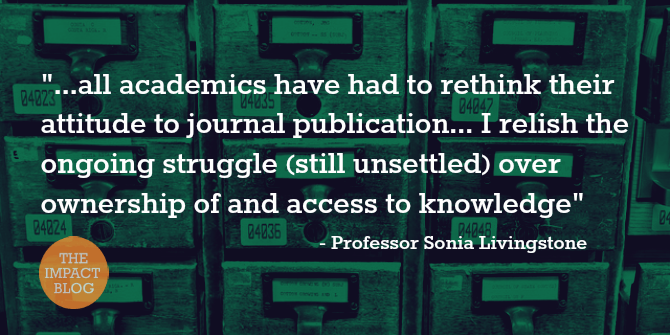
The benefits of Open Access Repositories – Q & A with Professor Sonia Livingstone shares her thoughts on the LSE’s institutional repository, LSE Research Online (LSERO)
oa-week-sonia-pablo

Honest and reliable Open Access Journals in Open and Distance Education from Rob Farrow at the @OER_Hub
Higher Education, Professional Development, Reflections

Digesting #dLRN15: Making Sense of Higher Ed

In the midst of the death of higher ed headlines,the  disruption of HE,  and all the higher ed is broken rhetoric tossed out, a few of us took a pause last week to discuss how to deal with the issues and challenges facing the post-secondary education sector at #dLRN15. I felt fortunate to be able to connect with a number of colleagues to talk behind the buzzwords, and dig into a the real issues challenges our colleges and universities face. It’s time and there is a need to take time for making change in higher education (thanks for the prompt post, @KateMfD). I am not sure that “change” was made, but I am proud to be part of the discussion and momentum that will move some of it forward.

pre-con QaMany thanks to the conference organizers for bringing a few smart kids around the table to discuss the following issues:

  • Ethics of collaboration
  • Individualized learning
  • Systemic impacts
  • Innovation and work
  • Sociocultural implications

The panels, sessions, and keynotes left me with more questions than answers – and that is a good thing. Beyond the formal program, the sidebar chats over coffee/snacks/pints were not to be dismissed As Mike Caufield said, I will need to process discussions had at #dLRN15 for weeks. There were some deep discussions into complex issues that could not be dealt with in just two days.

In our pre-conference meeting, each group picked a question/issue based on the themes the conference was focused on (see above). One the groups developed a question that resonated with me the most:

keyquestionWe always want to push forward with big change and innovative ideas in higher ed, but really do we sometimes forget to recognize the incremental changes occurring within our institutions? How do we acknowledge the slow movements and progress we make in HE or that it is an on-going process of change? There are many micro-movements occurring within our learning spaces to help us evolve. I know there are a number of amazing things happening within our colleges and universities — sometimes it’s these slow contributions that make the difference and we often fail to recognize this gradual progress. Slow and steady does win the race.

FinalPanel

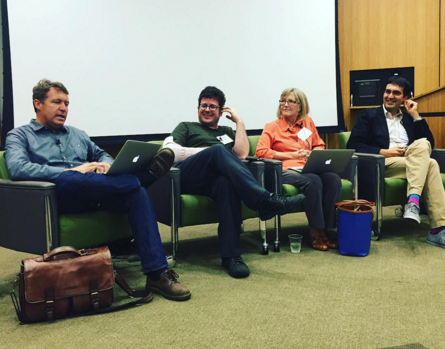
Ethics of Collaboration & Closing Remarks: Random Dude, Mike, Barbara & George

Fast-forward to the end of the conference, after a number of thoughtful conversations, this final panel reminded all of us of the call to action => to provide evidence for higher ed to shift. George Siemens asked us to utilize research to fuel the fight around the issues raised. Beyond collaboration, what are we really going to do with what we’ve talked about now? It’s great to hear that we are not alone in our discussions however we need empirical evidence to support the change ahead in higher education. I appreciated how this panel spoke about getting beyond the dichotomies and encouraged us to think about research in collaboration with our students and work. We really need to listen to our students and amplify their story/voice in the research we do. It’s easier to move and change when there is already momentum for systemic change, and perhaps #dLRN15 titled the scale for a few. There are a number of challenges and questions from #dLRN15 to consider with our research in higher education, including:

  • What were the foundational assumptions and purpose we thought about at the #dlrn15 ?
  • How do the threads of the conference fit together in a framework to support advancing higher ed? 
  • What does it mean to have a US-centrist focus in higher education? How does it impact HE on a global scale? Does it?
  • Was there enough systems-level research or research on systems change at #dLRN15?
  • Is there a need for systematic-change at all levels to advert change in higher ed?
  • How can higher ed research impact practitioner-based work?
  • Is research is the lever for change for us? And does empirical evidence have the potential to change the higher ed system?
  • How can we create a true design jam process — where research is reviewed and reflected?
  • Why should we trust the researchers?
  • We are able to get learners to the institution, but just not to get them through
  • economics of higher education — and the future of higher ed
  • Do we have enough divergent thoughts or ideas shared? Is this an echo chamber or do we need to invite others into the room/discussion for HE? 

This conversation (thankfully) is not over. Here’s a snapshot of my #dLRN15 Reading List with reflections and then some. Let’s keep this conversation and momentum going.