Higher Education, Social Media, StudentAffairs

Reflecting on Values & Identity from #Dalton13

Over the past few days at the 2013 Dalton Institute, I have been encouraged to think about the cross-section of how our cultural norms, use of technology, and institutional practices intersect to support students. Educational reform for higher education is not new; however it was refreshing to have a group of graduate students, faculty, scholars, and practitioners to be part of a thoughtful collective to think deeper about these challenges.

Although the institute’s focus was self-promotion, social media, and student development, it was great to hear a number of conversations emerge about the disruptive forces and potential opportunities to embrace change in Student Affairs. The philosophical narratives and analysis of technology’s impact on identity was enriched by listening to personal perspectives and such varied experiences.
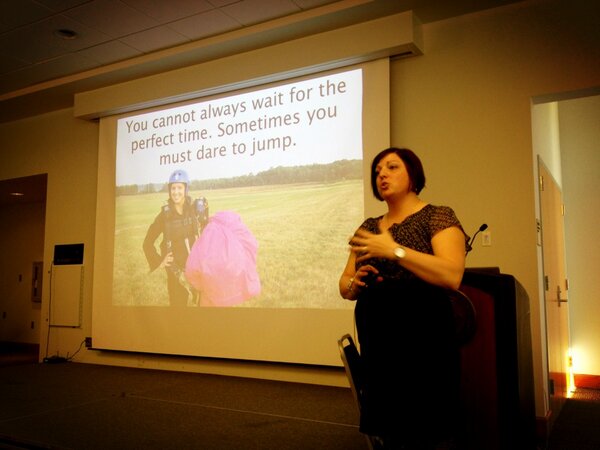
Dare to Jump

Photo c/o @DaltonInstitute {Thanks @vanessaballer!}

As the final keynote of the institute, I gave my “triple threat” perspective as a student, instructor, and professional in higher education. My goal was to share ideas and practices to develop a richer learning experiences; specifically ones that I have valued as an active scholar. So, doing my best to follow the amazing #dalton13 featured speakers – I shared my own narrative, critiques, and insights on how emerging technology can support and challenge student development. I gave some tangible examples and ideas of how to move beyond the gadget, application, or “next big tech thing” by considering ways educators can be actively pushing their learners. I talked about everything from exploration to collaboration, specifically by empowering students to be part of the solution to our institutional challenges.

My #Dalton13 Keynote – Notes & Then Some! (thanks for the photos & tweets #dalton13 backchannel!)

I appreciated the conversations (although some were far too brief!) around identity and student values that  I had with a number of #Dalton13 attendees, especially the FSU HESA graduate students. Although a number of ideas were shared at the institute, I am still left thinking and reflecting about these key questions:

  • How are student values demonstrated in a digital environment?
  • Can educators have an impact on the character development of learners?
  • Is student development really impacted by technology? How so?
  • Does there need to be a shift in how we support our student population on campus?
  • How can our graduate programs do a better job of challenging and supporting scholar-practitioners with “self-promotion” questions?
  • Will higher education cultural norms and institutional practices be changed, or will we be left behind?

#phdchat, PhD, Professional Development

Have Conferences, Will Travel

Apparently when it rains, it pours – for conference proposal acceptances, that is. Since this semester is light on course work, heavy on dissertation proposal research, and I have a amazingly supportive supervisor/department, I will be fortunate enough to be able to attend a few conferences this term.

Laura Pasquini Where is Shee

Here is the rundown for my tentative CONFERENCE travel schedule:

Dalton Institute 2013 http://studentvalues.fsu.edu/2013-Dalton-Institute
Florida State University, Tallahassee, FL  January 30-February 2nd   Follow: #dalton13 Invited Keynote: Student Development 2.0: Optimizing Social Media to Connect Your Campus

AHRD Conference http://www.ahrd.org/ 
Washington, DC   Feb 13-17, 2013
Abstract paper: “A Review of Theoretical Frameworks Explaining Formal Mentoring Relationships”; Thanks to my co-author Mariya Gavrilova-Aguilar who will be presenting

iConference 2013  http://www.iconference.ischools.org/iConference13/2013index/
@iSchools & UNT Host, Fort Worth, TX   February 12-15, 2013  Follow:#iconf13   Our #UNT Social Media Expo team (Andrew Miller, Leila Mills, Mark Evans & I) qualified for the grant from Microsoft Research FUSE Labs on our paper: “Towards a Methodology of Virtually Augmenting a Knowledge Sharing Community of Practice: A Case Study of the Local Food System of Denton, Texas”

South by Southwest (SXSW) Education Conference & Festival http://sxswedu.com/
Panel Discussion: Social Media in Higher Ed – where are we going? with @Bcroke, @tjoosten, & @bradpopiolek
Austin, TX  March 4-7, 2013  Follow: #sxswEDU


Emerging Technologies for Online Learning – Sloan C http://sloanconsortium.org/conference/2013/et4online/welcome
Las Vegas, NV   April 9-11, 2013   Follow: #et4online                               @et4online Conference Planning committee; graduate student instigator


Futures of Academic Publishing: UNT’s 4th Symposium on Open Access https://openaccess.unt.edu/symposium/2013

May 30-31, 2013   Dallas, TX


NACADA 2013 International Conference http://www.nacada.ksu.edu/Events-Programs/Events/International-Conference.aspx
Maastricht, Netherlands   June 5-7, 2013
Workshop: Communication 2.0 Plans: Effectively Engaging Students Online
*Possible poster and panel session involving the #AdvTech survey and Social Media in Higher Education research.*


10th Annual Sloan Consortium – Blended Learning Conference & Workshop http://sloanconsortium.org/conference/2013/blended/welcome 

Milwaukee, WI    July 8-9, 2013


Invited Workshop: Supporting Blended Learner’s Need to Develop Social and Connected Skills Through Digital Pedagogy

Let me know if you will be attending, presenting, or frequenting any of the above conferences. I expect to meet up with the usual [professional/scholarly] suspects I collaborate with, and I look forward to new colleague connections and learning during this conference season.

#phdchat, PhD

I’m Qualified… to Work on My Dissertation Proposal

Today I received the “official” paperwork letting me know that I am qualified to move onto the dissertation/thesis phase of my PhD. At the end of the Fall 2012 semester I defended my ATPI Portfolio, as part of my comprehensive or qualifying exams, and became a PhD Candidate.

This semester (much to my faculty advisor‘s surprise) I am not enrolled in any courses at UNT. The goal for this term is to concentrate on completing my dissertation proposal for a successful defense by the end of April 2013, if not before to be eligible for scholarship and/or other opportunities. Other than a few publications/projects, conference travel, and editing for the Learning and Performance Quarterly, you will probably see my nose deep in research methodology as I fine tune my literature review. Stay tuned…

Professional Development, Reflections

#oneword2013 = ACTION

It’s that time of year… time to consider the #oneword2013. I think I embodied my #oneword2012, fantabulous, so I thought I might as well give #oneword2013 a go. 2013 has a great deal in store for me – there are a number of projects, deadlines, objectives, and initiatives I want to accomplish this year. My one word will move beyond TO DO lists, goals, New Years’ resolutions, or even wishes [sorry Daruma doll!].

Our goal is set for 2013 @FiachraM.Here's to our scholarly work & having our Daruma doll to remind us of our focus.
My #oneword2013 is ACTION! This word will remind me to be active and engaged in what I am doing. A little less conversation, a little more action. This means you should be seeing more verbs in my blog posts, such as researching, writing, moving, publishing, dancing, exploring, adventuring, trying, doing, completing, graduating, and challenging.

I have also decided to use the word ACTION to push me beyond my comfort zone. It’s time to visit new places, to try new things, and to enhance my learning and professional development. Whether it’s a road trip to a new location or learning a new sport (that involves a few bumps & bruises) – then why not? It’s a year for ACTION. Just do it!
Let's ride
What’s YOUR #oneword2013? Add yourself to the list.

Higher Education, Reflections, StudentAffairs

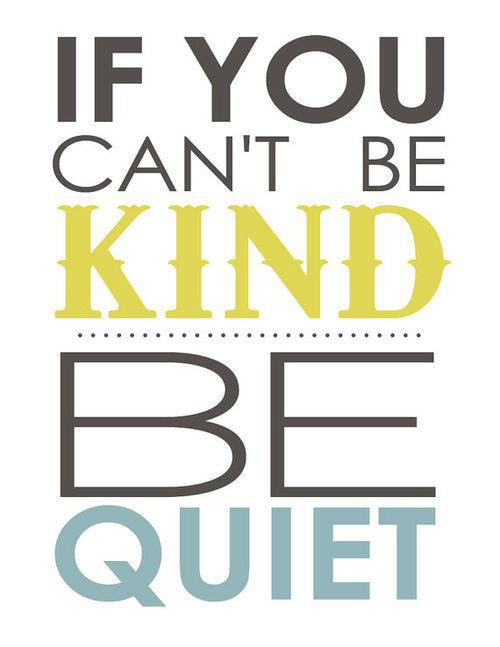
A Kinder Campus to Collaborate

Be KindThere are a  number of students, staff, and faculty in my life who I have gotten to know along my academic and professional journey – as colleagues and as friends. I have been fortunate enough to experience college/university life as a student, professional, and instructor  at various types of institutions and in more than one country.  Each new experience has afforded me to work with insightful colleagues, learn about effective practices, understand a variety of student populations, and consider innovative ways to  support students, staff, and faculty.

In a recent Inside Higher Ed article I shared my thoughts on why our divisions in higher education need to think beyond their own areas. Some of the challenges ahead in higher education will require our departments/divisions to step our of their silos to collaborate and reach shared goals for our institutions. It does require some risk; however I think there are larger rewards for reaching out and conversing with others. In considering some of the opportunities and challenges in higher education – such as financial, legislative, staffing, and more – perhaps it is just the right time to sit down to chat and connect to others on campus. Institutional units will need to put their heads together to think creatively and collectively about some of these issues – if they are not doing so already. 

Over the last few weeks, I have been thinking about what a “kinder campus” means in higher education. I am currently participating in a Collaborative Learning Community (CLC) at UNT that brings students, staff, and faculty together to work towards a shared solution to a problem/challenge at our institution [more to be shared on this later]. Since we have diverse representation on this CLC, as the co-chair with another faculty member we have been considering the following needs to keep our group moving forward:

  • introductions are important – find out what everyone “does” on campus
  • use common language and define terms
  • establish purpose and goals for the CLC
  • share and distribute information/facts that are not known
  • establish a meeting time/day of the week
  • create agendas to guide, not limit the conversation/sharing
  • record meeting minutes for those who might be absent
  • online space for resource sharing 
  • flexibility and understanding for attendance is a must
  • define roles to guide actionable items & project initiatives
  • bringing food/treats is never a bad thing

Although cross-departmental meetings can be challenging, as it requires stepping outside our own domains and sharing across disciplinary boundaries, I have had some of the most productive conversations and ideas to emerge from these gatherings.


Are you part of a collaborative working group at your higher ed institution? What tips do you have to “be kind” and connect with colleagues outside your division/department?