Higher Education, Reflections, StudentAffairs

A Kinder Campus to Collaborate

Be KindThere are a  number of students, staff, and faculty in my life who I have gotten to know along my academic and professional journey – as colleagues and as friends. I have been fortunate enough to experience college/university life as a student, professional, and instructor  at various types of institutions and in more than one country.  Each new experience has afforded me to work with insightful colleagues, learn about effective practices, understand a variety of student populations, and consider innovative ways to  support students, staff, and faculty.

In a recent Inside Higher Ed article I shared my thoughts on why our divisions in higher education need to think beyond their own areas. Some of the challenges ahead in higher education will require our departments/divisions to step our of their silos to collaborate and reach shared goals for our institutions. It does require some risk; however I think there are larger rewards for reaching out and conversing with others. In considering some of the opportunities and challenges in higher education – such as financial, legislative, staffing, and more – perhaps it is just the right time to sit down to chat and connect to others on campus. Institutional units will need to put their heads together to think creatively and collectively about some of these issues – if they are not doing so already. 

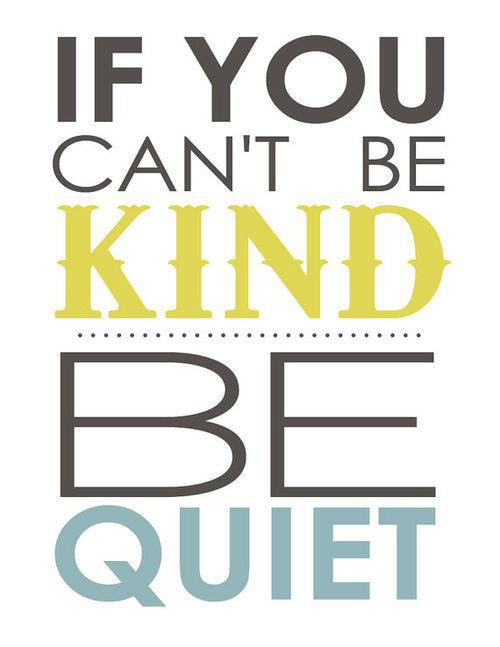
Over the last few weeks, I have been thinking about what a “kinder campus” means in higher education. I am currently participating in a Collaborative Learning Community (CLC) at UNT that brings students, staff, and faculty together to work towards a shared solution to a problem/challenge at our institution [more to be shared on this later]. Since we have diverse representation on this CLC, as the co-chair with another faculty member we have been considering the following needs to keep our group moving forward:

  • introductions are important – find out what everyone “does” on campus
  • use common language and define terms
  • establish purpose and goals for the CLC
  • share and distribute information/facts that are not known
  • establish a meeting time/day of the week
  • create agendas to guide, not limit the conversation/sharing
  • record meeting minutes for those who might be absent
  • online space for resource sharing 
  • flexibility and understanding for attendance is a must
  • define roles to guide actionable items & project initiatives
  • bringing food/treats is never a bad thing

Although cross-departmental meetings can be challenging, as it requires stepping outside our own domains and sharing across disciplinary boundaries, I have had some of the most productive conversations and ideas to emerge from these gatherings.


Are you part of a collaborative working group at your higher ed institution? What tips do you have to “be kind” and connect with colleagues outside your division/department?


#AcWri

#AcWriMo & Accountability to Write

Continuing with my blog “catch up” from the Fall 2012 semester theme…

I thought I’d share my #AcWriMo statistics for the month of November. In conjunction with #NaNoWriMo and #DigiWriMo, there are an avid group of academic scholars and early career researchers who “checked in” virtually to post their #AcWri goals and daily progress in a shared Google document.

So I decided to join in for #acwrimo in November to tackle a few writing projects and goals I had to hit by the end of 2012. This digital check in helped me track what I was doing. My goal was at least 750 words per day, as I found the 750words tool useful and a reasonable daily goal. In the end, my total number of words for the month of November 2012 = 60, 088 words!

I’m not sure if anyone really paid attention to what I was updating in the shared Google Excel doc, but  using 750words.com and tracking my own word count in a public space did remind me that I was not alone in my #acwri and publishing goals. This #AcWriMo word count sharing helped me keep tabs on my progress, and I was able to focus my attention to small milestones I have had for the bigger writing tasks, i.e. grant research, conference paper proposals, manuscript submissions edits, etc.

If you’re impressed with my stats and you want to increase your word count these days, then perhaps  a digital #acwrimo accountability is for you! A growing number of scholars continue to share #acwri goals and word count writing objectives each month here: Academic Writing Accountability 2013 spreadsheet.  Forget New Years resolutions for #acwri intentions, and focus on some S.M.A.R.T. goals for your scholarly writing this year.

#AcWri, OpenAccess

SPARC Addendum & Author Rights for Publishing #OpenAccess

As part of the international open access week last fall, I attended the #SPARC Addendums and Author Rights Workshop facilitated by Kris Helge from the UNT Libraries. As an author and editor for a journal, this session reminded me about the critical stakeholders and expectations for the scholarly publishing process and the need to consider my own author agreements before signing away my work. I am fortunate enough to work and study at an institution who supports Open Access,and #OpenAccess publications.

I am also excited that other academic journals (e.g. JALN) are joining the #OA movement; however there are a number of peer-reviewed, academic publications who hold traditional publisher agreements and copyright limitations close to their heart. If you are an academic, scholarly author, or early career researcher and you have NOT heard about SPARC … then this blog post is for you!

mainheader

After a brief review of copyrights and “traditional publishing agreements,” the workshop reminded me about of the importance of reading author agreements CAREFULLY and THOROUGHLY. A number of authors and early career researchers are just excited to get the chance to publish, that they rarely considering they are agreeing to transfer ALL OF THEIR COPYRIGHTS TO THE PUBLISHER. As researchers, we need to value our intellectual property and have a conversation with the publisher and inquire if any of the publishing agreement is negotiable.

Cue the SPARC Addendum

SPARC. or the Scholarly Publishing and Academic Resources Coalition, advocates for collaboration among authors, publishers, and libraries to correct imbalances found in the academic publishing system.

For a more balanced approach for author and publisher agreements you might want to consider the SPARC Addendum. This is a FREE, legal document that modifies the publisher’s agreement and allows authors to keep specific copyrights related to intellectual property (e.g. articles).  The author is able to retain their desired publishing rights with limited restrictions, and the publisher retains non-exclusive rights to publish and distribute your work. Overall, it allows authors to consider the access of their research, placement of writing into an electronic repository, and get the proper attribution when your work is utilized.

Want to know more about SPARC and #OpenAccess publishing resources? Check them out :


Reference:

Helge, K. (2012, October 24). SPARC Addendums and Author Rights Workshop. 2012 International Open Access Week @ UNT.

Reflections, Social Media, StudentAffairs

#Dalton13 – Google + Interview & Keynote Teaser

Thanks so much to the Dalton Institute (@DaltonInsitute) coordinators, Jessica Dean (@j_deanSAys) & Emily Fox (@EmilyFox526), for hosting my Google + Interview on Tuesday (1/9). I appreciate the great questions from the both of them, and the #Dalton13 backchannel. Everyone really made me reflect and ponder my own technology and student development path – so thanks!


In watching the video recording (which I rarely do), it helped me think more about my talk and how to best shape the focus. Here’s a sneak peak at my #dalton13 keynote title and abstract, for those of you who will be attending the session on February 2nd:

Here is my 2013 Dalton Institute Character Clearinghouse Interview and a preview to my keynote next week:

Title: 

Student Development 2.0: Optimizing Social Media to Connect Your Campus

Abstract: Today’s college student operates in a world that is informal, networked, and filled with technology. Digital interactions are influencing both our students’ characters and values, with increasing access to information and continual contentedness  With the emergence of social web resources, student development professionals and faculty have the ability to engage in experiential and applied learning objectives for their campus environments. Social media creates a space where “everybody and anybody can share anything anywhere anytime” (Joosten, 2012, p.6). Educational paradigms are shifting to include new modes of online and collaborative learning and student-centered, active learning to challenge our students to connect curriculum with real life issues (Johnson, Adams & Cummins, 2012). As new generations of students create and share content on campus, college educators need to realize the potential social media has to construct a culture of participatory, open learning. Emerging technology platforms and devices are beginning to disrupt higher education as we know it. To co-evolve and positively impact our learners’ success, it is critical that we consider the influence and impact social media has on our student populations. This keynote plenary will share ideas and suggested practices to develop a richer learning experience to help students thrive in the changing digital frontier.

References

Johnson, L., Adams, S. & Cummins, M. (2012). The NMC Horizon Report: 2012 Higher Education Edition. Austin, TX: The New Media Consortium.

Joosten, T. (2012) Social media for educators. San Francisco: Jossey Bass.

Reflections

TechKNOW Tools Blog Year in Review – Top Posts for 2012

Although I am off the grid for the holidays, I thought I would thank those of you who share, read, RT, and comment on my TechKNOW Tools blog. I started this particular blog for a learning workshop and seminar back in 2009, but then switched to blog about what I am learning, reading, presenting, and more. I try to share ideas for educators, trainers, and others around the topics of learning, technology, and design. I rarely post a “top viewed” blog post, but I thought I might as well share the favored posts from 2012 as I ponder about blog topics for 2013.

Title Views
I Tumblr For You… To Reflect. 4,184
The Productive & Disruptive Innovation of EDU 1,236
Organizational Learning Constructs 1,219
A @PhD2Published Post: A Book Review is #AcWri Too 962
Online Learning: More Than Just a MOOC 829
LMS/LCMS Review 822
My Prolegomenon to Technology 775
Facebook for Learning Communities: Groups vs. Pages 750
Going Mobile for Academic Advising: Tablets, iPads & Protocols on Campus 550
What’s Your Research Methods Worldview? 527
Social Media Strategies in Student Affairs 527
Backwards Design with TED-Ed 436

I appreciate the community of bloggers who I read and learn from – you inspire and challenge me to think and consider how and when I share. Thanks for reading and engaging with me. All the best in 2013!

Happy-2013-560x420