Social Media

The State of Social Media @ #edu14

State of #SocialMedia in Higher Ed (2)

Looks like EDUCAUSE 2014 (#edu14) is just around the corner.

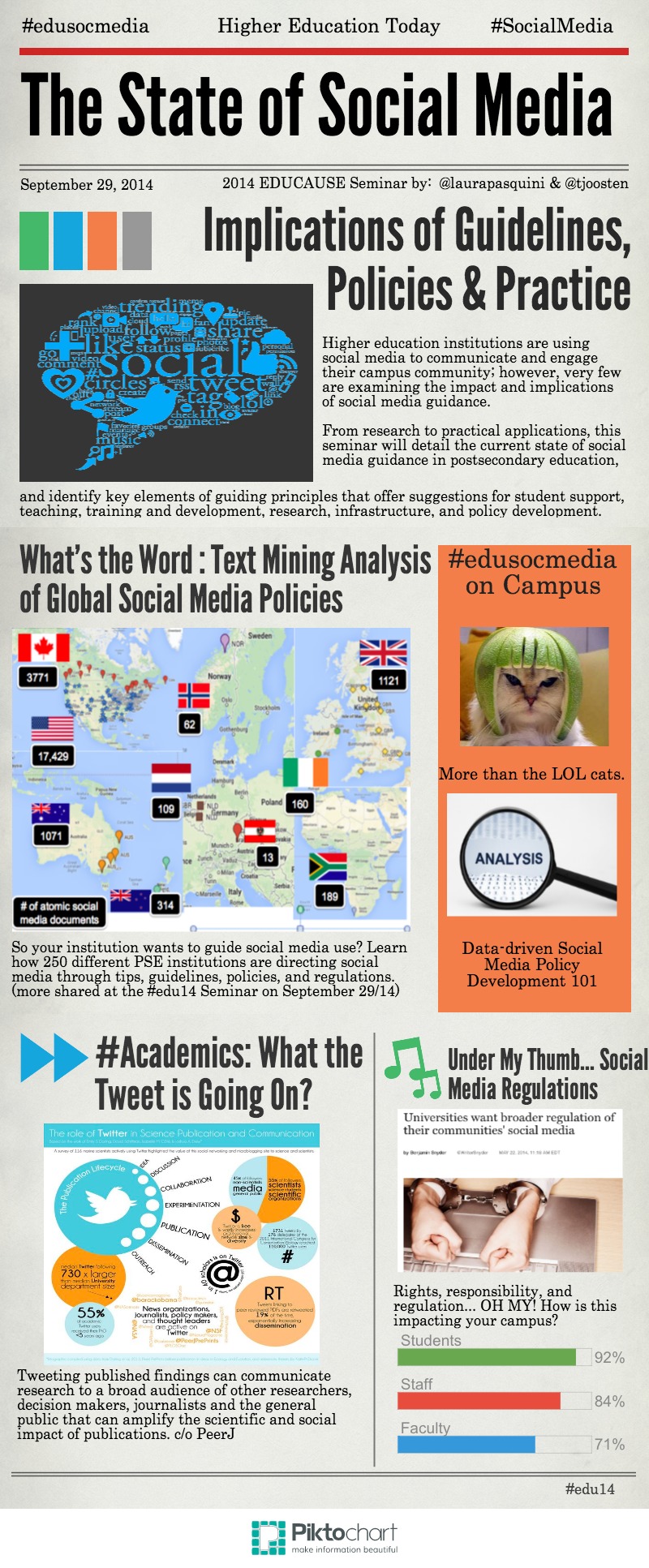
I am heading out to Orlando on Sunday and will be sharing my dissertations research at the #edu14 Virtual Seminar with Tanya Joosten (@tjoosten) on Monday, September 29, 2014. Interested in learning more about it? Sign up (HERE) for the online, half-day seminar to help with your social media planning:

Seminar 2A – The State of Social Media Guidance: Implications of Guidelines, Policies, and Practice in Higher Education (separate registration required)

Higher education institutions are using social media to communicate and engage their campus community; however, very few are examining the impact and implications of social media guidance. From research to practical applications, this seminar will detail the current state of social media guidance in postsecondary education and identify key elements of guiding principles that offer suggestions for student support, teaching, training and development, research, infrastructure, and more.

OUTCOMES
Participants will be able to:

  1. Articulate current higher education social media guidelines and policy document trends, categories, themes, and patterns emerging from research
  2. Identify practical components for effective social media guidelines for campuses
  3. Create meaningful guidelines and policies to positively impact teaching, learning, research, and development at your institution

Since I am only at #edu14 for a short stint,  I plan on making the most of my time. Here is my quick hit list of sessions that are in line with my research agenda:

If I was staying longer at #edu14, I would most likely attend these sessions:

Will you be at EDUCAUSE 2014? What is your focus and objective for attending this year? More importantly, will we be able to have a bit of a chat around these issues. I hope so. See you @ #edu14!


Dissertation, Social Media

Policing Social Media in Higher Ed: Implementing Policies on Campus

During the course of my dissertation research, a few events connected to the scope of my study, and directly to the social media documents I was gathering.  I ended up building a database of 250 post-secondary education (PSE) institutional guidelines and policies to completely understand HOW the PSE sector is ACTUALLY  “guiding” social media. More importantly my research uncovers the organizational identity and cultural values of social media among 10 different countries. {More to be shared post dissertation defense June 12, 2014.}

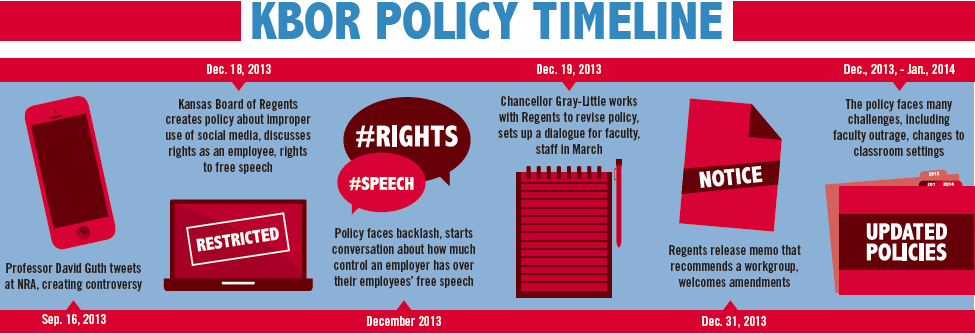
If you are interested in either research around policies and/or social media impact to organizations, specifically post-secondary education, then you most likely heard about the Kansas Board of Regents approval to amend their policy manual back in December 2013 to outline “improper use of social media by University of Kansas faculty.” If not, I have an article and infographic of the timeline of events for you:

KBOR Policies

Image and article credits from The Daily University Kansan ().

Concerns about social media use have been a continual debate and topic for higher education for at least a decade. There have been challenges to using social media accounts for “official” use, faculty blogging, HR employee regulations, or just a general “need” for increased policy implementation among a number of colleges and universities.  The PSE sector is not alone. The K-12 sector and other industries also are keen to social media polices around use and sharing for their stakeholders.

All THAT being said, I have a few questions for you:

  • HOW does (or will) a social media policy influence and impact your institutional culture?
  • Does (or will) your social media policy support your student services or research at your organization?
  • What goals and outcomes do you (or will you) achieve by implementing a social media policy on campus?
  • Does your (or will your) policy consider helpful guidelines, suggested practices, and/or training and development?
  • How does (or will) your social media policy be implemented with regards to teaching, service, and research scholarship?

Or is your PSE concerned with communication control and organizational management?  I would hope your institution of higher learning does not limit user interaction, community engagement, or general opportunities to share opinions.

From my dissertation findings, I hope to continue on this thread of research to identify ACTUAL use, related to the social media guideline and policy documents I have studied, to further understand how participation and interactions on these social media channels influence organizational identity and culture on campus. Is your campus listed in my PSE institution sample? Are YOU interested is getting involved in this type of research? Let me know.

Social Media

Curating Tweets: Social Media Content and Marketing Planning

With the 2014 CASE Social Media Survey results recently published, I thought I’d curate a few of my tweets shared regarding social media content creation and marketing practices. Although this sounds similar to my dissertation research on social media guidance, it is not. This exercise was to provide a few quick resources for an education organization as they redesign their communication (social media, publications, website, etc.) plan and develop a more effective social media content calendar (Example 1 or Example 2).

calendar

Content Creation


Content Sharing Strategy


Social Media Marketing 


SEO & Metrics


Email


Facebook


Twitter


Blogging & Blog Content


A number of these are relate to content sharing, marketing & targeting an audience; however this is not an all inclusive list. I have not included using other social media platforms, like YouTube, LinkedIn, or Instagram, or even provided “suggested reading” books and articles on this topic (yet).

For now, if you have any tweets and websites about said topic, please feel to comment on this post or UPDATE THIS GOOGLE DOCUMENT if you have suggestions. Please feel free to add to and share!

Social Media, SocioTech

#iConf14 Social Media Expo Winners!

I am just back from the 2014 iConference (#iConf14) hosted by Humboldt-Universität zu Berlin  in Berlin, Germany. The iSchools offer a stellar conference for scholars and researchers to share and discuss critical information issues that impact our society.

400 pounds

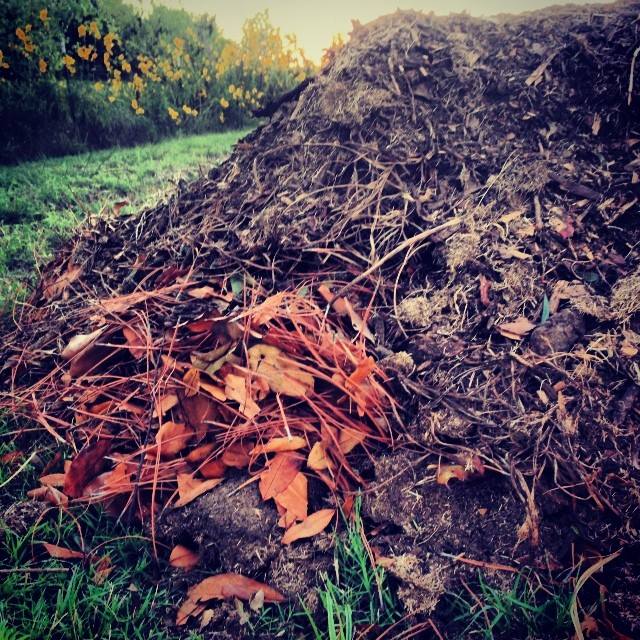
Let me give you the dirt (literally) on our collaborative project we completed for the 2nd Annual Social Media Expo: Community Systems, Sensor Monitoring, and the Internet of Things: A Case Study About Feed Denton Community Compost

compost_1

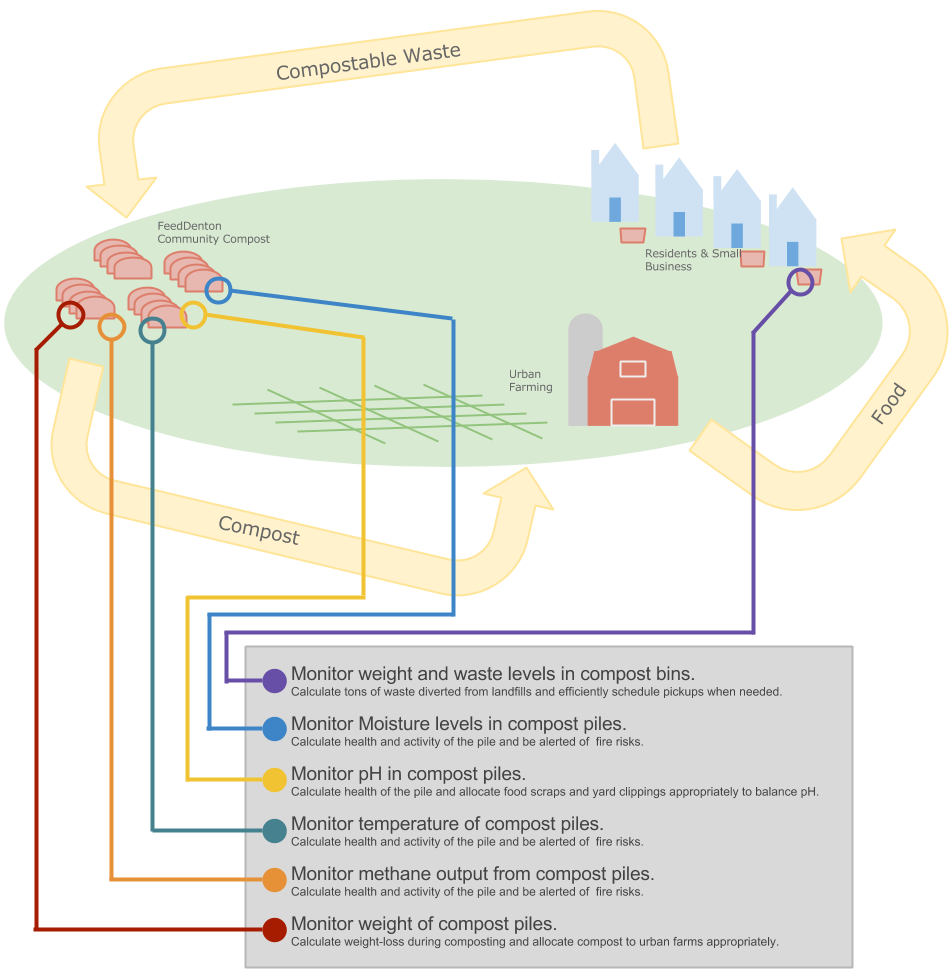
The University of North Texas team demonstrated how an interdisciplinary group from Decision Science, Computer Education Cognitive Science, Information Science, and Applied Technology & Performance Improvement can propose a design solution for a smart city/community for the iConference Social Media Expo. Our abstract paper and video for the competition outlined how social data, the Internet of Things, and smart design can improve sustainability in a community for Compost Denton.

SocialMediaExplo_ID_444_Figure_2

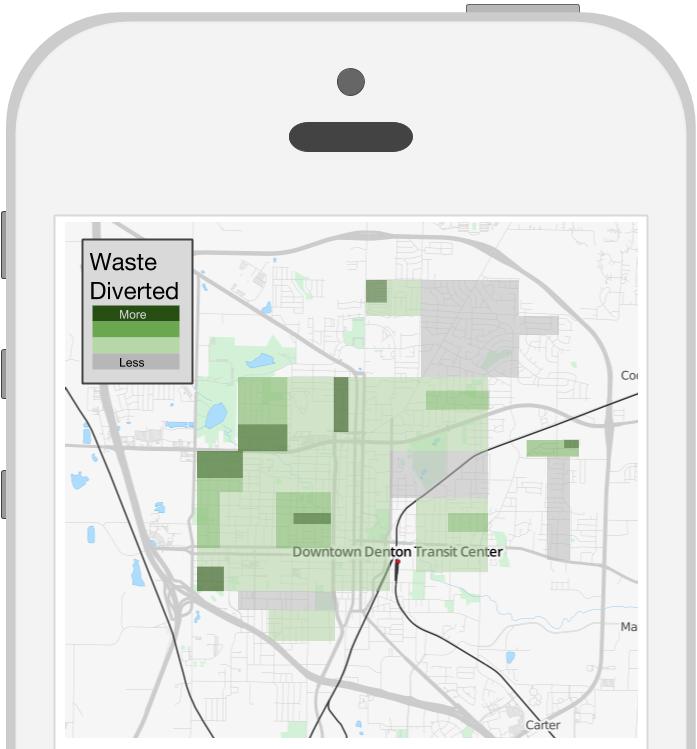
In thinking about information and how data is shared, our team proposed a unique design to make composting and data actionable. In conjunction with a pilot compost project in Denton, TX, our group suggested the use of augmenting this environmental start-up using Arduino sensors, smart technologies, data visualizations, and social media to encourage participation and inform the community about their ecological impacts. When data is socially shared, community members have the ability to see the larger picture for sustainable living by tracking individual and community composting progress.

gamification_loop

Thanks to the efforts made by local volunteers who initiated the Feed Denton Community compost pilot projects, we were able to consider how technological solutions can support and improve this model. Moving forward, we hope to support the business development plan and social media design to help scale and grow the Compost Denton initiative.

Here is the slide deck and our abstract that shares our proposed way to use social data for implementation and gamification for composting in a local community.

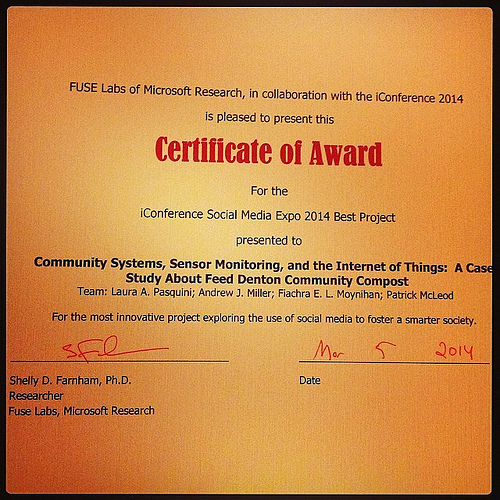
Guess who won? A message from the iConference 2014 daily news update:

“Congratulation also to the University of North Texas Social Media Expo team on
winning the 2014 Best Project Award. The winning entry was titled Community
Systems, Sensor Monitoring, and the Internet of Things: A Case Study About
Feed Denton Community Compost.
 It was authored by Laura A. Pasquini; Andrew J.
Miller; Fiachra E. L. Moynihan; Patrick McLeod. More at
http://ischools.org/the-iconference/awards/

Group Win Take1

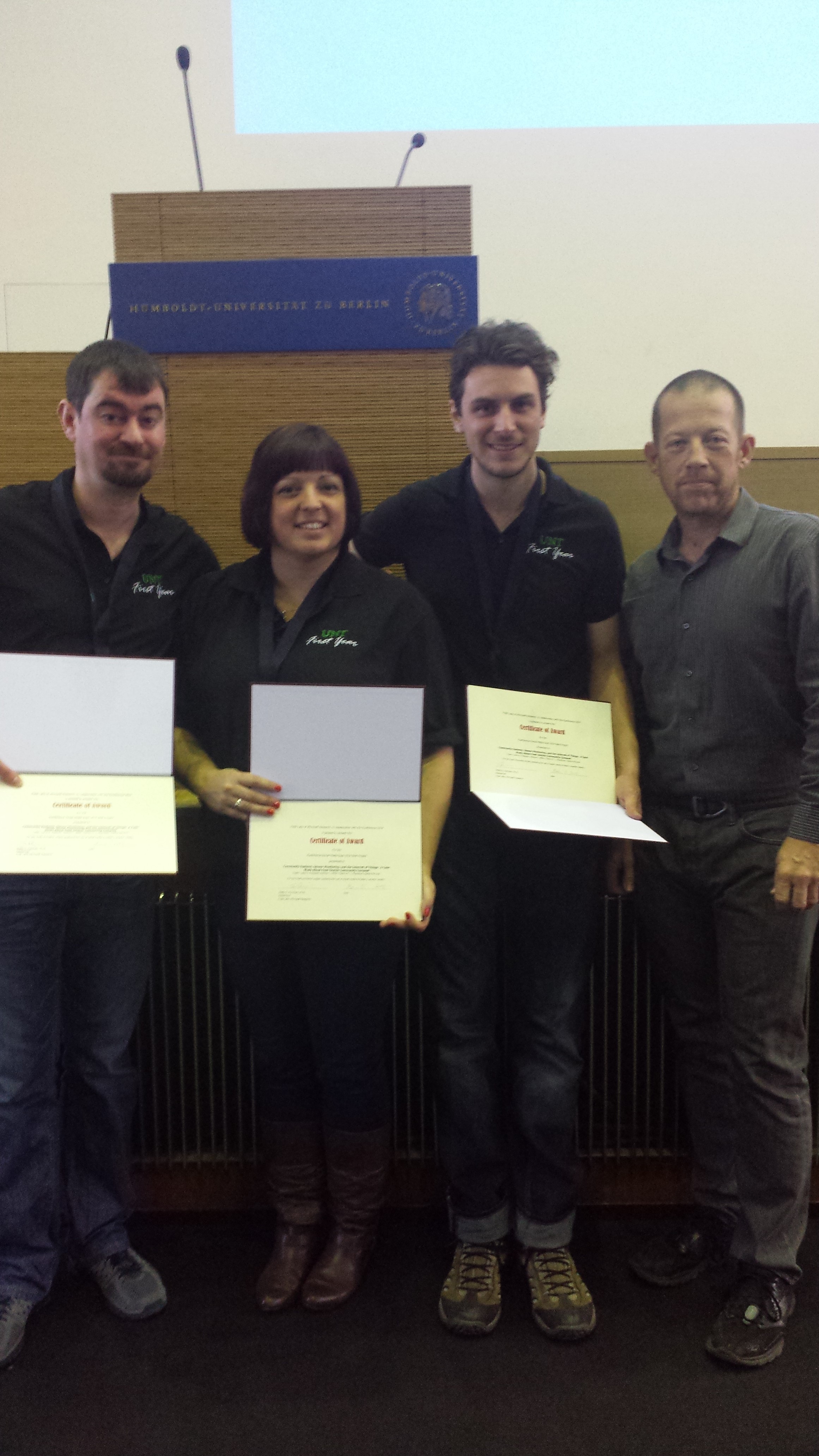
From L-R: Fiachra E. Moynihan (@FiachraM), Laura A. Pasquini (@laurapasquini), & Andrew J. Miller (@findandrew) with their College of Information faculty sponsor, Dr. Jeff M. Allen (@drjeffallen). Not in photo – Patrick McLeod (@misternaxal).

award

Guthen Tag.  Danke für das Kommen zu unserem Social-Media-Präsentation heute. Thank you for your support and this opportunity:

  • Dr. Jeff Allen, our faculty sponsor from Department of Learning Technologies in the College of Information at University of North Texas
  • Shelley Farnham, Organizer/Coordinator/Researcher of the Social Media Expo from FUSE Social Labs at Microsoft Research (along with others who reviewed/judged the expo abstracts)
  • Humbolt-Universitadt zu Berlin our iConference 2014 host with the most.


Abstract: This case study provides on the Feed Denton Community Compost Project. This ethnographic research will review how the collecting of social data and implementation of information communication technologies can provide a smart city infrastructure for this sustainable community of practice through sensor monitoring and the Internet of Things.
Keywords: social media; community of practice; Internet of Things; social data; sustainability
Copyright: Copyright is held by the authors.

Reference:

Pasquini, L. A., Miller, A. J., Moynihan, F. E., & McLeod, P. (2014). Community systems, sensor monitoring, and the Internet of Things: A case study about Feed Denton Community Compost. iConference 2014 proceedings.  (pp. 1-8). In M. Kindling & E. Greifendeder (Eds.) (2014). Berlin, Germany:  iSchools. DOI 10.9776/14010 Retrieved from https://www.ideals.illinois.edu/handle/2142/48831