Academia, AcAdv, Learning Community, Professional Development, Reflections, SAchat

Your Digital Self & Online Community: Let’s Twitter Chat About It #SAchat & #AcAdv

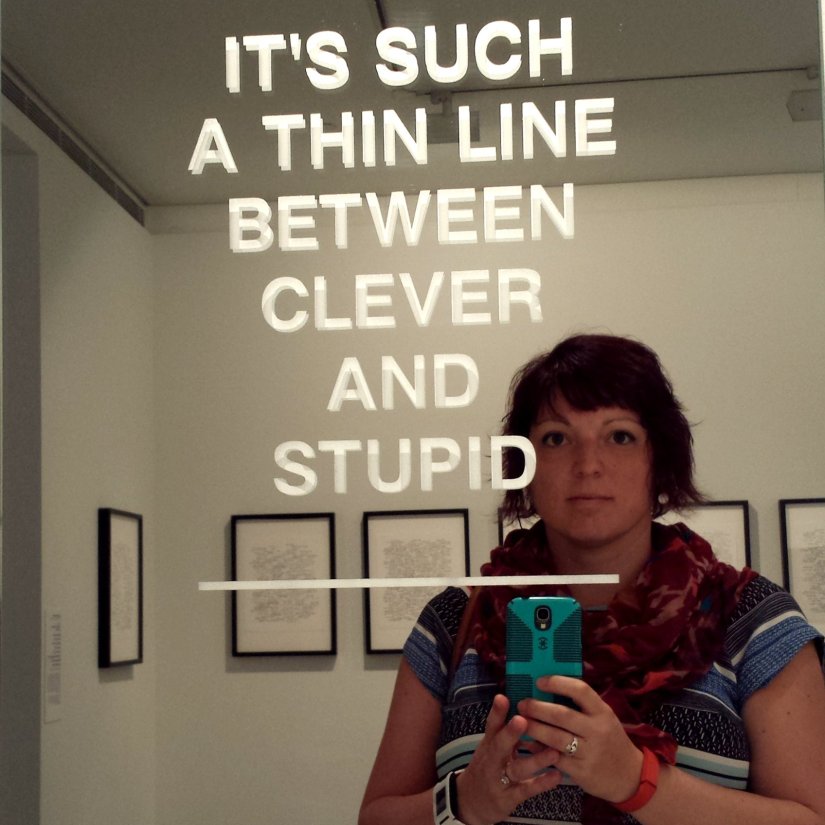
In my last blog post, I asked if you have thought about your digital self and what it means to be a “resident” in various spaces and places online.  This is a common question I pose and ponder with higher ed colleagues and friends I work with, connect with online, meet face-to-face, and now as I collaborate on research looking at Networked Communities of Practice. When it comes to digital participation there is no right or wrong. That being said, sometimes I think of this quote from the Sydney MCA as our lives continue to evolve online:
19500948685_f2386f3e10_oLast year, the TED Radio Hour podcast featured TED speakers who dug into what it means to be digital and connected in its two-part episode, Screen Time, Part I and Part 2The segments dive into how the digital version of ourselves are impacting who we are. There is one quote, in particular, that resonated with me from Jon Ronson’s segment in Part 2:

“The way we are defined on social media, on the Internet, and on Google has become more important than who we actually are as people.”

Ronson’s TED talk presents ideas he writes about in his book So You’ve Been Publically Shamed. His segment “How can our real lives be ruined by our digital ones?” discusses how the online self is impacting our offline self. With the recent US election, there are no shortages of examples of tasteless social media shares and volatile toned posts displayed online. The election is not the cause of this behavior; however, these type of actions and interactions within the higher ed community online are disheartening. If you are presenting your actual self online (and not an anonymous profile/account) the expression “in real life” or “IRL” no longer applies. What we do inside the screen does impact our life beyond the screen. What happens digitally and on the Internet IS IN REAL LIFE (exit distance worker soapbox rant for now).

As Inger puts it very well, there are some “academic assholes in the circles of niceness.” If you are on the social web and in higher ed, there is no doubt that you have witnessed more cruelty than kindness from your colleagues and far less empathy or compassion from your fellow practitioners in online communities.  For many of us who live our working life online, I think “our second selves” are impacting who we are.

Maybe it is also time for some reflection and perhaps a candid discussion about our digital self and our online communities. Thanks to two online communities — #SAchat and #AcAdv — we’re going to get real and talk these issues in higher ed in these upcoming Twitter Chats:

#SAchat TOPIC:

Personal and Professional Identity on Social Media & Online

sachat_logo

Thursday, December 1, 2016 for the DAYTIME #SAchat from 12-1 pm CDT; Follow @The_SA_Blog on Twitter

Let’s discuss what it means to “grow up” professionally online and offline in higher education. What motivates you to interact, engage, and share? What social networks and hashtags do you connect with for your work in student affairs and higher ed? Has being online impacted what you do professionally or personally? Share with us about your own digital identity development, specifically how it influences who you are and your work on campus. 

  • MOD for the DAYTIME #SAchat (12/1/6); TOPIC: Personal and Professional Identity on #SocialMedia & Online [Chat Transcript ARCHIVE]

#AcAdv Chat TOPIC:

Learning Online With And From A Community of Peers
acadv_chat

Tuesday, December 6, 2016 for the #AcAdv Chat from 12-1 pm CDT; Follow @AcAdvChat on Twitter

Let’s have a conversation about how online networks and digital spaces support your professional and personal well-being. Where do you learn online? What communities contribute to your work and success in #higher ed? Tell us how these networked communities offer resources, share ideas, and offer care for you, your professional role, and your personal growth.

If you work in higher education and care about these issues, please join in on one or both discussions on Thursday (12/1) and next Tuesday (12/6). We look forward to hearing what you have to say on the topics…Twitter Chat soon!

Do you have questions about this or our research team, please feel free to contact us or suggest a way you would like to collaborate!

AcAdv, ACPA, ACPAdigital, Blended Learning, Higher Education, Learning, Learning Technologies, Online Learning, Professional Development

Academic Support In A Digital Age

Although you might not advise or support students in an online degree program, there are increasing efforts for teaching and learning technology. Learning delivery and design does impact how we support our students, and we mediate much of our work in higher education using digital tools and platforms. That being said, any adoption of technology should be led with informed decisions on modifying pedagogical methods (Bates, 2015), which is directly related to our advising models and programs we offer in the post-secondary.

Our students want the same flexibility, access, and online support they often receive from instruction and other services they use. When learning with technology, our students are accustomed to having access to student support or other features alongside their online/blended coursework; however, the digital student success side is frequently an afterthought for these technology determinations. We need to have more student success and academic advising programs consider the best technology to provide advising content and service delivery (Steele, 2015) for a more learner-centered approach.

digital DNA

Digital DNA by Adriana Varella and Nilton Malz 

Whether you are leveraging technology to optimize your student support services or your campus is transitioning to either a blended or online learning model, there is both a need and desire to improve technology for academic advisors and student support practices in higher education (Pasquini & Steele, 2015). During your planning, it will be critical for your institution to ask the following questions before selecting technology-mediated environments for advising and learner support: 

  • What technologies is your institution currently utilizing for academic advising or student support?
  • How does your division or unit on campus decide on the most appropriate mode of technology delivery? [Will this be a campus-wide decision?]
  • What factors should be determined when designing technology in advising program and/or student support functional area?
  • What other strategies and structural support might benefit your campus in preparing  staff as they support learners digitally?  (e.g. training, skill development, etc.)

Join me as I discuss this further next Wednesday, September 14th from 12-1 pm EDT for the ACPA Commission for Academic Support in Higher Education (CASHE) Presents Webinar: “Selecting Technology for Advising and Supporting Your Students.” During this online event, I will be sharing a few evidence-based ideas and practical resources to help your advising team address these questions. This webinar will introduce your campus planning group to a few strategies and structures as they select technology for advising and student support. Sign up for this FREE webinar sponsored by ACPA CASHE here: http://goo.gl/tR8THa 

References

Bates, A. W., (2015). Chapter 9: Modes of delivery. In Guidelines for designing teaching and learning for a digital age. Open Text BC.

Pasquini, L. A., & Steele, G. (2016). Technology in academic advising: Perceptions and practices in higher education. figshare. Retrieved from https://dx.doi.org/10.6084/m9.figshare.3053569.v7

Steele, G. (2015). Using Technology for Intentional Student Evaluation and Program AssessmentNACADA Clearinghouse of Academic Advising Resources. 

#3Wedu, Career, Podcast, Professional Development

The #3Wedu Podcast No.7: Job Start Up in Higher Ed

TODAY, Wednesday, July 13th at 3 pm PST//5 pm CST//6 PM EST the #3Wedu Podcasters will discuss issues around getting started and establishing yourself in a new position in higher ed. In previous #3Wedu podcast episodes, we’ve discussed issues that a number of women face as they move throughout their career, including (but not limited to): the double bind, importance of supporting one another, mentoring, the value of care work, and removing organizational barriers for women. This next podcast we dig into the following questions, not in any particular order:

  • What are the things you should do just before and after you start a new job? This may include salary negotiations, benefits, culture and fit.
  • How should you plan your professional development funding? Suggestions and ideas for opportunities for learning and growth in your career.
  • Do you agree with this study or think we have to be “warm” to advance in your career?: To Seem Confident Women Have to be Seen as Warm 
  • We were thrilled to have Mary Niemiec as our special guest for our “Wine Box” rant, rave & review.

Flickr photo c/o lamenta3

Join us TONIGHT with the following show notes http://bit.ly/3wedu7  and by tuning into the LIVE broadcast here:

This blog post is cross-posted at EdTechIsGorgeous and The #3Wedu Podcast blog.

ACPA, ACPAdigital, Professional Development, Reflections

Introducing the 2016 @ACPA Powered By PechaKucha Night at #ACPA16

With the 2016 ACPA Convention just around the corner, I am so excited about the upcoming events and happenings in Montreal. As a member of the #ACPA16 Technology Programming Team (Shout out to our awesome chair Brian and fantastic planning posse: Erica, Jason, Kristen, Amanda, and Idriss), we have been busy organizing a number of program events like the Genius Labs, High Tech Room, and the “PK Talks.” I am really looking forward to the stellar ACPA Powered By PechaKucha night happening on Tuesday, March 8, 2016 from 7-10 pm in Palais des Congrès de Montréal, 517 C & D and on the backchannel with our event hashtag: #ACPA16PK.

acpa16_PK_welcome Join ACPA’s innovation movement and attend ACPA Powered by PechaKucha during the convention! PechaKucha is a simple, but innovative and challenging presentation format where presenters show 20 images, each for 20 seconds that cover a wide range of topics, ideas, perspectives and thoughts. Our goal is to create an exciting and uplifting atmosphere that is full of good thought and new ideas that will help advance the field of higher education. The event will include comfortable seating, coffeehouse lighting, a cash bar, and phenomenal presentations. A number of outstanding presenters who have had an impact on the association and higher education have been selected for this inspiring event will be welcomed by the co-hosts, Idriss Njike and moi! Here is the schedule line-up and a little bit “about the  PechaKucha talk” for this year’s event ACPA Powered by PechaKucha™ event:

UPDATE 3/9/16 – All the TWEETS shared on the #ACPA16PK Hashtag

UPDATE 3/25/16 – Videos from the #ACPA16PK are embedded below… enjoy!

PechaKuka Speakers

ACPA Powered by PechaKucha™ Talks

Paul Brown

Your Professional Network is Powered by Bacon

Many people have said that student affairs is a small profession. In this PechaKucha, the concept of “six degrees of separation” will be explored as it relates to professionals’ historical lineage and connection back to some of the founding members of the field.

Jacqueline Mac

“Where Are You From?”: A Complicated Question

Through exploring the concept of “home” and where “home” is for a group of displaced people for generations, this PechaKucha will attempt to answer the question, “where are you from?” This talk highlights storytelling as a tool for liberation, where voice and perspective is at the center.

Michael Goodman

Honoring Parentless Students

The landscape of families is changing, and “Mom’s Weekend,” “Dad’s Day,” and, “The Office of Parent Programs,” are no longer relevant to all students. Let this PechaKucha serve as a charge to you and your campus, with hope that we’ll adjust our practice to truly support all students.

Sarah Molitoris

Making the Impossible Possible: Lessons from Cirque du Soleil

Explore lessons from the whimsical world of Cirque du Soleil as they connect to student affairs work. Applying creativity to our work allows us to seek new ways to connect, create innovative environments and inspire ourselves, and those around us, to reach for the possibilities.

Hamza Khan

The Stress Paradox

Student affairs professionals are working longer and harder than ever before, and are at the risk of burning out (if we haven’t already burned out). It’s time to re-think stress, develop resilience, and make the transition from overachiever to high performer.

David Ip Yam

Supporting Francophone Students beyond the Classroom

The government of Ontario has made significant investments to increase access to French-language postsecondary programs. Learn about the imperatives and challenges of supporting Franco-Ontarian student life and success in minority settings.

Stacey Pearson-Wharton

Failing to Succeed: A Guide for Falling and Getting Back Up

Everyone has slipped fell down, failed, made a mistake..this is your chance to get back up again and thrive!

Kristen Perry

The Little Red Bird

Sexual assault is a scary and uncomfortable subject. This talk will walk you down a path of recovery, highlighting how a little red bird made a difference. This talk will give a voice to the stories that need to be told, and focus on the importance of empowering and supporting survivors.

PECHAKUCHA INTERMISSION BREAK

Bailey Parnell

“Dark Side of Social Media”: Social Media’s Impact on Mental Health

Yes it can be fun, but what else is happening out in the world of social media? How is it affecting our mental health and the mental health of our students? “The Dark Side of Social Media” will examine the current social media landscape, highlight the undesired effects it has on us every day and provide next steps for how to improve this situation.

Josué “JQ” Quiñones

Touch For Success

The sense of touch is a simple, yet powerful form of communication that can transform campus cultures and lead to more success.

Josie Ahlquist

What the Class of 2020 Doesn’t Know about Social Media

There is a difference between use of social media and leadership on social media, both for the incoming class of 2020 and student affairs professionals.

Tricia Seifert

Success isn’t Linear: It’s Geometric

Popular media cheats students out of the richness of college in its obsessive focus on defining success as a degree that leads to a high-paying career. “Success isn’t Linear, It’s Geometric” will introduce a success in all of its wonderful complexity.

Brittany Williams

Moving Beyond Identity Development: Why #DigitalActivismMatters

Digital activism empowers students and practitioners alike to address issues of social injustice and create multi-media platforms to acknowledge and celebrate their individual, cultural, and political identities. Session attendees will gain contextual understanding of the historical and social environments that inform digital activism, and its implications for campus and popular culture.


Keith Edwards

“Putting My Man Face On”

How do college men understand what it means to be a man? How do they construct their gender identity and manage their gender performance? What consequences does the performance have for others and themselves? What can we learn from their voices?

Stephanie Muehlethaler

Home and Abroad: Global Citizenship Identity Development Through Service Learning

Global Citizen. The term is everywhere in higher education. What does it even mean? Can any student develop and identify as a global citizen? This talk will explore one researcher’s questions around what constitutes a global citizen and whether or not all students have access to this identity.

Craig Bidiman

Revolution on Canvas: Art Therapy, Mental Health & the Job Search

This talk focuses on the often unspoken mental health aspects of the initial post-grad job searching in higher education. I will bring in my experiences with depression and anxiety and how I used art to not only cope with those issues, but also create a powerful networking tool!

#3Wedu, Higher Education, Learning, Professional Development, Reflections

1st Happy Hour Broadcast: Women Who Wine in Education (#3Wedu)

Did you ever have a great conversation at a conference, training event, or networking break about education over a glass of wine? If not, you have missed out. I am grateful that I have a few (of many) ladies who I  share this sort of chat with on a regular basis. Enter the following conspirators — Jess (@jlknott), Tanya (@tjoosten), Nori (@nononi28), and Patrice (@Profpatrice) — who wanted to expand this conversation further into a monthly podcast series for 2016 about higher education over a glass of wine:

Women Who Wine in Education (#3Wedu)

6292912389_b84936e048_oIn planning for a conference proposal, this fine group of ladies discussed a few ideas and issues in higher education that need clarity for the women who work in the field. Collectively, we decided it would be a good idea to discuss these topics further, specifically to:

  • understand the value of women leading innovation in higher ed
  • overcome gender barriers or challenges women may experience in our field
  • enhance the support of women in leadership roles through mentoring and coaching
  • empower women from all levels and disciplines (junior and senior)
  • support women doing amazing things and to provide better recognition for said things

There is no doubt that big ideas often get shared in podcasts. I have been fortunate to be part of a fine podcasting gang in the past [shout out to BreakDrink], and I am looking forward to the future chats with the #3Wedu posse. As Tanya said, we hope to bring forth ideas to banter, share, debate, discuss, and then some on the topics of education over a glass of wine. If you are interested in similar topics, or want to learn what we are sipping out — you should probably join in.  So, grab a beverage of your choice (wine or not), and join the discussion! Our first broadcast is happening here this Wednesday, January 20th from 5 – 6 pm CST as we discuss The Culture of Work* in higher education:


Google+ Hangout event page 
and, of course, join the backchannel conversation:

*Note: Our podcast backchannel notes, tweets, and broadcast will be updated here and on the YouTube channel post-show. Please let us know what you think, and chime into the vino chat. Missing this LIVE version, but want to tune in next month? Save the Date:  Wednesday, February 17th @ 3 pm PST //  5 pm  CDT // 6 pm EST for #3Wedu broadcast #2!