Higher Education, SAchat, StudentAffairs

Digesting the TECH Competency for Student Educators #SAtech

I have been thinking a lot about how we guide and support technology in higher education. Last year, ACPA/NASPA drafted a joint document sharing Professional Competency Areas for Student Educators [PDF], which included a new competency – Technology (TECH). As technology is woven into much the educational practices and student support field work, it is critical for student affairs educators to consider how this competency is guiding their work. Here are the basics about the TECH competency from the report:

TECH Competency Description: Focuses on the use of digital tools, resources, and technologies for the advancement of student learning, development, and success as well as the improved performance of student affairs professionals. Included within this area are knowledge, skills, and dispositions that lead to the generation of digital literacy and digital citizenship within communities of students, student affairs professionals, faculty members, and colleges and universities as a whole.

Professional Development: Professional growth in this competency area is marked by shifts from understanding to application as well as from application to facilitation and leadership. Intermediate and advanced level outcomes also involve a higher degree of innovativeness in the use of technology to engage students and others in learning processes.

TECH (page 33-35) The Technology competency area focuses on the use of digital tools, resources, and technologies for the advancement of student learning, development, and success as well as the improved performance of student affairs professionals. Included within this area are knowledge, skills, and dispositions that lead to the generation of digital literacy and digital citizenship within communities of students, student affairs professionals, faculty members, and colleges and universities.

With the 2016 ACPA Convention (#acpa16) just around the corner, I am looking forward to digging into the TECH competency further in a couple of weeks with Josie, Tony, Paul, Ed, and participants during our the Pre-Conference Workshop: Social and Digital Technology Competency Institute for College Student Educators (March 6th) in Montreal, Canada. I know that we each have some fantastic ideas and tools to share — and we are looking forward to learning from colleagues who will be joining us.

To prepare, I took another look at TECH as a competency earlier today. As a researcher, I naturally started to code these competencies into general themes, to further understand and digest the TECH competencies. Here are the categories I came up with based on themes:

  1. Trends, Research, and Knowledge Development
  2. Leadership, Governance, and Stewardship
  3. Assessment and Implementation for Education and Program Planning
  4. Information Literacy and Management
  5. Applied Skills for Using Technology
  6. Inclusion and Access
  7. Learning and Professional Development
  8. Communication and Collaboration

Many thanks to Brian Bourke for instigating this initial review of the ACPA/NASPA TECH competency last fall with the NASPA TKC Research Group (and kudos for crafting an #SAtech Research Agenda as well!). In returning to the TECH competency for the pre-conference workshop, I thought it would be a good idea to share these broad categories with participants and student affairs. Please take a gander and leave any thoughts/comments in this open google doc of what might need to be adjusted or reconsidered from this first analysis. I welcome comments here (on the blog) or directly in the document.  From this, I hope our student affairs community of inquiry, practitioners and scholars alike, can continue to work together to consider how these competencies can be applied our work with students in higher ed, and measured (as another ACPA/NASPA task force/working group is developing rubrics, etc.) to evaluate the work we do in the field. Google doc: http://bit.ly/SAcompTECH

#3Wedu, Higher Education, Learning, Professional Development, Reflections

1st Happy Hour Broadcast: Women Who Wine in Education (#3Wedu)

Did you ever have a great conversation at a conference, training event, or networking break about education over a glass of wine? If not, you have missed out. I am grateful that I have a few (of many) ladies who I  share this sort of chat with on a regular basis. Enter the following conspirators — Jess (@jlknott), Tanya (@tjoosten), Nori (@nononi28), and Patrice (@Profpatrice) — who wanted to expand this conversation further into a monthly podcast series for 2016 about higher education over a glass of wine:

Women Who Wine in Education (#3Wedu)

6292912389_b84936e048_oIn planning for a conference proposal, this fine group of ladies discussed a few ideas and issues in higher education that need clarity for the women who work in the field. Collectively, we decided it would be a good idea to discuss these topics further, specifically to:

  • understand the value of women leading innovation in higher ed
  • overcome gender barriers or challenges women may experience in our field
  • enhance the support of women in leadership roles through mentoring and coaching
  • empower women from all levels and disciplines (junior and senior)
  • support women doing amazing things and to provide better recognition for said things

There is no doubt that big ideas often get shared in podcasts. I have been fortunate to be part of a fine podcasting gang in the past [shout out to BreakDrink], and I am looking forward to the future chats with the #3Wedu posse. As Tanya said, we hope to bring forth ideas to banter, share, debate, discuss, and then some on the topics of education over a glass of wine. If you are interested in similar topics, or want to learn what we are sipping out — you should probably join in.  So, grab a beverage of your choice (wine or not), and join the discussion! Our first broadcast is happening here this Wednesday, January 20th from 5 – 6 pm CST as we discuss The Culture of Work* in higher education:


Google+ Hangout event page 
and, of course, join the backchannel conversation:

*Note: Our podcast backchannel notes, tweets, and broadcast will be updated here and on the YouTube channel post-show. Please let us know what you think, and chime into the vino chat. Missing this LIVE version, but want to tune in next month? Save the Date:  Wednesday, February 17th @ 3 pm PST //  5 pm  CDT // 6 pm EST for #3Wedu broadcast #2!

#AcWriMo, Higher Education, K-12, Learning, Learning and Performance, Learning Technologies, Online Learning, Professional Development, Research, Training & Development

What *IS* Innovation? Tell us. The CFP for OLC Innovate 2016 (#OLCinnovate) is OPEN!

What *IS* innovation?

This is the FIRST question the Online Learning Consortium (OLC) co-chairs, Karen VignarePaige McDonald and I, asked each other as we started to organize the *NEW* OLC Innovate Conference (#OLCinnovate). Innovation is a BIG word. It means so many different things, to so many different people. Before putting out the call and promoting the #OLCInnovate conference (happening April 20-22, 2016 in  New Orleans, LA), we thought carefully about who we wanted to join the planning team and how to design a conference experience to live up to the “hype” of the word INNOVATE. This conference was formed to merge the best ideas of blended learning (from #blend15) and emerging technologies for online learning (from #et4online); however we expect this meeting in NOLA — OLC Innovate 2016 — to be SO MUCH MORE! Thanks to our AMAZING #OLCInnovate Steering Committee (Tw-shout outs HERE and HERE) we support to hash out what innovation means for the program tracks, developed thoughtful session types for program delivery/format, and, we hope, this conference will model the learning design we all strive for at our institutions and organizations.

logo_516x227

So WHY should you attend #OLCinnovate 2016? [What’s in it for me? you ask.]

  • Advancing learning requires continuous visionary leadership from all disciplines
  • Connecting with multiple stakeholders (i.e. learners, educators, administrators, trainers, researchers, administrators, faculty, policy-makers, designers, and industry leaders) to strategize about the evolving needs at our institutions and organizations
  • Sharing learning and development ideas for all levels – K-12, higher education, & industry
  • Implementing solution-based approaches to learning design, support, and structure
  • Researching and developing evidence-based practices for learning is now more critical than ever.

Our #OLCinnovate planning team thinks this conference is a great opportunity to bring ideas, perspectives, research, and practices to the table to truly support innovation in education. The program tracks are structured around areas we all face with learning and development in K-12, higher education, and industry:

  • Workforce Innovation – connections from K-12 to higher ed to the workforce, curriculum to meet industry needs, partnerships for learning & work
  • Structural Innovation – systemic challenges, organization of education, learning spaces, partnerships between educators & technology solutions
  • Pedagogical Innovation – course & program approaches, methods, design, assessment models, etc.
  • Challenging Barriers to Innovation – digital divide, OER, Open Access, sharing evidence, ethical research collaborations, opportunities and areas for learning growth
  • Propose Your Own Topic – Tell us what YOU think innovation IS or what is missing!

Extend_OLCinnovate_Dec2

The call for proposals (CFP) is OPEN until November 9 December 2, 2015 

Program Format (Session Types) include:

  1. Conversations That Work – why have a panel, when you can facilitate a discussion on the topic with others in the room? Think of questions, discussion prompts, and ideas you want to chat about for this 45-minute session.
  2. Emerging Ideas – Forget the “traditional poster session” we want you to share your practice, research, and work-in-progress ideas in 10-15 minutes to get ideas, feedback, and suggestions during this networking event with both on-site & virtual attendees.
  3. Innovation Labs – 5-minute chat about the concept/idea; 20-minute demonstration; 20-minute applied skills for learning, technology, research, design, or other.
  4. Research Highlights & Trends – 15-minute presentation on your original research; abstract due in November; final, full paper due January 31, 2016 with the potential to be invited to a special issue of the Online Learning journal.
  5. Workshops – these are interactive 90-minute sessions with valuable take-away learning outcomes for participants (free to all conference participants).
  6. Education Sessions – a 45-minute lecture about an idea/concept with 5-10 minutes for Q & A at the end.

There are a number of helpful tips provided on the CFP page; however if you have questions or needs, I would be happy to support you with your proposal development/submission. It is getting the right PEOPLE and VOICES to the table that adds value to any learning and development experience. Please help us invite of institutional stakeholders from education (K-12 and higher ed), and industry (technology, design, L & D, and corporate training) to #OLCinnovate. Share this blog post with your peers, and tell me who the #OLCinnovate planning team should reach out to or invite. Thanks!

SUBMIT A PROPOSAL FOR OLC INNOVATE 2016!

Upcoming announcements of other #OLCinnovate program features, speakers, highlights, and are coming soon… stay tuned for more updates!

Higher Education, Professional Development, Reflections

Digesting #dLRN15: Making Sense of Higher Ed

In the midst of the death of higher ed headlines,the  disruption of HE,  and all the higher ed is broken rhetoric tossed out, a few of us took a pause last week to discuss how to deal with the issues and challenges facing the post-secondary education sector at #dLRN15. I felt fortunate to be able to connect with a number of colleagues to talk behind the buzzwords, and dig into a the real issues challenges our colleges and universities face. It’s time and there is a need to take time for making change in higher education (thanks for the prompt post, @KateMfD). I am not sure that “change” was made, but I am proud to be part of the discussion and momentum that will move some of it forward.

pre-con QaMany thanks to the conference organizers for bringing a few smart kids around the table to discuss the following issues:

  • Ethics of collaboration
  • Individualized learning
  • Systemic impacts
  • Innovation and work
  • Sociocultural implications

The panels, sessions, and keynotes left me with more questions than answers – and that is a good thing. Beyond the formal program, the sidebar chats over coffee/snacks/pints were not to be dismissed As Mike Caufield said, I will need to process discussions had at #dLRN15 for weeks. There were some deep discussions into complex issues that could not be dealt with in just two days.

In our pre-conference meeting, each group picked a question/issue based on the themes the conference was focused on (see above). One the groups developed a question that resonated with me the most:

keyquestionWe always want to push forward with big change and innovative ideas in higher ed, but really do we sometimes forget to recognize the incremental changes occurring within our institutions? How do we acknowledge the slow movements and progress we make in HE or that it is an on-going process of change? There are many micro-movements occurring within our learning spaces to help us evolve. I know there are a number of amazing things happening within our colleges and universities — sometimes it’s these slow contributions that make the difference and we often fail to recognize this gradual progress. Slow and steady does win the race.

FinalPanel

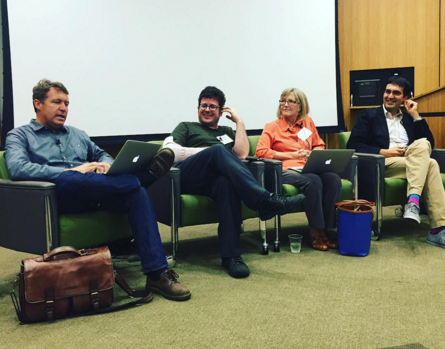
Ethics of Collaboration & Closing Remarks: Random Dude, Mike, Barbara & George

Fast-forward to the end of the conference, after a number of thoughtful conversations, this final panel reminded all of us of the call to action => to provide evidence for higher ed to shift. George Siemens asked us to utilize research to fuel the fight around the issues raised. Beyond collaboration, what are we really going to do with what we’ve talked about now? It’s great to hear that we are not alone in our discussions however we need empirical evidence to support the change ahead in higher education. I appreciated how this panel spoke about getting beyond the dichotomies and encouraged us to think about research in collaboration with our students and work. We really need to listen to our students and amplify their story/voice in the research we do. It’s easier to move and change when there is already momentum for systemic change, and perhaps #dLRN15 titled the scale for a few. There are a number of challenges and questions from #dLRN15 to consider with our research in higher education, including:

  • What were the foundational assumptions and purpose we thought about at the #dlrn15 ?
  • How do the threads of the conference fit together in a framework to support advancing higher ed? 
  • What does it mean to have a US-centrist focus in higher education? How does it impact HE on a global scale? Does it?
  • Was there enough systems-level research or research on systems change at #dLRN15?
  • Is there a need for systematic-change at all levels to advert change in higher ed?
  • How can higher ed research impact practitioner-based work?
  • Is research is the lever for change for us? And does empirical evidence have the potential to change the higher ed system?
  • How can we create a true design jam process — where research is reviewed and reflected?
  • Why should we trust the researchers?
  • We are able to get learners to the institution, but just not to get them through
  • economics of higher education — and the future of higher ed
  • Do we have enough divergent thoughts or ideas shared? Is this an echo chamber or do we need to invite others into the room/discussion for HE? 

This conversation (thankfully) is not over. Here’s a snapshot of my #dLRN15 Reading List with reflections and then some. Let’s keep this conversation and momentum going.

AcAdv, Higher Education, Learning, Professional Development, Social Media

Bringing Our Personality and Self(ie) to the Online

You can’t help but bring yourself to anything you are passionate about. I truly believe this.

Self-Love

This past week has brought conversation and debate prompted from a single blog post about The role of personality in education. Thank you, Martin. This post shared thoughts on how individual courses emerged with a “cult of personality” to drive it towards success, collaboration, interaction and then some. For these type of MOOCs, the learning design was intentionally focussed on the characters (Yes. Dave and Jim are characters… who I adore) to encourage participation and community in the vast Interwebs:

To be successful they often require someone with a well established online network to gather enough momentum, and because creating successful cMOOCs is hard work, that person usually needs to really be central in driving the course forward. And when this works well, it really does create a very engaging learning community.” ~ @mweller

I really think the “chalk and talk” can and should be changed for effective teaching and learning. This will take time, and much more than a popular face and/or a shiny technological platform to alter the culture of teaching and learning in higher education (online, blended OR F2F).:

…an understanding that public service is only a part of identity, and thus the educators who are engaging emergent technologies in the name of pedagogy and content need to be able and willing to build connections and relationships between the formal requirements of the educational system with the personal transformation of each individual.” ~ @RMoeJo

Of course, these ideas about personality and lead personalities are not always representative of the spectrum of learning we see leading these initiatives in higher ed. Social media has created opportunities for unique and powerful collaborations; however they have limited a voice from other populations. There are a number of flaws in elevating pedestals in online learning. Thanks for the reminder Kate, I appreciate her post to consider how we  reward and recognize privilege in our domain:

And on campus, we struggle with personality across student surveys and intellectual property policies: we haggle over the idea of the individual as creator of educational content whose expertise is the guarantee of student experience, while setting up procedures to assure the depersonalisation of content production so that students are protected from the vagaries of charm. Personality: can’t live with it, can’t live without it.” ~ @KateMfD

I am not naive in thinking a number of these social mediums and emerging technologies often influence the network, create affinity groups, and allow lead personalities to dominate. However; I am reminded these same social networks permit educators to customize student experiences, collaborate with researchers, and  build meaningful relationships to scaffold learning and inquiry.

A couple of weeks ago, I shared with student development and academic advising faculty/staff the only way I know how to best engage in what I do. To be myself, specifically, how to model your persona in the online to support student success and professional development on campus. In the #AdvSelfie session, we discussed how it is important, more than ever, to be present and engaged in the digital. More than ever we need to ask questions, be involved, and participate in the backchannel conversations happening at and around out institutions.

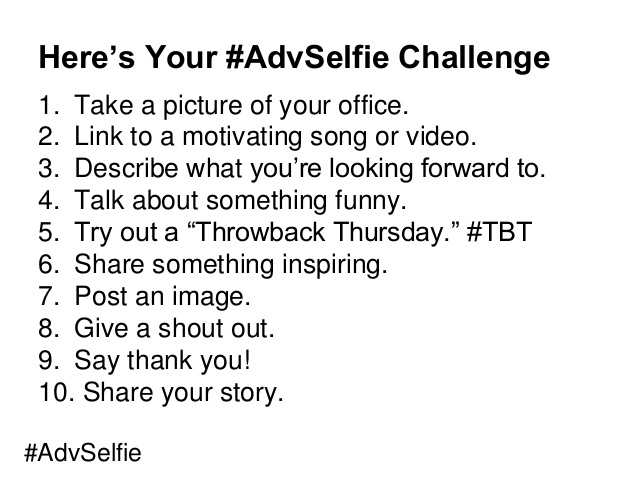
Mentoring and modelling online is the key to success for all in higher education — this includes our academic staff/faculty, administrators, staff, educators, and students of all educational levels. In an effort to engage in this dialogue, I challenged participants at the #NACADAmelb and other professional/faculty in higher ed online to BE PRESENT. This challenge stemmed from a 30-day challenge for those who are active online (or should be). To be the example for others on campus, I encouraged the advising group (hey – we all advise one way or another) to be the example with The #AdvSelfie Challenge – so you should probably participate as well:

the-advselfie-66-638_CHALLENGE

The #AdvSelfie Challenge: Post your best selfie showing how you mentor and model your online persona for your #highered campus (students, staff & faculty) with the hashtag #AdvSelfie before July 31, 2015 at 11:59 pm CDT. Prizes WILL be awarded … so get creative!

the-advselfie-7-638


UPDATE 08-14-15: And the winners of the #AdvSelfie Challenge Are….

Thanks to all of you who participated in The #AdvSelfie Challenge! It’s been great to see how you share some of yourself to colleagues, students, faculty and friends on campus. Kudos for being the digital mentors and models we need in higher ed!

Congratulations to the following “winners” of The #AdvSelfie Challenge:

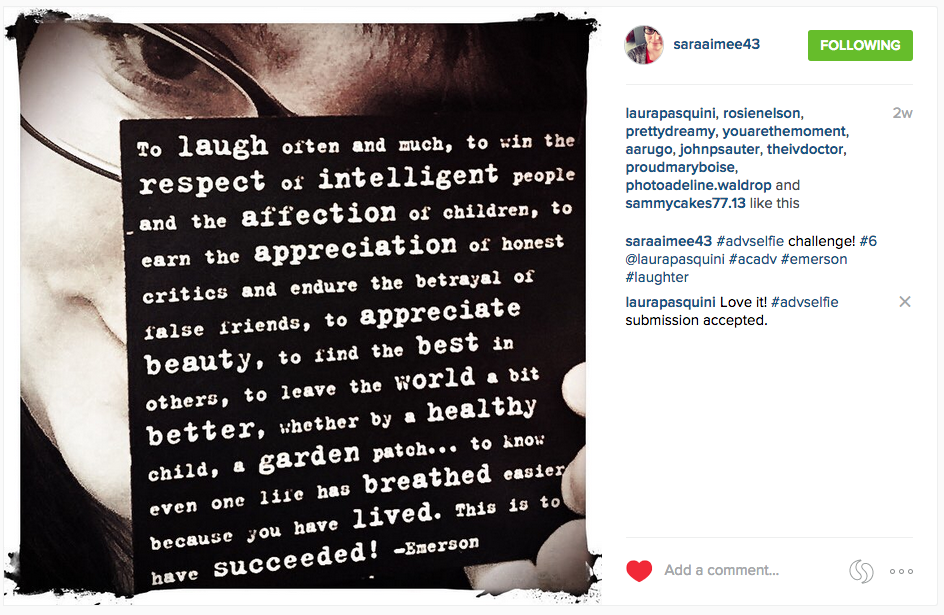
Sara Ackerson, Washington State University Vancouver, WA: For reminding her colleagues and students to laugh and find the best things in others for success.

SaraA

Amanda Mather, Texas A & M University at Qatar: For sharing who inspires and mentors her own advising career in high education.

AmandaM

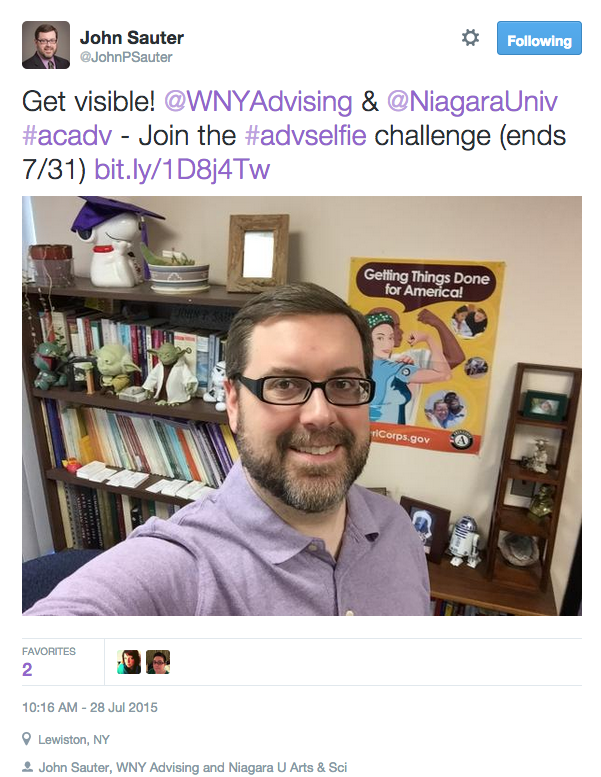
John Sauter, Niagara University, NY: For connecting his university and professional advising community in WNY to be active participants and engage online.

JohnS

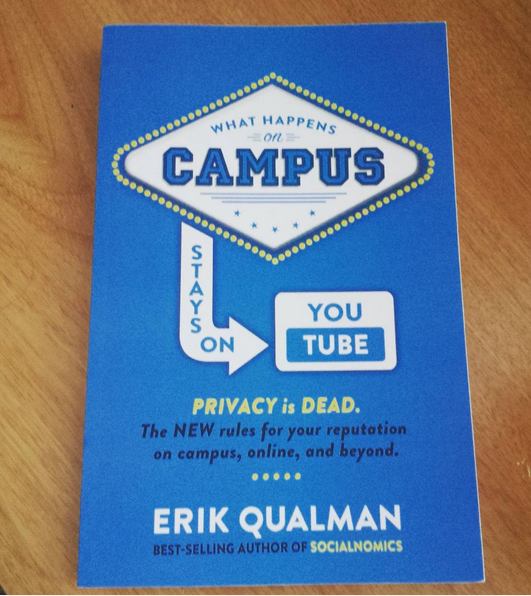
All winners will receive in the mail their own copy of the What Happens on Campus Goes on YouTube book shortly.

WHOCSY_book

Thanks for showing your #advselfie! Keep on supporting & being present online for your campus communities. Happy reading, y’all.