Collaboration, Conference, Learning, Professional Development, Reflections, Research

Innovation for Learning: Submit Your Ideas for the #OLCInnovate Solution Design Summit

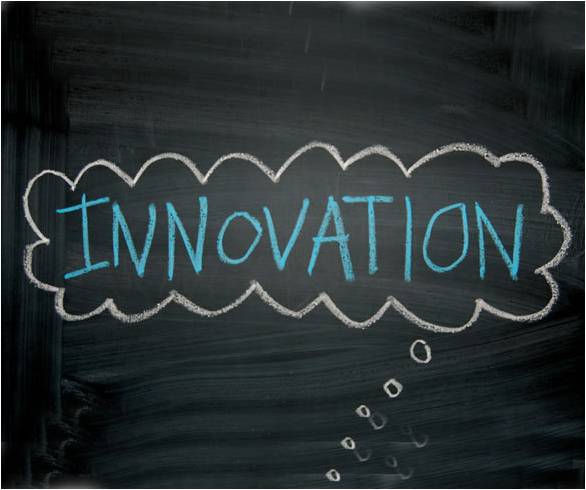
I have been thinking about innovation for a while. What does innovation mean to you? How does “innovation” play into your world of work and learning? The word INNOVATE feels very much like a buzzword when it comes to learning. It may even be as a prime contender found on one of my #edtech bingo cards used for education meetings and conferences. Now the word, innovate, has been placed as a conference title and I agreed to support the planning for this event => Online Learning Consortium (OLC) Innovate. These facts only means I have been reading and reflecting even more about innovation and what this term means. Here are my current ponderings and ideas.
pondering_innovation

Flickr photo c/o Missy Scmidt

A number of organizations are increasingly being influenced or impacted the eagerness to “solve” problems with technology. Last year, George Steele suggested the book, The Innovators, in a conversation about the culture of change in higher education (a HUGE topic I will save for another blog post). This was a well-timed referral and read for me. Isaacson (2014) describes how groups of individuals ingeniously cooperated to innovate in the real world. Say what? Tell me more!

Thinking, designing, and employing innovation for learning is complicated. The story of the collective successes (and failures) of many innovators need to be shared, and continually drafted as there are “far fewer tales of collaborative creativity, which is actually more important in understanding…how today’s technology revolution was fashioned. It can also be more interesting” (Isaacson, 2014, p. 1)

Although The Innovators shares the history of computing, technology, and the Internet, and it really spoke to my inner collaborator and WHY I dabble in the applied inquiry to understand more about online/blended learning technologies and workplace L & D. The collaboration emphasis resonated throughout this text, and I do believe that “no one individual…has truly achieved anything alone.” I concur.

By definition, we always appear to be “innovating” in learning, right? With formal education institutions (K-12 and higher education), professional associations, and learning organizations there seems to be a tension of how to balance innovative ideas or approaches due to structural, pedagogical, and workforce challenges in the real world. We want to be innovative, but sometimes our organizations or “the system” rarely allows this process to unfold with constrictions of our job portfolios/functions, institutional divides, or designated project timelines. As Martin Weller put aptly put it: “the rhetoric for the need for innovation is rarely backed up by practice that will encourage it.” Let’s change that narrative. Why don’t we try to play with a few innovative ideas and concepts together?

For OLC Innovate, there are a few new (I won’t say innovative, just yet) program features that are atypical of a traditional conference format. One of the goals the #OLCInnovate steering committee set out: Let’s have less “talking head” presentations (education sessions, lectures or plenary talks), and more conversations, fun social happenings, places to share, and opportunities to solve REAL problems for online/blended/F2F learning. <<Segue>> THAT being said, here’s a new feature of the #OLCInnovate program I hope you will consider:

The OLC Solution Design Summit (SDS)


Video trailer production credit to Kyle Johnson

The general call for program proposals is now closed (with the peer reviews completed, expect to see the full program online next week); however the call for TEAM Proposals is OPEN for the OLC SDS until February 10, 2016 [Deadline Updated to extend the call for proposals on 1/26/16]. Thanks to the 2015 #et4online unconference banter, the OLC SDS Team (Mike Goudzwaard, Patrice Torcivia, Kyle Johnson, Adam Croom, & Michael Atkisson) decided it was about time to offer a program feature that was less about product and more about process. Together we carved out space in the #OLCInnovate schedule to offer a space for design thinkers, tinkers, and leaders to assemble in order to propose and solve challenges we encounter in learning (in K-12, higher education, and industry-L & D), such as:

As we know innovation takes time and it is a team process. For this CFP we have a broader timeline for this program and we and different expectations for this call for submissions. We are not looking for an end solution. Our team is more interested in WHO is at your interdisciplinary team table and the potential problems you want to work on together. Solutions might appear, but regardless this will be shared opening before, during, and after the #OLCInnovate 2016 conference ends:

Before the Conference

  1. Prospective SDS participants submit a challenge proposal by February 10, 2016: Abstract about the problem, team, and potential solution.
  2. Acceptance notifications will be sent out to teams by February 16th. [Confirm acceptance of your team by 1/22]
  3. Those SDS teams with accepted challenges will submit a solution pitch video for public review on the OLC Innovate 2016 website, by March 11, 2016 (due March 4th).
  4. Experts and OLC Innovate attendees will be invited to view and comment online to provide feedback on the video pitches March 21 – April 1.
  5. SDS teams will meet via an online web conference for 30 minutes to debrief and plan before the with the SDS facilitators in early April, before the #OLCInnovate Conference.

During the Conference

  1. SDS teams participate in a two-part pre-conference workshop session the morning of April 20, 2016. This will involve sharing the challenge and potential solution.
  2. Building on the feedback from the pitch reviews before, the design-thinking workshop on day 1, and comments from the workshop (via educators, edtech experts, researchers, exhibitors, and other SDS teams), you will further develop your challenge statement and solution design “pitch” to present during a concurrent session.
  3. SDS teams will present their solution in a 15-minute (10-minute presentation & 5 minute Q & A) time slot during an OLC Innovate session for all conference attendees.

Post-Conference Winning Team Benefits

  1. The winning SDS team members will each receive a one-year OLC Professional Membership (limited to a maximum of 5 team members). Current OLC members would receive a 1-year extension to their existing OLC Professional Membership.
  2. The winning SDS team members will receive complimentary future OLC 2016 or 2017 conference registration (limited to a maximum of 5 team members, not applicable to OLC Innovate 2016).
  3. The OLC Team will engage the winning team in a conversation of how best to showcase their solution through OLC.  Examples may include a webinar, membership dashboard interaction, OLC social media promotion, etc.

Now that you know the details, I encourage and instigate ALL of you to REVIEW the Solution Design Summit CFP and SUBMIT your team application NOW! Please feel free to share with your colleagues, and instigate innovation among your peers as well. Do you have questions about the OLC SDS? Email our team: sds@onlinelearning-c.org or follow up with either Mike or me. Thanks!

References

Isaacson, W. (2014). The innovators: How a group of hackers, geniuses, and geeks created the digital revolution. New York, NY: Simon & Schuster.

Reflections

#OneWord2016: Focus

With a couple of weeks away from blogging, fewer messages posted in 140-characters or less,  and really unplugging from most things digital over the winter break — I have finally selected my #OneWord2016 to direct my resolution-less new year:

Focus

4546017269_92cfdf070b_o

Flickr image c/o Mark Hunter

My previous #OneWords the past two years were now and simplify, so word focus seems to be on track. Over the past few weeks, I have taken time off “the grid” for some R n’ R. This practice helped me to turn down the noise, and dedicate my time to particular interests and people in my life. I have formed a steady practice with this developing habit, which includes putting my phone on silence, removing notifications, checking email less, and reading less of ALL.THE.FEEDS!! By designating time to specific digital tasks and directing my attention to specific projects, I am able to participate in a type of deep work and by removing the distractions. Not only has this focused practice improved my productivity and decreased my procrastination tendencies, it has also made feel more balanced and pleased with my personal/professional progress.

habit

Moving forward in 2016, I will continue this focused habit. There will be an increased amount of focus on the important things — and this is not just work/research related. Focus on friends, family, and loved ones. Focus on learning fun things. Focus on being curious with my inquiry. Focus on what is going on the now now now. Focus on new opportunities that are ahead. Focus on health and well-being. Focus on contributing to my community. Focus on the things that matter.

What’s your #OneWord2016? Tell me about it.

Reflections

Time to Unplug

Dear TechKNOW Tool Readers & Friends,

For those of you who teach, learn, research, and work with technology ALL THE TIME, you know it is always nice to take a step back to disconnect. I’ve mentioned the benefits of taking a tech-cation before, and it’s about that time of year where I will do it again. As of this post, I will be going “off the grid” and unplugging from the interwebs until next year. I hope you and yours have a lovely holiday and/or just a break from the daily grind. I am so grateful for the brilliant adventures  and opportunities 2015 has presented. I am so very fortunate to be able to team and collaborate with some amazing folks this past year. Thank you all SO MUCH!  I am looking forward to what lies ahead for 2016 after a little R n’ R. You should probably do the same. Until then… be well and happy holidays!

Much love,
Laura

p.s. This includes a pause from our #Ginvent (our the advent calendar o’ gin tastings… if you’ve been following) posts. We will continue these gin-tastic updates in the new year. Slainte!

unplugFlickr photo via nyoin 

#AcWri, #AcWriMo

Developing Writing Habits with #AcWriMo

Woah. It’s December 9th … where did the time go? It feels just like yesterday that I logged in to post my November #AcWriMo goals.

writing blockHere’s me reporting back after the month (Note: this month was extended as I took a bit of a hiatus over American Thanksgiving & #Friendsgiving) on my #AcWriMo GOAL(S):

1. Finish manuscripts in progress for journal submissions:
(a) ICS-Shared resources in CoP
(b) ER – Remedies for learners in MOOCs
(c) Cdn institutions use of Twitter
(d) IHE – social media governance
2. Edit and submit final version of NDSS chapter
3. Complete a draft of the full article for #edusocmedia SOTL systematic lit review publication.
4.  Draft of #advtech data & article on NACADA Clearinghouse/figshare.
5. Research methods & IRB for formal mentoring research project.
6. Outline article for peer review in MOOCs
7. #FashioningCircuits – data for another manuscript outside book chapter

Not bad, eh? Who knew that I just need to hone into #AcWriMo Rule No. 3:

Draft a writing strategy. Plan how to accomplish your goals. Organize your schedule for your uninterrupted #ShutUpAndWrite time. PLAN TO WRITE IN ADVANCE!

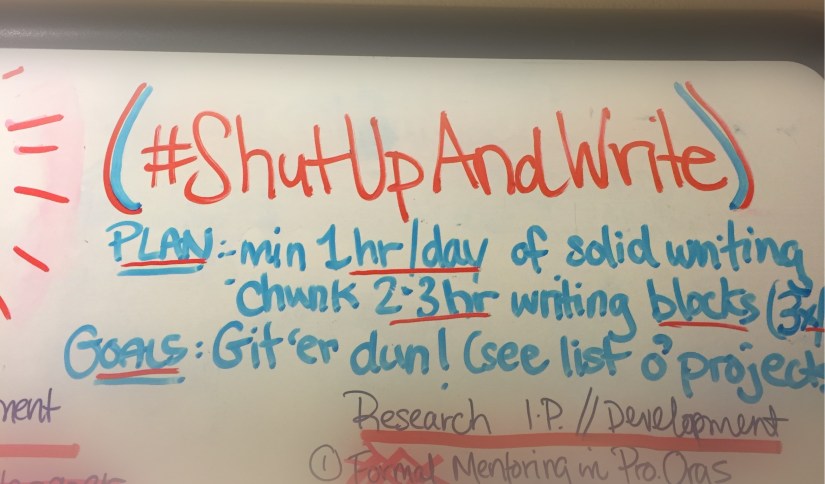
It’s SO true. If you don’t plan to write, you won’t actually write. Here was my overall strategy and plan for the month:

23641853985_c1f2571412_oTo make sure it happened, here are the strategic ways I ensured enough time to write:

  • Write EVERY day. This is hard. You are not always motivated to #AcWri every day — but it really helps you build a writing habit (21 days, right?). I am sure there are other items you can work on to fill the writing time, e.g. editing a manuscript, literature review search, organizing analysis, setting up project task lists, or organizing writing/research materials for your co-authors.
  • Determine the best time of day to write for you! For me, it was first thing in the morning between the hours of 6-10 am. These chunks of the day were for my “quiet writing” time. It could be late at night, or just after lunch. You decide.
  • Don’t check _______ before you start writing. For me the blank included e-mail, text messages, mobile, calendar invites, Twitter, RSS feeds, Facebook streams or news. I went right to the #acwri project that was up for that morning.
  • Block #ShutUpAndWrite time on your calendar (personal and work). Make it for 1 to 3 hours. Make appointments with yourself to write and KEEP THEM. I do this to reserve time on my calendar. This is a meeting for your writing productivity. (I do this with running & yoga as well — also very important appointments I keep).
  • Be an #AcWri Project Manager. Break your writing projects into smaller tasks. This will allow you to check off pieces of your writing, and motivate you as you make progress through your #acwri and research “to do” lists. (Bonus: Need a visual? Put it on a whiteboard in your office or remind yourself on your browser tabs – thanks Momentumdash!]
  • Log Your Time. This can be in your calendar notes, in a journal, or even an excel document — just to note the time in and out of writing. This helps to track when you were most productive, and what you worked on over the past week or month. If you need peer pressure, you could continue to log it here: #AcWriMo PUBLIC Accountability spreadsheet
  • Take A Day (or Two) Off. If you were VERY productive earlier in the week, it’s okay to break from the #acwri habit. Don’t burn yourself out from the writing flow. Or maybe come back to it later in the day if you’re not feeling it. #TreatYoSelf

The good news is I am still making progress on the #acwri goals not crossed off the list from November (and then some). Now that I’m armed with my #acwri plan, I will keep this writing pattern going strong for the winter break. With  ALL THE GRADING complete, nothing can stop me now. [Well perhaps a beach holiday might for a while, but I’m just adhering to #AcWriMo Rule No. 5]. Write on!

#AcWri, #AcWriMo

Learn to Write Badly #AcWriMo

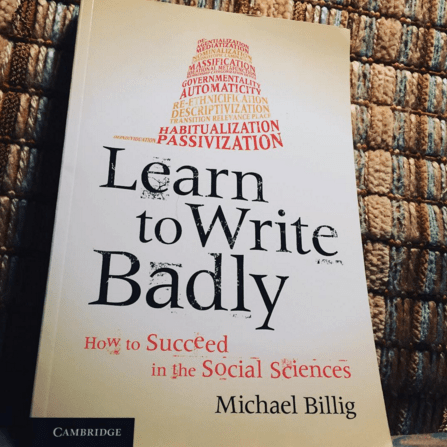
In my writing process of jumping into #AcWriMo for November, I also decided to add reading to my writing goals. I have a number of books on academic writing I’ve acquired, so why not read more about said things to gain motivation, inspiration, and ideas for my writing process. As I’m personally extending my November #AcWriMo through this weekend (because American Thanksgiving interrupted my workflow, and perhaps some other fun things), I thought I would share some words of wisdom from Michael Billig’s book, Learn to Write Badly.

LTWBbook

I may have ordered this book based on the Times Higher Education review or comments from @ThomsonPat‘s blog post — either way it was not fully read until this month. I spent some time away from the screen to visit my parents in Florida and also to get ideas about my own writing practice. This was one of the books I packed and picked up again. A few comments stood out from these posts, which I agreed and wanted to read more about:

  • Academe is part of a wider world in which the use of highly technical, specialised language is endemic and possibly even necessary.” ~Times Higher Education
  • “…in writing in particular ways – doing pretty conventional social science in fact – we actually do poor research. When we turn actions into lofty abstractions, he suggests, we actually gloss over important ambiguities and difficulties and make it hard for readers to understand what has really happened, how or why.” ~ @ThomsonPat

As I agreed on both of these points, I thought — this read is for me. I will be honest. This books is not for all. There’s some historical context to academia that interested me; however there is also a delve into the discipline diatribe nature of certain social science arenas. This is not the fun “how to” light read you might be looking for; however it’s one academics comments and thoughts on how we research, write, and contribute to the cannon. If you’re into that, then you’ll enjoy this book.

A section of the book that stood out to me was in Chapter 2, where Billig discusses “Mass producing research” and the efforts academe puts into this process in higher education:

“Superficially all seems to be well in the academic world, for, along with the increasing student numbers, research is booming as never before and, as we shall see, never have academics been publishing so much. This is an age where research, across all disciplines, is being mass produced. Of course, with more academics working in higher education, one might predict an increase in research and academic publications. However, the books in research is far too big to be accounted for simply by the increase in the number of academics. The job of many academics has changed so that they are now expected to publish as well as teach” (Billig, 2013, p. 19).

[As well as service: mentoring, advising, career development, coaching, program development, course design, and then some.]

Just because there is more research or a “massification” in academic publications — it does not mean it is good. If you have had the chance to do a systematic literature review and citation analysis lately in your field or specific research area — you will soon discover a bunch of okay research gets published. Multiple times. Sometimes the same research, almost written the SAME WAY… just with different titles [I kid you not, and will dig into this topic in a later blog post].

This book had some serious slagging for how social scientists write and perpetuate a particular writing style, paired with a number of interesting historical and discipline specific references. For all academic writers, I think Billing’s (2013, pp. 212-215) recommendations offered in the final chapter provides helpful suggestions for our academic writing practice:

  1. We should try to use simple language and avoid technical terms as much as possible. We should not assume that technical terms are clearer and more precise than the ordinary ones…” – Keep it simple. Could you explain your research to anyone outside your field? Then do it in your manuscripts.
  2. “Try to reduce the number of passive sentences in your writing.” Say what you mean in present terms. Own it. The active voice should be the default voice as your sentences will contain more information and connect with your readers. Build this habit in your writing.
  3. “We should try to write clausally rather than nominally… I would like to see a greater proportion of them [technical terms] as other parts of speech besides nouns.” i.e. we need to express ourselves in clauses with active verbs. Be less passive in how we write (see #2).
  4. “Treat all these recommendations as either guidelines or aspirations, but not as a rigid rules.” You need to know the rules to break the rules of writing. I may have this rule for most things in life. Understanding more of the rules to guide how you draft your publications.
  5. “As social scientists, we should aim to populate our tests – to write about people rather than things.” The goal for this suggestion is to describe and write about what people think, do, feel, etc. How do your research findings actually impact the world around you? What does this mean for your discipline, field, or society?

Reference

Billing, M. (2013). Learn to write badly: How to succeed in the social sciences. Cambridge, UK: Cambridge University Press.