Higher Education, SAchat, StudentAffairs

Digesting the TECH Competency for Student Educators #SAtech

I have been thinking a lot about how we guide and support technology in higher education. Last year, ACPA/NASPA drafted a joint document sharing Professional Competency Areas for Student Educators [PDF], which included a new competency – Technology (TECH). As technology is woven into much the educational practices and student support field work, it is critical for student affairs educators to consider how this competency is guiding their work. Here are the basics about the TECH competency from the report:

TECH Competency Description: Focuses on the use of digital tools, resources, and technologies for the advancement of student learning, development, and success as well as the improved performance of student affairs professionals. Included within this area are knowledge, skills, and dispositions that lead to the generation of digital literacy and digital citizenship within communities of students, student affairs professionals, faculty members, and colleges and universities as a whole.

Professional Development: Professional growth in this competency area is marked by shifts from understanding to application as well as from application to facilitation and leadership. Intermediate and advanced level outcomes also involve a higher degree of innovativeness in the use of technology to engage students and others in learning processes.

TECH (page 33-35) The Technology competency area focuses on the use of digital tools, resources, and technologies for the advancement of student learning, development, and success as well as the improved performance of student affairs professionals. Included within this area are knowledge, skills, and dispositions that lead to the generation of digital literacy and digital citizenship within communities of students, student affairs professionals, faculty members, and colleges and universities.

With the 2016 ACPA Convention (#acpa16) just around the corner, I am looking forward to digging into the TECH competency further in a couple of weeks with Josie, Tony, Paul, Ed, and participants during our the Pre-Conference Workshop: Social and Digital Technology Competency Institute for College Student Educators (March 6th) in Montreal, Canada. I know that we each have some fantastic ideas and tools to share — and we are looking forward to learning from colleagues who will be joining us.

To prepare, I took another look at TECH as a competency earlier today. As a researcher, I naturally started to code these competencies into general themes, to further understand and digest the TECH competencies. Here are the categories I came up with based on themes:

  1. Trends, Research, and Knowledge Development
  2. Leadership, Governance, and Stewardship
  3. Assessment and Implementation for Education and Program Planning
  4. Information Literacy and Management
  5. Applied Skills for Using Technology
  6. Inclusion and Access
  7. Learning and Professional Development
  8. Communication and Collaboration

Many thanks to Brian Bourke for instigating this initial review of the ACPA/NASPA TECH competency last fall with the NASPA TKC Research Group (and kudos for crafting an #SAtech Research Agenda as well!). In returning to the TECH competency for the pre-conference workshop, I thought it would be a good idea to share these broad categories with participants and student affairs. Please take a gander and leave any thoughts/comments in this open google doc of what might need to be adjusted or reconsidered from this first analysis. I welcome comments here (on the blog) or directly in the document.  From this, I hope our student affairs community of inquiry, practitioners and scholars alike, can continue to work together to consider how these competencies can be applied our work with students in higher ed, and measured (as another ACPA/NASPA task force/working group is developing rubrics, etc.) to evaluate the work we do in the field. Google doc: http://bit.ly/SAcompTECH
#3Wedu, Podcast

#3Wedu Podcast #2: Women Advancing in Higher Ed

After our 1st happy hour podcast pilot, our glasses are full! Thanks for those of you who tuned in live or later. The Women Who Wine in Edu (#3Wedu) hosts, Nori (@nononi28), Jess (@jlknott), Patrice (@Profpatrice), Tanya (@tjoosten), are back this month with more wine and banter! Join us for podcast #2 on Wednesday, February 17, 2016 at 5 pm CST.

What’s the #3Wedu Podcast all about ? Here you go:

  • to understand the value of women leading innovation in learning
  • to overcome gender barriers women may experience in higher ed
  • to support women doing amazing things from the field
  • to provide better recognition and platform for said things
  • to highlight women in leadership roles through mentoring and coaching
  • to empower women junior and senior in education
  • do all of the above while enjoying a fine glass of wine with a few delightful ladies

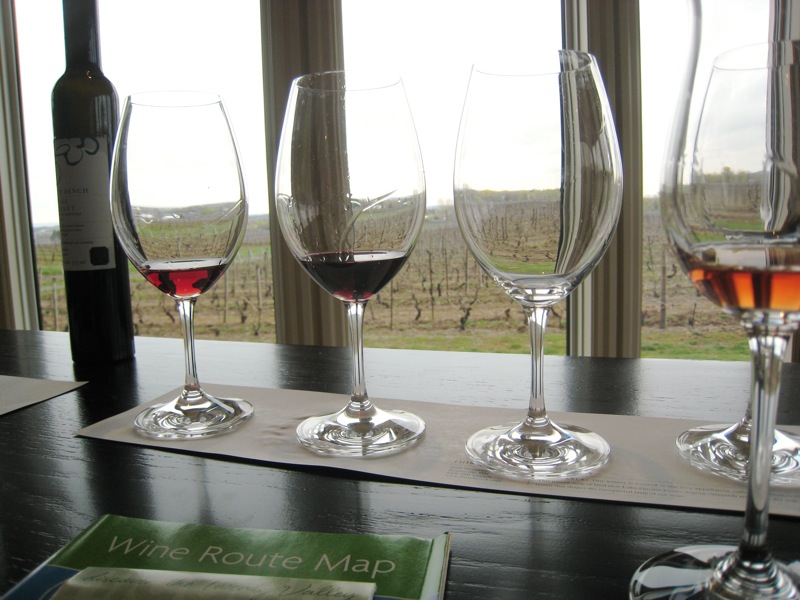
wine routeIn January’s podcast, the #3Wedu ladies discussed the culture of work. During this conversation, we had some back and forth about failure and a few other issues, which led us to this week’s topic of Women in Advancing in Higher Education. Join us for February’s #3Wedu podcast as we chat about imposter syndrome, mentoring experiences, and creating a growth mindset. We are also excited to welcome a “Boxed Wine Rant” from our first guest to the podcast, Amy Collier  (@amcollier).

Grab your favorite beverage (it does not have to be wine — you decide!) and join us to toast on February 17, 2016 from 5 – 6 pm CST as we discuss Women Advising in Higher Ed:

#3Wedu Podcast #2 Google+ Hangout event page and, of course, join the backchannel conversation:

*Note: Our podcast backchannel notes, tweets, and broadcast will be updated here and on the YouTube channel post-show. Please let us know what you think, and chime into the vino chat. Missing this LIVE version, but want to tune in next month? Save the Date:  Wednesday, March 23rd @ 3 pm PST //  5 pm  CDT // 6 pm EST for #3Wedu Podcast #3!

Career, Reflections, Workplace

What’s Your “Ideal” Job?

Have you ever been asked to describe your “ideal” job? Sometimes this comes up in a traditional job interview.  Or perhaps you had someone (a teacher, family member, or friend) just ask you about your career goals. Have you thought about what sort of work drives you? Do you know what sort of “job” you are looking for in your field that best fits you? How does work design impact what you do daily? What inspires you in your day-to-day work? How do you prefer to function and perform?
2644552954_2051baec90_o
These are questions I have asked for years. We spend a lot of time in the world of work. So, it’s a natural to want to know about goals and purpose as a student discusses courses in an academic advising appointment. And it is even more intentional as I have worked with undecided majors and first-year students (undergraduate and graduate) to help with their career exploration journey. This semester I am instructing LTEC 3010: Personal Development (a scaled up version that I promise to blog about soon), where we dive into these specific issues (follow #LTEC3010):
  • Determining avenues to find a job and planning your career
  • Preparing for the workforce: job search, interviews, resumes, applications, etc.
  • Getting started at your new job: dress, etiquette, digital identity, etc.
  • Being productive: Managing stress and time effectively, & working with others
  • Developing your career: Finding support, connecting to professional organizations, strategies & challenges for moving up the ladder, and seeking out mentoring experiences.
I typically ask my students what their “ideal” job and/or career entails — however until recently I haven’t flipped the tables on myself. After a recent prompt from someone, I decided to list what MY “ideal” interests are for the world of work — specifically targeted towards learning and development.
In general, I am interested in understanding how to build and support the complex learning spaces we work in, specifically, as we consider the connection between formal to informal learning (found among K-12, higher education & the workforce). If I was on a formal job hunt, here are a few items I would be scanning for in the job posting descriptions for, specifically to uncover the culture of an organization:
  • The opportunity to research the challenges/barriers facing our learning landscapes, which includes pedagogy and design of online, blended, and F2F learning. In particular, the issues encounter with higher ed faculty and staff development, systemic challenges, and student access. Those organizations who are aligned with a similar research agenda, i.e. new ideas of learning, learning delivery, and approaches to educational models impacting us now and in the future, would entice me to apply.
  • The ability to apply research into practice. This means continuing to be active in the field of learning and teaching, through course instruction and/or training & development programs for formal and informal learning. The idea of creating and delivering curriculum to various campus stakeholders who share similar emerging ideas for learning and research is exciting to me.
  • The opportunity for community building and network development to enhance the work of our segregated professional learning organizations that support higher ed faculty, practitioners, and administrators — specifically distributing knowledge, resources, and issues across these sections of our institutions. I would love to be part of an organization with a broader vision that can offer an avenue for social sharing/learning; considering these contributions beyond a space or place (i.e. conference, event, etc.) to allow for on-going dialogues; being a central hub to cross-pollinate ideas and deal with issues
  • Being encouraged to collaborate and support design thinking as a process for innovation within a team across our higher education organizations and/or institutions. In working with a number of talented and thoughtful folks, I have learned the value of incubating ideas to solve problems and work on shared projects. We need to apply this nimble sort of thinking to our learning organization. We need to value both the process and not just the final product, in an environment that values and encourages sharing.

Those are my general thoughts for my future focus for work, and here are a few practical/personal preferences* for my world of work. Here are a few “must haves” for my ideal job:

  • Shared vision with the organization; appropriate cultural fit that supports the above ideas and goals
  • Balance between shared projects and individual assignments
  • Opportunity to continue current research projects and/or contract instructional assignments within higher education and/or learning institutions
  • Flexibility for my work environment, i.e. ability to work within an office and the allowance to be a distributed team member (telecommutes/remote work)
  • Open & available for traveling to consult, work, train, etc.
  • Preference for project-based work vs. a set schedule of hours per day/week, while offering regular updates and progress reports as required
  • Being both challenged and supported on assignment projects and contributions
  • The culture of learning is embedded to the work functions; learning is not just something we talk, research, or do — the organization lives its mandate for all employees (i.e. professional development, mentoring, coaching, etc.)

*Note: I am sure I have other preferences (wants & needs) for a job — but let’s just start with this list and see what is out there first.

Can you describe your “ideal” job? If so, please share!

mentor, mentoring

Thank Your Mentor Day!

Happy THANK YOUR MENTOR Day! January, with January 17, 2016 being International Mentoring Day, was proclaimed National Mentoring Month by President Obama. This mentoring campaign is targeted at supporting youth and mentoring IRL (#MentoringIRL).

miyagi_mentorAlthough my youth is behind me, I can definitely say a number of people helped to get me where I am today. A mentor can listen, teach, guide, and coach. Can you think about the mentor(s) in your life? Where would you be today had it not been for their support?

Here are a few simple ways the National Mentor Campaign suggests to THANK your mentor:

  1. Contact your mentor directly to express your appreciation;
  2. Express your gratitude on social media; (#MentorIRL)
  3. Pass on what you received by becoming a mentor to a young person in your community;
  4. Make a financial contribution to a local mentoring program in your mentor’s honor; and,
  5. Write a tribute to your mentor for posting on the Who Mentored You? website.

You can download a Thank you card from the Campaign Marketing Materials page.

As a thank you to all the mentors who have supported me and the mentees I have learned from, it would be only fitting to introduce this research study on this topic; however now I am interested learning how mentoring supports professionals and the field they work in:

Exploring Mentoring Programs in Professional Learning Organizations

Have you been part of a mentoring experience? Tell us about it. I am grateful for the informal and formal mentoring experiences, and I would not be interested in this study if it weren’t for the formal mentoring programs I have been a part of (shout out to ACPAgrow & NACADA ELP).  If you have any formal or informal mentoring experiences, please take a few minutes to share by filling out this survey:

http://bit.ly/ExploringMentoring

More about the research study: https://techknowtools.wordpress.com/mentoring/

#3Wedu, Higher Education, Learning, Professional Development, Reflections

1st Happy Hour Broadcast: Women Who Wine in Education (#3Wedu)

Did you ever have a great conversation at a conference, training event, or networking break about education over a glass of wine? If not, you have missed out. I am grateful that I have a few (of many) ladies who I  share this sort of chat with on a regular basis. Enter the following conspirators — Jess (@jlknott), Tanya (@tjoosten), Nori (@nononi28), and Patrice (@Profpatrice) — who wanted to expand this conversation further into a monthly podcast series for 2016 about higher education over a glass of wine:

Women Who Wine in Education (#3Wedu)

6292912389_b84936e048_oIn planning for a conference proposal, this fine group of ladies discussed a few ideas and issues in higher education that need clarity for the women who work in the field. Collectively, we decided it would be a good idea to discuss these topics further, specifically to:

  • understand the value of women leading innovation in higher ed
  • overcome gender barriers or challenges women may experience in our field
  • enhance the support of women in leadership roles through mentoring and coaching
  • empower women from all levels and disciplines (junior and senior)
  • support women doing amazing things and to provide better recognition for said things

There is no doubt that big ideas often get shared in podcasts. I have been fortunate to be part of a fine podcasting gang in the past [shout out to BreakDrink], and I am looking forward to the future chats with the #3Wedu posse. As Tanya said, we hope to bring forth ideas to banter, share, debate, discuss, and then some on the topics of education over a glass of wine. If you are interested in similar topics, or want to learn what we are sipping out — you should probably join in.  So, grab a beverage of your choice (wine or not), and join the discussion! Our first broadcast is happening here this Wednesday, January 20th from 5 – 6 pm CST as we discuss The Culture of Work* in higher education:


Google+ Hangout event page 
and, of course, join the backchannel conversation:

*Note: Our podcast backchannel notes, tweets, and broadcast will be updated here and on the YouTube channel post-show. Please let us know what you think, and chime into the vino chat. Missing this LIVE version, but want to tune in next month? Save the Date:  Wednesday, February 17th @ 3 pm PST //  5 pm  CDT // 6 pm EST for #3Wedu broadcast #2!