#phdchat, Book Review, Higher Education, PhD

I’m “On the [Job] Market”: The Application Process

As academic job postings and other employment opportunities are becoming available, I decided it was time to prepare my own application materials and announce that I’m ON THE JOB MARKET. It should be no surprise to many as I am ABD (not a title), and I have been diligently working on my dissertation— so there is really no better time for a job search.

Well I was going to save this for holiday reading...but it looks like I'm On The Market NOW #phdchat I’ll be honest. I’m quite accustomed to the thrill of the job hunt (I am in my 3rd position of employment, since I have moved to Texas 5 years ago); however the academic job search has upped the ante. My future career planning involves a potential re-location (either in the US or abroad) and new career beginnings (either as a junior faculty member, research or other), which means this job search and application process is being treated like a job itself.

To prepare for my job search and career planning…

I have been talking to many researchers in the field, administrators in higher education, companies who seek my support, current faculty (off and on campus), mentors, and peers over the past year [Thank you for these discussions and talks – you know who you are]. More than not, many are quite open to offer advice, share professional experiences, edit my application materials, provide a reference, or send potential job postings my way (hint, hint). In my spare time, I have been reading Barnes’ (2007) “On the Market: Strategies for a Successful Academic Job Search,” specifically,  Chapter 4: The Application Process. This section of the book includes great questions to ask and think about before the application process, and examples of deciphering what academic job postings mean to decide what I want. Here are some current, pre-application questions I am currently pondering:

  • What type of position am I most interested in?
  • What sort of institution or organization do I want to work for?
  • Where do I want to live?
  • Do I want to apply for administrative or faculty track positions?
  • Who will write my reference letters?
  • Will my academic search focus on research or teaching institutions?
  • What is my best academic “fit” for department?
  • Do I want to look beyond higher education & academia?
  • Who will I connect to discussion the application process?
  • What is my timeline and schedule for applications?
  • How will I best organize a joint career search with my partner in crime?

Fortunately, most of my academic application requirements are “works in progress” from my doctoral program and portfolio requirements (Thanks #untLT department!) these past few years. My current objectives are to edit and prepare materials I have for my academic job search and application, including:

  1. Cover Letter
  2. Curriculum Vita
  3. Letters of Recommendation
  4. Writing Samples and Other Supporting Documents
  5. Teaching Portfolio (Dossier)
  6. Social Media Spaces & Places
  7. Application Schedule – to track applications & submissions

This chapter also includes helpful templates for CV’s and cover letter formats. I plan on re-tooling and modifying my current application materials based on position type and job description, so a review of these examples were helpful. Here are a few suggestions for cover letter writing items to include – 17 elements for the academic cover letter:

17 elements of the academic cover letter. #phdchat

Do you have academic job search advice? Tips on the application process? Considerations for the academic research and faculty positions? Potential openings I might be interested at your institution? Let me know. Academic job search advice is welcome.


Reference:

Barnes, S. L. (2007). On the market: Strategies for a successful academic job search. Lynne Rienner Publishers.

#AcWri, #AcWriMo

My #AcWriMo Goals for November

acwrimo1-01

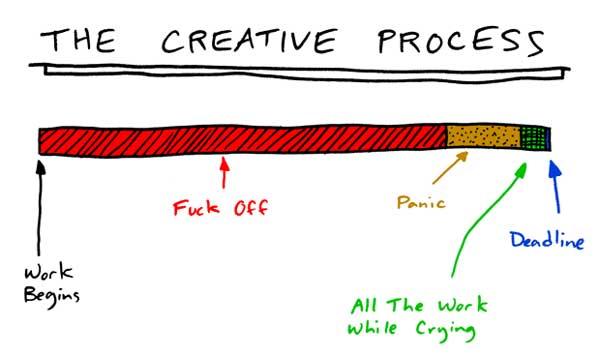
Happy Academic Writing Month (#AcWriMo)! November IS #AcWriMo… however as a student every month is #acwrimo… BUT in an effort move forward on a few writing deadlines and projects I thought this accountability would change my typical “creative process.”

The Creative Process

#AcWriMo main features include:

  • Setting academic writing goals
  • Writing down said goals & tracking (see the AcWriMo 2013 Writing Accountability Spreadsheet) collectively
  • Strategy sharing for #AcWri
  • Sharing my progress (will be weekly for me)
  • WRITE!!!! (most important)
  • Show results (see spreadsheet & future blog posts)

I have participated in this #acwrimo in the past, and I thought that this type of peer/social pressure was very productive. I liked the idea of declaring goals, being accountable and tracking my writing progress in chunks. I also think that this will be a very useful practice to step up my word count and complete writing projects that need to be completed.

My #AcWriMo Goals for November:

  1.  Complete my doctoral dissertation proposal so that it is ready to DEFEND to my committee.
  2. Finish Technology in Advising for Higher Education manuscript to submit to the NACADA Journal.
  3. #iConf14 Social Media Expo – paper & video for conference.
  4. Complete a minimum of 2 blog posts per week – on writing progress and projects.

Here is how I plan on achieving these goals:

  1. Write for a minimum of two 60 minute time blocks per day.
  2. Have a total of 750 words per day written.
  3. Logging my projects, words written, and more to the #acwrimo accountability spreadsheet.
  4. My Tweeps & other social networks can call me out and inquire at ANY time to see how I’m doing.

Are you going to JOIN IN THE #AcWriMo FUN? You should!

#phdchat

The Dissertation Proposal. #phdchat

For those of you who are not aware, I’ve been grinding away at my dissertation proposal the last couple of months. This (as I am told) is 80% of the work towards the final dissertation product. The plan is to complete and defend this piece of literature prior to March 28, 2014 (so that I can graduate and be finished in May 2014 – YAY!). For my specific doctoral degree program, the faculty in the Department of Learning Technologies provided their doctoral candidates with a rubric to guide the dissertation proposal process. Here it is:

I thought I would share a couple of key pieces of advice I have found to be quite valuable so far in the “proposing” stage from Appendix A: The Dissertation (Gray & Drew, 2008):

#163: PUT A LOT OF EFFORT INTO WRITING YOUR DISSERTATION PROPOSAL. The proposal provides two important payoffs:

  1. It usually provides one or more chapters of your end product, the dissertation.
  2. It is a contract between you and your advisory committee on what you must do to receive the degree. In general, if you do what you promise in the proposal, the committee should sign the final document. If, because of circumstances, you cannot accomplish all you set out to do, you have the basis for negotiation.

#166: IN DOING A LITERATURE SEARCH, use the “chain of references.” Begin with one or two recent articles (a survey article helps!). Look at the references that are cited. Then read those publications that seem apropos and look at their reference lists. Some things will pop out often. These are usually (but not invariably) the classics in the field that you must reference. Proceed from reference to references until the law of diminishing returns takes over.

Lessons to Learn #phdchat

In Gray and Drew’s (2012) 2.0 version of this same advice book for graduate students, they include a whole chapter on The Dissertation. There are a few useful tidbits for those of us who are (what I lovingly call) “dissertating”:

#19: PROBLEM-SOLVING MODE. Don’t assume that if you are having trouble defining a dissertation topic that the entire dissertation process will be that arduous. Once you define the topic, you are in problem-solving mode, and most people do well in solving a problem once they know what the topic is.

#26: MATCH THE LITERATURE SEARCH TO THE DISCUSSION OF RESULTS AND CONCLUSIONS. You may find that as your dissertation progresses, some parts of your literature search are really irrelevant to your research. In this case, you should be ruthless. Despite the brilliance of your pose and the long, tedious hours you put into creating the material, you must delete these pearls. Of course, you should save what you don’t use as part of your file of references so you can use it over and over in future publications.

Right now, I am spending much of my time refining and working on #163 and #19. I just met with my faculty advisor, Dr. Jeff Allen, to review my chapter three research methods and discussed how to develop the recipe for this section. Stay tuned as you will soon learn more about  my topic and direction I am going, and hopefully I will get some input when I crowdsource my data collection in the very near future.

For those who are currently developing your dissertation proposals as well OR those who have successfully defended your dissertation proposals, what sort of advice and tips would you give? Please share!

Reference:

Gray, P., & Drew, D. E. (2008). What they didn’t teach you in graduate school: 199 helpful hints for success in your academic career. Stylus Publishing, LLC.

Gray, P., & Drew, D. E. (2012). What They Didn’t Teach You in Graduate School 2.0. Chronicle of Higher Education.

EdTech

Ed Tech Career (#EdTechCareers) Forum: Questions, Discussions & Advice at #et4online

In preparing for the upcoming Emerging Technology for Online Learning (#et4online) conference this Spring, the planning committee discussed how to augment the Career Forum to better support graduate students and junior faculty who are job searching. The Career Forum will post jobs,  offer on-site interviews, and also host a series of  career development round table discussions with experienced scholars, researchers, and instructors in the educational technology field.
et_attending_400x100
Last week, Dr. Kevin Grazino and I began brainstorming potential round table discussions to host at the upcoming #et4online conference. These panels will provide a space for emerging scholars to meet and gain career insights from experienced professionals/faculty.
CAREER FORUM ROUND TABLES (#EdTechCareers)
Career Forum Round table – EdTech Career Tracks

Tuesday, April 9 – 2:30pm-3:20pm

There are a number of career directions and opportunities to apply for with your graduate degree. Join this roundtable to ask career questions and gain advice on which path is right for you:

  • Higher Education Faculty/Instructor – teaching vs. research institutions
  • Industry Research & Development
  • Consulting/Other
Career Forum Round table – Career Skills
Wednesday, April 10 – 10:10am-11:00am
In developing career skills for the educational technology field, it is critical to get involved and connected to both professional affiliations and peers. Come learn about how to build your CV and also showcase your experiences, as we talk about:
  • Professional Networking
  • Getting Involved in Professional Organizations
  • Scholarship Development – teaching, publishing, service
  • Interview Advice
Career Forum Round table – Career Applications

 Thursday, April 11 –  10:10am-11:00am 

Applying to your first faculty position? Looking for industry positions? Perhaps you should consider how you present yourself via your job application. Join us as we talk about things to consider when developing your career materials, including:

  • CV & Resume Writing
  • ePortfolio Development
  • References

If you are attending the Emerging Technology for Online Learning (#et4online) conference, and you are able to share your career experience with graduate students and junior scholars, PLEASE consider donating 50 minutes of your time for one of the following round tables. 

For graduate students attending #et4online, please consider attending at least one of these Career Forum Round tables to ask questions and seek out career advice. Do you have questions or things you want to learn from this? Let me know.

#phdchat, PhD

I’m Qualified… to Work on My Dissertation Proposal

Today I received the “official” paperwork letting me know that I am qualified to move onto the dissertation/thesis phase of my PhD. At the end of the Fall 2012 semester I defended my ATPI Portfolio, as part of my comprehensive or qualifying exams, and became a PhD Candidate.

This semester (much to my faculty advisor‘s surprise) I am not enrolled in any courses at UNT. The goal for this term is to concentrate on completing my dissertation proposal for a successful defense by the end of April 2013, if not before to be eligible for scholarship and/or other opportunities. Other than a few publications/projects, conference travel, and editing for the Learning and Performance Quarterly, you will probably see my nose deep in research methodology as I fine tune my literature review. Stay tuned…