Conference, EdTech

This Is My Recap of #et4online

Another year at the #et4online conference brings various researchers, educators, practitioners, and then some to talk about the online learning landscape. I presented a session, attended a few workshops & sessions, learned a great deal (see my notes taken on Twitter), and connected to some new ideas and people. Each time I attend #et4online I find myself surrounded by some of the usual #edtech suspects who banter about pedagogy and talk about learning — rather than just the technology… and this is refreshing.
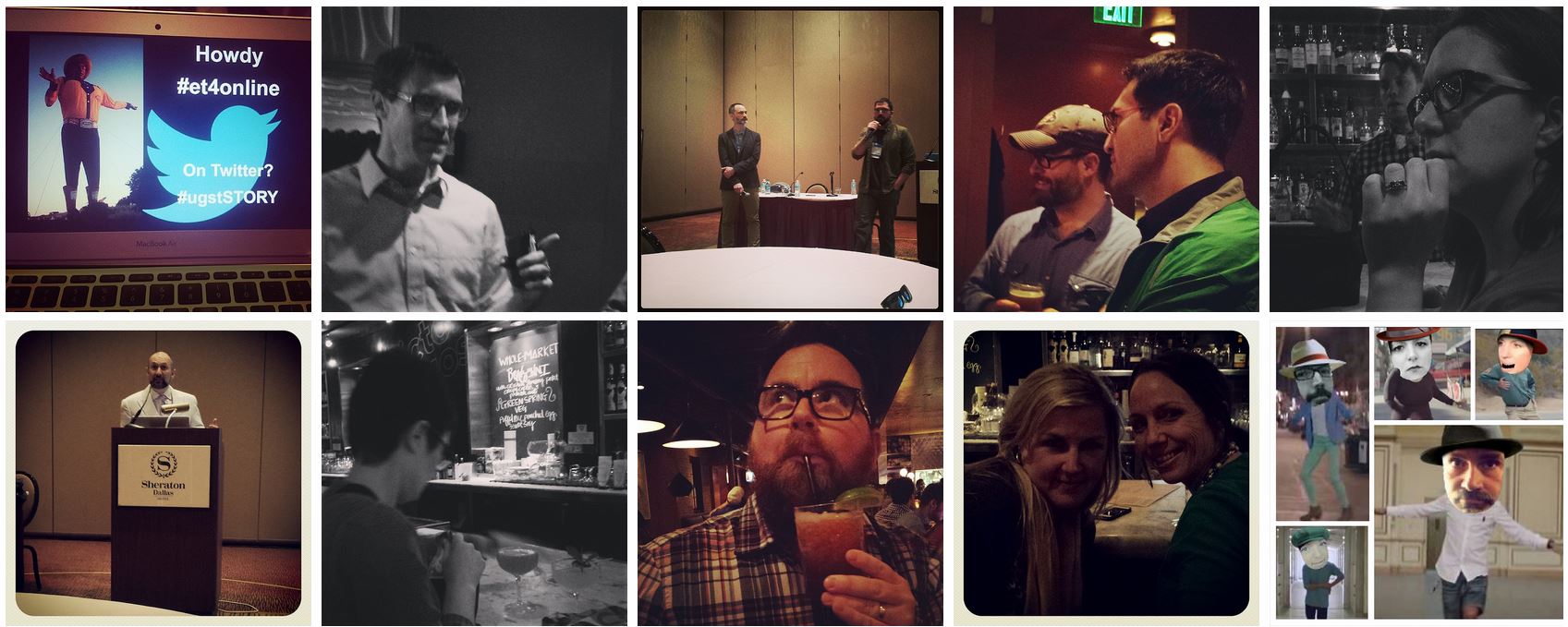
et4online montage

A few of my own #et4online highlights include:


Other reflections and thoughts about #et4online have been shared by George and Jim (#JimOfThings)…and I suspect a few others to follow.


Key takeaways I am still chewing on…


Special shout out to @jlknott for a stellar conference week as my roommate &  partner-in-crime. Here’s to our combined forces (support) to crush (or defend) our dissertations this summer! Go team!
Excited

Until then, I think #et4online should dance it out… Because I’m happy

Happy

#AcWri

#iamAcAdv – The #AcAdv Chat Community Topic for the NEXT @AcAdvChat

#iamAcAdv Join us for Tuesday’s (4/15) #AcAdv Chat from 12-1 pm CT on Twitter as the academic advising community discusses, shares,  and challenges ideas put forth in a recent article and blog post. Follow the moderator (MOD) @AcAdvChat  and conversation on Twitter with the #AcAdv & #iamAcAdv hashtags From my own experience, Jeff Selingo’s thoughts that faculty in higher education are not advising , are completely off the mark and inaccurate:

“While advising takes time away from research and teaching, not all professors favor relinquishing their role to professionals. Many see themselves as essential fonts of information about majors, courses and graduate school. But there are also fewer full-time faculty members around to do mentoring.”

In response to the inaccurate quotes from this article, Dr. Charlie Nutt, Executive Director of NACADA, responded in an Inside Higher Ed blog post follow up and on the NACADA Blog he says:

“believe[s] very strongly in faculty involvement the academic advising experiences of students. That role must be carefully defined and implemented. My statement as quoted in the article appears to be negative toward faculty advisors or faculty advising and that was not my message.  My message was that institutions must look carefully at their missions, their students, and their structure to determine the best advising processes.”

From my own experiences, I know the Academic Advising Community is strong, and might have a thing or two to say about the commentary above. I look forward to hearing from NACADA members and my @AcAdvChat colleagues, which INCLUDE  instructors, faculty, professionals, personal tutors, and more who comprise a diverse academic advising community. Follow  and contribute to the current conversation using the #iamAcAdv hashtag. Let me know “who advises best” …or better yet answer the how and what helps us support our students BETTER. How are you advising in the community? What does academic advising mean to you on your campus? 

Who is part of the Academic Advising Community & what we’re about => #iamAcAdv  UPDATE 4/15/14: The #AcAdv Chat group Discusses what it means to be part of the #iamAcAdv community [Transcripts]  Thoughts from @jselingo – the author from the NYT article post chat on Twitter, with tweet backs from myself and Marsha Miller:

Professional Development, web 2.0

Q: Should I Start Blogging? A: Maybe.

A common question I field from teachers, faculty, graduate students, higher education professionals, and researchers these days:

Q: Should I start blogging?

My response:

A: Maybe.

write-your-own-blog

Image c/o Blogiau

Blogging and maintaining a blog is not for everyone. I often ask a follow up question to this inquiry to learn more about the motivating factors for the blog:

  • Why do you want to start blogging? [purpose, goal, sharing, reflection, etc.]
  • Do you enjoy writing? i.e. beyond 140-characters & comprehensively
  • What format do you want your blog to be? Written or other, i.e. video, photo-sharing, podcasting?
  • Do you want to express and share your ideas in a public, online forum?
  • What focus will your blog take – work, education, learning, research, or all of the above?
  • Who is your audience? Professional group affiliation? Research discipline? Just for yourself?
  • What platform are you thinking about? Blogger, WordPress or other?
  • Do you have an idea about how often you want to post to your blog?
  • Where will you be getting ideas for your writing? [Content IS king.]
  • How will this contribute to your learning, professional development, etc.? [depending on the person]
  • When will you post to you blog? Daily? Weekly? Bi-weekly? Monthly?

Everyone has different reasons for the WHY they blog, or even how they started blogging. Some use blogging as a forum to connect to a professional or academic community. Others use their blog to share resources and ideas. Bloggers often present concepts and challenge the status quo in their field. Then there are other bloggers who use it for shameless self-promotion and self-marketing. The main point is – you should blog because you WANT TO BLOG.

My blogging tale started back in 2006 when I initially took up blogging to share my travel adventures and general life happenings on, Souvenirs of Canada, for family and friends who wanted to stay in touch. In 2008, I created TechKNOW Tools as a professional development space for an academic advising technology seminar for NACADA, and after that I continued to use this space to discuss my own work experiences, research projects, and share what I have been learning.

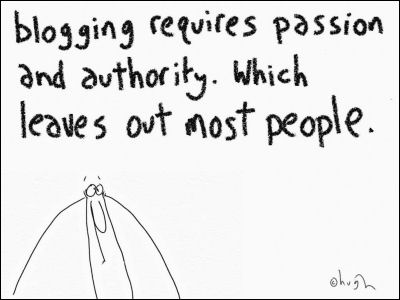
blogging requires passion and authority

Image c/o Gaping Void

There are a number of reasons WHY I blog.  Thanks to a researcher reviewing educational bloggers, I audited my own blogging experience, and I have considered what [really] prompts me to blog and continue to blog. For me, blogging and writing about my progress is very reflective and I enjoy documenting, sharing, critiquing, and writing about what is going on in my professional (and sometimes personal) sphere. I appreciate the community of research and educational bloggers who play in this blog sandbox. I like their comments, questions, challenges, and support — and at the end of the day I LIKE BLOGGING — otherwise I would not blog. Really.

If it sounds blogging might be just space for you to share your interests and express your ideas — go get your BLOG ON! Here’s a quick “HOW TO” Set Up a WordPress Blog I created for my learners, with a few helpful resources posted at the bottom to get you fired up for your blog writing. Want some more ideas? Here you go:

Do you have resources for the beginning blogger out there? Any advice or comments for new or potential bloggers? Post it in the comments, and also be sure to say HOW LONG and WHY you blog. Blog on, my friends. Blog on.

Social Media

Curating Tweets: Social Media Content and Marketing Planning

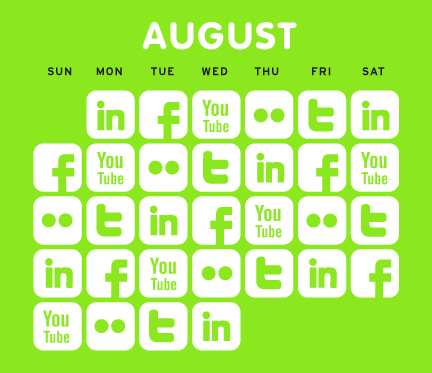
With the 2014 CASE Social Media Survey results recently published, I thought I’d curate a few of my tweets shared regarding social media content creation and marketing practices. Although this sounds similar to my dissertation research on social media guidance, it is not. This exercise was to provide a few quick resources for an education organization as they redesign their communication (social media, publications, website, etc.) plan and develop a more effective social media content calendar (Example 1 or Example 2).

calendar

Content Creation


Content Sharing Strategy


Social Media Marketing 


SEO & Metrics


Email


Facebook


Twitter


Blogging & Blog Content


A number of these are relate to content sharing, marketing & targeting an audience; however this is not an all inclusive list. I have not included using other social media platforms, like YouTube, LinkedIn, or Instagram, or even provided “suggested reading” books and articles on this topic (yet).

For now, if you have any tweets and websites about said topic, please feel to comment on this post or UPDATE THIS GOOGLE DOCUMENT if you have suggestions. Please feel free to add to and share!

#phdchat, PhD

Preparing for the Academic Job Interview #AcJobInterview [Workshop Notes]

phd031908s

Interview via @phdcomics

Life in Academia: Preparing for the Academic Job Interview
Tenure provides you a secure job for life, but getting a tenure track job is no easy task. How do you present yourself to land a tenure track position in these difficult economic times? Toulouse Graduate School, will share critical information for landing a tenure track job. Come and learn everything you need to secure a tenure track position and a secure future. Topics covered include the tenure track job interview, the research and teaching presentation, and salary negotiation.

My NOTES from today’s workshop.