DETA, Online Learning, Research

Developing a Research Model for Online Learning: @UWMDETA Wants Your Feedback!

The National Research Center for Distance Education and Technological Advancements (DETA) has been busy since the DETA Summit at #ELI15. Besides building a framework for inquiry, formulating measures, #DETAToolkits, and establishing research designs and instrumentation, the DETA team has been working on developing a research model for online learning — and they WANT YOUR FEEDBACK!

The DETA team reminds us that the field of distance education research is not new, but we do need to come together to consider how we examine, support, and thrive in online learning:

In distance education, a common language or ground has not yet been established.  Although existing scholarship attempts to establish an identity for teaching and learning on the fringe or margins (see Moore, 2013), such as distance education, there is still much work to be done.  It is common in other disciplines to struggle with finding this common ground as well (e.g., Corman and Poole, 2000).  Yet, unlike many other disciplines that have models illustrative of the phenomenon of interest or research models that guide the design of research, distance education has seen little traction in this area.  A cohesive approach to researching distance education from a transdisciplinary lens is pertinent.        

The lack of common language and work being conducted in disciplinary silos has led to a disregard or lack of acknowledgment of previous developments in the field.  Furthermore, the disconnect many times between the fast moving development of practice and redundant research of already proven practices is less than helpful to developing distance education. 

The function of the proposed online learning research model is “to facilitate cross-institutional distance education research efforts as a strategy for ensuring quality in teaching and learning for all students.”
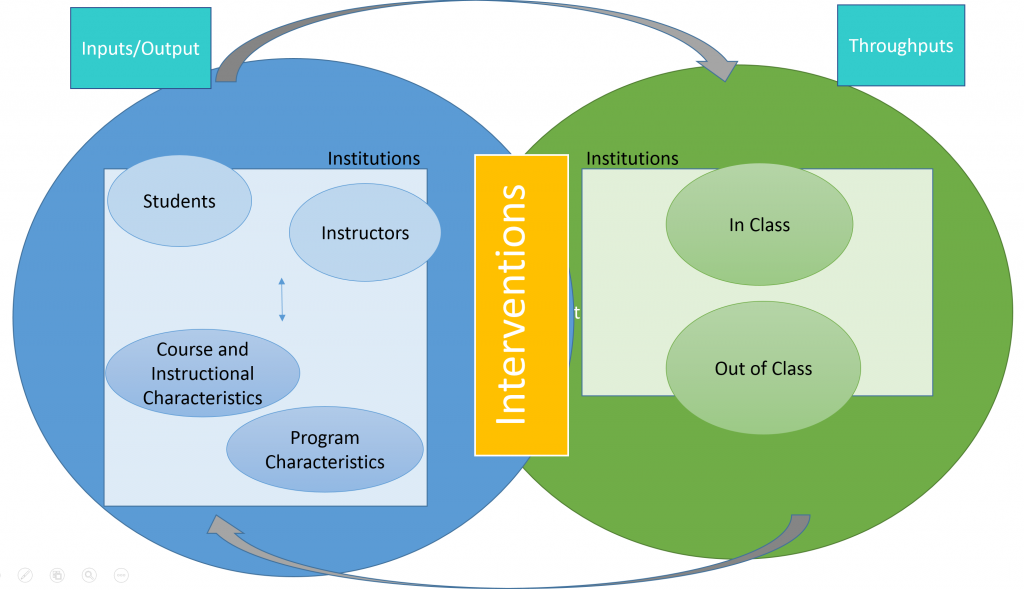
DETA Research Model (Proposed)

The research model document publicly is available online the DETA website for you to view. Please take a gander and comment. Your input will not only help the DETA team, it will also support many of us who research, work, teach, learn, manage, and then some online in higher education. In the proposed research model for online learning four components include (1) inputs and outputs, (2) process, (3) context, and (4) interventions.  I was interested in the three facets that describe the relationship between and among the components of the research model, including:

  1. Cyclical: Learning is conducted in cycles. It might be in a semester system, a certificate program design, or through a series of short courses. In thinking about this, it will also be important to identify attributes of the student, instructor, course, and program that feed into this cycle of learning.
  2. Transactional: Both students and instructors engage and are a part of the learning exchange. The learning process requires efforts and contributions on both end, i.e. design of a course could influence completion rates, learning interactions, course dynamics, and the feedback loop for online learning.
  3. Structurational: As instructors and staff design, develop, and modify online learning the courses, instructional methods, and program characteristics are a direct result of human action, which in turn, facilitate and constrain student interactions in online learning.

For each of these areas, I have made a few notes and questions for the DETA team — but I don’t want to influence your  feedback before you provide your own comments/questions/suggestions  on this research model. Please take a moment to review the proposed research model and complete a very brief FEEDBACK form embedded into this website at the bottom of the page and/or address any questions you have to the DETA Team:

http://uwm.edu/deta/research-model/

References

Corman, S. R., & Poole, M. S. (2000). Perspectives on organizational communication: Finding common ground. Guilford Press.

Moore, M. G. (Ed.). (2013). Handbook of distance education. Routledge.
 

ACPA, ACPAdigital, StudentAffairs

A Conversation with @ACPAPrez @GavinHenning: The Future of Organizational Learning in Higher Ed #ACPAlearning

As we look to the future trends of training and development, it will be critical for professional organizations and trade associations to consider how to meet the training and development needs of their constituents. Considering the nature of how we work, the evolution of how it’s changing, and the demands that lie ahead, more organizations are considering new ways to optimize learning and development.

ACPA-College Student Educators International is one of the professional associations I have been a member of and been working with to consider new ways of delivering learning. ACPA is interested in understanding more about how to support organizational learning, with regards to its membership needs. Being involved in the ACPA Digital Task  Force and program planning for the #ACPA16 Convention, I know the ACPA International Office, the Board, and its members are interested and working on dynamic ways to learn.

What does training and development look like among student affairs educators today? What do you want your professional development to look like? How can ACPA support organizational learning to meet your needs, issues, and challenges on campus? Let’s find out more what the ACPA President has to say about: The Future of Organizational Learning in Higher Ed

BannerACPAlearningAs ACPA considers the needs of their current members, I plan to chat with Gavin more about how the association plans to support student educators for their own training and growth in the field. We’ll talk about initiatives and ways ACPA is innovating for organizational learning, but also discuss the challenges and considerations, including:

  • What does professional development look like today for student educators or in the field of student affairs?
  • What are the current workplace learning and performance needs for higher education staff/faculty in relation to the new ACPA/NASPA Professional Competency Areas for Student Affairs Educators, specifically the newly added Technology Competency?
  • What’s on the horizon for #ACPAlearning? How will the ACPA organization support learning and development in the future? Thoughts, predictions, and “ponderings.”

Join me for a conversation with @ACPA President Gavin Henning on Monday (9/14) from 12-1 pm Central Time on Google+ Hangouts On Air as we discuss more about how ACPA learns and supports  the professional development of college and university student educators. Feel free to post your comments, questions, or thoughts you have for the ACPAprez here in advance. Then tune in for the LIVE conversation here and/or join the banter on the Twitter backchannel using the hashtag #ACPAlearning

Notes from the conversation: View the story “#ACPAlearning: A Conversation with @ACPAprez @GavinHenning on Learning & Development in Student Affairs” on Storify

Online Learning

Content Curation: Copyright, Fair Use, and Creative Commons

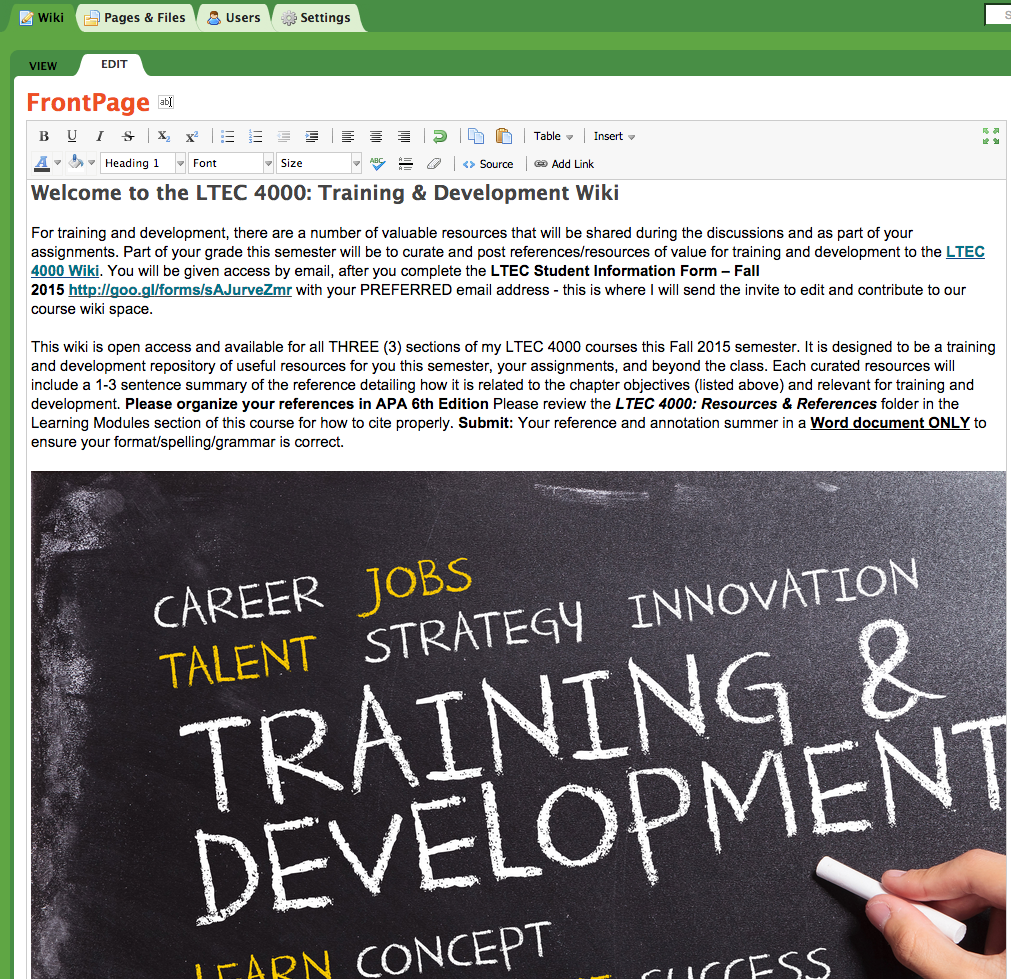
In planning my courses this term, the textbook for my LTEC 4000 course will be OPTIONAL. With a wealth of training and development resources digitally available online, in databases, from many professional organizations, and in our library system, I decided to have my three sections of my class be rhizomatic in their learning. (Thanks for modeling this learning approach for a few years now, Dave.) Learning is more than consumption. By encouraging my students to curate their own knowledge, I hope it will help  contextualization how these course objectives are applicable for the world of work. This semester LTEC4000 will aggregate training and development content in a wiki. Here’s to giving ownership to the learning process through research inquiry, critical thinking, and content contribution. Wish me luck!

LTEC4000_wikiIn thinking about digital curation and online literacy, I want my students to consider how they share, remix, and adapt content they discover for training and development. In the course, I hope this wiki content will scaffold project development this semester; however I think it’s important to discuss copyright, fair use, and intellectual property as they might apply some their training and development academic work to their own workplace.

Here are few of definitions (listed below) and I am gathering resources to share with my students around copyright and attribution. Let me know if you have further suggestions/resources to share. Thanks!
Adventures in copyright//embedr.flickr.com/assets/client-code.js

Copyright

The Basics of Copyright [Video; 6:19 minutes]. This is an introductory video  in copyright law, specifically about how to share copyrighted material at work while still respecting the rights of the content creators. Will you require permission before using materials? Do you ask permission before using protected content?

  • Copyright law applies to all works – print & electronic
  • Protected: Books, magazines, online articles, songs, screens plays, choreography, art,  software, work, software, podcasts, and photos
  • Not Protected: Ideas, facts & data; government items
  • Know the facts about copyright, not the myths
  • Get permission if required (when in doubt get permission)
  • Just because you found it online, & it is publicly available does not mean it is free to use
  • Not sure? Just ASK: legal council at your workplace or an information professional (in the College of Information) or at UNT Libraries for advice.
  • UNT Copyright Resources https://copyright.unt.edu/
  • CLEAR Copyright Guide for Instructors http://clear.unt.edu/copyright

Fair Use

Fair Use from copyright.gov: 

“Fair Use is a legal doctrine that promotes freedom of expression by permitting the unlicensed use of copyright-protected works in certain circumstances. Section 107 of the Copyright Act provides the statutory framework for determining whether something is a fair use and identifies certain types of uses—such as criticism, comment, news reporting, teaching, scholarship, and research—as examples of activities that may qualify as fair use.” fair use classroom poster draft

Specifically, there are four requirements for fair use of materials:

    1. The purpose is for nonprofit, noncommercial educational use (typical cases).
    2. The nature of the copyrighted work is consistent with the proposed use.
    3. The amount and substantial of the original work involved some small uses can be considered an infringement, that is, a small portion involves the core idea in the copyrighted work.
    4. The effect of using the copyrighted work is not likely to deprive the copyright holder of sales or market interest.

  Creative Commons
Creative Commons  

Wanna Work Together? from Creative Commons on Vimeo.

Creative Commons copyright licenses and tools allow for content to be shared beyond the traditional “all rights reserved” setting and decide on the best form of attribution for their work. The goal is to refine how copyright works and allows content creators to CHOOSE if they want to retain copyright while letting others copy, distribute, and make use of part of their work. Creative Commons licenses provide:

everyone from individual creators to large companies and institutions a simple, standardized way to grant copyright permissions to their creative work. The combination of our tools and our users is a vast and growing digital commons, a pool of content that can be copied, distributed, edited, remixed, and built upon, all within the boundaries of copyright law.

To enhance your learning and training materials, you  might want to find creative commons and public domain images. Certain social media sites, such as Flickr Creative Commons, even offer users content with specific attribution for use. There is even a Creative Commons Search to aggregate even more content to share, use and remix, including media, images, video, audio, music, photography, and web resources. Want to learn more about Creative Commons? Check out UNT CLEAR‘s Creative Commons Guide.

ACPA, ACPAdigital, Conference

#ACPA16 CFP: Genius Labs and Pecha Kucha Powered By @ACPA

August brings us to a time of back-to-school fun, but it also means the deadline for the 2016 ACPA Convention (#ACPA16) program proposals is coming fast! There are plenty of program categories to choose from for your #ACPA16 proposal; however, on behalf of the Technology Programs Team, let me highlight two NEW additions to the CFP this year and how you can successfully submit your proposal(s) for Genius Labs and Pecha Kucha Powered By ACPA.

Genius Labs

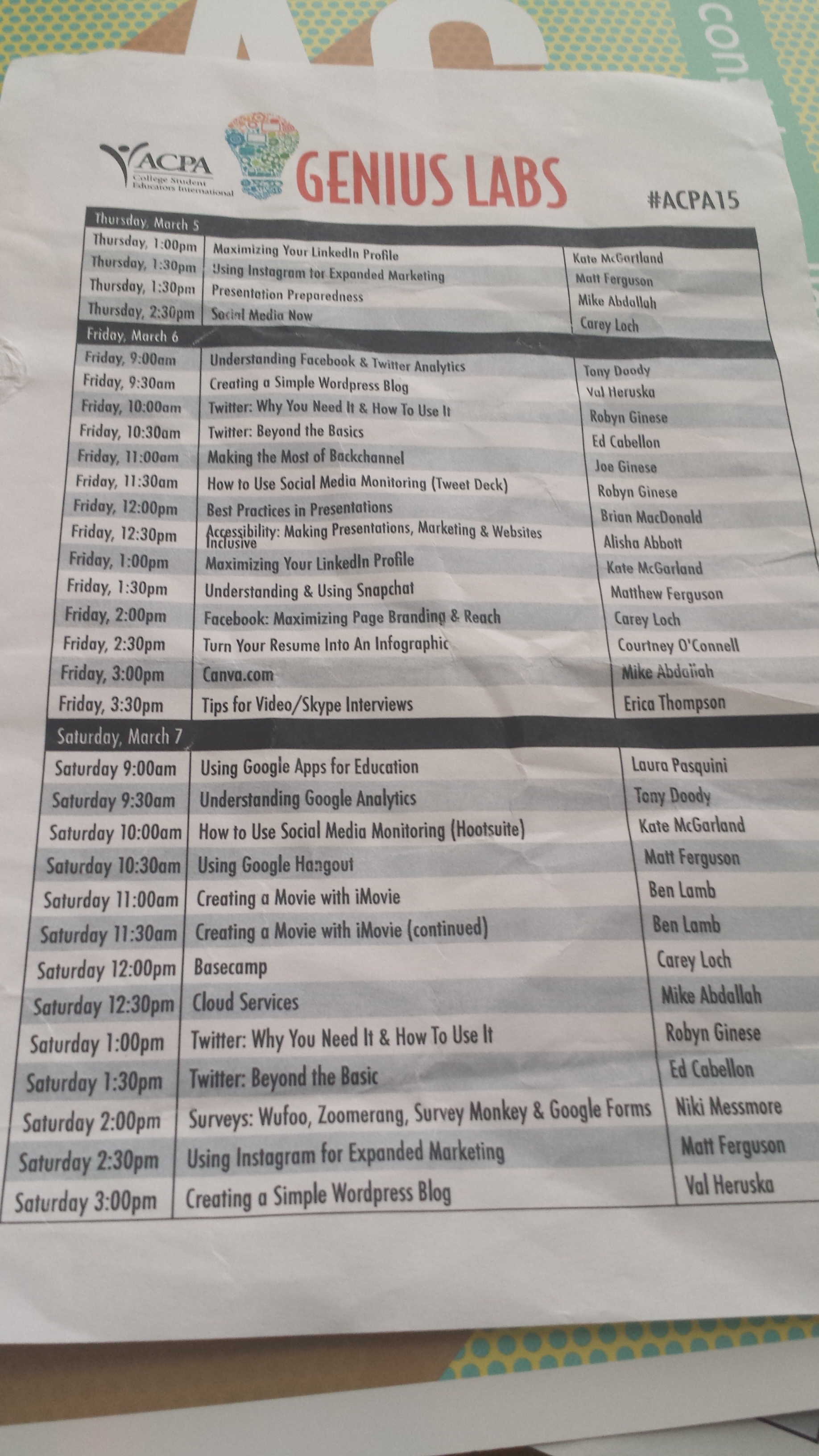
The convention’s Genius Labs are 20-minute skill-building workshops highlighting a number of practical activities (primarily focused on technology, but not limited to) for participants to learn about, experiment with, and implement immediately.

InfoCourt

Genius Labs topics are up to you! We hope to provide a variety of engaging content areas with the intent of having meaningful instruction for all skill levels, offering attendees effective (and often free) new resources, and building confidence and competence in technical tools to help you work at your institution. Want to learn how to develop your proposal or ask about a potential Genius Labs topic, be sure to connect with Erica Thompson (by email or @EricaKThompson).

listofacpa16genlabs

Pecha Kucha Powered By ACPA

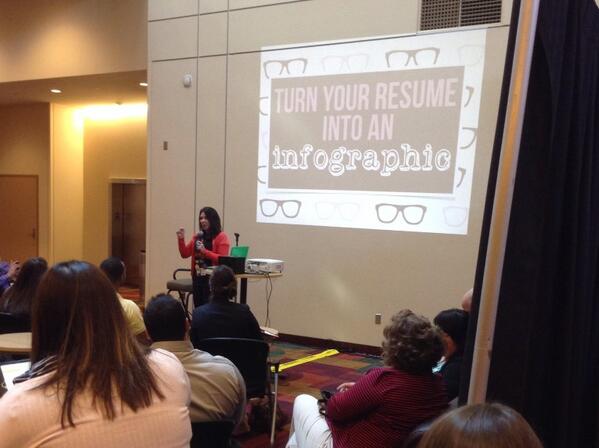
Pecha Kucha is an innovative presentation format during which the speaker’s 20 slides auto-advance every 20 seconds. It is the art of concise presentations. This event is guaranteed to challenge conventional presentation styles, while inspiring colleagues in 6 minutes and 40 seconds!

pecha-kucha-02Your Pecha Kucha Powered By ACPA talk can highlight issues from the field of higher education, student development, our professional competencies, and/or your own personal experiences. Want to see a few examples from past ACPA Conventions? Browse the Pecha Kucha Talks from previous years:

For more information about the origins of Pecha Kucha visit the official website, and for questions about your Pecha Kucha Powered By ACPA proposal please reach out to Laura Pasquini (by email or @laurapasquini).

For both the Genius Labs and Pecha Kucha Powered by ACPA talk proposals, we recommend sharing and showing your work. For Pecha Kucha Powered by ACPA program proposals, we want you to “audition” so we can “see” you in action to understand more about your potential talk. This proposal can include either a presentation lecture capture or screencast to showcase your talk or ideas. Here are a few free screencasting options to consider:

To help us select your Genius Labs demonstration, our team would love to see your examples, ideas, experiences, applicable resources, and concepts you will be share for either presentation. This might include the following item(s) for your Genius Labs program proposal submission: creating a screencast, posting a YouTube video, including a Google Doc tip sheet, linking to slide deck from SlideShare, or sharing a Dropbox file.

If you have a demonstration, handout, or “how to” presentation you want to share for the Genius Labs we would love to see examples of these in your proposal as well. For the Pecha Kucha program proposal sessions, we encourage you to submit a “rough draft” of your talk via a video or screencast shared on YouTube. This will video clip will give us a better idea of your content, presentation style, and we can offer suggestions/ideas if your proposal is selected for Montreal! All #ACPA16 program proposal submissions are due September 4, 2015. Have fun and good luck!

Submit your 2016 ACPA Convention program proposal today!

AcAdv, Higher Education, Learning, Professional Development, Social Media

Bringing Our Personality and Self(ie) to the Online

You can’t help but bring yourself to anything you are passionate about. I truly believe this.

Self-Love

This past week has brought conversation and debate prompted from a single blog post about The role of personality in education. Thank you, Martin. This post shared thoughts on how individual courses emerged with a “cult of personality” to drive it towards success, collaboration, interaction and then some. For these type of MOOCs, the learning design was intentionally focussed on the characters (Yes. Dave and Jim are characters… who I adore) to encourage participation and community in the vast Interwebs:

To be successful they often require someone with a well established online network to gather enough momentum, and because creating successful cMOOCs is hard work, that person usually needs to really be central in driving the course forward. And when this works well, it really does create a very engaging learning community.” ~ @mweller

I really think the “chalk and talk” can and should be changed for effective teaching and learning. This will take time, and much more than a popular face and/or a shiny technological platform to alter the culture of teaching and learning in higher education (online, blended OR F2F).:

…an understanding that public service is only a part of identity, and thus the educators who are engaging emergent technologies in the name of pedagogy and content need to be able and willing to build connections and relationships between the formal requirements of the educational system with the personal transformation of each individual.” ~ @RMoeJo

Of course, these ideas about personality and lead personalities are not always representative of the spectrum of learning we see leading these initiatives in higher ed. Social media has created opportunities for unique and powerful collaborations; however they have limited a voice from other populations. There are a number of flaws in elevating pedestals in online learning. Thanks for the reminder Kate, I appreciate her post to consider how we  reward and recognize privilege in our domain:

And on campus, we struggle with personality across student surveys and intellectual property policies: we haggle over the idea of the individual as creator of educational content whose expertise is the guarantee of student experience, while setting up procedures to assure the depersonalisation of content production so that students are protected from the vagaries of charm. Personality: can’t live with it, can’t live without it.” ~ @KateMfD

I am not naive in thinking a number of these social mediums and emerging technologies often influence the network, create affinity groups, and allow lead personalities to dominate. However; I am reminded these same social networks permit educators to customize student experiences, collaborate with researchers, and  build meaningful relationships to scaffold learning and inquiry.

A couple of weeks ago, I shared with student development and academic advising faculty/staff the only way I know how to best engage in what I do. To be myself, specifically, how to model your persona in the online to support student success and professional development on campus. In the #AdvSelfie session, we discussed how it is important, more than ever, to be present and engaged in the digital. More than ever we need to ask questions, be involved, and participate in the backchannel conversations happening at and around out institutions.

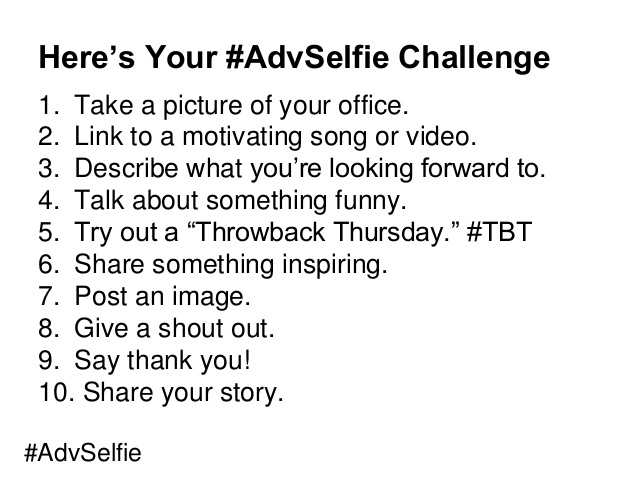
Mentoring and modelling online is the key to success for all in higher education — this includes our academic staff/faculty, administrators, staff, educators, and students of all educational levels. In an effort to engage in this dialogue, I challenged participants at the #NACADAmelb and other professional/faculty in higher ed online to BE PRESENT. This challenge stemmed from a 30-day challenge for those who are active online (or should be). To be the example for others on campus, I encouraged the advising group (hey – we all advise one way or another) to be the example with The #AdvSelfie Challenge – so you should probably participate as well:

the-advselfie-66-638_CHALLENGE

The #AdvSelfie Challenge: Post your best selfie showing how you mentor and model your online persona for your #highered campus (students, staff & faculty) with the hashtag #AdvSelfie before July 31, 2015 at 11:59 pm CDT. Prizes WILL be awarded … so get creative!

the-advselfie-7-638


UPDATE 08-14-15: And the winners of the #AdvSelfie Challenge Are….

Thanks to all of you who participated in The #AdvSelfie Challenge! It’s been great to see how you share some of yourself to colleagues, students, faculty and friends on campus. Kudos for being the digital mentors and models we need in higher ed!

Congratulations to the following “winners” of The #AdvSelfie Challenge:

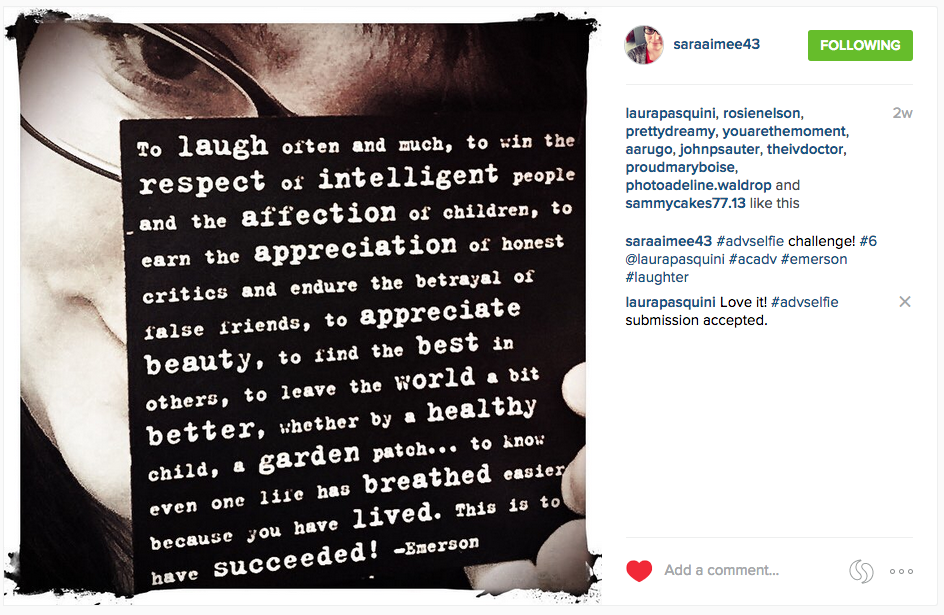
Sara Ackerson, Washington State University Vancouver, WA: For reminding her colleagues and students to laugh and find the best things in others for success.

SaraA

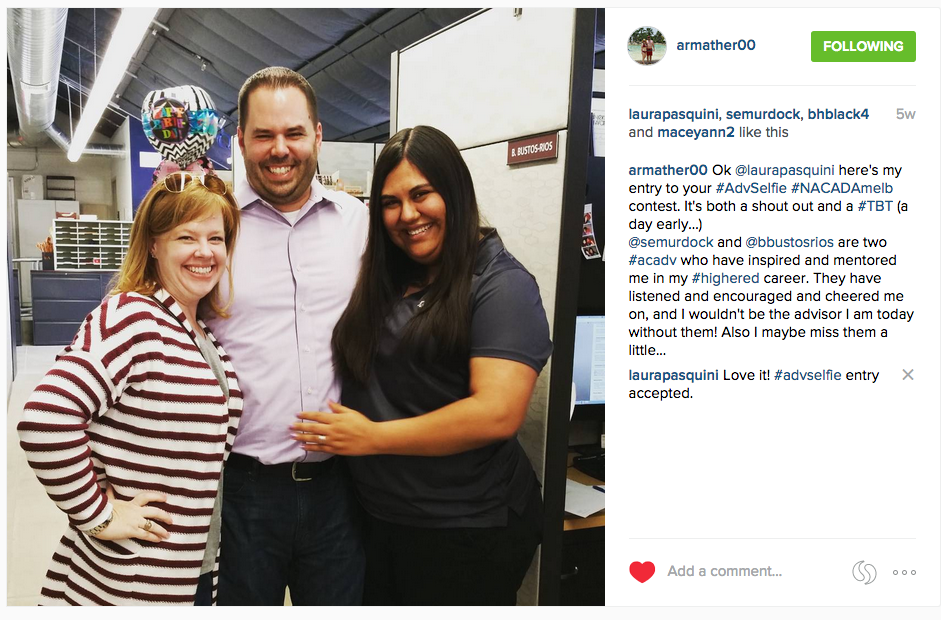
Amanda Mather, Texas A & M University at Qatar: For sharing who inspires and mentors her own advising career in high education.

AmandaM

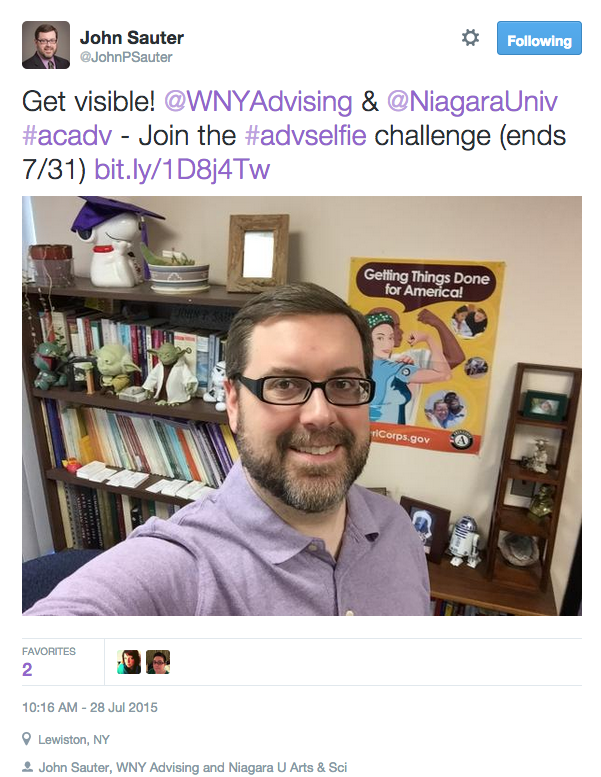
John Sauter, Niagara University, NY: For connecting his university and professional advising community in WNY to be active participants and engage online.

JohnS

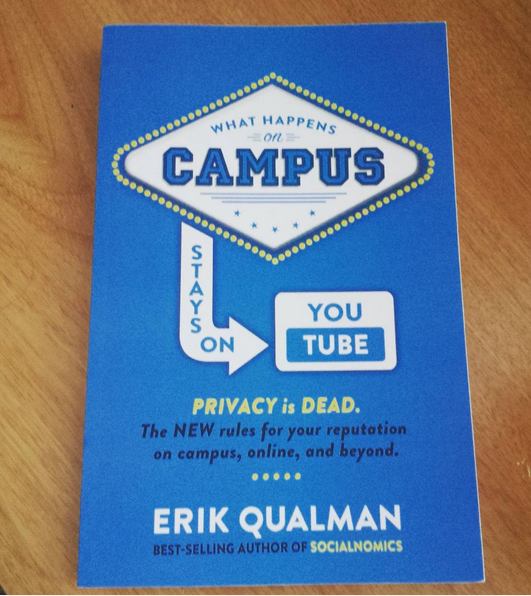
All winners will receive in the mail their own copy of the What Happens on Campus Goes on YouTube book shortly.

WHOCSY_book

Thanks for showing your #advselfie! Keep on supporting & being present online for your campus communities. Happy reading, y’all.