#AcDigID, #AcWri, #phdchat, Academia, Higher Education, networkedscholar

#AcDigID: Academic Digital Identity Matters

Over the last few weeks, you might have noticed the #AcDigID hanging off a few of my social posts. In between #OLCInnovate conference wrap-up work and the end-of-semester fun, I was designing a new workshop I’ll be facilitating via the Online Learning Consortium. This 7-day, asynchronous, online workshop is designed to support digital identity development for faculty and staff in higher education.
#AcDigID_hashtag

Developing Your Social Media and Digital Presence

Workshop Description: What does your online identity look like today? Have you Googled yourself lately? In academia, it is becoming increasingly vital to publish and share your teaching, service, and research knowledge. Besides developing an online presence and utilizing social media for professional development, faculty and staff are actively utilizing open and digital channels to support, learn, and contribute a thriving network of connected scholars. In this workshop, you will explore meaningful ways to craft an active, online persona, learn about strategies to effectively include social media and digital resources for your professional development, and understand how an online community of practice can enhance the work you do.

Learning Objectives:

  • Evaluate social media and digital platforms for faculty professional development, connected learning, and research impact.
  • Establish effective strategies for developing an online digital identity for open, networked scholarship.
  • Outline the benefits and challenges of open and digital scholarship while using social

Dates Offered: May 16-22, 2016 and September 26-October 2, 2016; Registration Page (if interested in signing up)

Initially, I was asked to create a workshop around social media; however I thought this could be more. There’s actually a lot more than just social media needed when becoming a networked scholar and in crafting your digital persona. Academic social networks are on the rise and there are a number of reasons why scholars use social media and digital resources (Van Noorden, 2014). This is an important topic we to talk about with our peers in higher ed, as we are all public intellectuals now – at least in some shape or form.

If you have ever attended a webinar and/or concurrent session with me on the topic, there’s way too much to share in just 45-60 minutes – so I was thrilled to think about these issues in an extended format and to figure out how to best support academics interested in building their digital presence. It’s been fun planning this workshop, as it has made me return back to my blog archive, review the articles I have curated, visit texts I’ve read, and also pick up a couple of new ones to learn more (future blog posts to review these books soon!).

Here’s the outline for the #AcDigID workshop this coming week:

  • Why Does Social & Digital Identity Matter in Academia?
    • Getting started, digital identity development, and state of scholars online
  • The Tools of the Digital Academic Trade: Social Media
    • Twitter, hashtags, blogging, podcasting, LinkedIn, and more!
  • Being a Connected and Digital Scholar
    • Digital research impact and influence, ORCID iD, academic social networks designed for scholars, and measuring impact.
  • Openness in Academia: Benefits & Challenges
    • Being open in higher education, the tension between challenges and affordances of online, and experiences from networked scholars.
  • Building Your Social and Digital Presence Online
    • Creating your own space and place for scholarship (at least 3 platforms)
  • Developing Your Digital Academic Identity
    • Bonus: ways to aggregate and showcase your digital/social profiles

I am looking forward to sharing ideas and strategies for digital scholarship and identity online this week in the #AcDigID workshop. I don’t claim to know all, and I continue to learn – however I will say I am grateful for those networked scholars who have supported my digital developing along the way. That being said, I know some of you might have suggestions, experiences, stories, and more when it comes to academic digital identity development. I welcome this. If you are or have been a higher education faculty/staff who is/was on social media, academic networking sites, or just online – please consider giving some advice to my #AcDigID workshop participants.

#AcDigID ADVICE and RESOURCES WANTED for how you share your teaching, service, and research scholarship online:

  • ADD TO THE LIST: to my “Academics Who Tweet” Twitter list? I would like to get a variety of scholars from all disciplines and areas in higher education. Let me know if YOU or someone else should be added.
  • SUGGEST A HASHTAG: Do you follow a particular academic hashtag that my #AcDigID community should know about?

//platform.twitter.com/widgets.js

  • TELL YOUR #AcDigID STORY: Interested in coming to talk about your #AcDigID development? How did you become a networked scholar? Want to share your issues, challenges or affordances for your academic online self? Let me know – happy to have you during a synchronous, online meeting.
  • JOIN THE #AcDigID TWITTER CHAT: Join us for the live Twitter chat this coming Friday, May 20 from 1-2 pm EST – We will, of course, use the #AcDigID to ask questions and discuss the issues, challenges, and affordances of being a scholar online.

//platform.twitter.com/widgets.js

  • USE the #AcDigID HASHTAG this week to introduce yourself, say hello, share resources, or offer advice.

Reference:

Van Noorden, R. (2014). Online collaboration: Scientists and the social network. Nature, 512(7513), 126-129.
#AcWri, #AcWriMo

Developing Writing Habits with #AcWriMo

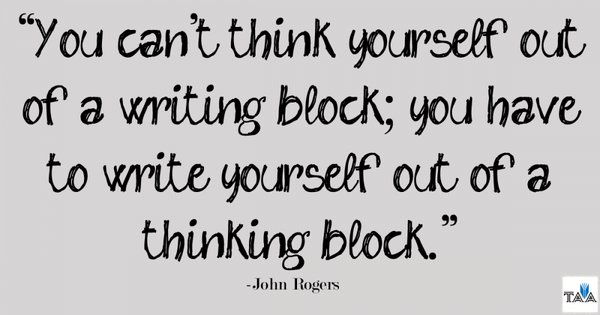
Woah. It’s December 9th … where did the time go? It feels just like yesterday that I logged in to post my November #AcWriMo goals.

writing blockHere’s me reporting back after the month (Note: this month was extended as I took a bit of a hiatus over American Thanksgiving & #Friendsgiving) on my #AcWriMo GOAL(S):

1. Finish manuscripts in progress for journal submissions:
(a) ICS-Shared resources in CoP
(b) ER – Remedies for learners in MOOCs
(c) Cdn institutions use of Twitter
(d) IHE – social media governance
2. Edit and submit final version of NDSS chapter
3. Complete a draft of the full article for #edusocmedia SOTL systematic lit review publication.
4.  Draft of #advtech data & article on NACADA Clearinghouse/figshare.
5. Research methods & IRB for formal mentoring research project.
6. Outline article for peer review in MOOCs
7. #FashioningCircuits – data for another manuscript outside book chapter

Not bad, eh? Who knew that I just need to hone into #AcWriMo Rule No. 3:

Draft a writing strategy. Plan how to accomplish your goals. Organize your schedule for your uninterrupted #ShutUpAndWrite time. PLAN TO WRITE IN ADVANCE!

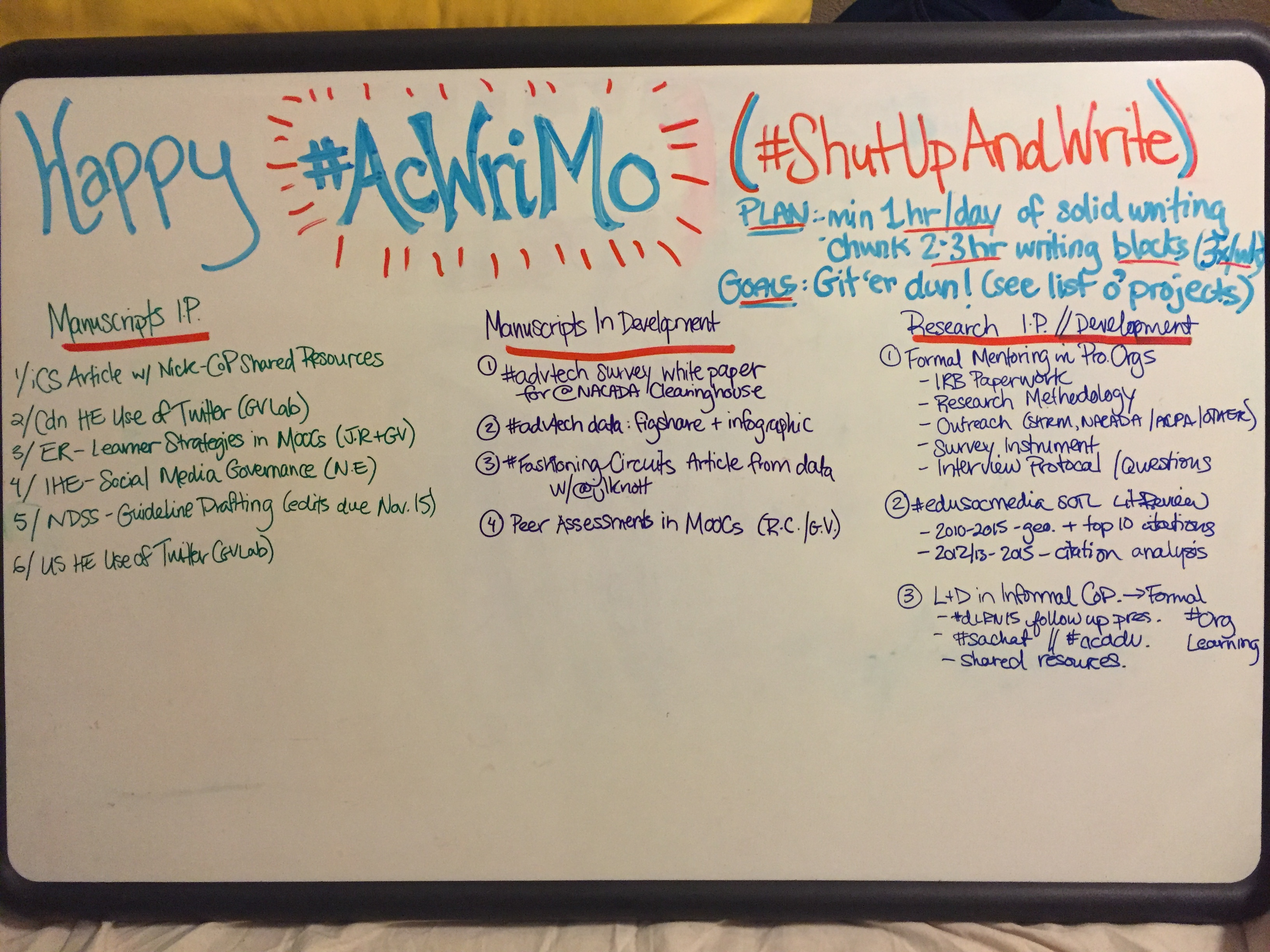
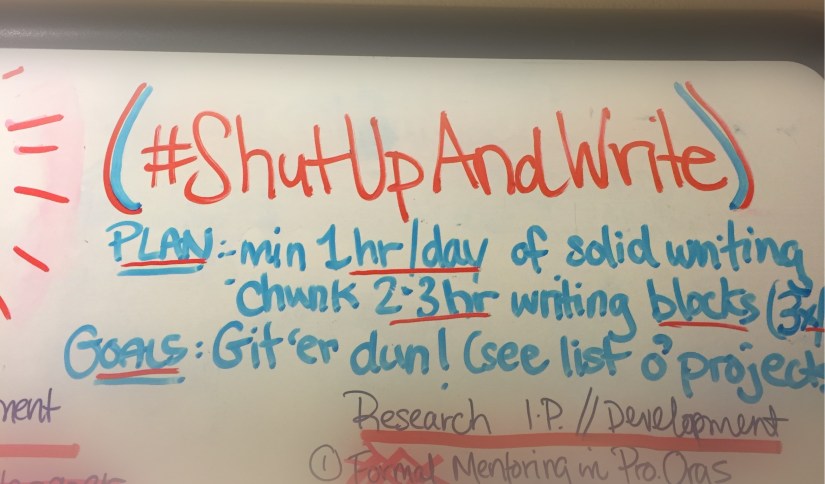
It’s SO true. If you don’t plan to write, you won’t actually write. Here was my overall strategy and plan for the month:

23641853985_c1f2571412_oTo make sure it happened, here are the strategic ways I ensured enough time to write:

  • Write EVERY day. This is hard. You are not always motivated to #AcWri every day — but it really helps you build a writing habit (21 days, right?). I am sure there are other items you can work on to fill the writing time, e.g. editing a manuscript, literature review search, organizing analysis, setting up project task lists, or organizing writing/research materials for your co-authors.
  • Determine the best time of day to write for you! For me, it was first thing in the morning between the hours of 6-10 am. These chunks of the day were for my “quiet writing” time. It could be late at night, or just after lunch. You decide.
  • Don’t check _______ before you start writing. For me the blank included e-mail, text messages, mobile, calendar invites, Twitter, RSS feeds, Facebook streams or news. I went right to the #acwri project that was up for that morning.
  • Block #ShutUpAndWrite time on your calendar (personal and work). Make it for 1 to 3 hours. Make appointments with yourself to write and KEEP THEM. I do this to reserve time on my calendar. This is a meeting for your writing productivity. (I do this with running & yoga as well — also very important appointments I keep).
  • Be an #AcWri Project Manager. Break your writing projects into smaller tasks. This will allow you to check off pieces of your writing, and motivate you as you make progress through your #acwri and research “to do” lists. (Bonus: Need a visual? Put it on a whiteboard in your office or remind yourself on your browser tabs – thanks Momentumdash!]
  • Log Your Time. This can be in your calendar notes, in a journal, or even an excel document — just to note the time in and out of writing. This helps to track when you were most productive, and what you worked on over the past week or month. If you need peer pressure, you could continue to log it here: #AcWriMo PUBLIC Accountability spreadsheet
  • Take A Day (or Two) Off. If you were VERY productive earlier in the week, it’s okay to break from the #acwri habit. Don’t burn yourself out from the writing flow. Or maybe come back to it later in the day if you’re not feeling it. #TreatYoSelf

The good news is I am still making progress on the #acwri goals not crossed off the list from November (and then some). Now that I’m armed with my #acwri plan, I will keep this writing pattern going strong for the winter break. With  ALL THE GRADING complete, nothing can stop me now. [Well perhaps a beach holiday might for a while, but I’m just adhering to #AcWriMo Rule No. 5]. Write on!

#AcWri, #AcWriMo

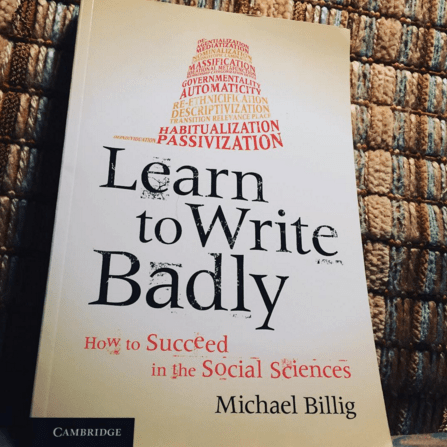
Learn to Write Badly #AcWriMo

In my writing process of jumping into #AcWriMo for November, I also decided to add reading to my writing goals. I have a number of books on academic writing I’ve acquired, so why not read more about said things to gain motivation, inspiration, and ideas for my writing process. As I’m personally extending my November #AcWriMo through this weekend (because American Thanksgiving interrupted my workflow, and perhaps some other fun things), I thought I would share some words of wisdom from Michael Billig’s book, Learn to Write Badly.

LTWBbook

I may have ordered this book based on the Times Higher Education review or comments from @ThomsonPat‘s blog post — either way it was not fully read until this month. I spent some time away from the screen to visit my parents in Florida and also to get ideas about my own writing practice. This was one of the books I packed and picked up again. A few comments stood out from these posts, which I agreed and wanted to read more about:

  • Academe is part of a wider world in which the use of highly technical, specialised language is endemic and possibly even necessary.” ~Times Higher Education
  • “…in writing in particular ways – doing pretty conventional social science in fact – we actually do poor research. When we turn actions into lofty abstractions, he suggests, we actually gloss over important ambiguities and difficulties and make it hard for readers to understand what has really happened, how or why.” ~ @ThomsonPat

As I agreed on both of these points, I thought — this read is for me. I will be honest. This books is not for all. There’s some historical context to academia that interested me; however there is also a delve into the discipline diatribe nature of certain social science arenas. This is not the fun “how to” light read you might be looking for; however it’s one academics comments and thoughts on how we research, write, and contribute to the cannon. If you’re into that, then you’ll enjoy this book.

A section of the book that stood out to me was in Chapter 2, where Billig discusses “Mass producing research” and the efforts academe puts into this process in higher education:

“Superficially all seems to be well in the academic world, for, along with the increasing student numbers, research is booming as never before and, as we shall see, never have academics been publishing so much. This is an age where research, across all disciplines, is being mass produced. Of course, with more academics working in higher education, one might predict an increase in research and academic publications. However, the books in research is far too big to be accounted for simply by the increase in the number of academics. The job of many academics has changed so that they are now expected to publish as well as teach” (Billig, 2013, p. 19).

[As well as service: mentoring, advising, career development, coaching, program development, course design, and then some.]

Just because there is more research or a “massification” in academic publications — it does not mean it is good. If you have had the chance to do a systematic literature review and citation analysis lately in your field or specific research area — you will soon discover a bunch of okay research gets published. Multiple times. Sometimes the same research, almost written the SAME WAY… just with different titles [I kid you not, and will dig into this topic in a later blog post].

This book had some serious slagging for how social scientists write and perpetuate a particular writing style, paired with a number of interesting historical and discipline specific references. For all academic writers, I think Billing’s (2013, pp. 212-215) recommendations offered in the final chapter provides helpful suggestions for our academic writing practice:

  1. We should try to use simple language and avoid technical terms as much as possible. We should not assume that technical terms are clearer and more precise than the ordinary ones…” – Keep it simple. Could you explain your research to anyone outside your field? Then do it in your manuscripts.
  2. “Try to reduce the number of passive sentences in your writing.” Say what you mean in present terms. Own it. The active voice should be the default voice as your sentences will contain more information and connect with your readers. Build this habit in your writing.
  3. “We should try to write clausally rather than nominally… I would like to see a greater proportion of them [technical terms] as other parts of speech besides nouns.” i.e. we need to express ourselves in clauses with active verbs. Be less passive in how we write (see #2).
  4. “Treat all these recommendations as either guidelines or aspirations, but not as a rigid rules.” You need to know the rules to break the rules of writing. I may have this rule for most things in life. Understanding more of the rules to guide how you draft your publications.
  5. “As social scientists, we should aim to populate our tests – to write about people rather than things.” The goal for this suggestion is to describe and write about what people think, do, feel, etc. How do your research findings actually impact the world around you? What does this mean for your discipline, field, or society?

Reference

Billing, M. (2013). Learn to write badly: How to succeed in the social sciences. Cambridge, UK: Cambridge University Press.

#AcWri, #AcWriMo

Accountability for Writing with #AcWriMo

Academic Writing Month (#AcWriMo) is a month-long academic write-a-thon that happens every November. Are you in it, to win it? I am!

acwrimo-unsw

Thanks to @CharlotteFrost for setting up the 1st #AcWriMo in 2011 (she’s also the founder and director of @PhD2Published) to coordinate a collaborative peer effort around accountability for academic writing.  After the first #AcWriMo ended, many embraced the #AcWri hashtag to continue a the discussion & discourse around academic writing (Follow: @AcWri). The PhD2Published blog shares ideas and inspiration for #AcWriMo – to follow these tips via the blog, follow the Twitter account, or “like” the Facebook page.

I’ve done #acwrimo in the past during my dissertating phase, so I know it works. This is a great peer community to help keep writing in check and supports my #acwri progress. This year I’ve set my #AcWriMo goals for November to wrap up a few writing and research projects. My priority is the green list, as these are active manuscripts in progress and need to be submitted before the month’s end. Then I’ll move right to publications in development, and future research ideas to tease out. Ask me how it goes this month – PLEASE!

22742710956_3dd118705a_oGood news. As of day 3, I am already finished with green list #1 – first draft of this manuscript is being edited and sent to the editors before the week is done. I have also made some progress on the Research I.P. for the IRB application and Research design on mentoring thanks to a meeting with collaborators this evening.

It might be day 3, but it’s NOT TOO LATE TO JOIN IN the #AcWriMo 2015 challenge => here are the 6 basic rules from the @PhD2Published blog:

  1. Set your writing goal(s) & plan. This can be in words, hours, or end products. You decide. (Check out the PhDometer app or 750 Words site to help you measure!)
  2. Make it public. Make it known. SIGN UP and let your goals & plan be known on the AcWriMo 2015 Sign-Up Form and then return to edit daily your progress. Peer pressure can do wonders! Check out WHO is participating from around the world on the #AcWriMo Map.
  3. Draft a writing strategy. Plan how to accomplish your goals. Organize your schedule for your uninterrupted #ShutUpAndWrite time. PLAN TO WRITE IN ADVANCE!
  4. Share your writing progress. Post it publicly. Twiter, blog, Facebook, Instagram — share with the hashtag #AcWriMo how things are going AND track your daily progress on the community #AcWriMo PUBLIC Accountability spreadsheet.
  5. Keep the #AcWriMo -tivation going. Don’t slack off. Write like it matters. Push yourself to reach your goals — chunk out projects, writing sections, and manuscripts to GIT ‘R DUN!  December will be here sooner than you think…
  6. Declare your results. Update the spreadsheet or whatever space you are keeping track of your writing progress — then let the #AcWriMo community know about your writing results at the end of the month. It helps to share and be accountable in the open — it is also a chance to get support, cheers, and feedback along the way.

So what are you waiting for? It’s time to get your academic writing ON! See you out there, #AcWriMo!

#AcWri

#iamAcAdv – The #AcAdv Chat Community Topic for the NEXT @AcAdvChat

#iamAcAdv Join us for Tuesday’s (4/15) #AcAdv Chat from 12-1 pm CT on Twitter as the academic advising community discusses, shares,  and challenges ideas put forth in a recent article and blog post. Follow the moderator (MOD) @AcAdvChat  and conversation on Twitter with the #AcAdv & #iamAcAdv hashtags From my own experience, Jeff Selingo’s thoughts that faculty in higher education are not advising , are completely off the mark and inaccurate:

“While advising takes time away from research and teaching, not all professors favor relinquishing their role to professionals. Many see themselves as essential fonts of information about majors, courses and graduate school. But there are also fewer full-time faculty members around to do mentoring.”

In response to the inaccurate quotes from this article, Dr. Charlie Nutt, Executive Director of NACADA, responded in an Inside Higher Ed blog post follow up and on the NACADA Blog he says:

“believe[s] very strongly in faculty involvement the academic advising experiences of students. That role must be carefully defined and implemented. My statement as quoted in the article appears to be negative toward faculty advisors or faculty advising and that was not my message.  My message was that institutions must look carefully at their missions, their students, and their structure to determine the best advising processes.”

From my own experiences, I know the Academic Advising Community is strong, and might have a thing or two to say about the commentary above. I look forward to hearing from NACADA members and my @AcAdvChat colleagues, which INCLUDE  instructors, faculty, professionals, personal tutors, and more who comprise a diverse academic advising community. Follow  and contribute to the current conversation using the #iamAcAdv hashtag. Let me know “who advises best” …or better yet answer the how and what helps us support our students BETTER. How are you advising in the community? What does academic advising mean to you on your campus? 

Who is part of the Academic Advising Community & what we’re about => #iamAcAdv  UPDATE 4/15/14: The #AcAdv Chat group Discusses what it means to be part of the #iamAcAdv community [Transcripts]  Thoughts from @jselingo – the author from the NYT article post chat on Twitter, with tweet backs from myself and Marsha Miller: