#3Wedu, Higher Education, Podcast, women, WomenWhoWine.edu

The #3Wedu Podcast, No. 14: Gender Matters

As our institutions welcome new faculty and onboard staff members, higher learning organizations often experience either (or both) salary compression and salary inversion. Why raise the salary of tenured professors or administrative staff, if this talent can be replaced by recruiting new professionals or faculty for substantially less? Or just focus on one or two impact hires that bargain a salary much higher than their counterparts already on campus?  In previous #3Wedu podcasts (listen to episode no. 6 and no. 7), we have certainly discussed the glass ceiling for women in the workforce. Although these #3Wedu chats dig into the issues and opportunities for advancement in higher education; we have not even touched what it means for women who want to pursue senior leadership roles at the administrative level?

One of the most measured issues of inconsistency is the salary and pay gap between women and men. In administrative roles at our colleges and universities, women have only moved from $0.77 to $.80 on the dollar between 2001 to 2016, when compared to their male counterparts. But with this fact being shared, there are even more concerns about the gender gap those who hold faculty rank in a department or across a discipline AND the pathways/pipelines women have to administrative leadership in higher ed.

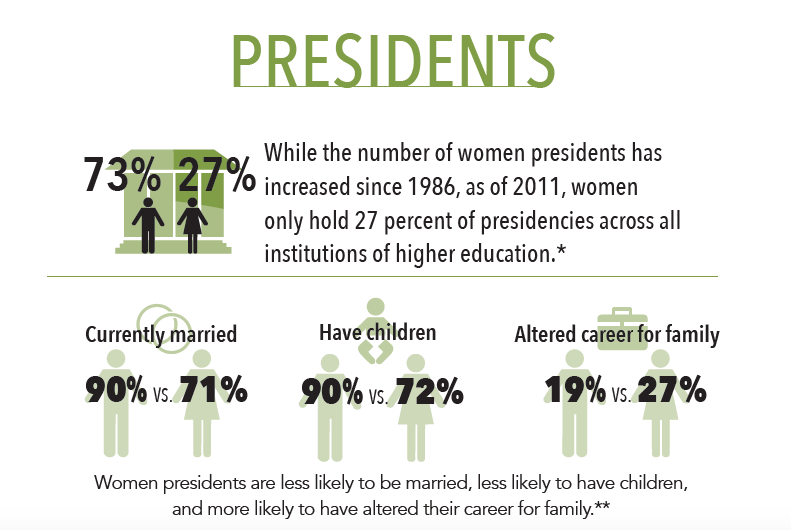
presidents statistics in higher ed
Image c/o Higher Ed Spotlight: Pipelines, Pathways, and Institutional Leadership [REPORT]

To dig into this issue further, I’m looking forward to welcoming  Ann Marie Klotz and Rich Whitney to share a bit around their narrative research inquiry for the impacts gender has in our university settings, specifically with regards to presidential leadership. [To Read: Ann Marie’s doctoral research will give you further insight on this topic as well]. Does gender matter for leadership in higher education? How do women presidents impact university leadership? What is their experience like? We will dig into these findings, specifically with a recent manuscript publication they completed, from their abstract:

“In spite of the increased enrollment numbers for women students, and that the demographic is enrolling and graduating at faster rates than their male counterparts, there are very few women in the highest level of leadership within a university. Several reasons for this phenomena include historical inequalities, stereotypical notions about women’s leadership styles, the presence of a chilly climate on college campuses, and the male-dominated history of academia. All of these impact the speed of advancement and professional options for women. This is a narrative inquiry study is part of a larger study that examines the role of gender and meaning-making for women in leadership within higher education, specifically at the level of the university presidency.

Join us TODAY (2/22) to discuss the impact and influence of gender on campus. Of course, we will always have dedicated time check-in with the #3Wedu ladies, who have been busy leading in research and conference happenings since January.  

Research

Visualizing Research and Work

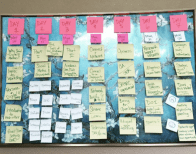
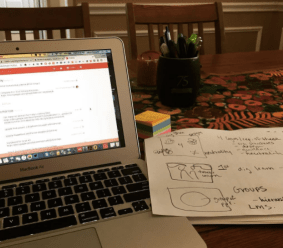
Do you ever doodle to figure out an idea? Do you sketch out a concept to make sense of it? Have you every created a Post-It Note wall montage on a wall to map out a project? Is there a whiteboard where you have a series of equations or problems you are working through? If so, then visualizing research and related works might be for you!

art

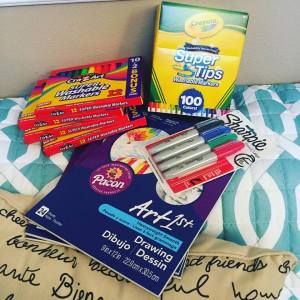
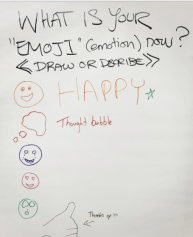
For the last workshop I facilitated, I opted to go low-tech to in order allow for reflection and discussion about our digital spaces and places. Sometimes analog processing with markers provides instigates creativity or creates an opportunity for deeper thinking. Drawing or concept mapping is a process I often use to plan programs/events, design websites, draft course curriculum, and more. I find these visualizations helpful for gathering thoughts, linking concepts ,and facilitating group/team processes.

emo_draw  course_design_posts  concept_maps_for_uunderstanding

Much to my surprise, my research role with The Digital Learning and Social Media Research Group has moved beyond your typical scholarly practice, such as literature review, data collection, data analysis, and academic writing, to include a visual design to share research. I thank/blame George for the opportunity to dig into valuable research to identify findings and implications by creating a short script and putting these audio narrations to animated format on the Research Shorts YouTube Channel [If you’re not subscribed, you should!].

storyboarding_research   research_shorts_video

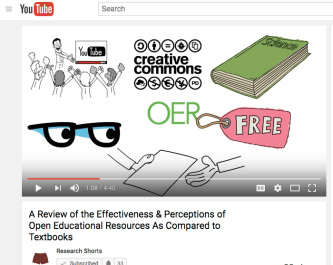
In a recent Research Shorts video, we scripted and produced Hilton’s (2016) recent article review of OER and college textbooks choices (highlighted in George’s post). Although this is an open access publication, we hope this video visualization extends beyond the typical scholarly audience and reaches other campus stakeholders in higher education who are thinking about these learning resources. You can view this video here:

For the Research Shorts video creation process, I have been scripting and storyboarding academic articles (of mine and others) to explain the implications and applications of these studies in a few short minutes. This work has made me think more about how I include visuals in my own scholarly practice, specifically to identify the “so what” or key points for my own initiatives. I typically map out works-in-progress, lesson plans, course designs, and meetings I will be facilitating or hosting by using a visual map or plan. From my experiences, visualizations for research and work projects have helped myself and my research collaborators:

  • Ideate and brainstorm for developments/project planning
  • Filter and itemize relevant results for literature reviews
  • Map out concept for a research plan and work initiatives
  • Connect the dots between theories and relevant published research
  • Organize a research pipeline and project workflows for effective project management
  • Provide “in plain English” about your research findings
  • Highlight key implications based on research results
  • Develop better images or visuals for conference presentations and/or posters
  • Showcase information through a new communication method or medium
  • Can lead to new insights for yourself and your audience/stakeholders — offer access to publications or complex work designs
  • Capture the “what’s the point” for organizational leaders for published reports
  • Pitch research implications/findings as an executive summary in meetings

Beyond creating a video to share visual research on YouTube, I am also considering what images or graphs I put into my own academic publications. Our written text can tell the story of our research; however, diagrams, images, or graphs can create meaning to our academic manuscripts, reports, and planning documents. What does the aesthetics of science look for you?  Have you put much thought into how you visualize traditional research publications, like conference proceedings or journal articles? What support your academic writing beyond the text? Do you give much consideration to these in your writing? If so, please share.

Reference:

Hilton, J. (2016). Open educational resources and college textbook choices: a review of research on efficacy and perceptions. Educational Technology Research and Development, 1-18.

Consulting

Research Shorts In Plain English: Time, Tone, and Value

I have always been a fan of the Common Craft “In Plain English” series of videos that explain concepts like Social Media (circa 2008) or Wikis. Often these videos demonstrate, outline, or explain a complex/novel idea. The concept of explaining ideas or video “how to’s” is not a novel idea, and these are perpetuated today as we see explainer videos on Personalized Learning and Augmented Reality for education.

In thinking about the research and scholarship we do, how often do we share our ideas openly and “in plain English” for others to digest? I have always been a fan of the lol my thesis; however, I am more impressed by those who can meet the Three Minute Thesis challenge or have contributed to the Research in Plain English blog posts in the #phdchat community. One reason I am a fan of all of the above is pure and simple – knowledge sharing. These acts/events require scholars to summarize the “so what” of their research and it requires scholars to engage with an unfamiliar audience, who might not read it in an academic publication. The sharing of research goes beyond the SPARC and open access rights (self/ paid publications) and open dissertations from our early career scholars (Thanks for the post, Bon). We also need to think about others beyond our discipline, research area, and ask — what are the practical applications of our research we need to outline from our journal articles or conference proceedings?

A couple of months ago George Veletsianos shared a Profhacker blog post about how we are Using Video and Audio to Share Our Scholarship with The Social Media and Digital Research Group. I think we are trying to provide access, share information, and put the word out about our findings and implications. How else can some of these evidence-based ideas get put into practice? Right? The issue is — some of this “beyond the academic publication” does take a bit of work.

videoscribeAs I have been tasked with developing a these “Research Shorts” on our YouTube channel, I thought I would share my experiences in what I have learned from scripting and visualizing publications. Also, I promised Ian a response to his comment [so sorry for the delay — it’s been a busy semester for me]:

Awesome post. Really a lot to think about! I have nothing to add in terms of interesting ideas on how to share the research – yours are really interesting and inspiring! However, I did start to wonder about time and tone.
In terms of time – how much does all this take you? And is it valued by your institution? For those of us more junior and precarious than yourself, it’s really hard to strike the balance between getting our research heard, and getting permanent jobs.
In terms of tone – your research fits animation wonderfully. I wonder how different type of research might manage to use video or audio styles, e.g. sociology that deals with sensitive issues. Then you’d need to be a master animator – or be able to pay someone who was – not to come across as crass.

Time: It does take some time. I am the dedicated person to put together most of the scripts for the videos you see on the YouTube Channel. This has been my task since June 2016.  Forget the time put in for data collection, coding/analysis, and academic writing for the journal publication, showcasing your work in this way does take a bit of effort. I do have a full-time faculty appointment and projects of my own beyond this task, so I did my best to fit in these 8 videos and another 4 “in editing” where I could. There are other things to consider — review of the script and edits, visualizations to collect (images, edits, and then some), waiting for audio narration by an author, and the final edits and uploads. Once in the groove of developing the scripts, getting the audio narration, and visualizing in the Audioscribe tool we use, the average time equation goes like this for one single video:

  • 1-2 hour for scripting (key points and findings for the article) +
  • 30-60 minutes for narration and setting up CC licensed music +
  • 5-6 hours putting the animations/drawings to the narration (this may vary) +
  • 1-2hour reviewing/editing +
  • 1-2hour rendering to YouTube & adding the closed captions from the script
  • = 12-15 hours total per article [May vary per article, i.e. if I helped to research/author]

Tone: Thanks for the compliments for the animation to audio — I appreciate it! (This is why this part takes the most time). This step varies by article topic. I used to draw storyboards at the beginning of this process, but once I became familiar with the VideoScribe platform functionality and repository of visuals — I just designed animations via the script. There are animations and images for different disciplines, including business, political science, journalism, natural sciences, etc. That being said, the free images are limited and you might have to search for other Creative Commons resources to add to the video. There are a number of drawings or animations available for free — no hiring of artist needed! It will require some solid search skills and a dash of creativity for “HOW” you want your audio narrative to be visualized.

Value: You asked about institutional value. Good question. The above does take some additional time and effort. I believe this dissemination of visualized research was actually written into a grant and/or our research project (George can verify). This premise is to widely share these research findings and evidence-based strategies to the scholarly community and practitioners in education. Sharing on YouTube offers additional optimization for reach, SEO, and tracking for views/shares + embedding into websites and blog posts. Also, the visual and narrated audio contextualizes the research, outlines the research questions, shares the study findings, and provides implications in a rich, multi-media format beyond the traditional text.

In drafting a short narrative for each academic journal article, I have put some thought into what goes into my script writing. Condensing a long-form publication into a 2-4 minute script is a fun and challenging task. It has forced me to think about my own research questions, identifying specific goals for implications, and to consider how I present “academic speak” or work to a broader audience. I want to make sure my research is understood, accessible and applied. This video/audio/scripting practice has made me think about my how I disseminate research while I’m in the thick of data collection, drafting articles, and sharing final products/findings.  I have used this summary format within my own research teams and I continue to support other early career scholars (in class or on a dissertation committee) about finding “the point” for empirical literature.

What would it take for you to offer a “research short” video, image, or snapshot of your scholarly work? If you are interested in animating your research, your project, or highlighting your work, please feel free to reach out to me to inquire. I have continued to support clients for the Research Shorts YouTube Channel (https://www.youtube.com/c/researchshorts) and other colleagues. Thanks!
MOOC, Online Learning, publication, Research

How Do Online Learners Overcome Challenges in MOOCs? [New Publication]

In analyzing recent MOOC research, a number of studies explore the vast amount of data collected by digital learning platforms to understand learning behaviors in these scaled classes. What we don’t know much about is:

  • How online learners resolve the problems
  • How students online persist in a course
  • The strategies MOOC students use to overcome challenges

In a new publication, The Life Between Big Data Log Events: Learners’ Strategies to Overcome Challenges in MOOCs, George Veletsianos, Justin Reich, and I share what we learned from talking to 92 MOOC students ages 21 to 81 enrolled in 4 different courses from North America, South America, Europe, Africa, Asia, and Australia. The whole paper is free and available for your reading pleasure at the new open access education journal, AERA Open, and check out the research findings presented in this short video summary created by moi:

During these interviews, we learned that there is so much more going on beyond the screen, tracking logs, and platform learning analytics. Learners shared how they engaging in the online course and activities in three domains:

  1. Describing their designated workstations and study methods for learning
  2. Utilizing online and outside resources beyond the learning platform
  3. Engaging with social networks both inside and outside the online course

Read more here:

Veletsianos, G., Reich, J., & Pasquini, L. A. (2016). The life between big data log events: Learners’ strategies to overcome challenges in MOOCs. AERA Open, 2(3); 1–10. doi: 10.1177/2332858416657002

#AcWri, #AcWriSummer

#AcWriSummer Week 3: Arguments and Reviewing the Literature

It’s week 3 of writing and accountability. This week and next, we’ve bumped up our #AcWriSummer accountability group meeting to Tuesdays (6/21 and 6/21). With my #acwri co-conspirators — Patrice, CatherineCaroline, & Elvira —  are continuing to work through the Writing Your Journal Article in 12 Weeks book. This week we focused on directing our manuscripts we are working on and consider how to read/reflect on the relevant literature. Here are some highlights for what we will be discussing this week:

 Advancing Your Argument (Week 3)

This chapter details a number of reasons why articles are rejected, specifically around an article argument being too narrow, too broad, off topic, too defensive, not sufficiently original, poor structure, not significant, theoretically or methodologically flawed, and too many misspellings and/or grammatical errors. It is important to review the direction of your paper as you prepare your manuscript for journal publication. Belcher (2009) encourages readers to identify if the current manuscript has problems and to consider how to revise the following issues:

  • Focus: contextualization, audience aim, proper length, and giving pertinent examples related to the argument;
  • Topic appropriate for journal selected: subject matter, methods, scope, etc. ;
  • Scholarliness: meticulous about documentation, reference multiple sources, cite recent and relevant literature, reference debates in the field, use discipline-related expertise, provide a critical framework and evidence;
  • Defensiveness: avoid extensive quotations, excessive documenting, monotonous accounts of others work, jargon, and dogmatism;
  • Originality: read literature in your field, focus on what’s new, argue what is, claim your ideas, and develop a voice for your research;
  • Structure: Present your structure clearly, stick to your point, delete the redundant or irrelevant, link article evidence to support argument, and state findings at the beginning of the article;
  • Problems with Significance: did you articulate how this research fills a gap or adds to the topic, and did you target this manuscript for the appropriate journal;
  • Theory or Method Issues: have your work peer reviewed for feedback, detail and describe your methods, avoid imbalance in writing, and review the analysis of your data or interpretations
  • Spelling and Grammar: improve your paper for these issues, run a spelling and grammar check, ask a peer for review before submission, get help in a writing group, hire an editor, and follow the submission’s guidelines for author.

Homework: Find an Article (or a few) to Model Your Article’s Argument
Find “model” articles for your manuscript that might be:

  • part of your literature review search
  • from the target journal(s) you selected (from Week 4)
  • outside your discipline or topic area
  • the way you will structure the presentation of your article’s argument

BONUS WORK: Abstract Revisions: Abstract examples on pp. 86-87 will help you in revising of your  abstract; consider how you to present  entire topic and findings in short form.

Reviewing the Related Literature (Week 5)

This chapter shared strategies for reading literature directed towards your articles focus. I like how it suggested setting up your electronic software or platforms first. This is critical — here are a few I have used or currently use myself with a quick “about” the platform:

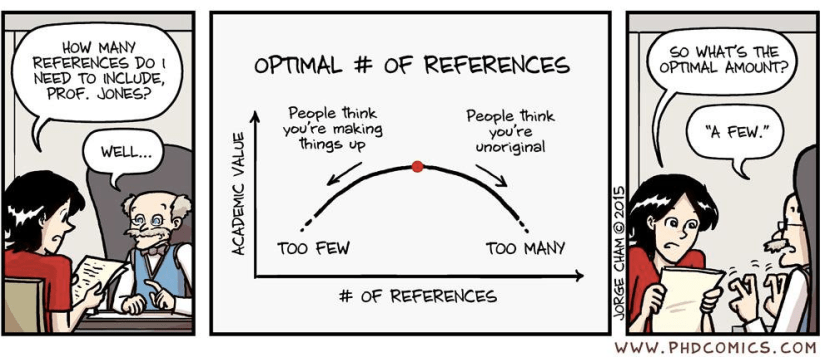
references_phdcomics

I really appreciated Belcher’s (2009) suggestions on refining and targeting the literature review by reading materials that specifically contribute to the central argument of your manuscript. Here are a few categories to limit how you collect relevant literature:

  • Set a time limit:  i.e. read nothing written over 10 years ago or five or two depending on your field of scholarship/topic of research
  • Language: read articles in English or designated other languages
  • Questionable or not recommended publishing outlets e.g. trade journals, non-peer reviewed, some conference proceedings not always suitable (find a journal publication)
  • Journal outside your discipline (if not interdisciplinary work)
  • Certain kinds of authors (established vs. early career?)
  • Different geographical areas (by author country of origin)
  • Different time periods (related to your genre — this might apply to humanities more)
  • Different kinds of experiments (by your methods of study/research)
  • Different kinds of participants (by research sample type, size, etc)
  • Different variables (e.g. gender, age, etc.)
  • Without your keywords in the title or abstract – focus your search for these items
  • Non-electronic formats – if you can’t access the research from home/library resources

Homework: Share How You Review Literature
-Explain methods of how you search, find, read, review, and select your literature
-Outline strategies for effective ways to approach this part of the research process

Here are a few of my suggestions and approaches for how I read & review literature:

  • Make reading/review social – find others to collaborate and add them into your Mendeley (or another software program) group to add and review publications
  • Scopus Search (ALL.THE.PUBS) and Track: I record the different search strings, track what I find, and set an alert to receive any updates — this is relevant in my field as technology, methods, and research continue to build. Here’s a screenshot of one of recent Google spreadsheets for search with a colleague: Screen Shot 2016-06-19 at 1.15.32 PM
  • Search for Publications Beyond Reach: articles I don’t have access to in my own library databases I tweet #iCanHazPDF [in action #icanhazpdf], ask a friend on Twitter, or email the author
  • Take fewer notes: Tag articles in the software,  group articles into specific folders, skim abstracts to code/organize, and identify literature for easy recall and use later
  • Don’t wait to write: Create annotations about publications as you would write it
  • Create an annotated bib for focused/small literature collections: include the APA 6th edition citation + a quick line or two making note about the study, methods, findings + personal thoughts on articles/methods
  • Google Scholar search the “Cited by ###” section of the site: this is to identify other relevant paper on topic or learn more about this research thread, i.e. a discovery search for missing literature
  •  Use Backward & forward referencing search method: for collecting and reviewing publications to be inclusive of empirical literature
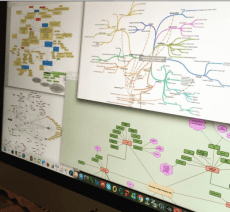
  • Concept mapping the Literature: Check out the great post from Pat Thomson on “spaces between the literature” for reviewing research; a.k.a. bushwhacking
  • Key Searching Suggestions from Doing a Literature Review (Hart, 1998) was blogged about in my Book Review post.

Here’s our continued #AcWriSummer 2016 Plan schedule for the remaining 5 weeks:

  • 27th June WEEK 4: Chapter 6:  Strengthen structure =>Article outline (Meeting Tuesday, June 28th)
  • 4th July WEEK 5: Chapter 7 & 8:Presenting evidence & Opening/Concluding =>Draft article (Meeting Friday, July 8th)
  • 11th July WEEK 6: Chapter 9 & 10: Give/get/use feedback & Edit sentences => Give feedback on manuscripts (Meeting Friday, July 15th)
  • 18th July WEEK 7: Chap 11 & 12 (Wrapping up & Sending article!) => Final article (Meeting Friday, July 22nd)
  • 25th July WEEK 8: X & Other (Meeting Friday, July 29th)

References:

Belcher, W. L. (2009). Writing your journal article in 12 weeks: A guide to academic publishing success. Thousand Oaks, CA: Sage Publications Inc.

Hart, C. (1998). Doing a literature review: Releasing the social science research imagination. Sage.