#phdchat, PhD, Professional Development, Reflections

What They Didn’t Teach You In Graduate School… The #phdchat Edition

What They Didn't Teach You in Graduate School

I finally wrapped up reading What They Didn’t Teach You in Graduate School during my #summerreading stint. This is the first edition and there is now a 2.0 update. This book is geared towards American doctoral students and academics; however PhD’s outside of the US might find value with these 199 academic hints.

There are a few good hints scattered throughout the book for budding academics and PhD students. Here are a few snippets from Gray and Drew (2008) geared for myself and other #phdchat comrades:

The PhD

  • Finish your PhD as early as possible.
  • You must finish your PhD to move up the academic ladder. The world is full of A.B.D.’s.
  • Be aware that the key danger point in any doctoral program is the one where you leave highly structure coursework and enter into the unstructured world of the qualification examination and the dissertation.

On Writing

  • Learn how to write clearly.
  • Limit self-plagiarism.
  • One of the most useful things you can develop is a pool of research references stored in your computer [or an online storage space of choice].

On Publishing

  • Submit your papers (other than those you know are stinkers) first to the best journals in the field.
  • Write most of your articles for refereed journals [not for conferences, meetings, etc.]
  • As they say in Chicago, publish early and often.
  • Include single-author papers in your portfolio.
  • Recognize the delays in publishing.

Appendix A – The Dissertation

  • Don’t assume that if you are having trouble defining a dissertation topic that the entire dissertation process will be that arduous.
  • Put a lot of effort into writing your dissertation proposal.
  • Be skillful in whom you select for your dissertation advisory committee.
  • In doing a literature search, use the “chain of references.” Begin with one or two recent articles (a survey article helps!). Look at the references that are cited.
Obviously Appendix A, The Dissertation, is on the forefront of my research this summer as I finish the last of my coursework this Fall. Reading this book provided some great insights and motivation to continue to push through. The book was bluntly written and I found it pretty helpful to read honest advice and expertise from other academics in the field. This book reminded me of previous conversations I have had with my own faculty advisor. For those of you who do not have a faculty advisor or another academic mentor in your life, you should read this… and probably find an academic mentor. Doctoral students need an advisor/mentor (or two) who will give us both a reality check and support as we embark on our academic life. Good luck with your journey!

Reference:

Gray, P. & Drew, D.E. (2008). What They Didn’t Teach You in Graduate School: 199 Helpful Hints for Success in Your Academic Career. Sterling, VA: Stylus Publishing, LLC.
#phdchat, Professional Development

What Are You Reading This Summer? #summerreading

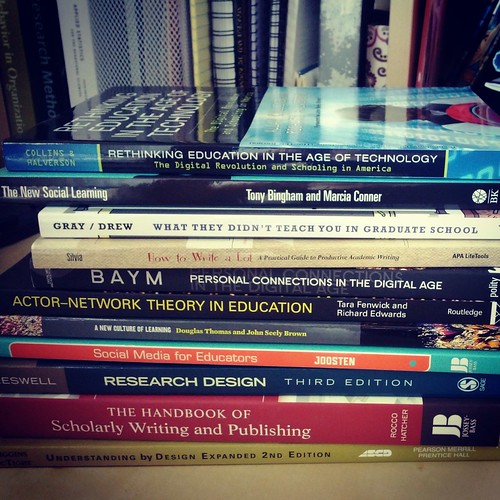
This year, the summer months are providing me space to read articles and books that I have been collecting on my #ToRead list. Below is the first stack of books I have started to read this summer. Since I am not working on any classes this summer,  the plan is to read and annotate  more articles, e-books, and other literary finds I have been collecting and storing in my Delicious and in my Good Reads account. Get ready for some EXTREME READING!

#summerreading

Although my goals are to move forward on my dissertation proposal, I know that I am not alone in setting reading goals for the summer months. Both the NY Times and Grad Hacker want to kick off the #summerreading social media campaign on June 7th. I was able start on my summer reading list early with the help of my recent travel plans – so I am always looking to add book recommendations (both for research and fun).

What books are you reading? What’s on YOUR #summerreading list? What books do you recommend?

#phdchat, Learning Technologies, LPQ

Announcement: Learning and Performance Quarterly First Issue Published & Call For Submissions for Issue No. 2

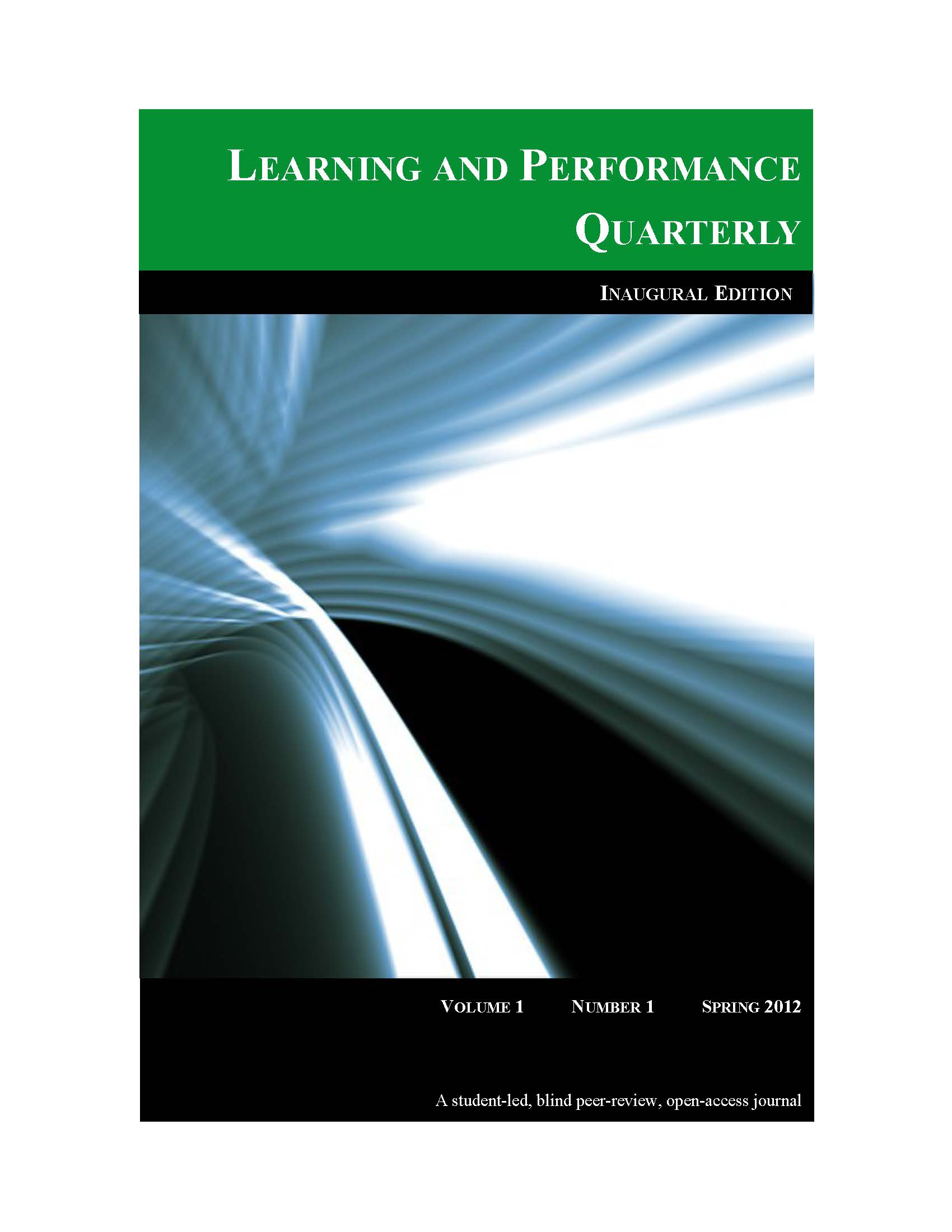
THE LEARNING AND PERFORMANCE QUARTERLY (LPQ), 1(1) FIRST ISSUE IS NOW PUBLISHED!

Thank you to the number of authors, reviewers and editors who helped contribute to the first open, access online Learning and Performance Quarterly journal. Please read and share with colleagues and researchers who might be interested:

Learning and Performance Quarterly, 1(1)

CALL FOR PAPERS: LPQ, 1(2)

The Learning and Performance Quarterly (LPQ) is currently accepting submissions for the second issue. Deadline for submissions is Friday, June 15, 2012 at 11:59 pm CSTSubmission of manuscripts can be made online through the LP Quarterly website via the Open Journal System.

TYPES OF MANUSCRIPTS ACCEPTED

Research Papers :

Papers that are concerned with the various approaches to learning and performance impact. These papers should discuss the literature related to the approach employed and include a measure of the learning and performance impact of the approach employed.

Case Studies:

Case studies that highlight a particular learning, training, performance or instructional setting in which learning and performance resources were used to address a particular challenge. They present a discussion of the challenge from current literature, what was done to solve or explore it, and the results of the project. They often offer suggestions for others interested in addressing similar challenges.

Concept/Theory Papers:

Papers that present new concepts or contribute to existing theory for learning and performance. This should offer a discussion of the literature related to the concept/theory along with a discussion of the major issues for future research needed to validate the concept/theory.

Book Reviews:

Book reviews of publications 2011 or later will be accepted to highlight a issues and resources relevant for learning and performance and offer a suggested solution or direction. The position is supported with both a logical argument and a review of the pertinent literature. Preference will be given in the review process to book review essays that comment on two or more related books.  Book review essays should not exceed 3,800 words and should include city, state, publisher, and year of the book’s publication.  An abstract of 150 words or less and keywords are required for book review essays.  Reviews of single books should not exceed 1,900 words.  At the beginning of the text please include title, author, publisher, city, date, and page numbers of the book(s) under review.

The deadline for submissions is Friday, June 15, 2012 at 11:59 pm CST. For detailed submission guidelines and instructions on how to make a submission please visit Author Guidelines.

CALL FOR LPQ REVIEWERS

Interested in reviewing articles for the LPQ Journal? The LPQ journal is looking for reviewers to conduct peer reviews and evaluations of submissions.

Please identify your reviewing interests, substantive areas of expertise, and preferred research methods when completing the LPQ journal registration online.

We look forward to receiving your submissions. Please pass this post onto other colleagues and researchers who might be interested in publishing, reviewing or editing for the Learning and Performance Quarterly journal.

Thanks!

Laura Pasquini & Jeff Allen, Founding Editors

Learning and Performance Quarterly

Like us on Facebook

Follow us on Twitter @LPQuarterly

Email: LPquarterly@gmail.com

#phdchat, Open Education, PhD, PLN, Professional Development

10 “Lessons” in Digital Scholarship from @mweller

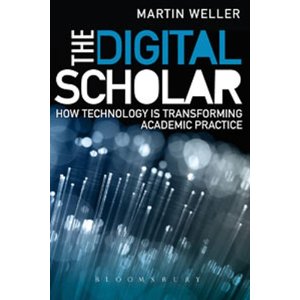
As a scholar who is lives digitally, connected & open, I have appreciated following along with Dr. Martin Weller’s as he tweets & blogs his ideas for similar philosophies. More recently he has published an open-access, creative commons book – The Digital Scholar.

I was just watching Martin’s recent talk with the LSE on how to engage in digital scholarship, i.e. scholarship that is open, networked and digital. Thanks to the Centre for Learning Technology at LSE for presenting the NetworkEd: Technology in Education Series, you can watch these “lessons” (a.k.a. general ideas and musings about how to be a connected & engaged scholar). @mweller has posted his 10 Digital Scholarship Lessons in 10 Videos to recap the presentation, slides and scoop it page as well:

  1. It’s not just for geeks
  2. Researchers are caught in a dilemma
  3. Interdisciplinary is the network
  4. We’re all broadcasters now
  5. We’re operating in an attention economy
  6. We can rethink research
  7. New skills will be required
  8. It’ll impact even if you ignore it
  9. It’s about alternatives
  10. Don’t focus just on risk

I think that Martin brings up some great ideas of what a digital scholar looks like – and there are many of them already out there. I hope to not only witness, but also be part of this academic revolution. The changing landscape of technology, information and communication is challenging higher education to rethink its approach to learning. Online resources are very social and collaborative, and I hope to see these emerging tools push the academic realm outside of the traditional boundaries and expectations. With current developments in educational technology, learning communities have the ability to enhance peer-to-peer connections, social learning, knowledge sharing, and critical thinking for researchers. When learners/researchers become creators, narrators and digital contributors of their own academic fields, many gain further in-depth meaning and purpose in the learning process.