Higher Education, MOOC, Open Education

New Social Learning … is It “New”?

Education rarely reinvents the wheel. This is not necessarily a bad thing. There are a number of great theorists, researchers, scholars, practitioners, and educators who have been utilizing connected and social learning ideas for decades.

In thinking about social learning for instructional design, I will turn to Bingham and Conner’s (2010) outline for how this is “new” in many of our organizations:

  • The new social learning is not just for knowledge workers – community-oriented.
  • Plays well with formal education to capture shared learning.
  • Compliments training and supplements development.
  • Similar but not the same as informal learning – more search and reading.
  • More than just online search and social networking.
  • Not like broadcasting information, more communal.
  • Allows for interaction and experiences to share ideas.

Image from Social Media Portal

Thomas and Brown (2011) inquire about the new culture of learning in their book, specifically asking: “What happens to learning when we move from stable infrastructure of the twentieth century to the fluid infrastructure of the twenty-first century, where technology is constantly creating and responding to change?”

I am thinking about this question a lot. A number of educators are looking for the “new” instead of asking questions and assessing the present practices. As a scholar-practitioner with perhaps faculty inklings, I have many concerns and questions for the future of our learning in higher education:

  1. Who (collaboratively) will best respond to the challenges and changes for our learning landscape on your campus?
  2. Why are educational changes and decisions being made? Is there assessment and evaluation? Data-driven decisions? Literature to support the change?
  3. What are we doing well & what can we improve upon in our face-to-face, online, and blended pedagogy in higher education?
  4. How are we thinking about connections, creativity, and social learning for our campus learning environments?
  5. When & how seek out the learner’s input for changes to our educational curriculum, campus programs, and student support services?

The idea of one idea, one thing, or one person to tackle the challenges/changes in higher education is ridiculous. If you think a “new” way to learn – perhaps a MOOC – will solve your university or college, then I am concerned about your strategic goals and learning outcomes. Take a gander at George Siemen’s recent #open13 talk [slides & video] to get a historical perspective on MOOCs (then and now), learning challenges, and other considerations for higher education pedagogy. [P.s. If you want to talk more MOOCs and research – y’all should come down to Texas for the 1st MOOC Research Conference in December]

One great take away from George’s talk (via a priest) about the upcoming shifts to higher education: “Don’t move away from things…because if you move away from things you don’t have a clue where you’re going to end up. Instead, move towards something.”

References

Bingham, T., & Conner, M. (2010). The new social learning: A guide to transforming organizations through social media. Berrett-Koehler Store.

Thomas, D., & Brown, J. S. (2011). A new culture of learning: Cultivating the imagination for a world of constant change (Vol. 219). Lexington, KY: CreateSpace.

Siemens, G. (2013, November 7). MOOCs: How did we get here? Elearnspace. Retrieved from http://www.elearnspace.org/blog/2013/11/07/moocs-how-did-we-get-here/

#AcWri, #AcWriMo

My #AcWriMo Goals for November

acwrimo1-01

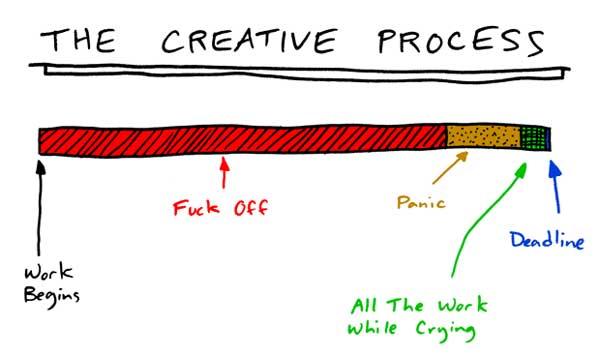
Happy Academic Writing Month (#AcWriMo)! November IS #AcWriMo… however as a student every month is #acwrimo… BUT in an effort move forward on a few writing deadlines and projects I thought this accountability would change my typical “creative process.”

The Creative Process

#AcWriMo main features include:

  • Setting academic writing goals
  • Writing down said goals & tracking (see the AcWriMo 2013 Writing Accountability Spreadsheet) collectively
  • Strategy sharing for #AcWri
  • Sharing my progress (will be weekly for me)
  • WRITE!!!! (most important)
  • Show results (see spreadsheet & future blog posts)

I have participated in this #acwrimo in the past, and I thought that this type of peer/social pressure was very productive. I liked the idea of declaring goals, being accountable and tracking my writing progress in chunks. I also think that this will be a very useful practice to step up my word count and complete writing projects that need to be completed.

My #AcWriMo Goals for November:

  1.  Complete my doctoral dissertation proposal so that it is ready to DEFEND to my committee.
  2. Finish Technology in Advising for Higher Education manuscript to submit to the NACADA Journal.
  3. #iConf14 Social Media Expo – paper & video for conference.
  4. Complete a minimum of 2 blog posts per week – on writing progress and projects.

Here is how I plan on achieving these goals:

  1. Write for a minimum of two 60 minute time blocks per day.
  2. Have a total of 750 words per day written.
  3. Logging my projects, words written, and more to the #acwrimo accountability spreadsheet.
  4. My Tweeps & other social networks can call me out and inquire at ANY time to see how I’m doing.

Are you going to JOIN IN THE #AcWriMo FUN? You should!

Higher Education, Social Media

Gathering #SocialMedia Guidelines from Higher Education #SoMe #edusomedia #highered

Grey of Social Media

When discussing social media guidance in higher education, there seems to be a lot of grey areas. Social media use is a relevant topic on many college and university campuses. Over the course of the next few months, my plan is to review social media guidelines to sort out the grey, and identify more black and white ideas about social media guidance.

To pursue my dissertation research, I am currently gathering ANY and ALL Social Media Guidelines from Higher Education Institutions from ANY and ALL COUNTRIES. If you currently attend, work, teach, or know of any a post-secondary institution that provides guidance for social media, then I need your help! Please search your institutional website for “social media” guidelines. Keep in mind, your higher education institutional “guidance” for social media may also be labeled as: guidelines, policy, tips, rules, beliefs, regulations, strategy, or take on another name. If you are aware of any websites, documents, or artifacts that guide social media in higher education, please COMPLETE THIS FORM.

 Please consider contributing to help advance social media guidance and use at our post-secondary education institutions: 

Submit a Social Media Guideline & Policy Document

The following website was created to gather and build a social media guideline database and share information about this research:

http://socialmediaguidance.wordpress.com/

If you have questions, concerns, or want to get more involved in this social media guideline project, please feel free to CONTACT ME. Thank you!

FashioningCircuits

#FashioningCircuits Takes On Design Your World STEM Conference

Last weekend, I volunteered at the Design Your World – North Texas STEM Conference for Girls. This is the second year running for this conference, which was created to introduce and engage young girls to the STEM (science, technology, engineering & math) fields. I spent last Saturday on campus at SMU working with girls (ages 9-11) and sharing how coding, electronic circuits, and fashion intertwine with our fearless workshop creator/leader, Dr. Kim Knight (@purplekimchi). Girl power!

Design Your World fun with the #fashioningcircuits

Initially I joined in the Design Your World fun to document and take notes about the  #FashioningCircuits workshop, course, and research — but really how could I resist crafting my very own LED circuit headband with moustaches. REALLY?!?! This workshop introduced girls to the wearable Arduino Lillypad, and how to include this technological hardware in your fashion design.
Getting directionals from  @purplekimchi for my #fashioncircuit

It was a fun and productive day. I really enjoyed working with the Girl Scout Troupe from Denton (Holla!) who wanted to learn how fashion connects to technology design, historically and in application. Not only did I earn my “Product Designer” badge (YES!), I also learned what these young ladies thought about working with technology, circuits, coding, and more:

My product designers from Denton Bella, Leah & Lilly. #fashioningcircuits #stem #girlpower

After getting to the end product — the blinking LED lights on the headband — all the girls felt a great sense of accomplishment and satisfaction for the day. It was a pretty cool project, after all. For me, I had a few personal takeaways from the workshop experience, and interacting with the participants:

  • Sometimes when you learn and try new things — you will not succeed. We all had a number of mistakes, but we learned from them and fixed errors to get to the end product.
  • Get a strategy and tip from those around you. Whether it’s how to thread the electric thread chord or stitching, you can learn from all levels.
  • These girls were not aware the barriers or even the lower number of females in the STEM fields. That being said, this might be the first time they learned about the fields of computer science, engineering, and more.
  • At this age, most girls believe that anything is possible.
  • “Girls work better together” (said my group) specifically with regards to collaboration, listening, and helping each other problem-solve.
  • My ladies thought that it was “much quieter without boys” and the said boys are more competitive.
  • Many of the girls were interested in learning more about computers, coding, circuits, electricity, and how things work in general as a direct result of interacting and designing in this workshop.
  • While completing the conference evaluation, my  group had to ask a parent what “box to check” for ethnicity. I liked this. It reminded me that institutions and educators put labels on things they don’t need to.
  • Keep exploring. Keep learning. Even this workshop schooled this ME… a self-acclaimed creative, smart kid. It reminded me to always keep the challenges coming.

Are you interested in learning more about this cool workshop? Want to connect to Fashion Circuits to learn about technology & design? Check out the Fashioning Circuits course taught by Dr. Knight at UT Dallas, follow @FashionCircuits on Twitter or track on the hashtag #FashioningCircuits for different happenings. I will continue to play with fashioning circuits every now and then to collaborate and contribute to Kim’s upcoming book, Fashioning Makers and Counterpublics: Critical Making and Public Humanities. Stay tuned for more maker and fashionista magic.

EdTech, Professional Development, Social Media

My #edu13 Sampling Tour at @EDUCAUSE

With limited time in my October schedule, I was only able to drop into the 2013 EDUCAUSE annual conference (#edu13) in Anaheim, CA for a couple of days. It’s unfortunate that I was not able to stay longer; however I’ll share my sample of the #edu13 higher education and technology conference. {This is what happens when you are traveling to conferences, writing a dissertation proposal, advising for Spring 2014 registration, teaching a class & training for a marathon all in the same month. Lessons learned for next year.}

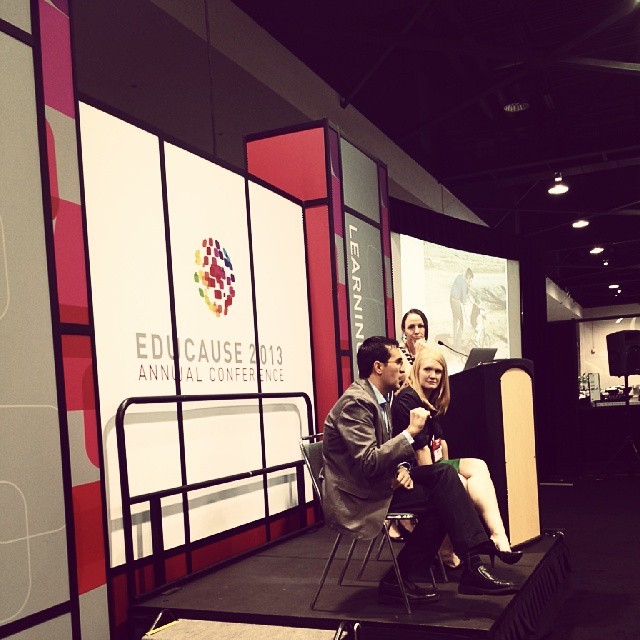
I was fortunate to be able to attend #edu13 since Tanya Joosten (@tjoosten) asked me to co-facilitate a virtual workshop on Social Media for Teaching and Learning. Much of this session shared ideas from Tanya’s book, our research article, and our practical application for utilizing social media for learning/teaching. During the session we modeled our teaching/learning expectations by encouraging participants to interact & dialogue with us on Twitter. Our emphasis was not on the tool, but more on the social learning and interactions you can have to augment educational experiences:

Let's get social #edusocmedia ....its not the tech #edu13Here is our digital handout from the workshop: http://bit.ly/edusocmedia13

Before I had to leave EDUCAUSE on Wednesday, I attended the #edu13 Prepare for Lift-Off: Becoming a Successful IT Pilot Site Panel and took a few digital notes: http://bit.ly/pilotpanel

How can the solution improve student learning? Ask @tjoosten @amcollier & @Veletsianos #edu13

During this session, Tanya Joosten (@tjoosten), Amy Collier (@amcollier), and George Veletsianos (@veletsianos) discussed the TOP 10 questions every institution should ask before piloting a technology solution for learning at their campus:

  1. Why should this solution be introduced to the campus?
  2. How can the solution improve student learning?
  3. Does your institution have readiness or capacity to pilot a new solution?
  4. Who is the audience and are the stakeholders?
  5. What is the pedagogical model that will lead to the greatest?
  6. How will a vendor be selected for the new technology?
  7. How would faculty be selected to participate?
  8. How do you evaluate the impact of the solution on the identified outcomes?
  9. How do you diffuse the innovation on campus and beyond?
  10. What are your questions?

Since I missed out on the live happenings, I made sure to follow the #edu13 backchannel and my tweeps while traveling home. If you don’t have much time or interest in text mining all the many tweets, The Chronicle curated few conversations on Twitter and EdTech Magazine compiled a list of people to follow at EDUCAUSE 2013.

Good morning #edu13