#AcWri, #AcWriMo, Dissertation

#AcWriMo Discipline: Dissertation Boot Camp Here I Come!

In honour of my #AcWriMo November Goal #1, I decided to apply to the UNT Eagle Dissertation Boot Camp that is happening this week (November 21-23). To date, my word count for the month is 19, 344; however I need to dedicate more of these words to my dissertation drafting.
BootCampGraphic

Image from UDaily post from University of Delaware.

After approval from my faculty advisor and support from my supervisor, I applied to this 3-day boot camp to SHUT UP AND WRITE.  I just received my official acceptance to the program from Dr. Joseph Oppong, the Associate Dean for Research and Professional Development in the Toulouse Graduate School:

 Dear Student,

Congratulations, you have been accepted to attend the Eagle Dissertation Boot Camp! It will be held in the Willis Library Forum (first floor area). The boot camp is designed to provide you 3 days of interruption-free, stress-free, no-excuses-just-do-it writing time for your dissertation. To help you prepare so that you optimize your output here are some packing tips.

Be sure to clear your calendar for the whole of the boot camp. You need to commit to attend the entire workshop. You will not be excused to teach or attend class. Arrange transportation and childcare so that you are free to attend each day.

This is your notice that you are enrolled in Boot Camp. If you cannot attend this session let me know immediately. If you cancel within 3 days of the event you will be considered a “no show” unless you situation truly is serious. If you “no show” you will not be allowed to participate in the next session and your advisor will be notified. We have limited funds, space, and resources and you must commit to coming or give your seat to someone else.

Please bring a laptop, a mug (coffee/tea available) and/or water bottle. If you don’t have a laptop, you can check one out from the Library, but, bring a flash drive to save your work. MP3 players and headphones are recommended if they help you concentrate, or if you find nearby conversations distracting. Work tables, lunch, and snacks are provided.

No lateness, please. It’s distracting for the other campers…

Here is the line up this week’s dissertation boot camp – so don’t expect a whole lot of tweets, email responses, social network posts,  or interaction from me as my Interwebs use will be limited from Thursday (11/21) morning onward:

Boot Camp Schedule

Day 1 Day 2 Day 3
8:00-9:30 a.m. Formatting Workshop
9:30-10:00 a.m. Roll Call, Welcome, Introductions, Breakfast
10:00-11:30 a.m. Writing
11:30-12:00 p.m. Wellness Activity
12:00-1:30 p.m. Writing
1:30-2:00 p.m. Lunch
2:00-3:30 p.m. Writing
3:30-6:00 p.m. Optional Writing Time or Optional Individual Consulting
9:00-10:30 a.m. Writing
10:30-11:00 p.m. Wellness Activity
11:00-12:30 p.m. Writing
12:30-1:00 p.m. Lunch with Advisors
1:00-2:30 p.m. Writing
2:30-3:00 p.m. Self-Assessment and Discussion
3:00-6:00 p.m. Optional Writing Time or Optional Individual Consulting
9:00-10:30 a.m. Writing
10:30-11:00 a.m. Wellness Activity
11:00-12:30 p.m. Writing
12:30-1:30 p.m. Lunch
1:30-3:00 p.m. Writing
3:00-6:00 p.m. Optional Writing Time or Optional Individual Consulting

Each day includes:

  • several blocks of writing time
  • scheduled, limited time for web-browsing
  • tip sheets
  • wellness breaks
  • a lunch conversation with fellow campers (box lunches provided)
  • space to continue writing in the afternoon (if interested)

The reason I applied, is to have specific time carved out and a dedicated space to move forward on my #AcWriMo goal #1. A number of things get in the way of my dissertation writing, including other writing projects, presentations, work items, and life. Also, as a student who wears “many hats” on campus and outside my job, I can sometimes find it challenging to pick up where I have left off, and my motivation to just write is fragmented with other responsibilities. I think this dedicated writing schedule will push me further along with my dissertation goals.

I will report back in after “camp” is over. Write on, my friends. Write on.

#AcWri, #AcWriMo

#AcAWriMo Reading: The Literature Review

In SAGE’s Doing a Literature Review, Hart (1998) defines the literature review as “The selection of available documents (both published and unpublished) on the topic, which contain information, ideas, data and evidence written from a particular standpoint to fulfill certain aims or express certain views on the nature of the topic and how it is to be investigated, and the effective evaluation of these documents in relations to the research bring proposed.”

Reviewing my literature this afternoon. #phdchat

I have been collecting and organizing literature, publications, and more on the topic of social media guidance for quite some time. I have been reviewing the key questions used for a typical literature search and review of my research topic (Hart, 1998):

  • What are the key sources?
  • What are the major issues and debates around the topic?
  • What are the key theories, concepts, and ideas?
  • What are the epistemological and ontological grounds fro the discipline?
  • What are the political standpoints?
  • What are the origins of this topic?
  • What are the definitions involved with this topic?
  • How is knowledge on the topic structured and organized?
  • How have approaches to these questions increase our understanding and knowledge?

In thinking about my own doctoral research, the literature review, a.k.a. Chapter 2 and part of Chapter 3 (methodology), often demonstrates a specialization in a topic and focus. For a number of doctoral researchers, the dissertation/thesis is requires a high level of scholarship, and it is an opportunity to make an original contribution to the field. Phillips and Pugh (1994) conducted a study around doctoral research and literature reviews, in which they identified nine definitions for originality:

  1. doing empirically based work that has not been done before;
  2. using already known ideas, practices or approaches but with a new interpretation;
  3.  bringing new evidence to bear on an old issue or problem;
  4. creating a synthesis that has not been done before;
  5. applying something done in another country to one’s own country;
  6. applying a technique usually associated with on are to another;
  7. being cross-disciplinary by using different methodologies;
  8. looking at areas that people in the discipline have not looked at before;
  9. adding to knowledge in a way that has not previously been done before.

It appears I will be working on #1, #6, & #7 with my dissertation research methodology. Enough talking about it, back to my literature review additions, and more writing. Go #AcWriMo Go! [p.s. Word count to date for #AcWriMo = 16, 271 now. How are you doing?]

References:

Hart, C. (1998). Doing a literature review: Releasing the social science research imagination. Sage.

Phillips, E. M., & Pugh, D. S. (1994). How to get a Ph. D.: a handbook for students and their supervisors. Buckingham, UK: Open University Press.

#AcWri, #AcWriMo

My #AcWriMo Goals for November

acwrimo1-01

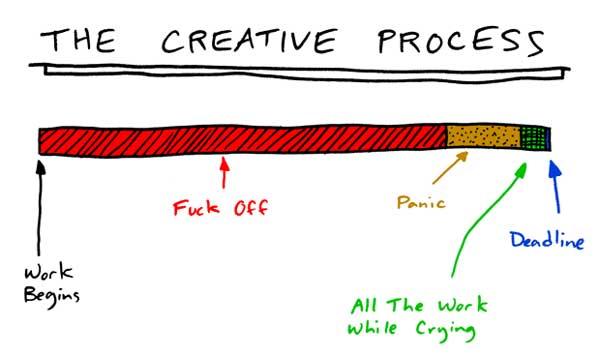
Happy Academic Writing Month (#AcWriMo)! November IS #AcWriMo… however as a student every month is #acwrimo… BUT in an effort move forward on a few writing deadlines and projects I thought this accountability would change my typical “creative process.”

The Creative Process

#AcWriMo main features include:

  • Setting academic writing goals
  • Writing down said goals & tracking (see the AcWriMo 2013 Writing Accountability Spreadsheet) collectively
  • Strategy sharing for #AcWri
  • Sharing my progress (will be weekly for me)
  • WRITE!!!! (most important)
  • Show results (see spreadsheet & future blog posts)

I have participated in this #acwrimo in the past, and I thought that this type of peer/social pressure was very productive. I liked the idea of declaring goals, being accountable and tracking my writing progress in chunks. I also think that this will be a very useful practice to step up my word count and complete writing projects that need to be completed.

My #AcWriMo Goals for November:

  1.  Complete my doctoral dissertation proposal so that it is ready to DEFEND to my committee.
  2. Finish Technology in Advising for Higher Education manuscript to submit to the NACADA Journal.
  3. #iConf14 Social Media Expo – paper & video for conference.
  4. Complete a minimum of 2 blog posts per week – on writing progress and projects.

Here is how I plan on achieving these goals:

  1. Write for a minimum of two 60 minute time blocks per day.
  2. Have a total of 750 words per day written.
  3. Logging my projects, words written, and more to the #acwrimo accountability spreadsheet.
  4. My Tweeps & other social networks can call me out and inquire at ANY time to see how I’m doing.

Are you going to JOIN IN THE #AcWriMo FUN? You should!

#AcWri, Learning Technologies, LPQuarterly, OpenAccess

The @LPQuarterly – Year Two, An Editor’s View, and Volume Two

It is my second year editing and working with the Learning and Performance (a.k.a. @LPQuarterly) here at the University of North Texas.

The Learning and Performance Quarterly (ISSN 2166-3564) is a peer-reviewed, open access journal from the Center for Knowledge Solutions at the University of North Texas. The journal takes a broad look at current developments and research that involves innovative learning, training, human resource development, and performance management across academic and professional disciplines.

Creating an open access, academic writing space from scratch is a bit like a “start up” – it takes a lot of time, investment, tears, creativity, stress, and collaboration (not in any particular order). In being an open educator and seeing academic channels open for scholarly publications, It was only fitting that our agraphia writing/research group from the Department of Learning Technologies consider developing an interdisciplinary, online space for scholars, practioners, and researchers to publish in our field. In coming from the University of Toronto, I knew that the Faculty of Information Quarterly (FIQ) was a student-led, peer review project — so I figured that our talented group could do the same thing.

lpq_logo_enhanced

After reading Karina Quinn’s (a.k.a. @riotk ) blog post, “How to start an Open Access journal,” I thought I could have helped to co-author that post. 🙂 I shared some similar stories and a deep respect for her experiences in open access publishing. So, with that, I thought I would share a few of my lessons learned (from Fall 2011) about the academic publishing process:

  • It takes time to build a journal. TIME!
  • You will have to always CHECK your journal email for communication updates from authors, reviewers, editors and then some. This SHOULD be separate from your personal and work e-mail to keep your life organized, and if your editorial board needs access to the journal email.
  • You can NEVER have enough quality peer reviewers on your roster. Search them out. Invite them. Mentor/support them. Grade and evaluate them with your editorial team.
  • Surround yourself with many talents on your editorial team – think of copyediting, layout, recruitment, and more!
  • Find great scholars and researchers to publish – help to build your street cred and raise the bar for your journal content.
  • Communicate & Market – share what you are doing with different professional associations, student groups, conferences, research listservs, social media outlets, and then some. I started bringing flyers and cards for the journal to places I would go to invite potential authors/researchers, copy editors and most of all peer reviewers.
  • Connect to your friendly neighborhood librarian for advice, indexing, database set up, and then some. They have some GREAT experiences & ideas.
  • Sharpen your editing TOOLS – read books, review websites, watch tutorials, learn about publishing guidelines, school yourself in APA 6th,  talk to other editors, peer review in for other academic journals, and more!
  • Offer developmental writing workshops and opportunities for graduate students and junior scholars, e.g. HOW TO: Effectively Review, Submit & Publish Your Academic Manuscript. . This is a great space for learning, and provides them with opportunities to inquire about academic writing. Also, find experienced scholars and faculty who can share their publication experiences – the good, the rejected, and then some!
  • You will learn new tech skills: read “how to” for the Open Journal System (OJS), linking to EBSCOhost databases, and meta data fun times!
  • Consider how your virtual team will function, meet, and connect on a regular basis to publish issues.
  • Identify a workflow and easy to use spaces for archiving meeting notes, recruitment/marketing material, and communication for your editorial team.
  • Understand your institutional policies for publishing if you are a university. Our university is Open Access, and I’m proud to say that our Provost just signed the latest SPARC agreement to for Fair Access to Science and Technology Research Act (FASTR) bill. What will it mean for an open access publication at YOUR campus?
  • Build in transition and mentoring into your role as an editor. Look for peer reviewers who might be great copy-editors, and consider your change in role as an editor.  I am currently working with our Assistant Editor, Tekeisha Zimmerman, this year who will take on the main editor role for 2014.
  • Never doubt the power of your network. Talk up what you’re doing in person at conferences, when you meet researchers, and get SOCIAL online. We share our call for papers and information about writing on Twitter (@LPQuarterly), our LPQ Facebook Page, and on LinkedIn Groups that are relevant to LPQ.

PUblishing

With the support of the LPQ editorial team, I have been able to work with a number of brilliant contributing authors, peer reviewers, and readers within the fields of education (K-12 and higher ed), learning technology, human resource development, human computer interaction, knowledge management, training and development assessment, and performance management systems. We are currently seeking manuscript submissions for the following categories:

  • Research Articles – Qualitative/Quantitative
  • Concept/Theory Papers
  • Case Studies
  • Book or Media Reviews
  • Invited Articles

If you are interested in submitting an article, the 2013 call for papers is OPEN. Please submit your manuscripts ONLINE today!

For more information or questions, please contact the Learning and Performance Quarterly Editors:
Laura A. Pasquini, Editor
Tekeisha Zimmerman, Assistant Editor
Dr. Jeff M. Allen, Managing Editor
~~~~~~~~~~~~~~~~~~~~~~~~~

On behalf of the editorial LP Quarterly team, we invite you to read the current issue, or visit the archives for your research and learning.

Here is the most recent issue,Learning and Performance Quarterly, Vol 2, No 1 (2013) that is…

HOT-OFF-THE-PRESSES

Table of Contents
http://www.sageperformance.com/ojs/index.php/LPQ/issue/view/7

Editorial
——–
Transforming Teaching, Knowledge Management & Performance Measurement
Systems
Laura A. Pasquini,      Tekeisha Zimmerman,     Jeff M. Allen

Invited Articles
——–
Traditional Teaching or Innovative Teaching via Technology?
Victor C.X. Wang,       Patricia Cranton

Concept/Theory Paper
——–
A Conceptual Model for Community of Practice and Its Implications for Human
Resource Development Practice
Hee Sung Lee,   Jeong Rok Oh

Performance Measurement Systems and Culture:  An Integrative Literature
Review
Shelby Danks

Book Review
——–
A Year Up: How a Pioneering Program Teaches Young Adults Real Skills for
Real Jobs with Real Success
Michael F. Koslosk

#AcWri, #phdchat, LPQ

The @LPQuarterly Workshop No. 1 – HOW TO: Effectively Review, Submit & Publish Your Academic Manuscript

To support our graduate students and junior scholars at UNT, with their academic writing development, the Learning and Performance Quarterly hosted its first workshop this past Friday, March 1st.

The purpose of this session was to introduce graduate students to the Learning and Performance Quarterly journal, and engage in a discussion about scholarly peer-review, academic editing, and the publication process. Dr. Kim Nimon & Dr. Jeff Allen shared their experiences and thoughts on the publication process, and what it takes to submit an academic manuscript.

We discussed the steps from submission preparation, through correspondence, and all the way to publication, including:

  • Understanding Academic Journal Types: A, B, & C Level
  • Considering the Social Science Citation Index (SSCI) for journal levels
  • Using Google Scholar Citations & being critical with Google Scholar
  • Filtering with the UNT Libraries Search – Summon
  • Researching Academic Journals: Cabell’s Directory (hard copy in library)
  • Scholarly Publication Process – how it helps your academic writing improve
  • Effective Peer Reviewing – comments, feedback & effective suggestions
  • Expectations & Considerations – the typical process is 9-12 months
  • Developing Publishing Relationships – between reviewers & editors AND the editor & author; it’s a human process
  • Attending Conference Sessions with the Editor – bring your manuscript, learn if they need papers, build a rapport
  • key rejection reasons – format, grammar, APA, and theoretical frameworks
  • How to get involved in the academic reviewing & writing process
  • Using a plagiarism checker to review your manuscript before submission
  • Communication with the editor & being timely with your peer reviews

During the session Dr. Nimon shared her own publishing experiences, provided the group with  peer-reviewing and editor correspondence, and talked about what she looks for in academic manuscripts as an editor. 

Although many asked to record the workshop; I decided not to as the open discussion, and Q & A format was really best served in person, and I think the conversation was more candid without the recording.  You can thank the LPQ Assistant Editor, Tekeisha, for compiling notes from this session – here is the summary of what we discussed:

Besides encouraging our attendees to write, we also placed value in joining the peer-review and editing process. We suggested to sign up to review articles for the LP Quarterly AND other journals in their field. Being a peer-reviewer helps junior scholars gain experience in the publishing process, build a rapport with editors, learn about acceptable journal submissions, and hone their own academic writing craft. I suggested reading Rocco and Hatcher’s (2011) book, specifically “Chapter 2 – Publishing in Peer-Reviewed and Non Refereed Journals” to get their feet wet with starting the academic submission process, preparing a manuscript, deciding where to publish, and how to best work with editors.

Although I have seen this session before – I know that I left the workshop with some great takeaways from Dr. Nimon, and helpful ideas shared by scholars who have been through the full academic writing experience from submission to publication. A huge thanks to Dr. Nimon for her time and sharing, Dr. Allen for donating the book giveaways (who doesn’t LOVE winning the Rocco & Hatcher text or APA 6th edition book?), and, most importantly, thank you to those of you who joined us on a Friday night. I appreciate it. 

In our efforts to be more developmental, the Leaning and Performance Quarterly would like to offer more in-person and online workshops on researching, writing, editing, reviewing, and publishing. It was great to see representation from other departments and disciplines across campus the other evening. We welcome others to join us for future LPQ Workshops as we consider other topics, including:

  • Managing Your Writing Projects
  • Forming Agraphia (Writing) Groups
  • Writing Literature Reviews
  • Drafting Conceptual Articles
  • Secondary Data Analysis

If you have any topic suggestions or would be interested in participating – let me know. Feel free to write suggestions in the comments OR send a message to the LPQ Editors: LPQuarterly [at] gmail [dot] com.

FYI: The NEXT Call for Submissions is on Monday, March 11th at 11:59 pm CDT. Do you have your academic manuscript ready? Submit TODAY!

Reference:

Rocco, T.S. & Hatcher, T. (2011). The handbook of scholarly writing and publishing. San Francisco: Wiley/Jossey-Bass.