networkedscholar, Open Education, Research, Social Media

#CFP Due April 15th: Digital Learning and Social Media Research Funding 2017

Are you an early career scholar or an advanced doctoral student researching networked scholarship, social media in education, open learning, emerging technologies, etc.? Then this might just be the grant funding for you!

Dr. George Veletsianos (Canada Research Chair in Innovative Learning and Technology at Royal Roads University) and Dr. Royce Kimmons (Assistant Professor, Brigham Young University) invites applications from advanced doctoral students (i.e. those who completed their graduate coursework) and post-doctoral associates to conduct research with The Digital Learning and Social Media Research Group. This research funding opportunity aims to scaffold and mentor advanced doctoral researchers and early career scholars to co-plan, execute, and submit for publication a research study.

There are five (5) $2000 CAD grants available for research that focuses on one or more of the following areas: networked scholarship, social media use in education, digital/online learning, open learning, emerging technologies, learning analytics, social network analysis, or educational data mining.

Requirements

  • Advanced doctoral student status (usually in the 3rd or 4th year of their studies) OR postdoctoral status having completed a graduate degree (Ph.D./EdD) within the last 3 years.
  • Enrollment in or having attained a graduate degree (PhD/EdD) in education, educational technology, learning technologies, learning sciences, curriculum and instruction, cognitive science, or other related fields.
  • Individuals must be Canadian citizens or permanent residents of Canada or must hold a valid employment visa or work permit issued by the Government of Canada.
  • To be well-suited for this opportunity, individuals must have excellent organizational abilities, analytic skills, and be familiar with methodologies involving the analysis of quantitative or qualitative data.

Questions?

Please feel free to reach out to me, or for further inquiries regarding this opportunity please send an email to: CRCILT.Research@RoyalRoads.ca

BreakDrink, Higher Education, Podcast

Committed To Talking About Mental Illness in Higher Ed: @BreakDrink No. 6 #HEdCommits

Are you hankering for more of the @BreakDrink podcast now that you’ve got a taste? No need to fear, Jeff & I are back! We recently caught up with our friends Sue Caulfield and Kristen Abell to discuss how mental illness impacts our colleagues who work in higher education and have them on the podcast to share about their work with The Committed Project  a.k.a.

Do you remember the @BreakDrink Daily Dose? It was a bi-weekly higher ed news podcast Sue produced/hosted with Sarah MaddoxShawn Brackett. Other updates since BD days: Sue got married, started drawing #suedle(s), started The Committed Project, and she podcasts with her #poopfriends on The Imposters podcast. Besides working as a kick-ass web developer and manager at her institution, Kristen has pushed all of us to think more about the impact mental illness has for colleagues in higher ed. If you haven’t seen her 2015 ACPA Convention PechaKucha Talk – Depression: A Love Story, you should — NOW!

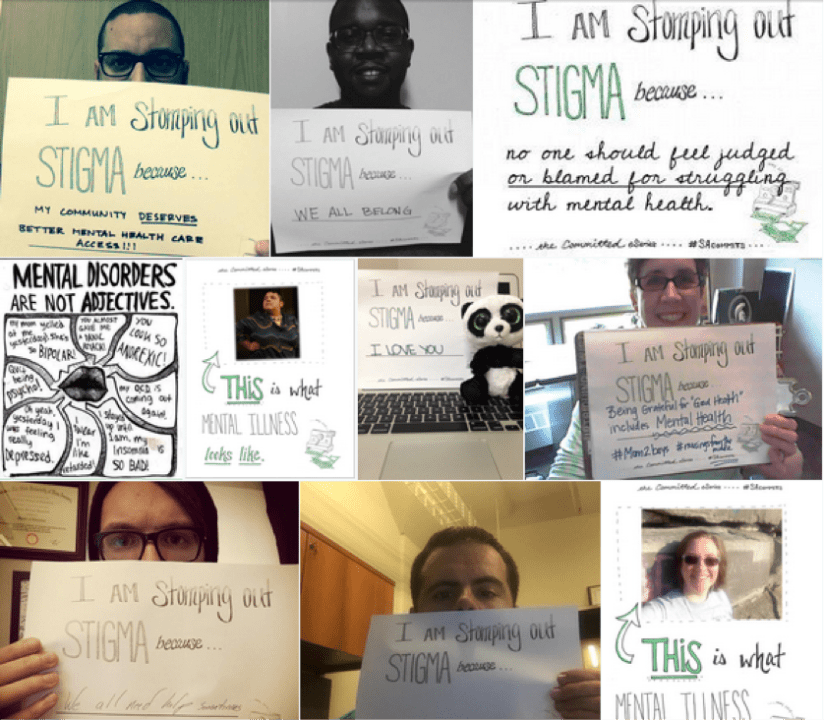
Also, props to her work with Committed’s campaign for #StompingOutStigma and getting more of us talking about mental illness (I gave a shout out to this in my #SAspeaks talk last month in San Antonio, TX – hola!):

#StompingOutStigma

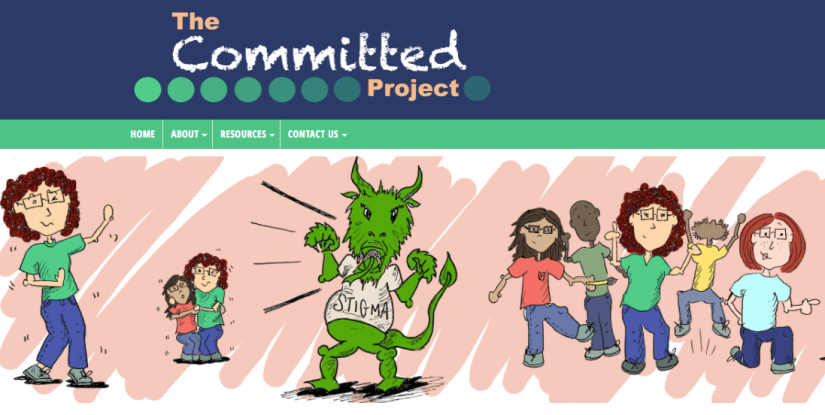
If you have not heard about the book, Committed: The Stories of Mental Illness in Student Affairs, it is created to share narratives from higher ed practitioners dealing with mental illness accompanied by #suedle visuals. From this book project, Sue and Kristen’s work with mental health awareness led to developing the blog series into The Committed Project, an organization that advocates for and supports higher ed professionals experiencing mental illness. For the past few years, they have been sharing stories – mostly firsthand accounts – from other professionals in higher ed who experience mental illness. YOU ARE NOT ALONE.  Please read and share the stories of your peers who struggle with mental health in higher ed on The Committed Project Blog.

As usual, I learn so much from these @BreakDrink discussions and there is a wealth of information/resources shared by The Committed Project on their website (thanks, y’all!):

May is Mental Health Awareness Month. While The Committed Project will be sharing one person’s story of mental illness through many voices on the blog this month, the group would also like to hear from YOU about how it feels to experience mental illness – your own or a loved one’s. If you are so inclined, please share a short video clip of you or someone you know talking about one aspect of your experience with mental illness – whether at work, at home, at school, or wherever to The Committed Project. You can submit videos at admin@thecommittedproject.org

Take a listen here to episode no. 6 #HEdCommits:

@BreakDrink Podcast Shout Outs:

@BreakDrink Recommended Reading:

If you are in need of support or need help, please reach out to the National Suicide Prevention Hotline by calling 1-800-273-TALK (8255) where you will be connected to a skilled, trained counselor at a crisis center in your area, anytime 24/7.

If you have comments, questions, or feedback about this podcast episode, please feel free to post a comment below, or follow us on the following the “BreakDrink” podcast channels:

We welcome banter & comments there. If y’all listen to the podcast via iTunes, please consider leaving us a rating and review.

BreakDrink, EdTech, Higher Education, Podcast

@BreakDrink Podcast, Episode No. 5: Digital Redlining with @hypervisible

In @BreakDrink episode no. 5, we chatted about LOADS of things related to our assumptions about access, policies, and practices in have higher education, specifically with regards to technology and learning. Last year for 2016 #OLCInnovate, I invited Chris Gilliard to share his work on Digital Redlining for a short “Ignite-like” talk. Why do we assume everyone has access to the Internet? Or a device? Or access to the same digital learning resources? What do we know or care about privacy and our data? Thanks for joining us to podcast on the topic, Chris. We suspect you’ll be back to chat more with us sometime about similar issues… and anime, of course

Here are a few show notes, ideas, and resources shared in @BreakDrink episode no. 5 with Chris:

Information Literacy, Filtering & Access

Online Access & Web Architecture

Do you KNOW what limitations to your search or access to your knowledge is like at your institution? Understanding Google Search Algorithms & SEO

Journal Access & Journal Databases: What are your resources or limitations? What can you not find that is not accessible on Google Scholar?

  1. Scholar Buddy Search – Find a friend at a larger university/college + ask them to search a topic (or borrow a password) to compare search results
  2. #icanhazpdf hashtag – Ask a friend on Twitter to email you the closed or pay-for-play publication
  3. Alternative creative ways to search: Find a romantic partner at a larger institution; academic citizenship acquisition? Or other ways to search for journal articles and here.

Searching Online & Information Literacy

The process of how information is shared needs to be explained. There are issues with walling-off information, the privatization of knowledge, and those who are moving towards a blockchain in higher ed. – explain what this means for limitations to information/knowledge.Do we teach our students to go beyond the first page hits on the Google search page? Do you know How Google Search Works? Much of our civic online literacy skills could be developed in order to hold ed tech & technology companies more accountable

Technologies in higher ed have many inequalities and technology is not neutral. Want to get more political for higher ed & #edtech? I’ll let Audrey Watters take this one: The Politics of Ed Tech Issues in higher ed are real for all of our campus stakeholders — students, staff, and faculty. These issues are around privacy, cyberbullying, trolling data security, and more. We need to be asking more about the technologies to learn what is ethically right and the limitations to these platforms, applications, and digital resources.

For a start, why don’t we learn more about privacy. Perhaps, it’s time we take a “short course” on privacy and what it means to be online, connected now. Check out the Privacy Paradox created by Note To Self. There are 5 podcasts and actions you do to take back your privacy & data. BONUS LISTEN: Privacy, Data Survivalism and a New Tech Ethics

We Need To Ask More About…

  • Do we really care about privacy online? Are we putting thoughts into the spaces and places online we are working with our learners?
  • Pew Research – State of Privacy in America  & Online Privacy & Safety articles
  • Do we know how our learners access educational materials and resources at our colleges/universities?
  • Cell-phone dependent students: the learner’s main access for Internet is their mobile device which is problematic as this is their main way to complete coursework, assignments, projects, etc.. (e.g. Educause 2015 mobile study & Case Study from Australia)
  • Do we think about the digital divide when considering our practices in higher ed for teaching, service & support?
  • Are we thinking about the platforms & apps we’re requiring our learners to use and how these technologies might be “sucking up their data”? We should.

@BreakDrink Books for Recommended Reading:

Here’s how to connect with Chris Gilliard to learn more about his work and this topic:

@BreakDrink Podcasts Shout Outs/Recommendations:

If you have comments, questions, or feedback about this podcast episode, please feel free to post a comment below, or follow us on the following the “BreakDrink” podcast channels:

We welcome banter & comments there. If y’all listen to the podcast via iTunes, please consider leaving us a rating and review.
AcAdv, AdvTech, Higher Education

Today’s #AcAdv Chat Topic: Data Analytics in Academic Advising #highered

A couple of week’s ago, I was fortunate to join the Open SUNY COTE Summit 2017. I will be sure to share more about the #COTEsummit learning in the coming weeks; however, the last session helped me think about framing TODAY’s (3/21) #AcAdv Chat I’ll be moderating from 12-1 pm CT: Data Analytics in #AcAdv 

During the #COTEsummit Learning Analytics panel hosted by OLC, we dug into what information we know and how we use it to understand more about our learners.  Many academic advising units/divisions, often jump to the platform or process for how we analyze students to predict learner behavior:

//platform.twitter.com/widgets.js

But before advising leaders in higher ed jump on the big data bandwagon or decide to implement technology platform to collect data, I think our support units need to identify what information and data we need to know to effectively support our learners. Let’s make decisions on the data that is most helpful, instead of letting predictive analytics make decisions for us at our institutions. What often gets lost in this conversation and planning is this: learning or learning analytics.

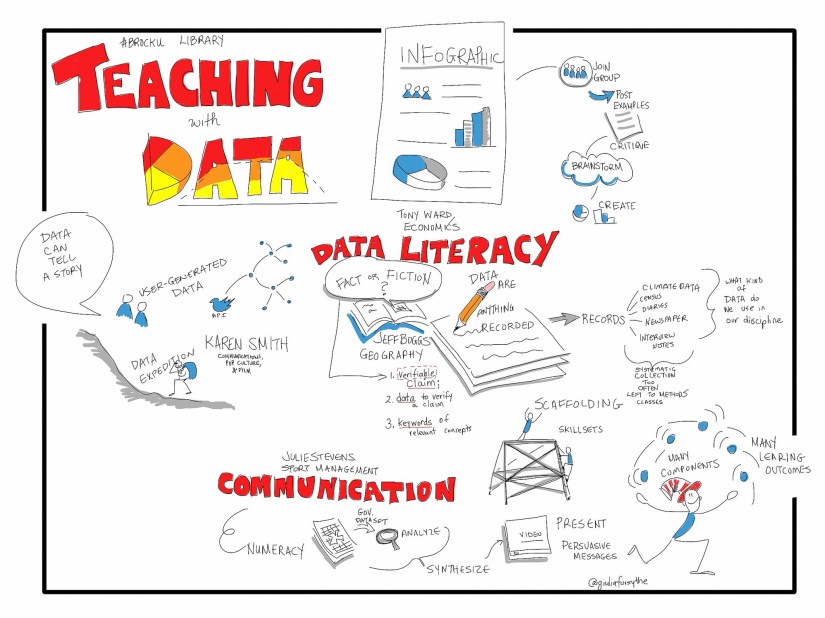
Learning analytics are about learning (Gašević, Dawson, & Siemens, 2015). Sometimes we forget this about learning analytics when the phrase data is tossed out at the  “strategic-planning-task-force-retention-student-success-operation” meeting occurs at our universities and colleges. Sure, learning analytics might be most relevant for instructors and faculty; however, learning data is also critical for those who support the instructional design, scaffold student success, and provide academic advising/support in higher education.

Image c/o Giulia Forsythe

In thinking about academic advising and learner support, I have SO many questions about data and data analytics for this #AcAdv Chat topic… here are just a few:

  • How does your institution collect, store, and share data campus-wide?
  • What do you do as a staff or faculty member to interpret the data?
  • Are you able to interpret, read, and translate the information provided about your learners?
  • Are there real-time notifications where students, staff, and faculty can interpret academic progress? What does this look like at your campus?
  • Do your data sets on campus talk to one another? Is there much interaction between your student information system, learning management system, institutional portal, or institutional research data? Why or why not?
  • What challenges and/or issues have you thought about for how data is collected and/or reviewed for learner support?
  • Who or what office can you reach out to on campus for “data analysis” or digging into your learner data to interpret further to support the work you do?

What thoughts or questions do you have about this issue, higher ed? Won’t you join us for today’s #acadv chat conversation? Here’s how:

TWEETS from the #AcAdv Chat conversation on 03.21.17

Reference:

Gašević, D., Dawson, S., & Siemens, G. (2015). Let’s not forget: Learning analytics are about learning. TechTrends, 59(1), 64-71.

#3Wedu, Higher Education, Podcast, women, WomenWhoWine.edu

The #3Wedu Podcast, No. 14: Gender Matters

As our institutions welcome new faculty and onboard staff members, higher learning organizations often experience either (or both) salary compression and salary inversion. Why raise the salary of tenured professors or administrative staff, if this talent can be replaced by recruiting new professionals or faculty for substantially less? Or just focus on one or two impact hires that bargain a salary much higher than their counterparts already on campus?  In previous #3Wedu podcasts (listen to episode no. 6 and no. 7), we have certainly discussed the glass ceiling for women in the workforce. Although these #3Wedu chats dig into the issues and opportunities for advancement in higher education; we have not even touched what it means for women who want to pursue senior leadership roles at the administrative level?

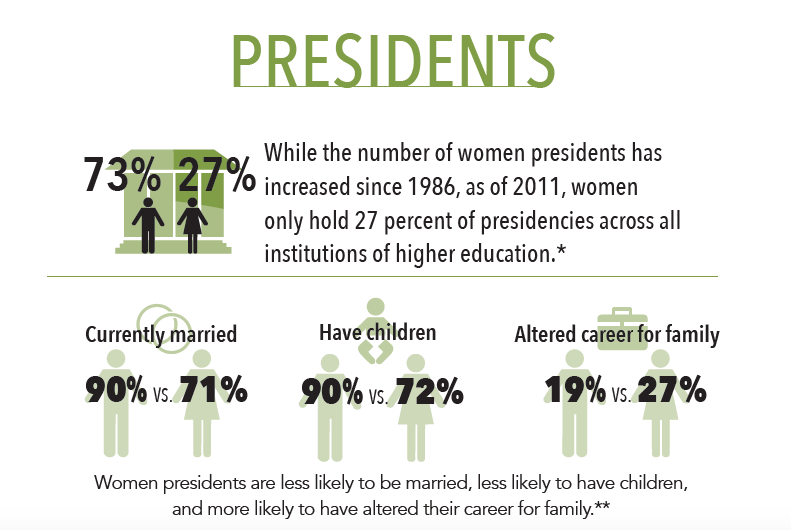
One of the most measured issues of inconsistency is the salary and pay gap between women and men. In administrative roles at our colleges and universities, women have only moved from $0.77 to $.80 on the dollar between 2001 to 2016, when compared to their male counterparts. But with this fact being shared, there are even more concerns about the gender gap those who hold faculty rank in a department or across a discipline AND the pathways/pipelines women have to administrative leadership in higher ed.

presidents statistics in higher ed
Image c/o Higher Ed Spotlight: Pipelines, Pathways, and Institutional Leadership [REPORT]

To dig into this issue further, I’m looking forward to welcoming  Ann Marie Klotz and Rich Whitney to share a bit around their narrative research inquiry for the impacts gender has in our university settings, specifically with regards to presidential leadership. [To Read: Ann Marie’s doctoral research will give you further insight on this topic as well]. Does gender matter for leadership in higher education? How do women presidents impact university leadership? What is their experience like? We will dig into these findings, specifically with a recent manuscript publication they completed, from their abstract:

“In spite of the increased enrollment numbers for women students, and that the demographic is enrolling and graduating at faster rates than their male counterparts, there are very few women in the highest level of leadership within a university. Several reasons for this phenomena include historical inequalities, stereotypical notions about women’s leadership styles, the presence of a chilly climate on college campuses, and the male-dominated history of academia. All of these impact the speed of advancement and professional options for women. This is a narrative inquiry study is part of a larger study that examines the role of gender and meaning-making for women in leadership within higher education, specifically at the level of the university presidency.

Join us TODAY (2/22) to discuss the impact and influence of gender on campus. Of course, we will always have dedicated time check-in with the #3Wedu ladies, who have been busy leading in research and conference happenings since January.