Check out 10 frequent fliers that are active on Twitter in Higher Ed c/o the Chronicle article from late last week. (Sorry for the delay.)
Most of these micro-bloggers study new media & the impact of Twitter on higher education. Follow on, friends.
Check out 10 frequent fliers that are active on Twitter in Higher Ed c/o the Chronicle article from late last week. (Sorry for the delay.)
Most of these micro-bloggers study new media & the impact of Twitter on higher education. Follow on, friends.
For those of you higher education folks who dabble in web design (and/or have web development as a larger part of your job portfolio) you might want to check out the findings from The 2008 List Apart – Survey for People Who Make Websites.

Very interesting information about folks (some like you) who create and design websites. Get their perspective on their projects and where the world wide web is going in the future. Other key details about:
Here is a very interesting TED talk by Richard Baraniuk about the vision behind Connexions, his open-source, online education system.
Imagine a world without textbooks in schools. Knowledge would be shared and modified for various courses. The materials would be online, free and accessible for the entire world. Welcome to the knowledge ecosystem!
This talk is a few years old, which means much of what Baraniuk is talking about has and will continue to transform the traditional classroom experience. Resources like Flat World Knowledge already exist to share textbooks and course materials with college students.
How has (or will) open-source learning made an impact to your learning environment?
The Technical Institute for Developmental Educators (TIDE) will be held at Texas State San Marcos from July 26-31, 2009. This is an interesting, hand-on technology workshop sponsored by Texas State University, CRLA and NADE fo higher ed folks interested in utilizing technology in their work.
Those who should attend include:
There will be at least 6 mini-course sessions (3 hours each) throughout the week, to introduce various learning opportunities with technology and enhance skills. There will also be daily mentoring group meetings to debrief and support project development.
To help process information it is always great to introduce a mind map as an effective learning tool.
A mind map is a diagram used to represent words, ideas, tasks, or other items linked to and arranged around a central key word or idea. Mind maps are used to generate, visualize, structure, and classify ideas, and as an aid in study, organization, problem solving, decision making, and writing. (c/o Wikipedia.org)
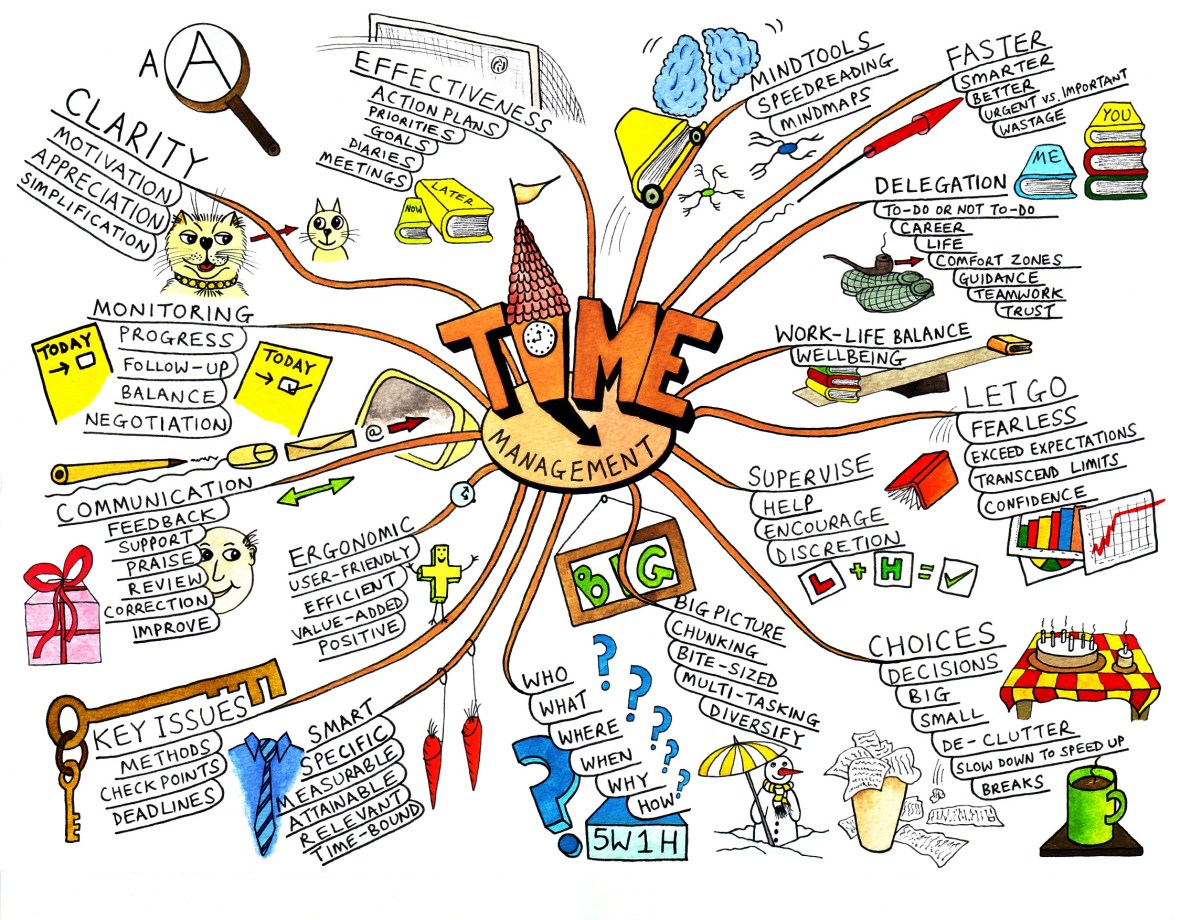
(c) Mind Tools Ltd
There are a few online tools that best support the mind-mapping approach for learning. Lifehacker.com recently reviewed the Five Best Mind-Mapping Applications for online mapping action. These tools are FREE & very user-friendly.
These resources are quite useful for both learning and teaching. There are plenty of online mind-mapping resources to support visual learners which makes mapping information fun!
Map on, my friends. Map on.
 techKNOWtools
You must be logged in to post a comment.