EdTech, Learning Technologies, Professional Development

Are You Coming to #et4online in Dallas? You Should.

The Emerging Technologies for Online Learning Symposium (#et4online), hosted by the Sloan Consortium and MERLOT, is just around the corner. This 7th Annual #EdTech conference will be held in Dallas, TX from April 9-11, 2014, and based on the program you can expect a number of talented individuals to be in attendance. Registration is OPEN!

et4online

I know that the #et4online is giving you 7 Reasons Why You Should Join Us…
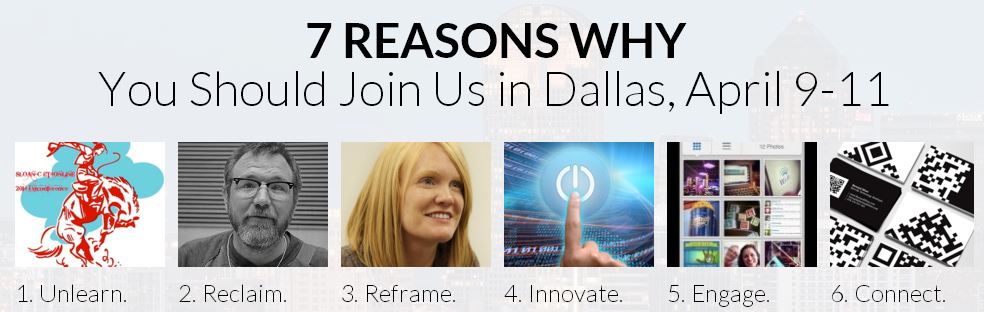
7 reasons

However I will give the reasons I am attending:

  • I get to talk about my #ugstSTORY class in terms of student development, learning design, social media applications, and my own lessons learned for instructional design.
  • Yours truly invited the Featured Sessions speakers to the conference, based on the amazing things they are working on in the field of Ed Tech and my own interest in meeting them. 🙂
  • I always learn something new from any of the interactive workshops and information sessions I have participated in.
  • You are able to order (almost) FREE MOO cards to help with your networking and such. This could also be handy as you attend the Career Forum (#edtechcareers) this year with some fantastic panelists c/o @RMoeJo
  • If you don’t know Jim Groom (@jimgroom) & his work on Reclaim Hosting – you should. He’s an #EdTech bad ass, and I look forward to his keynote.
  • The discussion, debate, & idea swapping in the Unconference is brilliant. All sessions are user-generated and led by those who attend these meetings. There is usually something for everyone, with regards to topics, and I usually leave with some interesting take-aways and things I want to work on as we wrap up the conference.
  • Last, but certainly not least… I attend #et4online because of THE PEOPLE. This conference is a fantastic meet up for a number of graduate students, early career  researchers, experienced scholars, instructors, entrepreneurs, faculty and more! From my previous #et4online experience, I have been fortunate to collaborate and connect with a number of folks beyond the conference to research, publish, and play. 

Can’t travel to the Big D? Learn more about our virtual attendee option.

Let me know if you’re heading to Dallas for the #et4online conference. If enough people are around, there could be rumours of me hosting a Texan BBQ at my homestead.  Until then, I look forward to following the banter about it on Twitter:

Hashtag: #et4online 
Handle @et4online

Social Media, SocioTech

#iConf14 Social Media Expo Winners!

I am just back from the 2014 iConference (#iConf14) hosted by Humboldt-Universität zu Berlin  in Berlin, Germany. The iSchools offer a stellar conference for scholars and researchers to share and discuss critical information issues that impact our society.

400 pounds

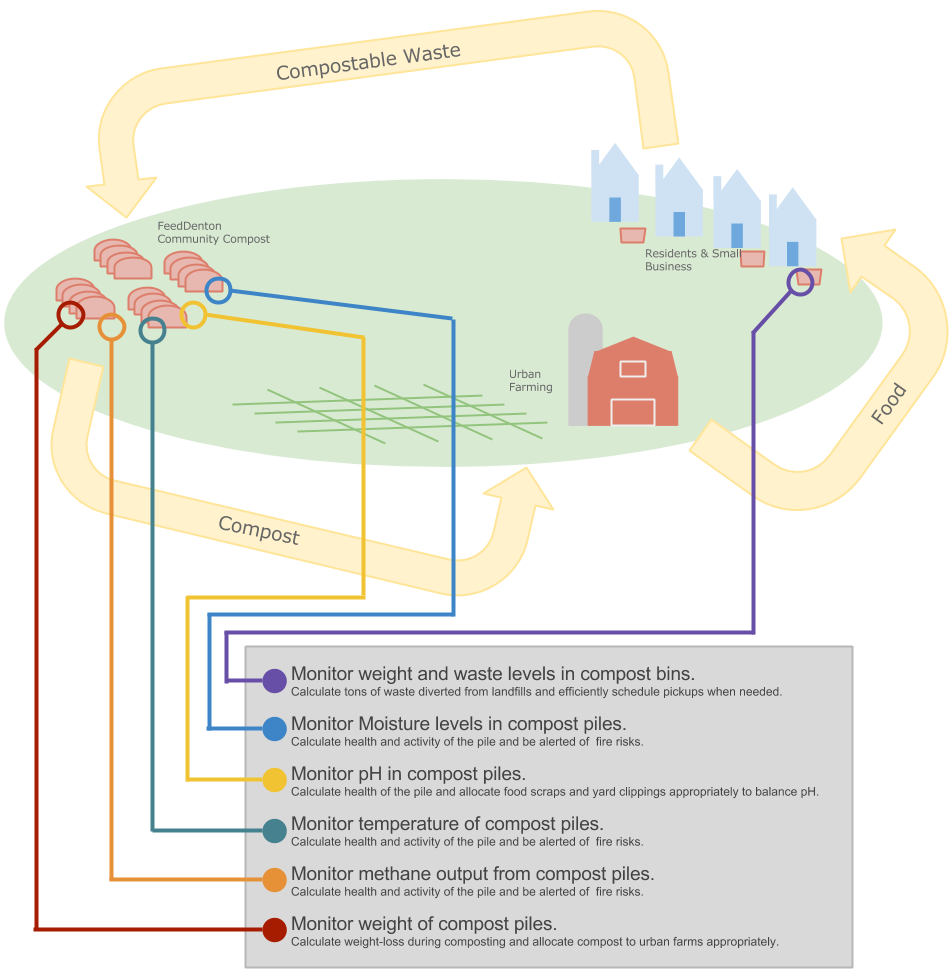
Let me give you the dirt (literally) on our collaborative project we completed for the 2nd Annual Social Media Expo: Community Systems, Sensor Monitoring, and the Internet of Things: A Case Study About Feed Denton Community Compost

compost_1

The University of North Texas team demonstrated how an interdisciplinary group from Decision Science, Computer Education Cognitive Science, Information Science, and Applied Technology & Performance Improvement can propose a design solution for a smart city/community for the iConference Social Media Expo. Our abstract paper and video for the competition outlined how social data, the Internet of Things, and smart design can improve sustainability in a community for Compost Denton.

SocialMediaExplo_ID_444_Figure_2

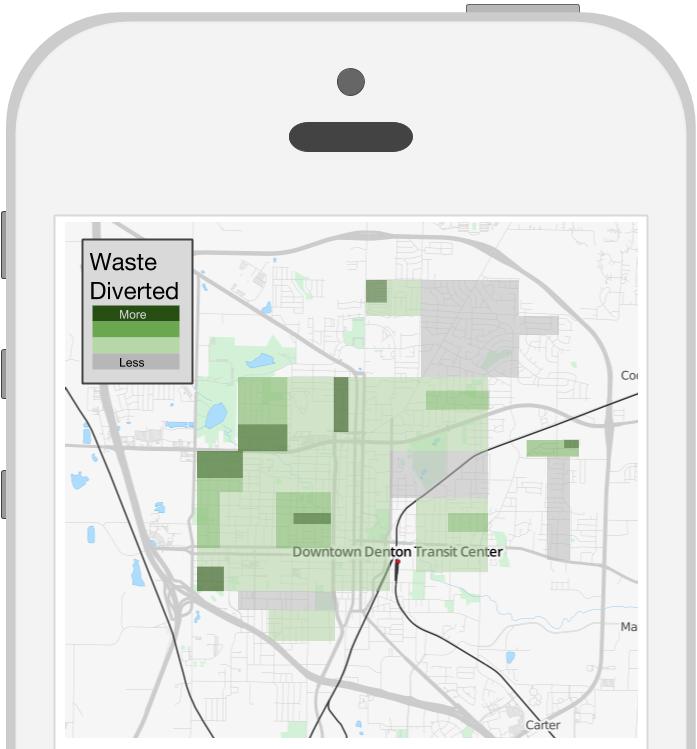
In thinking about information and how data is shared, our team proposed a unique design to make composting and data actionable. In conjunction with a pilot compost project in Denton, TX, our group suggested the use of augmenting this environmental start-up using Arduino sensors, smart technologies, data visualizations, and social media to encourage participation and inform the community about their ecological impacts. When data is socially shared, community members have the ability to see the larger picture for sustainable living by tracking individual and community composting progress.

gamification_loop

Thanks to the efforts made by local volunteers who initiated the Feed Denton Community compost pilot projects, we were able to consider how technological solutions can support and improve this model. Moving forward, we hope to support the business development plan and social media design to help scale and grow the Compost Denton initiative.

Here is the slide deck and our abstract that shares our proposed way to use social data for implementation and gamification for composting in a local community.

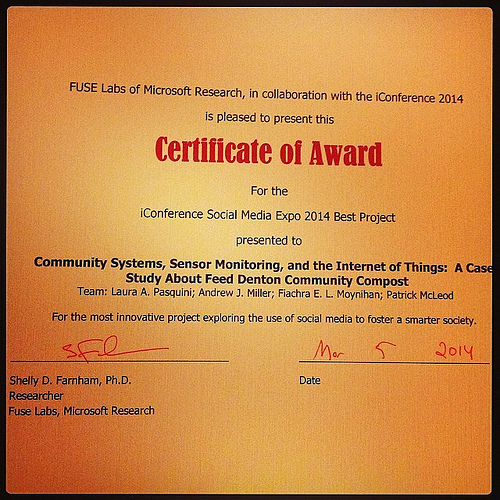
Guess who won? A message from the iConference 2014 daily news update:

“Congratulation also to the University of North Texas Social Media Expo team on
winning the 2014 Best Project Award. The winning entry was titled Community
Systems, Sensor Monitoring, and the Internet of Things: A Case Study About
Feed Denton Community Compost.
 It was authored by Laura A. Pasquini; Andrew J.
Miller; Fiachra E. L. Moynihan; Patrick McLeod. More at
http://ischools.org/the-iconference/awards/

Group Win Take1

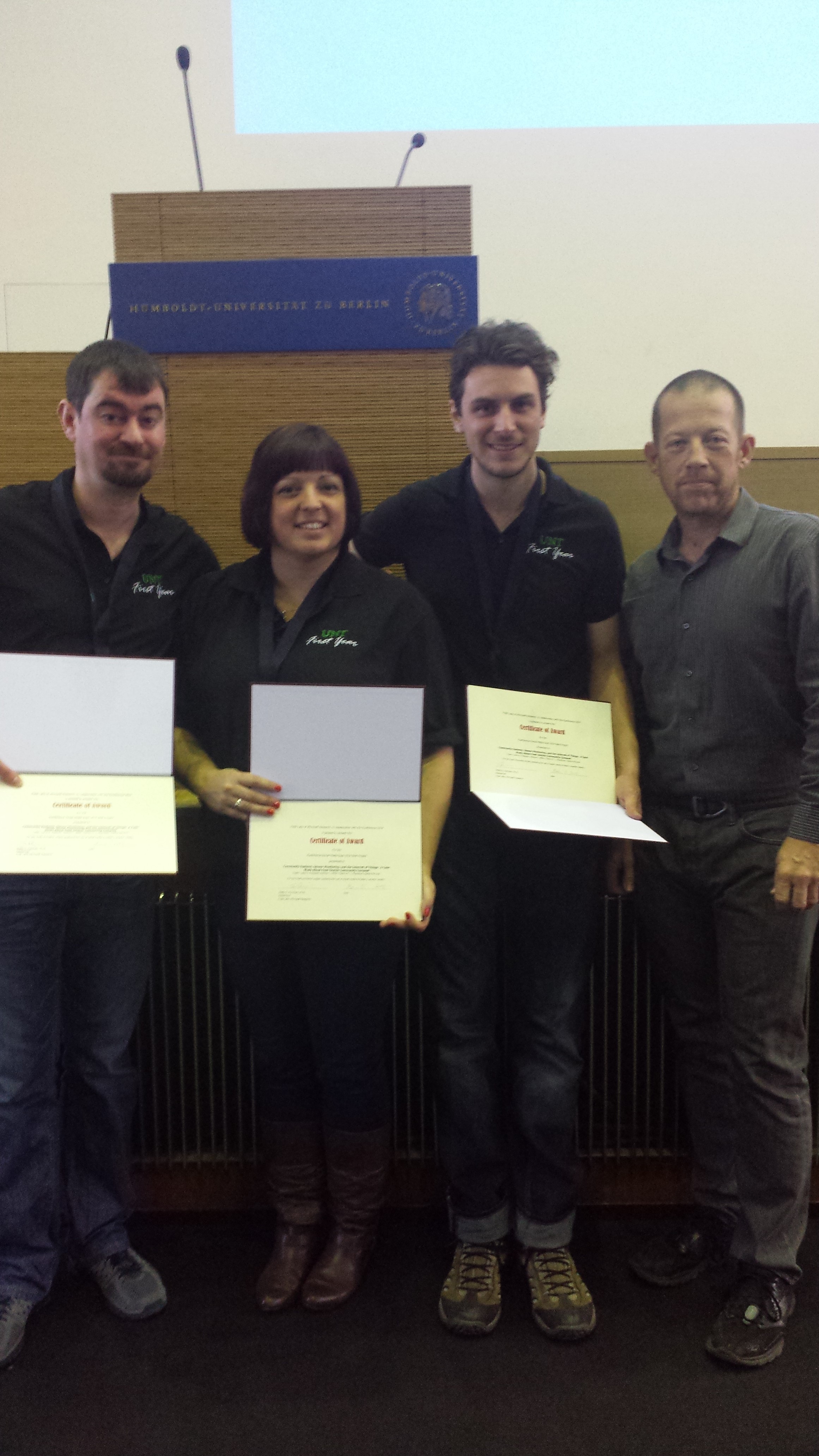
From L-R: Fiachra E. Moynihan (@FiachraM), Laura A. Pasquini (@laurapasquini), & Andrew J. Miller (@findandrew) with their College of Information faculty sponsor, Dr. Jeff M. Allen (@drjeffallen). Not in photo – Patrick McLeod (@misternaxal).

award

Guthen Tag.  Danke für das Kommen zu unserem Social-Media-Präsentation heute. Thank you for your support and this opportunity:

  • Dr. Jeff Allen, our faculty sponsor from Department of Learning Technologies in the College of Information at University of North Texas
  • Shelley Farnham, Organizer/Coordinator/Researcher of the Social Media Expo from FUSE Social Labs at Microsoft Research (along with others who reviewed/judged the expo abstracts)
  • Humbolt-Universitadt zu Berlin our iConference 2014 host with the most.


Abstract: This case study provides on the Feed Denton Community Compost Project. This ethnographic research will review how the collecting of social data and implementation of information communication technologies can provide a smart city infrastructure for this sustainable community of practice through sensor monitoring and the Internet of Things.
Keywords: social media; community of practice; Internet of Things; social data; sustainability
Copyright: Copyright is held by the authors.

Reference:

Pasquini, L. A., Miller, A. J., Moynihan, F. E., & McLeod, P. (2014). Community systems, sensor monitoring, and the Internet of Things: A case study about Feed Denton Community Compost. iConference 2014 proceedings.  (pp. 1-8). In M. Kindling & E. Greifendeder (Eds.) (2014). Berlin, Germany:  iSchools. DOI 10.9776/14010 Retrieved from https://www.ideals.illinois.edu/handle/2142/48831

#phdchat, PhD, Reflections

Defending My Dissertation Proposal

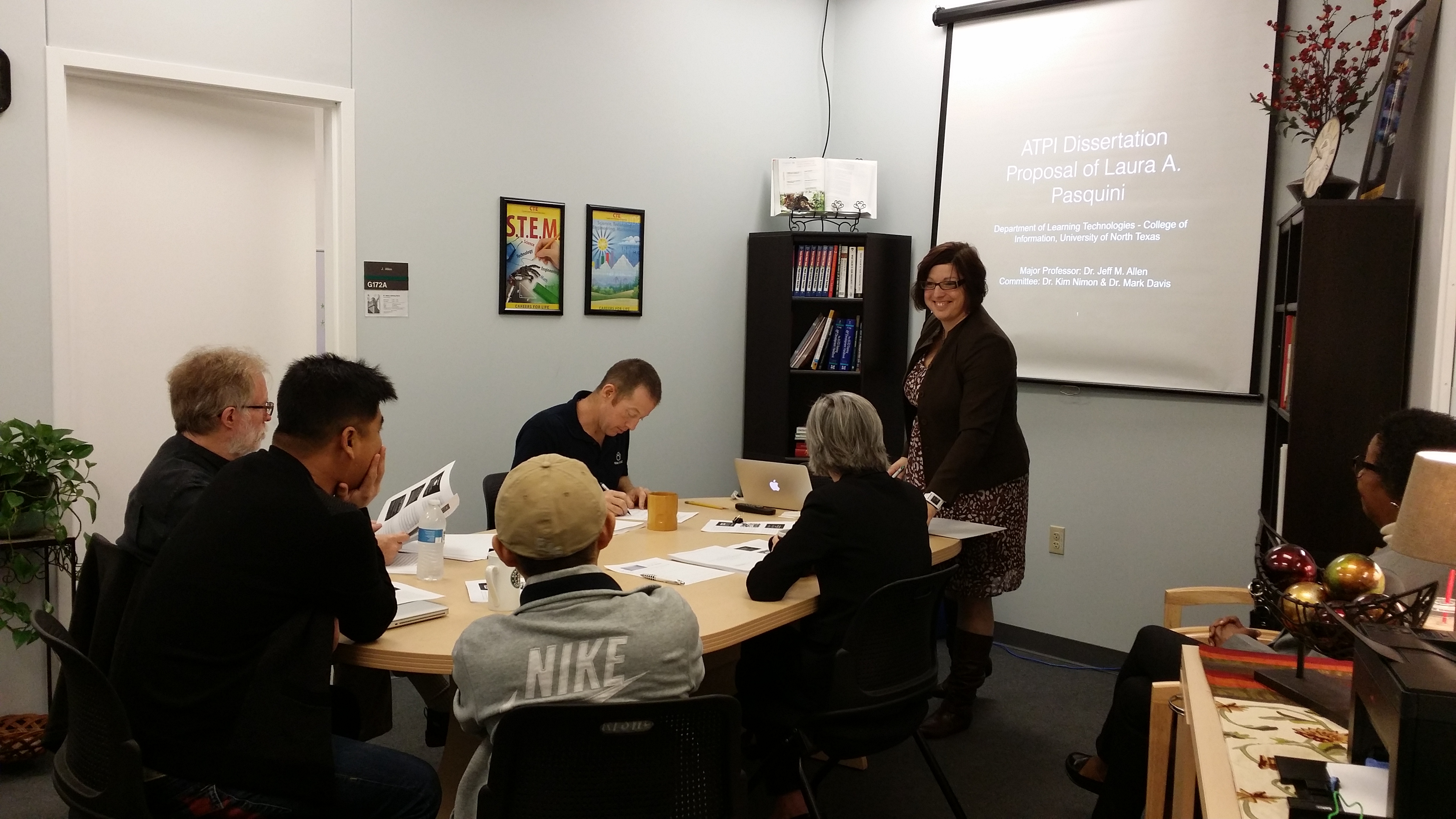
Well there you have it. I successfully defended my dissertation proposal to my faculty committee on Tuesday. My proposal represents Chapters 1, 2, & 3 of my dissertation.

This slide deck might give you some insight, but probably not enough to cover my 89-page proposal. Really, this was just a visual to talk about my research plan. From this meeting, I have some helpful notes, comments, and questions to answer before moving forward with my data analysis. After I clean a few things up, I will be sure to detail more about my these chapters, specifically the literature review and research methods.

20140225_104145Our department also invites other researchers, including students, faculty and visiting scholars, to our dissertation proposal and final dissertation defenses. This open forum style provides other doctoral researchers with ideas and examples for their own research and defense. I have attended a few proposals (and final defenses) before presenting my own. These defenses are great learning opportunities to gain insight and ideas for the doctoral process. During this post defense meeting, I really do appreciate the SUPPORT and FEEDBACK given by my scholarly peers (near and far). Thank you all!

Although it is not the end (just one FINAL defense left), my faculty advisor told me to celebrate. Take heed of important milestones. It is important to recognize steps throughout the doctoral experience since it is a long journey. I am not finished; however my dissertation proposal lays the ground work for Chapter 4: Results and Chapter 5: Discussion, a.k.a. my contract to freedom and to finish my PhD. It’s go time.

Research Methods

Action Research Methods

Action research (Koshy, 2005), also known as participatory action research, is a method of research that can combine a framework for public, reflective inquiry.  It offers a way for academics and scholars to work with individuals or communities, such as learners or communities of practice, to investigate issues together to find a solution-oriented approach. For educational settings, this might often be the “teacher-as-researcher” research approach (Elliot, 1991; McNiff, 2013).

action_research

Image c/o New Mexico State University, College of Education Research and Budgeting

The premise for the action research method is that  researchers study with the subject(s), rather than research on or outside the subject(s) as a hierarchy or “expert” (Cousin, 2008). Action research is a journey that experiences transformative findings with linear, sequential relationship between the hypothesis, research activity and the research findings, i.e. a proposed solution.

Another branch of this research includes, community-based participatory action research (CBPR), involves researching a group or community where research is conducted:

by community members, so that research results both come from and go directly back to the people who need them most and can make the best use of them.

CBPR research will grow in education as it is impacted with emerging technologies and learning pedagogy design, while needing to meet standards and managing fiscal challenges. This research method allows for project ideas and measurement outcomes to be designed by the community population to shape the research agenda. Participation in research by the community often results in generating greater sociopolitical awareness and effecting systemic change in the community (Jason et al., 2004). From  other case studies described by Jason et al. (2004), CPBR has improved upon the quality of scholarly work, developed research outcomes, created intervention tools, and increased quality collaborations on projects.

References

Cousin, G. (2008). Researching learning in higher education: An introduction to contemporary methods and approaches. Routledge.

Elliott, J. (1991). Action research for educational change (Vol. 49). Buckingham: Open University Press.

Jason, L. A., Keys, C. B., Suarez-Balcazar, Y. E., Taylor, R. R., & Davis, M. I. (2004). Participatory community research: Theories and methods in action. American Psychological Association.

Koshy, V. (2005). Action research for improving practice: A practical guide. Sage.

McNiff, J. (2013). Action research: Principles and practice. Routledge.