Collaboration, EC&I831, Learning Community, PLE

Learn to Share(ski)

In the spirit of Valentine’s Day, I thought I would post a little bit of technology love and sharing. Last Fall, Dean Shareski joined Alec Couros#eci831 class to discuss The Power of Sharing.

Photo by excomedia


Online movement on the internet is very personal and quite social.  When you share ideas and resources it is possible to initiate new connections and develop your online personal learning environment (PLE). Much of this online, social learning creates collaborations, connections and interactions to enhance an education experience.


As web 2.0 and social media continues to develop and thrive online, this leaves users with little reason not to share. Most applications are collaborative and creative in nature, which require users to become active participants in the conversation.

Benefits of online sharing & shared learning:

  • immersion into all things ‘like that’
  • interactive web experience
  • publish first and then filter work
  • online & immediate feedback
  • share knowledge & resources easy
  • connection is another means to learning
  • efficient research
  • modelling from others online
  • development collaboration skills
  • variations on an article, concept or idea
  • pay it forward – share what you know and what you do
  • power of connecting people
  • moving toward search & learn
  • networks CAN replace Google
  • encourages filtering information

More stories of shared online learning:

Just a few tools of the sharing trade:

  • Skype
  • Delicious – great resource sharing & connecting
  • Google Reader – RSS feed for bookmarks & paste into add subscriptions for google reader
  • Google Documents
  • Flickr – creative commons license to share; take an idea of how to compose and generate ideas and learn form them
  • Twitter – just in time & just for me learning; personal and professional mix
  • Wikis
  • YouTube
  • SlideShare

What else are you using to share with your personal learning network? Please share.
“Sharing, and sharing online specifically, is not in additions to the work of being an educator. It is the work.”  Ewan McIntosh

Collaboration, Open Education, PLE

It’s Time for the Educational Remix…

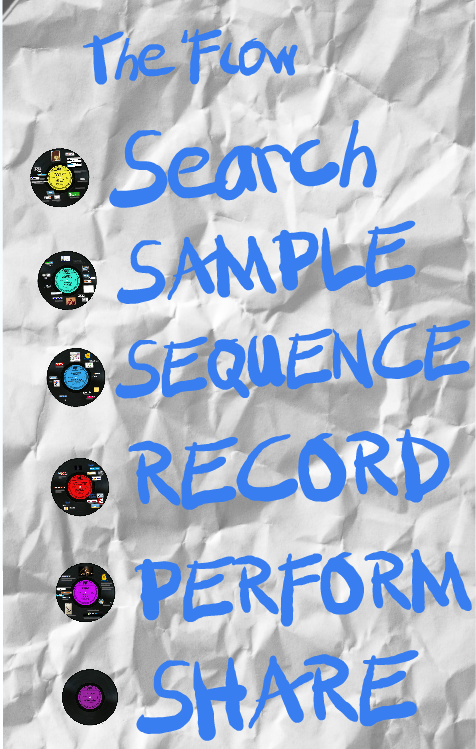
It’s time to catch up with some fantastic scholastic chats in #eci831… and there are a few weeks to share. During #eci831 Week 10Brian LambScott Leslie discussed their experience in remixing education. In reviewing some inspiring media savants, examples, and ideas for open, remixed educational resources.In a true network environment – the application logic is relied onto the machines and built into the network itself. The open education movement introduced large quantities of formal education resources into the pool of content that can be mashed up and remixed for learners. Networks have evolved to the point where learners are no longer bound by space or time, which allows learners to direct and choose their personal learning environment objectives. There is now a “mashup of learning” medium to best support content knowledge and skill acquisition for learners. The process of remixing education is simply extending the existing concept. Mashing OERs as an Instructor (or DJ) includes this sample DJ workflow applied to education:

Image from Mashing OER Wiki

More resources that inspire openness & remixing:

Collaboration, Learning Technologies, PLE

Surfing the Google Wave.

Google wave is a web-based application that enhances electronic communication. Here is a (long) presentation and preview of Google Wave:

This latest initiative may provide educators additional resources for online personal learning environments. In EDUCAUSE‘s 7 Things You Should Know About Google Wave, details how this emerging technology can be utilized for teaching and learning:

  • Conversations -multiple messages for message board chats, IM, texting, etc
  • Archiving email/chat dialogues that are also non-linnear & asynchronous
  • Interactive maps
  • Informal polls
  • Translation of text for global learners
  • Photography & image sharing
  • Playback function for review of conversations, notes & presentations
  • Team-based learning for collaboration of projects
  • Accessibility & usability
  • Practical uses for academic advising [from @ericstoller]

As a recent invitee to Google Wave, I am still experimenting and sampling this new resource [with the help of The Complete Guide to Google Wave]. As more people receive invites and the beta version of Google Wave develops, educators will get involved and as they find value and potential for their profession.

Learning Community, Networked Practice, PLE, PLN

Personal Learning Environments (PLEs) & Personal Learning Networks (PLNs)

Personal Learning Environments (PLEs) & Personal Learning Networks (PLNs) are a forced to be reckoned with as technology becomes more accessible and user-friendly.

pler

On October 13-16, 2009, the online symposium on learning-centric technology shared ideas on how PLEs & PLNs are impacting the educational technology field. Here’s a bit more from the symposium organizer’s George Siemens & Stephen Downes:

The interest in Personal Learning Environments has grown with the emergence of Web2.0 technologies. Learning technologists can see how PLEs can help learners to organize their own personal learning, rather than that formal education institutions control the technologies that are being used and the way in which they are being used. Speakers will include developers and researchers of PLEs. All events will be hosted in Elluminate and recorded for archives. A discussion forum will be hosted in Moodle for asynchronous interactions.

Although I was working during the scheduled speakers, I managed to read posted materials and listen to the one of the recorded sessions . There are a wealth of great experiences & ideas archived online, and I hope to listen/learn more  in the upcoming weeks. Many of these speakers are leaders and pioneers in the PLE & PLN learning field.

For those of you interested and engaged in contributing your own educational experience with personal learning environments/networks, might I suggest you also check out the Call For Chapters for an upcoming eBook by Athabasca University and the National Research Council of Canada.