Online Learning

Content Curation: Copyright, Fair Use, and Creative Commons

In planning my courses this term, the textbook for my LTEC 4000 course will be OPTIONAL. With a wealth of training and development resources digitally available online, in databases, from many professional organizations, and in our library system, I decided to have my three sections of my class be rhizomatic in their learning. (Thanks for modeling this learning approach for a few years now, Dave.) Learning is more than consumption. By encouraging my students to curate their own knowledge, I hope it will help  contextualization how these course objectives are applicable for the world of work. This semester LTEC4000 will aggregate training and development content in a wiki. Here’s to giving ownership to the learning process through research inquiry, critical thinking, and content contribution. Wish me luck!
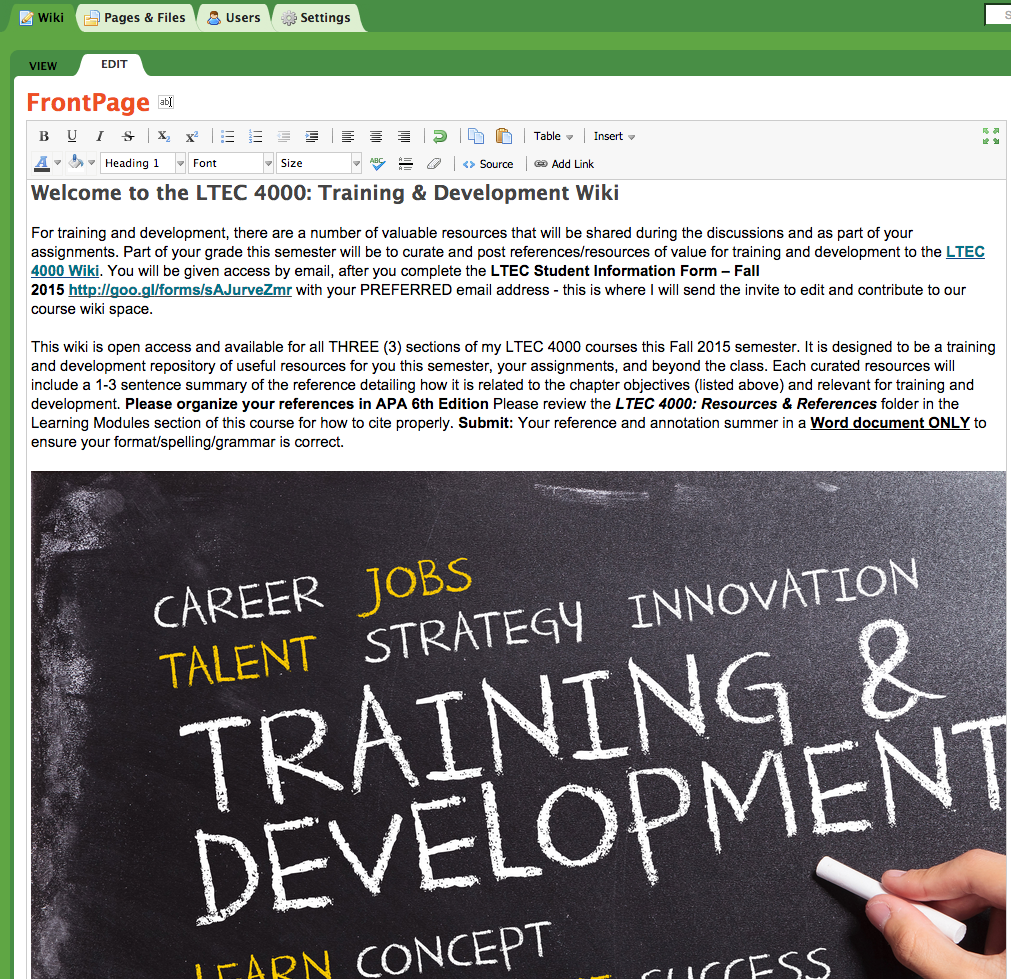
LTEC4000_wikiIn thinking about digital curation and online literacy, I want my students to consider how they share, remix, and adapt content they discover for training and development. In the course, I hope this wiki content will scaffold project development this semester; however I think it’s important to discuss copyright, fair use, and intellectual property as they might apply some their training and development academic work to their own workplace.

Here are few of definitions (listed below) and I am gathering resources to share with my students around copyright and attribution. Let me know if you have further suggestions/resources to share. Thanks!
Adventures in copyright//embedr.flickr.com/assets/client-code.js

Copyright

The Basics of Copyright [Video; 6:19 minutes]. This is an introductory video  in copyright law, specifically about how to share copyrighted material at work while still respecting the rights of the content creators. Will you require permission before using materials? Do you ask permission before using protected content?

  • Copyright law applies to all works – print & electronic
  • Protected: Books, magazines, online articles, songs, screens plays, choreography, art,  software, work, software, podcasts, and photos
  • Not Protected: Ideas, facts & data; government items
  • Know the facts about copyright, not the myths
  • Get permission if required (when in doubt get permission)
  • Just because you found it online, & it is publicly available does not mean it is free to use
  • Not sure? Just ASK: legal council at your workplace or an information professional (in the College of Information) or at UNT Libraries for advice.
  • UNT Copyright Resources https://copyright.unt.edu/
  • CLEAR Copyright Guide for Instructors http://clear.unt.edu/copyright

Fair Use

Fair Use from copyright.gov: 

“Fair Use is a legal doctrine that promotes freedom of expression by permitting the unlicensed use of copyright-protected works in certain circumstances. Section 107 of the Copyright Act provides the statutory framework for determining whether something is a fair use and identifies certain types of uses—such as criticism, comment, news reporting, teaching, scholarship, and research—as examples of activities that may qualify as fair use.” fair use classroom poster draft

Specifically, there are four requirements for fair use of materials:

    1. The purpose is for nonprofit, noncommercial educational use (typical cases).
    2. The nature of the copyrighted work is consistent with the proposed use.
    3. The amount and substantial of the original work involved some small uses can be considered an infringement, that is, a small portion involves the core idea in the copyrighted work.
    4. The effect of using the copyrighted work is not likely to deprive the copyright holder of sales or market interest.
  Creative Commons
Creative Commons  

Wanna Work Together? from Creative Commons on Vimeo.

Creative Commons copyright licenses and tools allow for content to be shared beyond the traditional “all rights reserved” setting and decide on the best form of attribution for their work. The goal is to refine how copyright works and allows content creators to CHOOSE if they want to retain copyright while letting others copy, distribute, and make use of part of their work. Creative Commons licenses provide:

everyone from individual creators to large companies and institutions a simple, standardized way to grant copyright permissions to their creative work. The combination of our tools and our users is a vast and growing digital commons, a pool of content that can be copied, distributed, edited, remixed, and built upon, all within the boundaries of copyright law.

To enhance your learning and training materials, you  might want to find creative commons and public domain images. Certain social media sites, such as Flickr Creative Commons, even offer users content with specific attribution for use. There is even a Creative Commons Search to aggregate even more content to share, use and remix, including media, images, video, audio, music, photography, and web resources. Want to learn more about Creative Commons? Check out UNT CLEAR‘s Creative Commons Guide.

Online Learning, StudentAffairs

#SAchat Podcast: Online Student Services

Last month I joined Dustin from The Student Affairs Spectacular Podcast, to talk about the impact online learning will have on student support for our learners. Much of what is happening in distance education, which includes online learning, blended learning, hybrid courses, and more, will impact how to student affairs educators work.  As we discussed how online learning will be relevant to student affairs, I shared a few resources to get listeners stated and shared these resources in the show notes (below). Thanks for the invite Dustin, and happy listening:

SAC-Podcast

Link on Stitcher: http://app.stitcher.com/splayer/f/65465/38022983

Show notes:

This blog post is cross-posted at The Student Affairs Collaborative website. Read more about all things Student Affairs and Higher Education at https://studentaffairscollective.org/

Online Learning, Professional Development

#ET4online Recap, Reflections, and Review

As I regroup from last week’s Emerging Technologies for Online Learning (#et4online) conference, I am filled with ideas and inspiration. Inviting a group of teaching, learning, and researching friends invested in supporting online pedagogy is a fantastic way to wrap up April.With the help of a fab #et4online steering committee (especially that co-chair Michelle), we were pleased to bring OLC to my current hometown, Dallas, TX.

Screen Shot 2015-04-28 at 9.32.18 AM

Thanks to ALL who contributed to the #et4online program. I was genuinely impressed by the quality of content, interactions, and engagement in the conference workshops, sessions, #et4women dinner, panels, and more! I was told time and time again, how much participants enjoyed the program and felt motivated to bring these ideas back to campus. Way to bring your A-game to Dallas, #et4online! BIG THANKS and shout out to the #et4online Program Track Chairs (@adesinamedia@amichaelberman, @ajsalts@JLeafstedt, @Profpatrice,  & @unatdaly) and our proposal readers for putting this together!

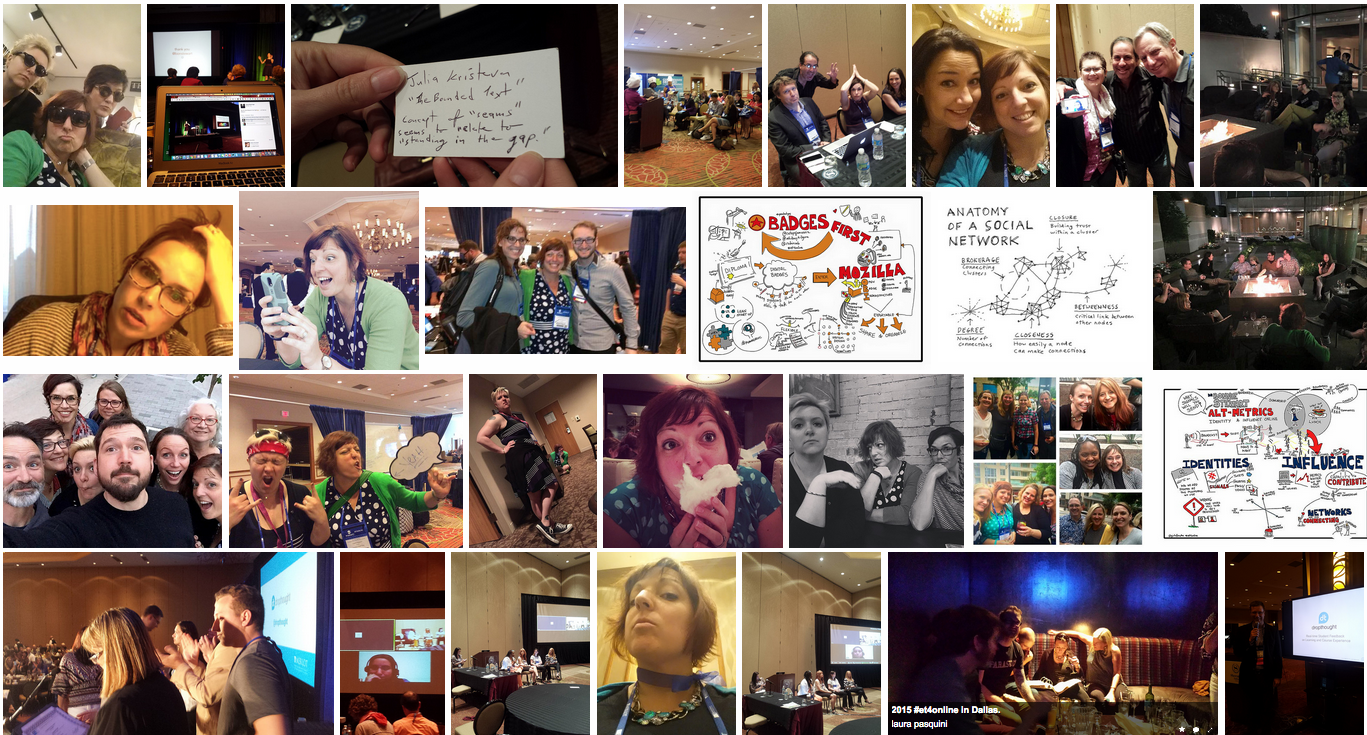
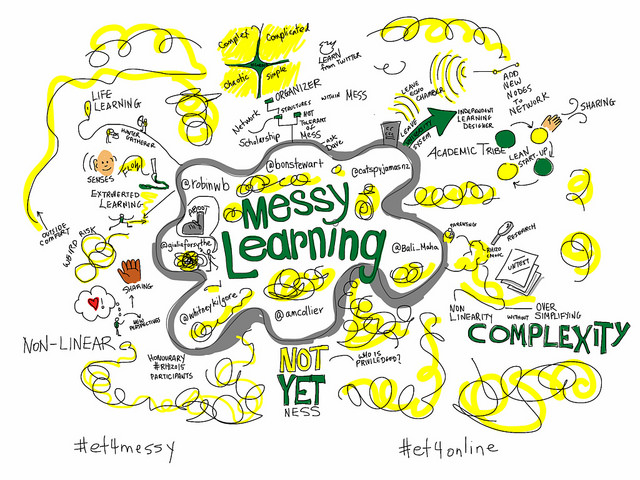
ET4MontageThe conversations and interactions at #et4online really provided momentum for supporting my online learners. I am already thinking about ways to improve my own online teaching and learning, to include action-based pedagogy, #et4messy learning, and reconsider assessment in my curriculum.  It was also a  treat to listen to our #et4online keynote & plenary speakers reflect and share research, projects, and developments in the follow areas of technology emergence – thank you so much:

I am grateful for the collaborative and sharing spirit of the #et4online participants. I was so pleased by a number of new initiatives and happenings at the conference – which also left me contemplating and considering a few things ahead, including:

17255568561_f2f80870e3_z

Messy Learning sketch by Giulia Forsythe

  • The value of wrapping up a conference with #unet4online the ET4Online Unconference hosted in Canvas facilitated by @Jessifer & @slamteacher (About & remote support @Bali_Maha) + Tweets. Although I was exhausted at the end of the conference, this was  – BY FAR – one of my ET4 conference highlights. The discussions were very fruitful and active in the #unet4online room. It was nice to connect with a few new folks, and walk away with a few new ideas after this thoughtful debriefing session.
  • Hybrid participation in a conference with the #et4buddy pilot project with @Bali_Maha & @rjhogue – Submit feedback for the #et4buddy and #et4buddy video playlist. I am still thinking about this hybrid engagement for a few and its impact for others at the conference. What does it mean to be present at a conference? How does this type of digital involvement make meaning for in-person interactions? How does this interaction help or hinder everyone’s conference experience? Can this meta conference be the “same” or does it have to be?
  • The purpose of the Teacher Tank (Launch Pad) to #et4online, and beyond an entertainment value – how does this really serve #et4online participants? The ideas for this new program feature was to have  ed tech startup’s provide a solution for teaching and learning by sharing their results & preliminary feedback. After processing with the startups, judges, and reviewing the #et4snark meta backchannel, many agreed the format/concept has little value-added to the program.  During the #unet4online conference, we had a great talk about a hackspace and/or collaboration to provide a more meaningful concept — so I look forward to our next meeting about this in May to re-purpose the “shark tank.”
  • The after conference social times that included #et4Bonfire Sing-Songs, dinners, karaoke, 1st Ukulele Lessons #moocalele & harmonizing with peers. These impromptu lessons & creative spaces should have a bigger place for professional development and learning at our conferences. I want to think more about this for next year. How can the non-sessions provide a great space to dialog, learning & engage? Where could and should this fit into a future conference?

A HUGE thanks goes out to the on-going efforts and developments of the OLC Technology Test Kitchen. The addition of the hands-on demonstrations by the Technology Test Kitchen Chefs #et4TTK  was brilliant. I would like to give a shout out to @jlknott & @scragg_OSU for their efforts on organizing this play/maker space! Thank you.

I am continuing to absorb and read others reflections about #ET4Online from tweets and in the blogosphere – thanks for sharing Adam, Patrice, Maha, Jeff, Rebecca, and others to come. Please continue to post your blog reflections, write comments, and share your general thoughts. Also remember to complete the post-conference evaluation so we can better understand your impression of #et4online and improve future events. This survey will take less than 5 minutes, and the #et4online steering committee will use this information to learn about your experiences and utilize this for planning ahead:

Onsite Survey

Virtual Attendee Survey

This was my 3rd and last #et4online conference. Like the ones before it, ET4 did not fail to deliver quality memories and interactions. Next year #et4online will be replaced by the NEW OLC Innovate Conference 2016 in New Orleans, LA from April 20-22, 2016.

innovate_spiral

We will be taking ideas from both #et4online and #blend15 for the OLC Innovate 2016 event. Are you interested in getting involved in planning this new event? Want to contribute to planning the program or being a member of the steering committee? Interested in being a program proposal reader? Do you have an idea or suggestions for Innovate 2016? Let me know – complete this Google Form:

EdTech, Higher Education, Online Learning

Research Wanted: Distance Education & Technology in US Higher Ed #DETAsummit

Last week, I was invited to join a group of educators, researchers, practitioners, leaders, and more before #eli2015 to discuss the state of online and blended learning at the DETA Summit (#DETAsummit), hosted by the National Research Center for Distance Education and Technological Advancements (DETA). With the primary role of the DETA Research Center “to promote student access and success through evidence-based online learning practices and learning technologies,” the morning’s agenda was full and the purpose of the DETA Summit meeting was to:

  • Gather key partners and research experts to generate of ideas
  • Brainstorm crucial issues in conducting research and developing coherency in the field of distance education
  • Discuss ideas relating to competency-based education, accessibility, and distance education support

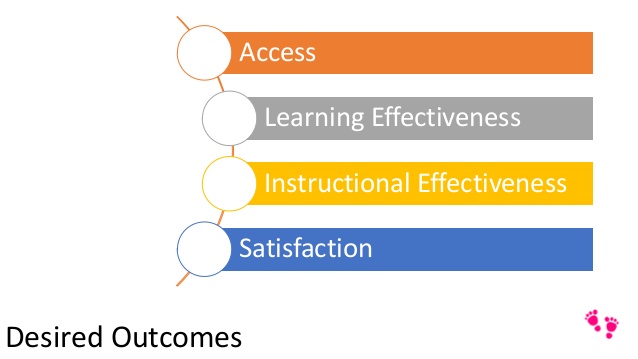
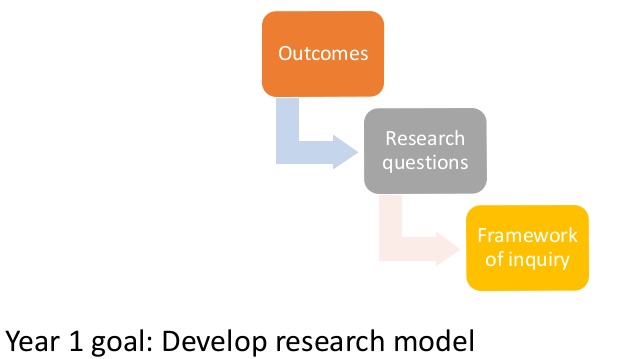
The DETA Research center has desired outcomes that focus on access, satisfaction and learning/instructional effectiveness – read more about these from the grant HERE:

Desired Outcomes

At the #DETAsummit a wide variety of folks gathered with interest to discuss what research should look like for technology and distance education. Looking around the room, it was like a tweet up of all online learning  levels of support, instruction, development, planning, and research from around the US.  The focus of the meeting was to work on the DETA Yea 1 goal: Develop a research model.

Research Model

In facilitating one of the many round tables discussions, our group swapped ideas about potential research questions that should be asked, common definitions under the distance education umbrella, standard variables to measure, known frameworks for inquiry, and shared models being used for online/blended learning assessment. Although we were only given about 3 hours in total, I think the entire room was buzzing with ideas and wanted to continue talking. The conversations were driven to list our top choices on large post-its and vote on top our top choices after seeing what other groups discussed [See post-it voting from my Flickr album]. For the short amount of time, I think the #DETAsummit  was a very productive, and we managed to gain some broader insight into what a research model could look like. With a mixed participant list, there were insights and questions  from varying perspectives and it was rather REFRESHING.

Based on the small group discussions and voting process, the research questions selected are:

  • What are the definitions of success from student’s perspective? | 33 | Wicked Hop
  • What patterns of behavior lead to increased student learning for different populations? | 26 | Safehouse
  • What are the different design components (content, interactivity, assessments) that impact student learning? | 29 | Rochambo
  • How can we define and measure student success beyond traditional outcomes (learning and competency)? | 25 | Benelux

If you are interested in distance education research (e.g. online learning, blended learning, hybrid pedagogy, etc.) I would suggest digging into the conversation and resources from the #DETAsummit. The DETA group is very open and transparent with their development process, as you can find our discussion notes shared in Collaborative Google Docs, listen/view the G+ Hangout Recording, and check out the Presentation Slides that give an overview of the day.

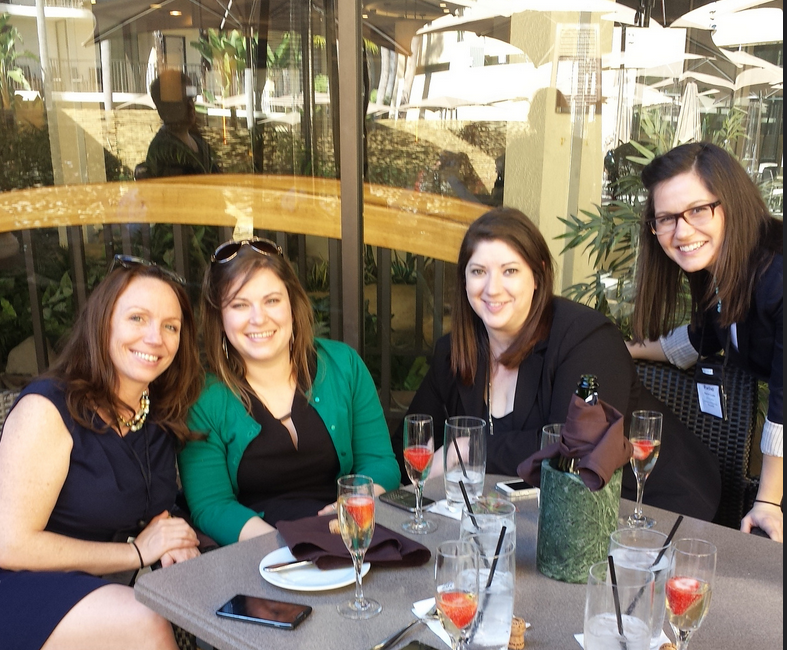
Congratulations to the DETA Team (who I now call the #DETAdivas) on a successful start to the work you have ahead. I look forward to following along with your progress on the grant, learning how your group utilize these research questions, and, hopefully, contributing to a better way to measure/assess online and blended learning.

DETAdivas

Want to stay connected to the research?

EdTech, Higher Education, Online Learning

Online Education in the US [2014 Report]

As I am on my way to the EDUCAUSE Learning Initiative (ELI & #eli2015), specifically to attend the National Research Center for Distance Education and Technological Advancement (DETA) Summit, I figured it was critical to review the 2014 Grade Level: Tracking Online Education in the United States just released from the Babson Survey Research Group (BSRG):

“The study’s findings point to a competitive marketplace, in which traditional institutions are gaining ground on the for-profits in online and distance education,” said study co-author Jeff Seaman, co-director of the Babson Survey Research Group. “While the rapid pace of online learning growth has moderated, it still accounts for nearly three-quarters of all US higher education’s enrollment increases last year.”

It is clear that online learning is on the rise in America – yet there is a vast difference between how administration and faculty view it. A majority of post-secondary education leaders (70.8%)  indicated that online learning is “critical to their long-term strategy;” however these leaders may struggle with online adoption as only 28% of their faculty find “value” and view online education as “legitimate.” A number of findings in this report show opposing views for online education. For example, these two factions of higher differ  by their awareness of open education resources (OER).

OER_FutureHE

There is much more of this narrative to tease out; and I would like to go through this report further (on the plane) and learn what others in the field have to say. For now I will leave you with some of the ‘quick facts’ shared, and encourage you to download and read through the FULL REPORT if you are in the online learning sphere:

Key report findings include:

  • The number of higher education students taking at least one distance education course in 2014 is up 3.7 % from the previous year.
  • The year-to-year 3.7% increase in the number of distance education students is the lowest recorded over the 13 years of this report series.
  • Public and private nonprofit institutions recorded distance enrollment growth, but these were offset by a decrease among for-profit institutions.
  • The percent of academic leaders rating the learning outcomes in online education as the same or superior to those in face-to-face remained unchanged at 74.1%.
  • The proportion of chief academic leaders reporting online learning is critical to their long-term strategy reached a new high of 70.8%.
  • Only 28.0% of academic leaders say that their faculty accept the “value and legitimacy of online education.”
  • The adoption of MOOCs (Massive Open Online Course) is reaching a plateau, only 8.0% of higher education institutions currently offer one, another 5.6% report MOOCs are in the planning stages.
  • The proportion of academic leaders who believe that MOOCs represent a sustainable method for offering online courses dropped to 16.3%.

Update:

A couple areas to note, and for further discussion this week at #eli2015 and the #DETAsummit (Follow @UWMDETA):

Pgs. 43-44: Discuss the under count and over count of distance education, i.e. for “fully online” enrollments – this seems to be hazy, as it might be as learning design for enrollment varies by student population type and course design delivery.

Pg. 44 – “The definition of ‘distance education is causing confusion”

There was an interesting segment in this report that struggled with the term “distance education.” This report takes into account distance education, when looking at “fully online” higher education programs. This part of the report reminded me about the Twitter debate of online learning, online education, distance education, and then some when trying to name an update to an edited book. What terminology is best? How can we describe/define education that is delivered from a distance/online/on the web/virtually? Please advise.