Reflections, TBT Posts

#TBT Blog #2: Happy Christmas and the Holiday Comic Strip

Over the past seven years, Fiachra and I have created an annual holiday comic strip for Christmas cards to recap our year. This year we broke the tradition and did not create one. I know. Sad. Maybe we ran out of James Bond themes, or perhaps far too much has happened in 2014 to contain our year events in just one comic strip.

2014 was a full year of great events. Both Fiachra and I completed the academic leg of our lives, as we graduated over the summer with our MBA in Decision Sciences and PhD in Learning Technologies, respectively. After this accomplishment we decided to take a break by taking an EPIC road trip to explore the US southwest. This 5-week journey showcased a number of gorgeous landscapes, outdoor adventures, eclectic attractions, and, most importantly, time to spend with each other and also a chance to catch up with family and friends. Here is a quick spotlight to highlight our travels and year in review:

On behalf of Fiachra and myself, we want to thank you SO MUCH for all your love and support this year. We are so grateful for everything. We wish you and your loved ones a very Happy Christmas, and all the best for 2015!
xo
L and F

PLN, Reflections

Semester Reflections & What I’ve Learned [Fall 2014]

Wow. My first semester as a Lecturer and teaching ALL online classes is DONE! First and foremost – I am glad to have all my grades posted. {For real! After 2,400 hours of video watching, I can say I learned a lot from my #LTEC4121 class – and I had a talented group of students this term.}

FinishedGrading

Along with other projects (e.g. research, writing, editing, OLC Certificate, presenting, conference, and consulting), I am glad to see the semester and 2014 come to an end – or at least a pause over the holiday break. This academic term has been fun and challenging for me as I move all my instructional experiences to the online environment. My own teaching philosophy centers on technology-enhanced pedagogies that foster student–centered learning environments. Over this semester, I put a great deal of thought to how I design learning experiences and support my students online in a more meaningful and authentic manner. This term, I constantly made edits and improvements to the online courses I was teaching to help foster real-world experiences and provide opportunities for engagement. I really wanted my students to take what they are learning in the online classroom and apply these concepts to their own workforce learning and performance. With whatever technological platform and, more importantly the planned pedagogy, my primary role in these classes were to facilitate learning by motivating, instigating and supporting my students as they work through their modules and projects.

From this semester, I shared some of my personal reflections for lecturing with the GSTEP program last month:

To be honest – there are more than just 10 lessons I’ve learned. Not everything has been great this semester. There has been a great deal of stress and frustration in lecturing with someone else’s course materials, and considering how to best support the learners’ needs. I have been constantly improving functions of not only the course delivery, but also the content in the modules to consider how to get students to reach the course learning outcomes. Although it has been a busy semester, I have appreciated the hands-on lessons I have learned and applied to my online instruction and support for my students. Learning about learning, and evaluation of the curriculum supports our students. Stay tuned for deeper reflections in an upcoming blog post after I go through my course evaluations, LTEC feedback forms, and review of my course design from Fall 2014 for the next semester.

For time management and scheduling,  I learned a great deal about the need to develop my own personal workflow. Although I have been “working remotely” and I have a great deal of online work experience, my new role has got me thinking about what it means to be productive when working from home. Work-life balance is key. With a number of involvement and projects, I have had to think about how these are managed and prioritized. I believe my scheduling and task-management has improved over the term (when I am not traveling for business/personal obligations #LessonLearned), and I feel as though I have mastered my grading and instructional flow with online teaching. Thanks to some additional motivational tools for time and fitness, I have improved my time-on-task ability for work projects and increased my running/walking mileage (thanks Todoist.com, Asana, #FitBit & RunKeeper).

Most importantly,  I have learned the value of being an active participant in my networks. My mom was concerned about my social contact with others now that I teach online. I laughed – and told her that I still have just as much (or maybe more) contact with others. Although I am not an 8-5 worker on campus, I have made a point to stay connected to UNT and get involved in various things (e.g. UNT Faculty Writing group, GSTEP support,  Alternative Service Break advisor, and LT department meetings/projects). In my online work, there are a number of virtual teaming projects and collaborations that keep me quite engaged and social (e.g. #ACPAdigital task force, NACADA meetings, OLC conference planning, and other community interactions). Finally, I have sought out new opportunities to grow and learn professionally to focus on research scholarship, instructional design, and strategic organizational planning (e.g. RA position with @veletsianos, CLEAR instructional course design work, and external consulting/training initiatives).

Thanks to a number of you who have been there for me this academic term. Your ear, your advice, and your support have been greatly appreciated during my transition period. Thank you!

Professional Development, web 2.0

Q: Should I Start Blogging? A: Maybe.

A common question I field from teachers, faculty, graduate students, higher education professionals, and researchers these days:

Q: Should I start blogging?

My response:

A: Maybe.

write-your-own-blog

Image c/o Blogiau

Blogging and maintaining a blog is not for everyone. I often ask a follow up question to this inquiry to learn more about the motivating factors for the blog:

  • Why do you want to start blogging? [purpose, goal, sharing, reflection, etc.]
  • Do you enjoy writing? i.e. beyond 140-characters & comprehensively
  • What format do you want your blog to be? Written or other, i.e. video, photo-sharing, podcasting?
  • Do you want to express and share your ideas in a public, online forum?
  • What focus will your blog take – work, education, learning, research, or all of the above?
  • Who is your audience? Professional group affiliation? Research discipline? Just for yourself?
  • What platform are you thinking about? Blogger, WordPress or other?
  • Do you have an idea about how often you want to post to your blog?
  • Where will you be getting ideas for your writing? [Content IS king.]
  • How will this contribute to your learning, professional development, etc.? [depending on the person]
  • When will you post to you blog? Daily? Weekly? Bi-weekly? Monthly?

Everyone has different reasons for the WHY they blog, or even how they started blogging. Some use blogging as a forum to connect to a professional or academic community. Others use their blog to share resources and ideas. Bloggers often present concepts and challenge the status quo in their field. Then there are other bloggers who use it for shameless self-promotion and self-marketing. The main point is – you should blog because you WANT TO BLOG.

My blogging tale started back in 2006 when I initially took up blogging to share my travel adventures and general life happenings on, Souvenirs of Canada, for family and friends who wanted to stay in touch. In 2008, I created TechKNOW Tools as a professional development space for an academic advising technology seminar for NACADA, and after that I continued to use this space to discuss my own work experiences, research projects, and share what I have been learning.

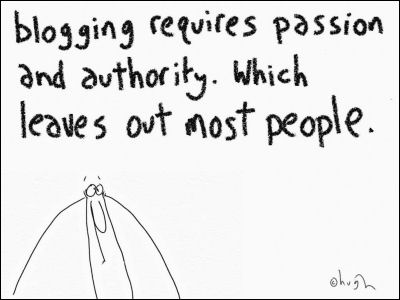
blogging requires passion and authority

Image c/o Gaping Void

There are a number of reasons WHY I blog.  Thanks to a researcher reviewing educational bloggers, I audited my own blogging experience, and I have considered what [really] prompts me to blog and continue to blog. For me, blogging and writing about my progress is very reflective and I enjoy documenting, sharing, critiquing, and writing about what is going on in my professional (and sometimes personal) sphere. I appreciate the community of research and educational bloggers who play in this blog sandbox. I like their comments, questions, challenges, and support — and at the end of the day I LIKE BLOGGING — otherwise I would not blog. Really.

If it sounds blogging might be just space for you to share your interests and express your ideas — go get your BLOG ON! Here’s a quick “HOW TO” Set Up a WordPress Blog I created for my learners, with a few helpful resources posted at the bottom to get you fired up for your blog writing. Want some more ideas? Here you go:

Do you have resources for the beginning blogger out there? Any advice or comments for new or potential bloggers? Post it in the comments, and also be sure to say HOW LONG and WHY you blog. Blog on, my friends. Blog on.

blogs, Reflections

TechKNOW Tool 2013 – Blog Posts In Review

In the process of auditing my social media and web life, I thought I’d take a gander at what I blogged about in 2013. What the heck was I reflecting and sharing in 2013?

Screen Shot 2013-12-20 at 8.26.57 AM

Photo from  marsmettnn tallahase on Flickr

TechKNOW Tools received a number of views on older blog posts; however the key themes that were clicked on for 2013 included: academic writing, research gathering, teaching support, role transition, job search/application, conference sharing, learning design, and social media auditing.

Thanks for reading, and following along. I’ll be sure to share more in 2014. 🙂

Title


Digital Clean Up: Social Media Audit & How Not to Be Hacked
Lucky 13: Top Blog Post Views for Summer 2013
The PhD: Troubles Talk… and Moan… and So On
Using Verbs for Specific Learning Outcomes
Supporting Student Success at #UFTL13
#EDUSprint 1: Beyond MOOCs – IT as a Force of Change
Do You Have Social Media Goals?
The Dissertation Proposal. #phdchat
Your Higher Ed Website + Search: “Social Media Guidelines” or “Social Media Policy” = A Database for My Dissertation Research
Help My #ugstSTORY Class Tell Their Story
Gathering #SocialMedia Guidelines from Higher Education #SoMe #edusomedia #highered
#SXSWedu Panel: Social Media in Higher Ed – Where Are We Going? #smHE
#AdvTech at #nacada13…More Than Just a Hashtag!
#AcWriMo In Review: My Output
#AcWriMo & Accountability to Write
#AcWriMo Peer Pressure: Time, Challenge/Support & Cheerleaders
My #AcWriMo Goals for November
I’m “On the [Job] Market”: The Application Process
Passing the Torch: Leadership Transition in Our Professional Organizations
The Vitae: Brewing Academic Experience for Your CV
#phdchat, PhD, Reflections

The PhD: Troubles Talk… and Moan… and So On

As a PhD candidate, I am trying to be more cognizant  with my response when asked the following (common) questions:

  • “How’s your dissertation going?”
  • “When are you going to finish your PhD ?”
  • “Where have you been? I haven’t seen you in ages…”
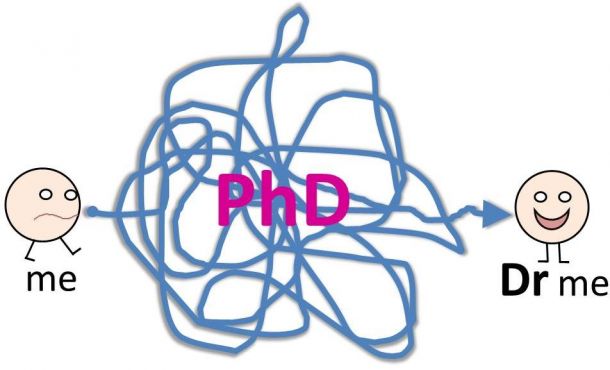
phdFor those who are also “dissertating” like me, you understand how easy it is to offer a roll of the eyes, smile/nod combo, and “just great” to friends and family. When talking to fellow PhD candidates and scholarly researchers, we seem to be more open to dig right in to slag the our dragging timelines, cry about our progress, complain about our faculty support, identify dissertation distractions, and, of course, whine about the TIME we used or didn’t use productively.

I recently read an article by Dr. Inger Mewburn (a.k.a. The @ThesisWhisperer), who discussed such “troubling talk” among PhD candidates. Often it is the talk of troubles that brings PhD scholars together to form communities  of practice, like a learning network and/or support group. There has been a large growth in online blogging, tweeting, slidesharing, podcasting, and more from PhD and early career researchers. There’s an active online community that supports personal/professional development and sharing of resources.

One section in particular interested me as Inger shared her own experience with the transition from student to professional academic. Specifically Mewburn (2011) discusses how there is evidence for doctoral researchers who interact with one another often whine and encouraged this type of struggle storytelling with others, even if they were not having any challenges. In recounting experiences of PhD gatherings and discussion over lunch, Inger identifies with the camaraderie of a shared PhD struggle:

 “The recognition that others were struggling too certainly made me feel better, but at the same time my own role in the talk was strangely discomforting. I realised I was amplifying my writing trouble, making it into a ‘war story’  in order to make it amusing and interesting to others. I wondered: was my performance of an   ‘inept student’  in the kitchen a form of PhD student identity work? By talking about being ‘in trouble’ with my writing, I was positioning myself as ‘one of us’  (a student) and not ‘one of them’  (a professional academic)  which was closer to my lived experience. I began to wonder: did my fellow PhD students ever deliberately perform ‘non competence’  too? It’ s likely that many of them experienced good writing days, but I rarely, if ever, heard about them in the lunch room” (Mewburn, 2011, p. 322).

Which brings me to my own experiences, and thoughts about my PhD progress. Do I keep quiet or join in with the slagging if I am around others who are complaining about the struggle? Do I try to down play my advances in writing and publications with other grad students? Have I told any “war story” to entertain my peers, rather than the reality of my own research progress? It is easy to fall into this, especially when there are funny xckd.com images or brilliant PhDComics.com cartoons. Just posting something like this to get a like, RT, or share from others in my PhD community is commonplace with those of us who claim #GradStudentProblems:

grad student motivation graph

A number of blogs, such as The Thesis WhispererPhD Talk, and PhD2Published; and Twitter hashtag communities, like #phdchat#gradchat, and the @GradHacker community of bloggers/Tweeters, have actually been quite helpful for my PhD progress.  I appreciate theses online communities for sharing ideas, talking about writing resources, offering advice, and linking to research methodology. When thinking about my own approach to “catching up” with my social networks (online and in person), I’ll be sure to not just moan about things. Although I do value my online networks, there’s nothing better than having a bit of a chat with other doctoral students/candidates or researchers when we get a chance to meet up and socialize.

Let’s not just use these social moments to be A.B.M. (always be moaning). As PhD candidates, our lives aren’t THAT bad. We were selected to study and research in a field or discipline we want, and really if it’s not your cup of tea … then maybe it’s time for a change anyways. Much of our PhD negative self-talk or even group-think can stifle research and writing momentum. Sure – there’s going to be issues and challenges; however we need to celebrate the small victories along the way. I know we have more productive and interesting things to talk about when we get together (online or in person), so let’s collectively encourage, motivate, and positively influence each other with our research progress. We CAN do it!

Reference:

Mewburn, I. (2011). Troubling talk: Assembling the PhD candidate. Studies in Continuing Education, 33(3), 321-332.