
#phdchat, Open Education, PhD, PLN, Professional Development

10 “Lessons” in Digital Scholarship from @mweller

As a scholar who is lives digitally, connected & open, I have appreciated following along with Dr. Martin Weller’s as he tweets & blogs his ideas for similar philosophies. More recently he has published an open-access, creative commons book – The Digital Scholar.

I was just watching Martin’s recent talk with the LSE on how to engage in digital scholarship, i.e. scholarship that is open, networked and digital. Thanks to the Centre for Learning Technology at LSE for presenting the NetworkEd: Technology in Education Series, you can watch these “lessons” (a.k.a. general ideas and musings about how to be a connected & engaged scholar). @mweller has posted his 10 Digital Scholarship Lessons in 10 Videos to recap the presentation, slides and scoop it page as well:

  1. It’s not just for geeks
  2. Researchers are caught in a dilemma
  3. Interdisciplinary is the network
  4. We’re all broadcasters now
  5. We’re operating in an attention economy
  6. We can rethink research
  7. New skills will be required
  8. It’ll impact even if you ignore it
  9. It’s about alternatives
  10. Don’t focus just on risk

I think that Martin brings up some great ideas of what a digital scholar looks like – and there are many of them already out there. I hope to not only witness, but also be part of this academic revolution. The changing landscape of technology, information and communication is challenging higher education to rethink its approach to learning. Online resources are very social and collaborative, and I hope to see these emerging tools push the academic realm outside of the traditional boundaries and expectations. With current developments in educational technology, learning communities have the ability to enhance peer-to-peer connections, social learning, knowledge sharing, and critical thinking for researchers. When learners/researchers become creators, narrators and digital contributors of their own academic fields, many gain further in-depth meaning and purpose in the learning process.
Collaboration, Open Education, PLE

It’s Time for the Educational Remix…

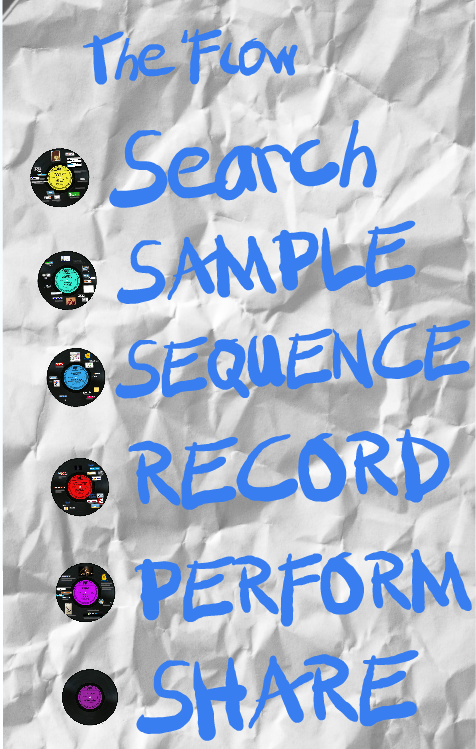
It’s time to catch up with some fantastic scholastic chats in #eci831… and there are a few weeks to share. During #eci831 Week 10Brian LambScott Leslie discussed their experience in remixing education. In reviewing some inspiring media savants, examples, and ideas for open, remixed educational resources.In a true network environment – the application logic is relied onto the machines and built into the network itself. The open education movement introduced large quantities of formal education resources into the pool of content that can be mashed up and remixed for learners. Networks have evolved to the point where learners are no longer bound by space or time, which allows learners to direct and choose their personal learning environment objectives. There is now a “mashup of learning” medium to best support content knowledge and skill acquisition for learners. The process of remixing education is simply extending the existing concept. Mashing OERs as an Instructor (or DJ) includes this sample DJ workflow applied to education:

Image from Mashing OER Wiki

More resources that inspire openness & remixing:

EC&I831, Learning Community

Open, Connected & Social With EC&I 831

The next online, open education course I am involved with this semester is EC&I 831: Social Media & Open Education from the University of Regina with Dr. Alec Couros that meets only every Tuesday evening (8-10pm CST). I first learned about this course through a few online networks in the ed tech arena, and I thought it may be an interesting lens to review curriculum and content development for learning. Here’s the 5 minute elevator pitch for the course:

The Tuesday evening elluminate session provided the basic introduction to the course schedule and outline. I am looking forward to connecting to other students to further explore the role of the educator/learner in terms of media literacy, knowledge and social networks.

It was great to hear the parallels between my personal philosophy of education, and how it ties into the learning objectives of this course.  Dr. Couros’ believes that there are great strengths in learning relationships and connectiveness amongst students, rather than just the specific content or knowledge.  It will be interesting to see how this sentiment is interpretted by the various weekly session speakers and participants throughout the course of the semester.

Although this course is similar to CCK09, I think that EC&I 831 will challenge me to:

  • get perspectives of social media education – history, ideas & development
  • expand my social learning theories & applications
  • experiment & play with NEW social learning & open educational tools/resources
  • provide a critical lens for curriculum development with social media & open education
  • build up my learning network – connect & enage with new online peers
CCK09, Learning Community, MOOC

Connecting to CCK09

Last night was the first meeting for the open course Connectivism & Connective Knowledge (CCK09) facilitated by George Siemens and Stephen Downes. Approximately 708 students have signed up for either credit or non-credit learning to share ideas around connected learning and knowledge at any given time. In the live elluminate room, there were about 50 or so active & engaged students ranging from a wide field of interests and professional backgrounds.

mechano

Photo c/o http://londonskyline.blogspot.com


I decided to join this course for a few reasons:

  1. Connect with other like-minded individuals online.
  2. Join a learning community interested in sharing ideas around connected knowledge and online learning.
  3. To further explore the ideas around the pedagogy of connectivism – a term coined by George & utilized in an early research/pilot project at the University of Toronto.
  4. Ponder some theories and developments for learning/performance technology to enhance my doctoral research & studies @ UNT.

The meeting last night was more around the structure of the course and expectations for the participants. The opening session introduced a myriad of methods for continual connection throughout the semester, and encouraged networking and collaboration amongst our online peers.

Although there are few structured sessions and a CCK09 schedule, this does not limit anyones means for connections beyond the confines of the course. I think it is amazing to see the connections of a few of our peers flourish immediately on Twitter, through sharing of the blogs and more.  I’m looking forward to connecting further and engaging with the numerous resources and ideas that everyone is bringing to the digital table

TO DO List:

(before next class – September 17, 4:00 pm CST “What is Connectivism”)

Readings

What connectivism is

What is the Unique Idea in Connectivism?

Optional Readings/References:

http://ltc.umanitoba.ca/connectivism/?p=101

Little Boxes, Glocalization and Networked Individualism (.pdf)

http://it.coe.uga.edu/itforum/Paper105/Siemens.pdf


If you are interested in staying “connected” to CCK09, feel free to jump into the course as a non-credit student and/or use CCK09 tag to search on Twitter, Google Alerts, Diigo, Delicious and more! You are bound to connect to one of the members of the online learning community and perhaps take away an idea or two.

Hello to all my new online friends. Feel free to stay connected to me on this blog or via various ways I engage online –  HERE. See ya’ll on Thursday!

Learning Community, MOOC, Professional Development, Social Media

Open Learning Courses: EC&I 831 and CCK09

Summer always leads to much needed time outdoors and away from the computer. It’s nice to be off the grid, but also good to plug in and reconnect with friends and learning ideas online.

To kick off the new academic year, online education, and career development I have signed up for a couple of online, open education courses to compliment the grad program I start this fall.

open

Here are the two courses that I am connecting with mid-September:

1. Connectivism & Connective Knowledge 2009 (CCK09)

This course is led by Stephen Downes and George Siemens. The CCK08 Syllabus and supporting content can be found on the CCK09 Wiki.

You can register to receive course information here. Learners can also get formal credit as part of the Certificate in Emerging Technologies for Learning can enroll through University of Manitoba’s Extended Education Faculty. The course will begin on September 14, 2009.

2. EC & I 831: Social Media & Open Education

This is an open access graduate course from the Faculty of Education, University of Regina by Dr. Alec Couros. Although this courses is for credit, there is also an opportunity for participation from non-credit students. All lectures in this course, from September 15/09 to December 8/09 will be publicly available. To access the lectures, look for the appropriate date under “Synchronous Sessions“, then look for the weekly Elluminate link. I will also offer the appropriate Elluminate link via tweet via @courosa.

If you’re looking to learn from interesting and experienced educators, while connecting to peers and resources online, than one or both of these courses may be of interest to you. Sign up & join in the fun. Although I’ll be busy with work & school, I’ll be sure to continue to share my thoughts, ideas and resources that I learn here.

If you are currently interacting and learning from another open course… please share. Happy open learning!