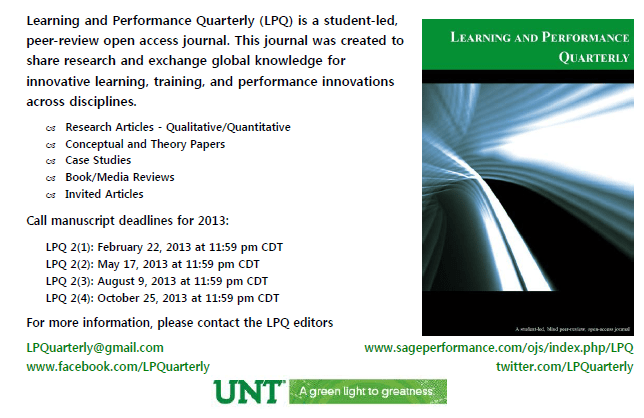
As part of the international open access week last fall, I attended the #SPARC Addendums and Author Rights Workshop facilitated by Kris Helge from the UNT Libraries. As an author and editor for a journal, this session reminded me about the critical stakeholders and expectations for the scholarly publishing process and the need to consider my own author agreements before signing away my work. I am fortunate enough to work and study at an institution who supports Open Access,and #OpenAccess publications.
I am also excited that other academic journals (e.g. JALN) are joining the #OA movement; however there are a number of peer-reviewed, academic publications who hold traditional publisher agreements and copyright limitations close to their heart. If you are an academic, scholarly author, or early career researcher and you have NOT heard about SPARC … then this blog post is for you!

After a brief review of copyrights and “traditional publishing agreements,” the workshop reminded me about of the importance of reading author agreements CAREFULLY and THOROUGHLY. A number of authors and early career researchers are just excited to get the chance to publish, that they rarely considering they are agreeing to transfer ALL OF THEIR COPYRIGHTS TO THE PUBLISHER. As researchers, we need to value our intellectual property and have a conversation with the publisher and inquire if any of the publishing agreement is negotiable.
Cue the SPARC Addendum…
SPARC. or the Scholarly Publishing and Academic Resources Coalition, advocates for collaboration among authors, publishers, and libraries to correct imbalances found in the academic publishing system.
For a more balanced approach for author and publisher agreements you might want to consider the SPARC Addendum. This is a FREE, legal document that modifies the publisher’s agreement and allows authors to keep specific copyrights related to intellectual property (e.g. articles). The author is able to retain their desired publishing rights with limited restrictions, and the publisher retains non-exclusive rights to publish and distribute your work. Overall, it allows authors to consider the access of their research, placement of writing into an electronic repository, and get the proper attribution when your work is utilized.
Want to know more about SPARC and #OpenAccess publishing resources? Check them out :
- About & What SPARC Does
- SPARC Addendum
- Addendum to Publication Agreement [PDF]
- Resources for Authors
- UNT Open Access Policy
- SHERPA/RoMEO – Publisher copyright policies & self-archiving
- SPARC Members – Did YOUR institution make the list?
- Scholarly Communications @ Duke – A blog about copyright, publishing, and more!
Reference:
Helge, K. (2012, October 24). SPARC Addendums and Author Rights Workshop. 2012 International Open Access Week @ UNT.
 techKNOWtools
You must be logged in to post a comment.