#AcDigID, #EdDigID

Social and Digital Presence in Higher Ed (#EdDigID)

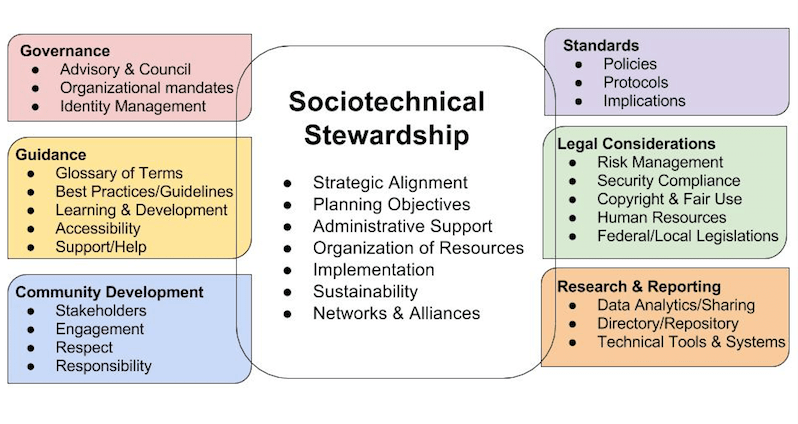
Social media and digital technologies are not neutral. These platforms come with cultural, social, and political context — often engineered to encourage interaction, engagement, and some form of addiction. [Listen to more on this rant in @BreakDrink episode no. 7: The Tech Curmudgeons.] Nora Young (2012) details more about her perspective of disembodiment and digital culture in her book, The Virtual Self. There are ways that technology is shaping us socially and this, in turn, has impacted the way we work — even in higher education. That being said technologies are not “infinitely malleable” as we have witnessed “the character of digital technology to decontextualize and recontextualize, to remix and reassemble” (Young, 2012, p. 81). As I read perspectives on social technologies to interviewing higher ed professionals, I am reminded that fluidity between the online and offline self is both interpreted and approached differently by each individual. Digital culture is changing. Although it is not entirely “embodied” by as we “live” and work online, there are emotional, intellectual, and personal impacts for our offline lives.
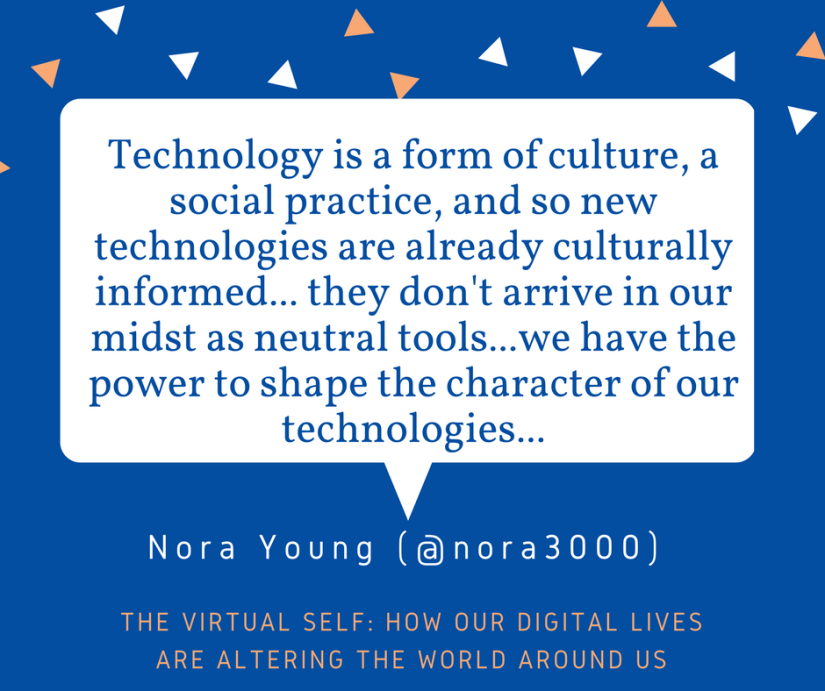
Next week (May 15-21, 2017), I am facilitating an OLC online workshop (also offered September 25-October 1, 2017) to dig into issues and affordances of our networked selves. What does your online identity look like today? In higher ed, it is becoming increasingly vital to share your work and practice online. Besides developing a digital presence, higher education staff, administrators, and scholars are utilizing social media to support their work, add to their professional development, engage with peers, and share what they are doing to the public. Open and digital channels help colleagues solicit for advice, seek out support/collaboration, offer free professional development, share information and resources, and learn in networked communities with common interests. Although there are benefits to “working out loud” and online, there are also challenges and issues as we repurpose social, digital spaces.  This workshop was designed to discuss, explore, and consider how YOU want to BE online — if you do. At the end of this workshop, I hope participants will be able to:

  • Evaluate social media and digital platforms for professional development and connected learning in the field;
  • Establish effective strategies for developing/creating/improving your  digital identity for open, networked practice; and
  • Outline the benefits and challenges of open and digital practice, especially when considering what it means for higher education staff and faculty are active on social media and in networked spaces.

If you are not able to sign up for this #EdDigID workshop next week, fear not! There are a few other ways you can get involved, contribute, and participate virtually:

  • TWITTER:
    • TWEET: Share resources around digital identity, networked experiences, and how you learn online and on social media using the workshop hashtag: #EdDigID
    • HASHTAGS & TWEEPS: What hashtags do you track on or who do you follow on Twitter? What hashtags are YOU interested for colleagues in higher ed? #EdDigID
    • LISTED: I have been curating Twitter lists for quite some time that includes peers in higher ed, academia, academic advising, librarians, and MORE! Do I need to add you to one of my Twitter lists? Please advise (on Twitter or in the comments below). Thanks!
    • PARTICIPATE in the#EdDigID TWITTER CHAT: Join us for the live, synchronous Twitter chat on Friday, May 19th from 1-2 pm CDT on the Twitters. We’ll be hanging out in this TweetChat Room and I will moderate this chat here: http://tweetchat.com/room/EdDigID
  • LINKEDIN: 
    • CALL FOR CONTRIBUTION: Are you using LinkedIn for your professional, networked development? How are you learning on this platform? Let me know. It’s something I want to chat about in our synchronous meeting online next Wednesday (5/17) from 12-1 pm CST — you can even JOIN THE CONVERSATION if you are interested/available.
  • PODCASTS:
    • From my personal interest in podcast listening (and producing of podcasts), I have been curating an amazing number of podcasts for/by higher ed professionals and academics. I will be sharing this out via another project and blog post soon — but for now, what should be on my podcast feed AND what podcasts should the #EdDigID participants listen to?

Reference:

Young, N. (2012). The virtual self: How our digital lives are altering the world around us. Toronto, Canada: McClelland & Stewart, Ltd.
Higher Education, Social Media, SocioTech

Sociotechnical Stewardship: Guiding Social Media Policy and Practice in Higher Ed

In a previous blog post, I shared how I am visualizing scholarship via the Research Shorts YouTube Channel (Please SUBSCRIBE: http://bit.ly/researchshorts). If you have not viewed any of these papers, here’s a list of journal articles, that are now videos on this channel, compiled by George. As an open, digital scholar, I thought that producing videos of my own work might be a solid idea to share scholarship. So here I go…

Remember that “really big paper” known as a dissertation? It was on the topic of social media guidance and such? If not — check out the website on the topic here: https://socialmediaguidance.wordpress.com/ Well, I learned one is never really Ph-inishe-D with this research until the research is published in a peer-reviewed journal [More on this #AcWri process and experience in a future blog post… I promise!].

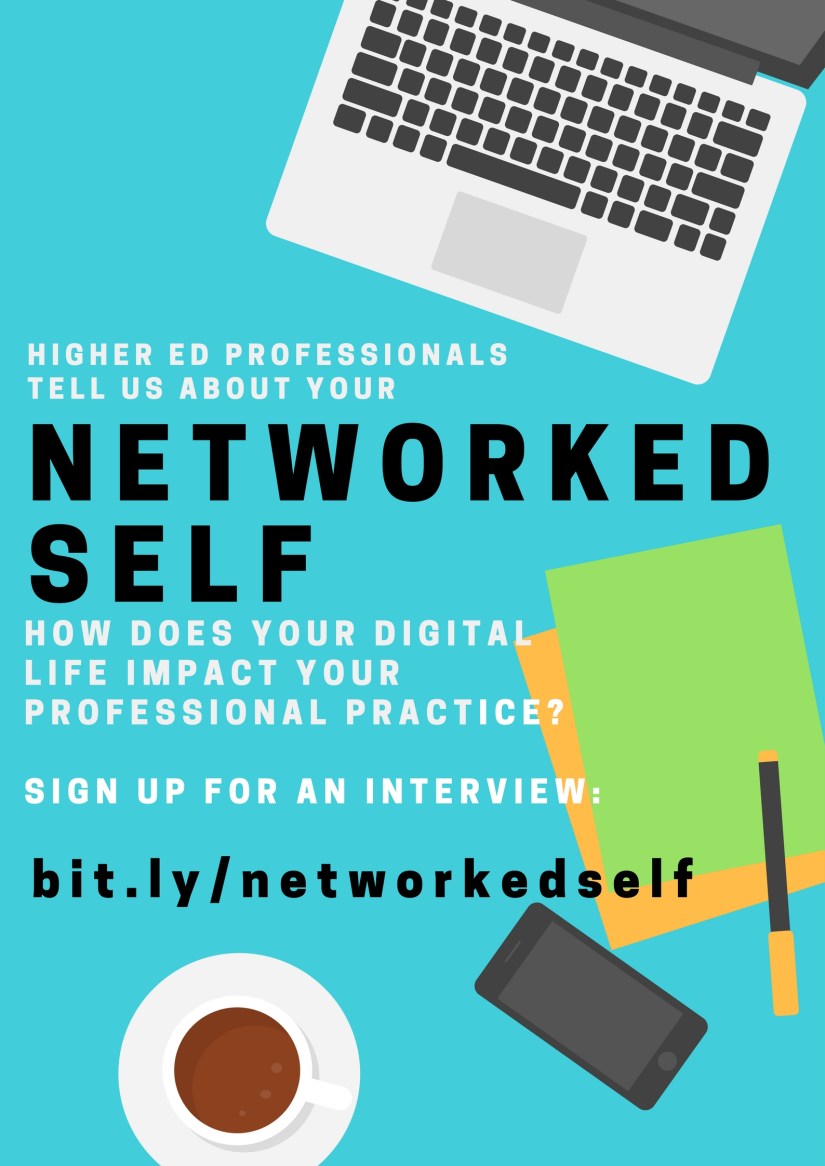
I am proud to say this research has been officially published! This blog post shares a quick video overview of the paperlink to the journal article/pre-print paper, and the database of over 250 social media policies from 10 countries analyzed within this study. Thanks to all who contributed to this research and to others who will continue to use this open data set and research to further work in this area. This sociotechnical stewardship framework is organized from the key themes found from text-mining the 24, 243 policy passages reviewed within this corpus. Here are a few things we need to consider when organizing and guiding sociotechnical systems in our organizations:I am continuing to understand how we best guide and support sociotechnical systems for higher education professionals as I interview participants for a current research project[Hint, hint: CONTRIBUTE to our current study that is “in progress” now: https://bit.ly/networkedself

I hope other scholars and practitioners further this research and apply these practices to effectively support campus stakeholders. Want to learn more about this study, here is a quick video summary (4:59 minutes):

Social media technologies transform how we share, communicate, and interact with one another. On our college and university campuses, new media applications and platforms are transforming how students, staff, faculty, and alumni engage with one another. As these social, emerging technologies impact teaching, learning, research, and work functions on campus, we need to understand how social media use and behaviors are being supported. To help higher education administrators and organizational leaders effectively guide social, emerging technologies, we prove a summary of 250 institutional policy documents and we offer a sociotechnical framework to help support strategic, long-term technology planning for organizations and their stakeholders.

Download this research paper:

The article is published in the Journal of Computing in Higher Education here or find the pre-print version of the original paper on my ResearchGate profile.

Download a csv file of the higher education social media policy database:

Pasquini, L. A. (2016). Social media policy document database. Figshare. doi:10.6084/m9.figshare.4003401. Retrieved from https://figshare.com/articles/Social_media_policy_document_database/4003401

Reference:

Pasquini, L. A., & Evangelopoulos, N. (2017). Sociotechnical stewardship in higher education: A field study of social media policy documents. Journal of Computing in Higher Education, 29(2), 218-239. doi: 10.1007/s12528-016-9130-0 Published Online November 21, 2016.


#3Wedu, Higher Education, wine, women

The #3Wedu Podcast No 16: #OLCinnovate 2017 Re-Cap

Hey squad [replacing “hey guys” one phrase at a timeThanks @alexpickett}. Listen up.

heysquad

The #3Wedu posse is hosting a happy hour podcast THIS Wednesday (4/26) at 5 pm CDT. Join us to for a chat with your cup of cheer and ideas here:

Laura Pasquini's avatarThe #3Wedu Community

On April 5, the women of #3Wedu traveled to New Orleans, Louisiana to facilitate roundtable discussions on ways to re-define education to support women in innovative contexts. If you haven’t heard about this, check out our last blog post about the #3Wedu Conversation at #OLCinnovate:

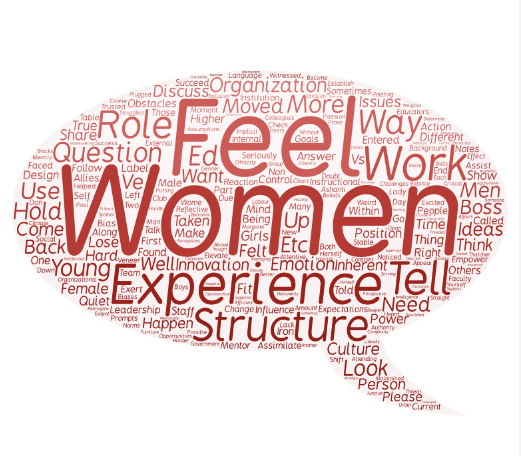
News, blogs, and panels are filled with horror stories from Silicon Valley, reflecting pay gaps, gender bias, and more. In our roundtable, we first asked, “what does it mean to be a woman in innovative education environments?” Next, we thought about how we might re-imagine the organizational structures of universities to be more supportive of women. Read and contribute to the #OLCinnovate discussion here: http://bit.ly/3weduinnovate17 

In the next episode of the #3Wedu podcast No. 16, we’ll reflect on the roundtable conversations further, to share who we met, what we heard, and ways we might move the conversation forward into action. Join us…

View original post 57 more words

BreakDrink, Podcast

A Throwback to the Campus Tech Connection (#CTCX) on @BreakDrink Episode No. 7

Do you miss the Campus Tech Connection (#CTCX) podcast from the ol’ skool BreakDrink? [Or perhaps just the rants?] Then @BreakDrink episode no. 7, lovingly called, The Technology Curmudgeons, is for you! Jeff Lail
joins Jeff and me to chat about how technology AND our own perspectives on technology have changed. 

If you have not read the article, Tech Bigwigs Know How Addictive Their Products Are. Why Don’t the Rest of Us?, or seen the Brain Hacking episode from a recent 60 minutes – you should. What is technology doing to our brains? How are technologies social engineering us? Are we questioning the issues around technology on campus enough? Have we even thought about Privacy, Data Survivalism, and New Tech Ethics [via Note To Self episode with Anil Dash & Julia Angwin] and where we are going as a society?

Listen and catch the rest of the show notes/links directly on the BreakDrink.com site, including the following recommended reads & listens.

@BreakDrink Reads Mentioned:

@BreakDrink Podcast ShoutOuts

If you have comments, questions, feedback, or thinks you want to hear about from this episode or future episodes, please feel free to post a comment below, or follow us on the following the “BreakDrink” podcast channels:

We welcome banter & comments there. If y’all listen to the podcast via iTunes, please consider leaving us a rating and review.

Library

School Librarians’ Impact to Student Learning: CLASS II Research Call for Field Studies

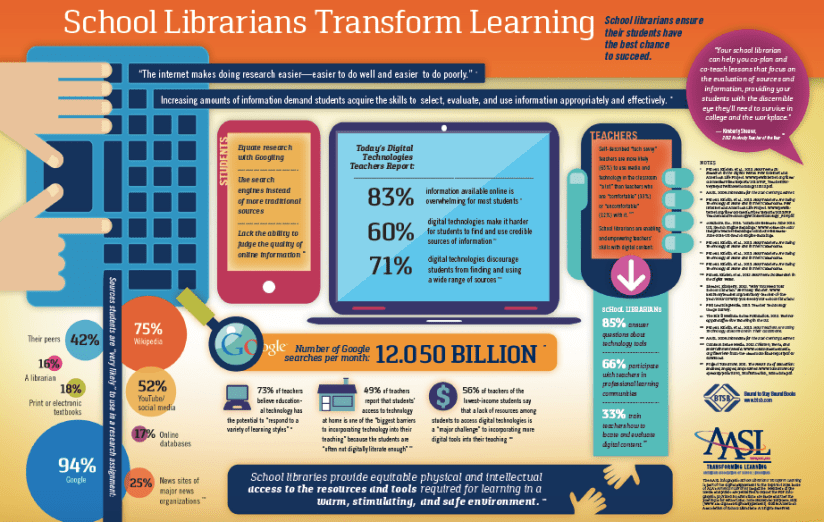
For just over a year, I have been part of a project with the American Association of School Librarians (AASL) and the Institute of Museum and Library Services (IMLS) to dig into the empirical research proposed by the Causality: School Libraries and Student Success (CLASS) white paper For this second phase, the CLASS II researcher teams (from Old Dominion University, Florida State University, and the University of North Texas) are investigating possible causal relationships between the work of effective school librarians and student learning outcomes the K-12 education. Learn more about the call and upcoming webinar (4/24) we’re hosting to discuss the call for research proposals.

Much of our work has been reviewing, aggregating, and synthesizing empirical literature from 1965-present that includes school-based malleable factors that impact learning. Unlike other aggregations, the multi-team approach is examining causal relationships beyond the domain of school library research to identify interventions that may already be or could potentially be used by school librarians. To synthesize the combined corpus, we directed our evaluation of the literature to uncover evidence-based strategies, activities, and interventions identified by the U.S. Department of Education non-regulatory guidance document released in September 2016: “Using Evidence to Strengthen Educational Investments.”

The NEXT phase of this project is the opportunity to contribute to the CLASS II Research via the Request for Proposals (RFP) for CLASS II: Field Studies. We hope to fund/support proposals that seek to understand how school libraries make a difference to student learning outcomes in practice, specifically by examining evidence-based strategies, activities, and interventions for school librarians in K-12 education. Deadline to Submit: June 15, 2017

Successful applicants should advance our understanding of how school librarians contribute to one or more of the following issues and findings from the empirical literature based on our synthesis findings:

Learners Benefit From:

  • Direct, explicit, and systematic instruction on new material blended with strategically timed small group reinforcement activities.
  • Hands-on experiences in science and mathematics that connect learning with real-world or familiar content and experiences.
  • Contextual instruction in questioning, problem-solving strategies, and other metacognitive skills.
  • Formative, corrective feedback, including quizzes, that promotes and reinforces learning.
  • Exposure to vocabulary through reading and listening as well as explicit vocabulary instruction and acquisition strategies.
  • The frequency of instruction may be as or more important than the concentration of time particularly in mathematics.
  • The amount and type of intervention or teaching are personalized to meet individual needs.
  • Modifying the learning environment to decrease problem behavior, although a positive learning environment alone may not be sufficient.
  • Teachers with 2-5 years of teaching experience, especially compared with first-year teachers who are generally less effective.
  • Visual representations.
  • Intensive and individualized interventions for struggling readers.

Please join us for a FREE informational webinar for further details about the RFP requirements, answer questions about potential proposal topics, or respond to any research methods or approaches:

CLASS II Research: RFP Information Session

Monday, April 24, 2017 from 3:00 PM – 4:00 PM CDT

Webinar Archive  |  Webinar Slides  | Webinar Notes

If you have any questions about the CLASS II RFP for Field Studies and are unable to attend the LIVE, synchronous webinar, please do not hesitate to email us with further inquiries: class@ala.org