PhD

Thriving… Not Just Surviving in Your Ph.D.

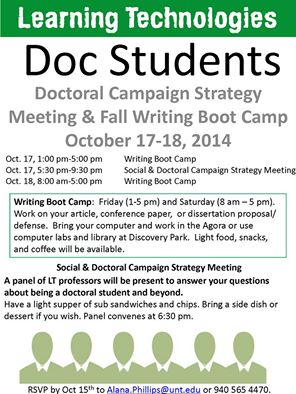
Today is the start of the UNT Learning Technologies (#untLT) Doctoral Fall Writing Boot Camp (October 17-18, 2014). This program has been developed by our department to support our doctoral researchers in their dissertation progress. Currently a number of doctoral researchers are writing and working in the LT Agora with snacks, support, and relevant available resources.

DocStudents

I am looking forward to joining the “Doctoral Campaign Strategy Meeting” tonight on a panel this evening with our faculty, including Drs. Cox, Ennis-Cole, Knezek, Tyler-Wood, and J. Wircenski. (Drs. Allen and Warren will participate remotely if they are able). This Q & A session will provide some advice and give some ideas for not only how to “survive” but also thrive in doctoral research regardless of the phase.

This presentation is a remix of @drjeffallen ‘s wisdom/advice

I like to use the phrase thrive not survive, to for the doctoral process. There are a number  a number of supportive strategies and ideas to get to the PhD finish line, including:

  • Making a habit of WRITING & scheduling only #ShutUpAndWrite session
  • Social, emotional & mental support
  • Identifying champions in your department, on campus & in your discipline
  • Outlining the major professor-advisee working relationship – needs & expectations
  • Using the advice of your committee wisely
  • Organizing your research materials & literature review effectively
  • Mapping out your data collection process
  • Attending to your personal-wellness & well-being
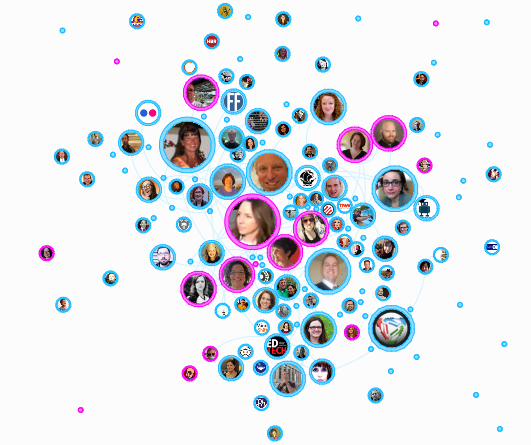
  • Connecting to a cohort of scholars in your personal learning network
  • Giving up something, to get something to finish your dissertation
  • Understanding how you work best
  • Consulting & using the resources available
  • Focusing your efforts wisely

Want to learn more? I will be sure to post notes and advice from our panel of professors and doctoral researchers who attend. What is YOUR advice on how to THRIVE in a doctoral program and through the dissertation process? Please share!

UPDATE (post-panel):

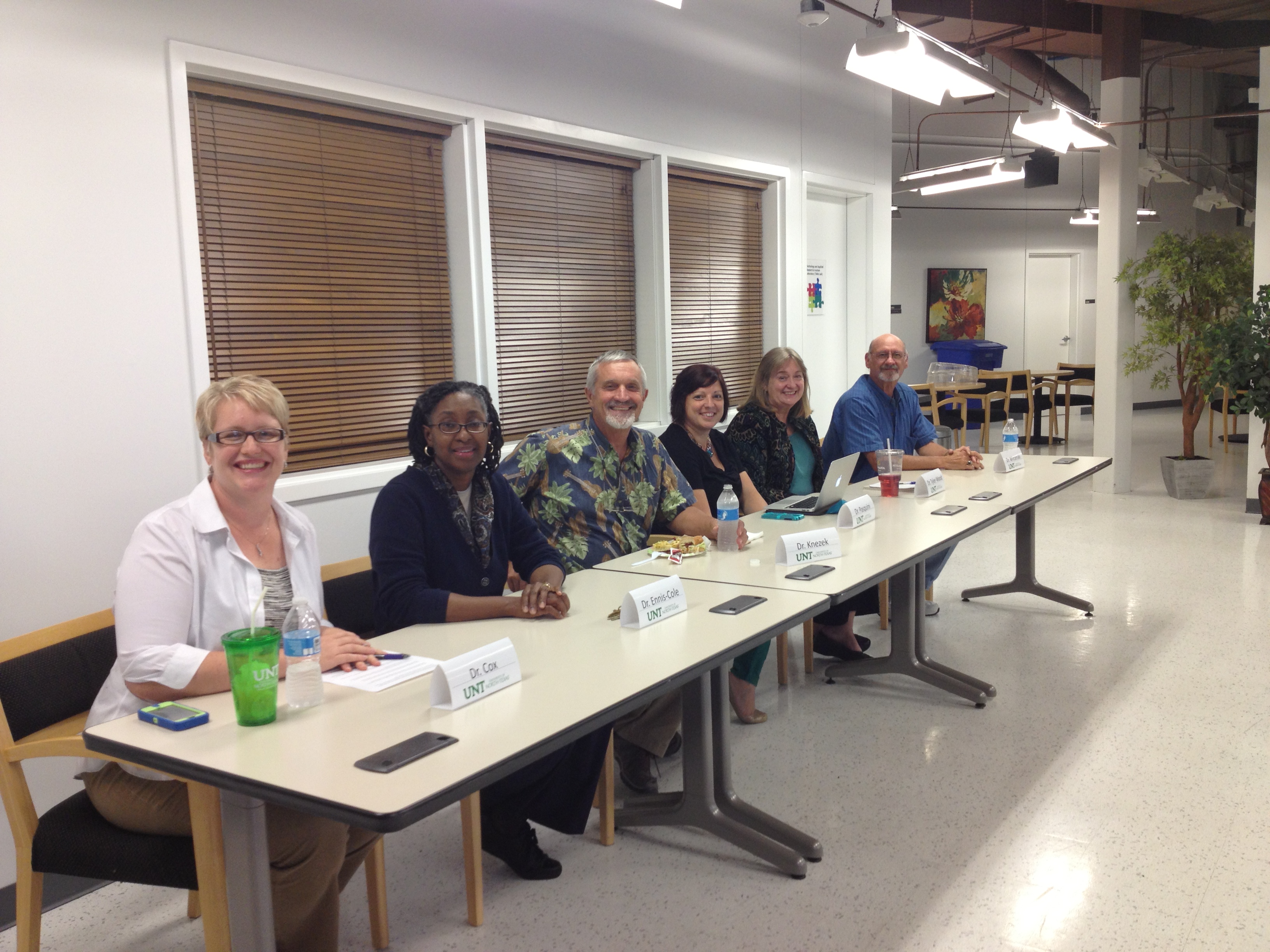
Doctoral Strategy Panel - Group Photo

From left to right: Drs. Cox, Ennis-Cole, Knezek, Pasquini, Tyler-Wood, and Wircenski.

AcAdv, PhD, Reflections

PhD Balance & Support: Life as a Doctoral Researcher and Higher Ed Professional

As part of my “Thanks-For-Supporting-My-PhD-Completion” and ways to motivate other doctoral researchers, Melissa and I decided to write an article for NACADA’s Academic Advising Today. This piece shared insights from our #hackPhD Panel at #nacada13 and our own hindsight of what it takes to successfully finish the degree.
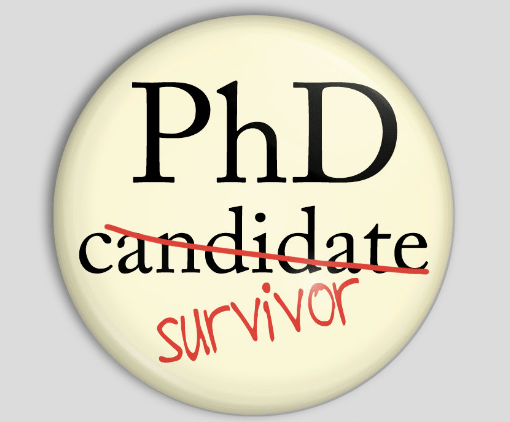
PhD Survivor

We are not alone in thinking that being both a full-time professional in higher education AND full-time PhD student is a CHALLENGE:

The tensions among academic and personal roles can have a great impact on an advisor’s doctoral education. The theory of doctoral student persistence (Tinto, 1997) in particular can provide a look at how conflicting roles might impede a doctoral student’s academic progress. Tinto’s theory (1997) assumes that the primary communities for students relative to their graduate education are their peers and the faculty in their programs. Social integration within graduate education is almost synonymous with academic integration in the department. These social communities assist students with both intellectual and skill-building capacities needed to succeed in their doctoral programs, as well as networking within the greater professional community. Membership in other communities, e.g. those encompassing personal roles, can have a negative impact on graduate persistence by providing conflicting demands for time. If students are not able to manage their competing roles, they may find that they must give up on some of them.  (Read the full article here.)

I am thankful to the #AcAdv Chat community and fellow PhD friends (#sadoc & #phdchat) for the support. A number of my colleagues from these groups ALSO hold a faculty or staff position on campus, while grinding through their doctoral coursework and/or dissertation. I salute all of you who have made it, and a number of you who are still working towards the end. {You can do it! #GoScholarGo!}

At times this challenge is not easy – AT ALL. What it often comes down to is, support at the local level. At my campus, I was fortunate to have dedicated faculty advisors, solid graduate program support, an understanding/empathetic boss, a supportive and collaborative office team, and brilliant Dean to scaffold my PhD progress. Although my support network online is brilliant,  I think that it is imperative for the Staff/Faculty Supervisor of the PhD employee to consider how they can impact degree completion. Here are a few suggestions on how to get started:

  1. Ask How To Support: Sounds easy enough, but often it does not come up in 1:1 meetings. Consider asking how their degree will fit into their overall career goals, and what sort of strategies and resources would be most appropriate to reaching this objective.
  2. Identify Funding Resources: Inform students about tuition breaks, employee scholarships, and travel funding that might be optional during their doctoral study. Sure – your grad student might be savvy enough on this topic; however it does not hurt to inform them about budget allowances or potential funding sources.
  3. Encourage Professional Development: Continue to nourish and cultivate professionals who want to hack their doctoral degree, AND contribute to their own personal growth. Professional and informal affiliations often helps their progress towards degree completion.
  4. Consider Scheduling & Being Flexible (with Time): Allow for a varied staff schedule, time in office, or even opportunities to telecommute on projects. This might even include moving a lunch or break around to meet with dissertation committee members, writing groups, or graduate student seminars. Often your graduate student is very good at both self- and time management, so trust them to be effective in and out of the office.
  5. Express Value for Scholarship: Help your employee identify service, teaching and research scholarship on your campus and with your professional affiliations. Think about their research as an extension of your unit’s or institution’s vision and mission, and capitalize on their talent and skills in this area. Scholar-practitioner contributions can impact strategic goals, and compliment what you do day-to-day.

If you currently supervise a doctoral researcher who is a full-time staff member, how do you support your employee? OR vice-versa. What do you need as full-time employee AND PhD student to get you to your dissertation defense? Please share in the comments below.

References:

Johnson, M. A., & Pasquini, L. A. (2014, September). Negotiating the multiple roles of being and advisor and doctoral student. Academic Advising Today, 37(3).

Tinto, V. (1997). Toward a theory of doctoral persistence. In P. G. Altbach (Series Ed.) & M. Nerad, R. June, & D. S. Miller (Vol. Eds.), Contemporary higher education: Graduate education in the United States (pp. 322-338). New York, NY: Garland Publishing, Inc.

PhD, Reflections

#Dissertation Thanks and Acknowledgement for my PhD Journey

“Communities of practice are groups of people who share a concern or a passion for something they do and learn how to do it better as they interact regularly.”

~ Etienne Wenger

My doctoral dissertation research is dedicated to all the members of my personal learning network and communities of practice, who connect, inspire, collaborate, interact, challenge, and share with me personally and professionally. I am thankful for your passion.

Here are a few slides from my final dissertation defense from Thursday, June 12, 2014. Some slides have been removed to prepare for journal publications, and I promise that more will be shared on this blog or here:  http://socialmediaguidance.wordpress.com/


ACKNOWLEDGEMENTS

I would like to acknowledge the support and encouragement I received during my doctoral research. I am incredibly grateful for those of you who stood by to support me along the way. Thank you for helping me during my PhD journey.

Fiachra

My husband: Fiachra Eamon Liam Moynihan – I am truly grateful for your love, support, and patience. Without you, I would not have been able to thrive in my doctoral program or balance my research with everything else. Thanks for joining me in this scholarly adventure – I could not accomplish this feat without you by my side.

Thank You Dissertation Committee

To my  doctoral dissertation committee:  Dr. Jeff Allen, Dr. Nick Evangelopoulos, Dr. Kim Nimon,  and Dr. Mark Davis.  I appreciate the support during my dissertation research, and general advice you provided about academic writing, publishing, career development, and life on the tenure track. I look forward to our continued collaboration in publishing, research, and more.

Mi Familia

My family: My parents, Michael and Coleen Pasquini, and my siblings Mark and Katie. You were the first community that encouraged me find my passion in learning. For this, I thank you.

PLN

My friends: A sincere THANK YOU to my friends near and far. I am honored to have an eclectic support network to challenge and check in on me. A heartfelt thanks goes out to all of you who provided support, inspiration, mentoring, peer pressure, and motivation along the way. Shout out to: #untLT, #AcAdv, #PhDchat, #EdTech, #HigherEd, #SAchat,  and other communities and/or hashtags we created along the way.

OEM

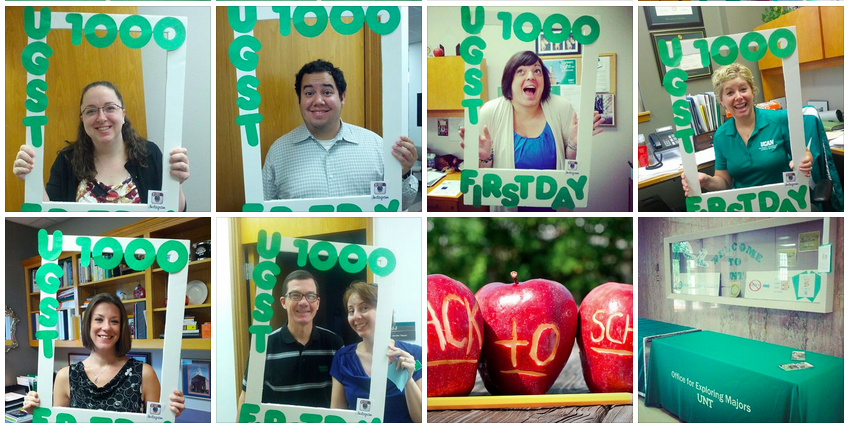
My colleagues: Thank you to the fantastic team I have been fortunate to work with over the years at the Office for Exploring Majors in Undergraduate Studies at UNT. Although this division no longer exists, you all will hold a special place in my heart.

Thank You!
Image c/o Flickr member Chris Piascik