As a PhD candidate, I am trying to be more cognizant with my response when asked the following (common) questions:
- “How’s your dissertation going?”
- “When are you going to finish your PhD ?”
- “Where have you been? I haven’t seen you in ages…”
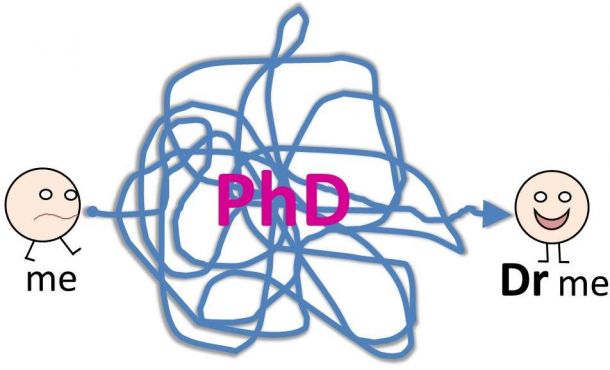 For those who are also “dissertating” like me, you understand how easy it is to offer a roll of the eyes, smile/nod combo, and “just great” to friends and family. When talking to fellow PhD candidates and scholarly researchers, we seem to be more open to dig right in to slag the our dragging timelines, cry about our progress, complain about our faculty support, identify dissertation distractions, and, of course, whine about the TIME we used or didn’t use productively.
I recently read an article by Dr. Inger Mewburn (a.k.a. The @ThesisWhisperer), who discussed such “troubling talk” among PhD candidates. Often it is the talk of troubles that brings PhD scholars together to form communities of practice, like a learning network and/or support group. There has been a large growth in online blogging, tweeting, slidesharing, podcasting, and more from PhD and early career researchers. There’s an active online community that supports personal/professional development and sharing of resources.
One section in particular interested me as Inger shared her own experience with the transition from student to professional academic. Specifically Mewburn (2011) discusses how there is evidence for doctoral researchers who interact with one another often whine and encouraged this type of struggle storytelling with others, even if they were not having any challenges. In recounting experiences of PhD gatherings and discussion over lunch, Inger identifies with the camaraderie of a shared PhD struggle:
“The recognition that others were struggling too certainly made me feel better, but at the same time my own role in the talk was strangely discomforting. I realised I was amplifying my writing trouble, making it into a ‘war story’ in order to make it amusing and interesting to others. I wondered: was my performance of an ‘inept student’ in the kitchen a form of PhD student identity work? By talking about being ‘in trouble’ with my writing, I was positioning myself as ‘one of us’ (a student) and not ‘one of them’ (a professional academic) which was closer to my lived experience. I began to wonder: did my fellow PhD students ever deliberately perform ‘non competence’ too? It’ s likely that many of them experienced good writing days, but I rarely, if ever, heard about them in the lunch room” (Mewburn, 2011, p. 322).
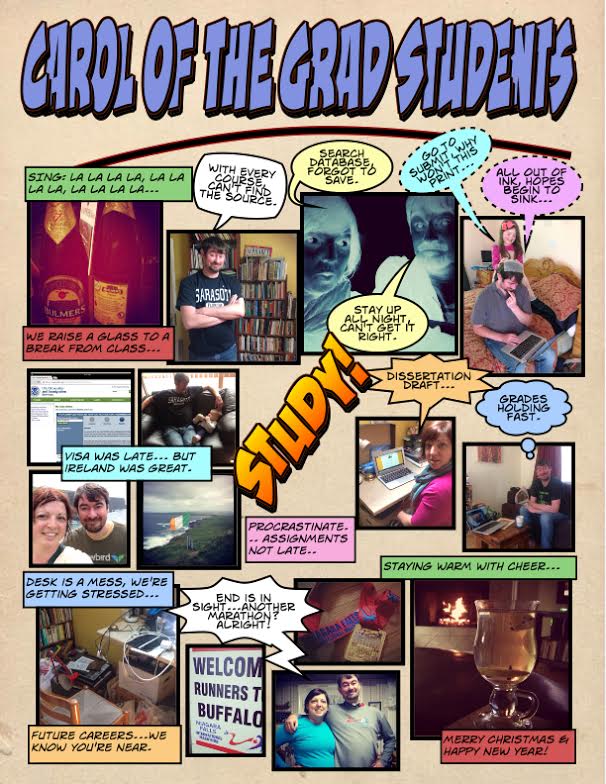
Which brings me to my own experiences, and thoughts about my PhD progress. Do I keep quiet or join in with the slagging if I am around others who are complaining about the struggle? Do I try to down play my advances in writing and publications with other grad students? Have I told any “war story” to entertain my peers, rather than the reality of my own research progress? It is easy to fall into this, especially when there are funny xckd.com images or brilliant PhDComics.com cartoons. Just posting something like this to get a like, RT, or share from others in my PhD community is commonplace with those of us who claim #GradStudentProblems:

A number of blogs, such as The Thesis Whisperer, PhD Talk, and PhD2Published; and Twitter hashtag communities, like #phdchat, #gradchat, and the @GradHacker community of bloggers/Tweeters, have actually been quite helpful for my PhD progress. I appreciate theses online communities for sharing ideas, talking about writing resources, offering advice, and linking to research methodology. When thinking about my own approach to “catching up” with my social networks (online and in person), I’ll be sure to not just moan about things. Although I do value my online networks, there’s nothing better than having a bit of a chat with other doctoral students/candidates or researchers when we get a chance to meet up and socialize.
Let’s not just use these social moments to be A.B.M. (always be moaning). As PhD candidates, our lives aren’t THAT bad. We were selected to study and research in a field or discipline we want, and really if it’s not your cup of tea … then maybe it’s time for a change anyways. Much of our PhD negative self-talk or even group-think can stifle research and writing momentum. Sure – there’s going to be issues and challenges; however we need to celebrate the small victories along the way. I know we have more productive and interesting things to talk about when we get together (online or in person), so let’s collectively encourage, motivate, and positively influence each other with our research progress. We CAN do it!
Reference:
Mewburn, I. (2011). Troubling talk: Assembling the PhD candidate. Studies in Continuing Education, 33(3), 321-332.





 techKNOWtools
You must be logged in to post a comment.