#AcDigID, #EdDigID, Learning and Performance, Networked Community, networkedscholar, OLC, Training & Development

Join the #EdDigID Twitter Chat on Friday (9/29) @ 2 pm CT!

Being an open professional or academic might mean showcasing your own work, research, teaching, and practice online. Social networks and digital tools are increasingly offering higher ed professionals an online place for collaboration, learning, and sharing. In the information age, being able to display research and practical work in higher education is the norm and it is critical we are contributing to public knowledge.

There are a great number of benefits for being open and online; however, professional digital identity development does not come without questions or challenges. My last post not only introduced a few issues, challenges, and affordances (+ the #EdDigID workshop); however, we are going to share MORE in a LIVE Twitter Chat this Friday, September 29, 2017 from 2-3 pm CDT (time zone converter, I’m in Dallas, TX, USA). What does it mean to be a connected practitioner? How has being a networked scholar impacted your work? Come chat, in 140 characters or less (or more) with us! All #highered colleagues & peers are welcome for some FREE Twitter PD!
HOW TO: Participate in the #EdDigID Chat on Friday (9/29)

Here’s a quick overview of how to participate in #EdDigID Twitter Chat:

  1. Set up your Twitter Account (HOW TO: Set Up The Twitters).
  2. Follow the #EdDigID hashtag on Twitter for the latest tweets.
  3. Follow @LauraPasquini who will moderate the Q & A for the Twitter Chat, a.k.a. “MOD”
  4. Get ready and excited for Friday’s (9/29) chat by checking out what’s being shared and discussed on the#EdDigID hashtag NOW! BONUS: You might learn what’s happening & being in my workshop. 🙂
  5. JOIN US Friday, September 29th from 12-1 pm PT/1-2 pm MT/2-3 pm CT/3-4 pm ET for the following TOPIC: Being Online as a #HigherEd Professional in 2017

Contribute to the #EdDigID Twitter Chat by:

  • Logging into your Twitter account as the #EdDigID chat will happen ON TWITTER.
  • Follow along in real time during the #EdDigID Twitter chat by following along on the  Twitter hashtag: #EdDigID  or this Tweet Chat Room: http://tweetchat.com/room/EdDigID
  • The MOD (moderator) @LauraPasquini will ask 3-4 questions during the 60-minute chat; please respond with the Q# in your update, e.g. “Q1: Your Answer” or “A1: Your response”
  • Invite your higher education faculty/staff peers to join the conversation – all are welcome to join!
  • Include the #EdDigID hashtag in your tweets and responses (“@”) to others.

To help you prepare, here are a few of the #EdDigID chat questions to ponder IN ADVANCE of our conversation:

  1. What questions should we discuss, with regards to #highered professional presence/identity online + social media?
  2. What are you preferred spaces & places to learn online? This could be social media, digital platforms, etc. Please list!
  3. What are your spaces and places to “be” online as a #highered professional (besides Twitter)? Please share!
  4. What advice do you have for #highered peers who are just starting to develop their digital ID?
  5. What are some of the benefits for developing a digital identity?
  6. What are the possible challenges/issues for being online, on social media or having a professional a digital presence?

UPDATED POST 9/29/17: Here is our #EdDigID conversation archived in @Storify:

#EdDigID Twitter Chat: Being Online as a #HigherEd Pro in 2017 [Transcript]

#AcDigID, #EdDigID, networkedscholar, Training & Development

Being “Professional” Online… Whatever That Means. #EdDigID #AcDigID

I just started reading the new book, The Digital Academic (Lupton, Mewburn, & Thomson, 2018), and I was reminded of the debate in The Guardian on being or not being a “serious academic.”  These two articles argue the merit of how scholars participate (or should not) on social media and digital networks. The two sides see involvement on social networks as either public discourse and knowledge sharing or as a complete waste of time only used for personal reputation management. Not surprising, this how networked practice is mirrored among the administrative staff I have been interviewing. Often postsecondary educators express the need to “be professional online.” Depending on the campus culture, professionals are either encouraged or discouraged from actively engaging online on social media. Most staff expressed uncertainty of any policies, expectations, politics, and implications of their own social media use. And commonly, social media and digital technologies are not often guided by academic institutions or via the professional organizations/associations. What is exciting about this edited collection (that I’ve read so far), is it unpacks these binary perceptions and dichotomous narratives. There is so much more to discuss than just good vs. bad for these social, online contexts. Just like our social identities, our online selves are so much more complex and things get complicated when we interact on certain platforms, connect with particular communities, and experience “being” within social networks. Just like our social identities, our online selves are so much more complex and vary in certain contexts. Things tend to get complicated when we interact on certain platforms, connect with specific communities, and experience “being” within particular professional online networks. Online identity is more fluid and less compartmentalized than ever before. Sure we share our practices and offer praise; however, there seem to be escalating issues and challenges we need to talk about in these online environments.

Sure, I can reflect back to the early days of participating in open, digital channels to ask for advice, share resources, support one another, and really have a bit of a chat (and banter) with loads of colleagues in #highered. I have definitely benefited from the offering of professional development via Twitter, open sharing of learning on blogs, and wealth of knowledge being shared by videos, open documents, and curated resources via my personal learning network. Although I still experience benefits to “working out loud” and participating in these online social networks, I believe “being online” in higher ed looks today looks different from when I first started, plus I recognize my own points of social privilege I have in these spaces. Our networks have grown up and with this scaled new look comes concerns about privacy, data collection, and reputation management. Additionally, there are a number of unwritten rules and informal sanctions facing higher ed faculty and staff in these social, digital places. “Academic work and academic selfhood in the increasingly digitised realm of higher education are fraught with complexities and ambivalence” (Lupton et al., 2018, pp. 15-16). So much is left unanswered:

  • What happens when our personal and professional online networks intersect and come to campus?
  • What behaviours and use of social media are acceptable for your role, discipline, and institution?
  • How do we work online and offline, when the boundaries are poorly defined and perhaps even seamless?
  • What implications are there for being online and connected in 2017?
  • How does being active on social media or in networked spaces impact career development and advancement?
  • What are we not learning about networked practice in higher ed we should know more about?

These are the questions I am asking (in my research and for my practice), and they are why I developed an OLC online workshop:#EdDigID: Developing Your Social & Digital Presence in Higher Ed (#AcDigID)

Next week (September 25-October 1, 2017) is the last offering of this workshop for 2017. [Update: I’m teaching the #AcDigID version January 8-14, 2018 for academic faculty and researchers.] This 7-day short course is like an expanded, self-pace webinar to understand and identify what it means to be networked as a higher education professional. This course was created 1st targeted only at networked scholars (#AcDigID), and it has evolved to discuss the affordances and challenges faced by both academic and administrative staff in higher ed who are digitally engaged. Although this workshop was pitched to me as a “how to” develop your online presence on social media, I think it would be a disservice to postsecondary practitioners if we did not discuss the blurred lines of our occupational selves, including private vs. public, online vs. offline, and context collapse between our personal and professional networks.

Here are the learning goals for the workshop:

  1. Evaluate social media and digital platforms for professional development and connected learning in the field;
  2. Establish effective strategies for developing/creating/improving your  digital identity for open, networked practice; and
  3. Outline the benefits and challenges of open and digital practice, especially when considering what it means for higher education staff and faculty are active on social media and in networked spaces.

For those who join this course, we will dig deeper into to help YOU consider HOW and WHERE you want to present (or not present) online.  SIGN UP HERE! If you are not able to formally join the #EdDigID workshop next week, no need to fear! I have created a few ways YOU can get involved, perhaps contribute, and potentially drop into this learning party/conversation:

  • TWITTER:
    • TWEET: Share resources around digital identity, networked experiences, and how you learn online and on social media using the workshop hashtag: #EdDigID
    • SHARE HASHTAGS: What hashtags do you track on or who do you follow on Twitter? What hashtags are YOU interested for colleagues in higher ed? #EdDigID
    • TW-LISTED: I have been curating Twitter lists for quite some time that includes peers in higher ed, academia, academic advising, librarians, and MORE! Do I need to add you to one of my Twitter lists? Please advise (on Twitter or in the comments below).
    • JOIN the#EdDigID TWITTER CHAT: Join us for the live, synchronous Twitter chat on Friday, September 29th from 2-3 pm CDT on the Twitters. We’ll be hanging out in this TweetChat Room and I will moderate this chat here: http://tweetchat.com/room/EdDigID
  • LINKEDIN: 
    • CALL FOR CONTRIBUTION: Are you using closed/private groups and networks on social media platforms? Are you forming communities to share in digitally closed spaces, e.g. Private/Secret Facebook Groups, Slack, Mastodon, etc.? Let me know! I will be hosting a synchronous meeting online next Wednesday (9/27) from 1-2 pm CST and I would LOVE if you could JOIN THE CONVERSATION if you’re interested/available.

Reference:

Lupton, D., Mewburn, I., & Thomson, P. (2018). The digital academic: Critical perspectives on digital technology in higher education. New York, NY: Routledge

Open Education

Getting Started with Copyright, Fair Use, The Public Domain, and Creative Commons

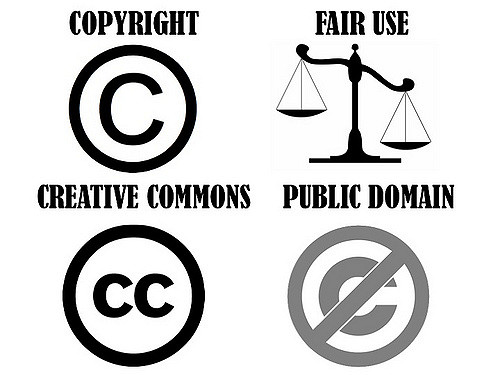
There are no shortages of articles, resources, videos, and ideas found online to support our educational planning.  With the vast amount of ways to create and disseminate learning materials, it is critical to appropriately share, curate, remix, and adapt educational content. In open education, it is important to understand how to attribute and identify copyright, fair use, and intellectual property.

Flickr image c/o Langwitches

In gathering resources for my courses and to encourage appropriate attribution as my students to create, this is a quick overview and definitions of copyright, fair use, the public domain, and the creative commons.

Copyright

The Basics of Copyright 

[Video; 6:19 minutes]This is an introductory video in copyright law, specifically about how to share copyrighted material at work while still respecting the rights of the content creators. Will you require permission before using materials? Do you ask permission before using protected content?

This is an introductory video in copyright law, specifically about how to share copyrighted material at work while still respecting the rights of the content creators. Will you require permission before using materials? Do you ask permission before using protected content?

  • Copyright law applies to all works, including print, media, and electronic mediums
  • Protected: Books, magazines, online articles, songs, screens plays, choreography, art,  software, work, software, podcasts, and photos
  • Not Protected: Ideas, facts & data; government items
  • Know the facts about copyright, not the myths
  • Get permission if required (when in doubt get permission)
  • Just because you found it online, & it is publicly available does not mean it is free to use
  • Not sure? Just ASK! Legal counsel at your workplace or an information professional (in the College of Information) or at the UNT Library for advice.
  • UNT Copyright Resources https://copyright.unt.edu/
  • CLEAR Copyright Guide for Instructors http://clear.unt.edu/copyright
  • Electronic Frontier Foundation: Teaching Copyright Resources 

Flickr image c/o Horia Valarn

Fair Use

Fair Use from copyright.gov:

“Fair Use is a legal doctrine that promotes freedom of expression by permitting the unlicensed use of copyright-protected works in certain circumstances. Section 107 of the Copyright Act provides the statutory framework for determining whether something is a fair use and identifies certain types of uses—such as criticism, comment, news reporting, teaching, scholarship, and research—as examples of activities that may qualify as fair use.”

Specifically, there are four requirements for fair use of materials:

    1. The purpose is for nonprofit, noncommercial educational use (typical cases).
    2. The nature of the copyrighted work is consistent with the proposed use.
    3. The amount and substantial of the original work involved some small uses can be considered an infringement, that is, a small portion involves the core idea in the copyrighted work.
    4. The effect of using the copyrighted work is not likely to deprive the copyright holder of sales or market interest.

Public Domain

The “public domain” relates to creative materials or works that are not protected by intellectual property laws, including copyright, trademark, or patent laws. These materials are owned by the public, not an individual author, artist, or creator.  Public domain materials and work may be used without obtaining any permission; however, no one is permitted to claim ownership for it. More information about the Public Domain, “Collective Works,” and when copyright expires can be found at the Copyright & Fair Use Website via Stanford University and Teaching Copyright via the EFF.

 Creative Commons  

Wanna Work Together? from Creative Commons on VimeoCreative Commons copyright licenses and tools allow for content to be shared beyond the traditional “all rights reserved” setting and decide on the best form of attribution for their work. The goal is to refine how copyright works and allows content creators to CHOOSE if they want to retain copyright while letting others copy, distribute, and make use of part of their work. You can decide what the copyright is and how others may use your photo, music, or works. Creative Commons licenses provide:

everyone from individual creators to large companies and institutions a simple, standardized way to grant copyright permissions to their creative work. The combination of our tools and our users is a vast and growing digital commons, a pool of content that can be copied, distributed, edited, remixed, and built upon, all within the boundaries of copyright law.

To enhance your learning, training, and/or presentation materials, you may want to find creative commons and public domain images, videosmusic, or media. Certain websites, such as Flickr Creative Commons, even offer users content with specific attribution for use. There is even a Creative Commons Search to aggregate even more content to share, use and remix, including media, images, video, audio, music, photography, and web resources. Besides Flickr, there are a number of other helpful sites to locate Public Domain or Creative Commons images. Additionally, there are ways to attribute and provide CC by licenses via other online accounts including YouTube, Bandcamp, SoundCloud, Vimeo, Archive.org, and your blog or website.

Want to learn more about Creative Commons and Open Educational Resources (OERs)? Check out UNT CLEAR‘s Creative Commons Guide and the UBC’s OER Accessibility Toolkit.

BreakDrink

Harvey Relief c/o @BreakDrink

As rain from tropical storms flood and impact Texas after Hurricane Harvey, Jeff and I decided to do a quick podcast to share ways we know you can offer relief and support for those in need in the Lone Star state via a @BreakDrink podcast. We appreciate the love and concern a number of you have expressed for our well-being, but we are a-okay. Our fellow Texans to the southeast are under water and they could really use your help.

In this episode, we chat with Paul Eaton who is in the midst of some flooding in Conroe, TX and share few ways you can donate to Harvey (and avoid being scammed) if you are so inclined.

There are a number of ways to get and offer help for Harvey. If you know people who are directly affected by Hurricane Harvey, FEMA recommends visiting www.nvoad.org/how-to-help/ Additionally, DisasterAssistance.gov includes a link to the Federal Emergency Management Agency’s step-by-step guide to filing a flood claim, a map to locate the nearest FEMA Disaster Recovery Centers and instructions on how to apply for assistance. If you have questions about the help FEMA offers or the application process, call 1-800-621-FEMA (1-800-621-3362) or submit your query online. Or better yet, Find an open shelter near you by texting SHELTER and your zip code to 4FEMA (43362). You can also use the FEMA mobile app.

Houston, Dallas, Austin, and San Antonio, are currently taking in residents from the flood and hurricane zones. This means the state of Texas needs your help to support these small towns who have moved into these shelters. Additional donations for various relief needs can be met by visiting the following websites – and if you know of others, please tweet or comment where others can help:

Want to VOLUNTEER in-person to help with Harvey relief? Here’s how you can get involved.

Learning, Performance, PLN, Professional Development, Reflections, TBT Posts

Ode to Hashtag

Dear Hashtag,

I am SO sorry I missed your 10th birthday. With the start of the new academic term and a number of paper deadlines, my attention was elsewhere. I know. No excuse, right? But, can you please forgive me? Wait — I know how to make these belated wishes better!

To honor your decade of existence on social media and everyday conversation,  I decided to get creative with your birthday gift. I am truly grateful for the communities you unite, the awareness you share, the conversations you thread, and the subtle way I can give my tweets/posts/texts more meaning.

Ode To Hashtag

Hashtag, hashtag

We adore thee

Signal events and,

Tags for news

Tweets unfold like stories before thee

Link us to interests we so choose

Twitter chats used for work and play,

Say so much in just one little tweet.

Symbol of meaning is here to stay

Pound sign in speech is hashtag sweet!


Tweeters unite in hashtag chorus

140 characters: “Trends for you”

Blue bird, Larry, is tweeting o’er us,

Hashtag use connects us too.

Post composing, humor we’re sharing

Ideas in the midst of memes,

Protest tweets or GIFs of caring

Hashtags filter social streams.

Thank you for all that and all you have done this past decade.  You have contributed so much more to my life than I can ever thank you for — keep up the great work!

Your friend,

Laura

p.s. Here are a few throwback posts where I give you an honorable mention, as well. A toast to you! #cheers