Open Education, PhD, PLE, PLN

This Research is Brought To You By The Letters K, P, H & D

Some of the basics we learned in kindergarten can also be applied to how you learn as an adult. I have been thinking a great deal about how to organize my information and research as a graduate student. I strive to be both an open learner and transparent educator, so let’s see if I can use a few principles from my kindergarten years to explain how.

Share everything

With the ease and cost of the social web it is easy to share with others. Social media applications and resources provide a great community for others to read, publish, and write content online.  In a previous post, I shared how I engage with social media both personally and professionally. The value I get from sharing is that if I pay it forward it often comes back in return. I value ideas, articles, opportunities and challenges that are posted in my PLN. Learning is a continuous cycle.

Don’t take things that aren’t yours.

As a researcher and writer, I am often scanning and reading for a literature review or an article. To quote a common phrase by my faculty advisor – “Publish or perish!” One lesson I learned early in my academic career came from a History faculty who told our class, “You have no original thought. Be sure to frequently cite your sources.” This statement is somewhat true. You might have a great idea; however it has most likely originated from someone or somewhere else.  Using online bibliographic resources like Zotero and Mendeley  are key for my APA-induced world. When I am blogging, creating presentations or sharing in my networks – I often refer to where I get these great resources too. It’s important to give credit, where credit is due.

Live a balanced life.

Remember to nurture yourself. Take the time to attend to your basic “F” needs: family, friends, food, fitness and fun. Although you may be consumed by your academic interests, it’s important to find harmony in your life. As my Niagara University Crew coach said, “If you want to row strong and win the race, you need to be able to balance your boat.”  Balance is critical to sustain yourself and your priorities – do not forget to find time to laugh.

Take a nap every afternoon.

Naps are great. Maybe an afternoon nap is not realistic in your office, however effective sleep-care maintenance can be. Consider taking breaks throughout your day: stand up, leave distraction, and get un-connected for a while. Find a way to hit your refresh button – take a walk, sit in the sunshine, meditate or daydream. These breaks create a space for your mental reserve.

Hold hands and stick together.

Many find the process of the PhD daunting, but just remember: YOU ARE NOT ALONE. I have found a few different groups and spaces to connect to on locally and far away.  to support my learning and research. On campus, I am part of a collaborative doctoral student research group for my program ATPI where we connect weekly IRL and on a wiki/google docs for projects, presentations and publication work. The #phdchat community has been a group I have found helpful to chat with on Twitter and ponder my own process – plus they have some great resources to share on their wiki. Beyond that, I have a connected to the PhD Journey group on Flickr, tagged my bookmarks in a Delicious way, and stay on top of my news and trending information via RSS in a Google Reader. 

Be aware of wonder.

There is always room to learn. Believe it or not, it is not possible to know everything there is to know. That’s what keeps life interesting. I try to open my learning options by staying tuned in to new literature, scanning a myriad of  blogs, listening to a variety of podcast, or connecting to a researcher in a different field then my own.  Don’t let your academic work get dusty. 

CTC, EC&I831, Open Education, Podcast

An Open Educator

Last September I joined a pretty interesting course I heard about on Twitter called EC&I 831: Social Media & Open Education. Little did I know how much learning and engagement an online course could provide in just one semester.

Dr. Alec Couros , from the University of Regina, is the faculty who facilitated this open, online graduate course and I participated as a non-credit student during the Fall 2009. Although this course did not go towards any specific degree requirements for my Ph.D. program, it did influence my practice with social media as a learner, researcher, and educator. Along with other students (credit & non-credit), I was introduced to a myriad of #edtech topics, online resources, pioneers in the #edtech field (See ARCHIVED Fall 2009), and, of course, it helped build my personal learning network.

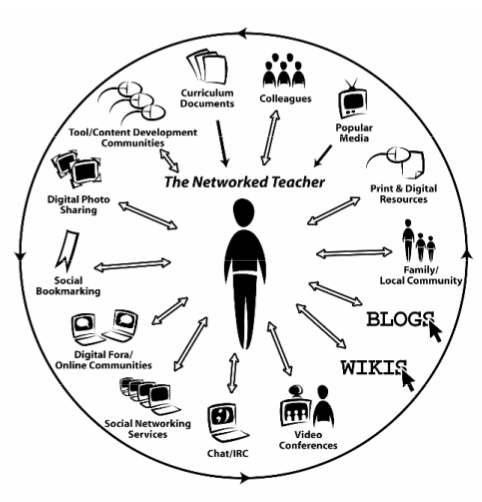
The Networked Teacher c/o courosa on Flickr

So it was only fitting that just shy of a year later, I am fortunate to discuss the great impacts EC&I 831 made on me and more! Dr. Couros shared his philosophy on open education, his open tenure application, involvement in social media & justice and his experience as an open educator using social media for instruction, research, publications and professional development.

The Campus Tech Connection had a very enjoyable chat with @courosa on the CTC #10 podcast to discuss his experience and process as an open educator. Both @jacksonj and I agree – that he was a delight to talk with and learn from. We would welcome him back anytime in the future as a guest, or heck, even an honorary host of the #CTC podcast.

Are you interested and have time to take a class this Fall? Then I would strongly suggest you participate as a non-credit student in EC & I 831: Social Media & Open Education.

See you NEXT week for the Campus Tech Connection #11 on Monday, September 13, 2010 at 7 pm CDT with guest Ed Cabellon (@EdCabellon).

For now enjoy LAST week’s show with Alec HERE

UPDATE:

Dr. Couros just posted about his Open Graduate Course & Call for Network Mentors on his blog… including a great new promo video for the course:

BreakDrink, CTC, CTCX, Open Education, Podcast, SAchat, Social Media

Campus Tech Connection Archives for July

As the summer rolls along, so does the next month of the Campus Tech Connection (CTC) podcasts – have you heard what’s been happening during the month of July on CTC. As I just caught up on the podcasts happenings, I can say that they are worth the listen.

Check them out:

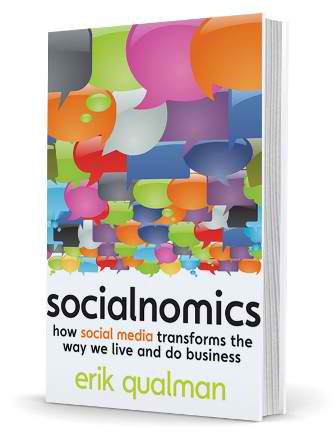
Erik Qualman, author of Socialnomics => July 12, 2010 CTC Podcast #5

Photo from http://outsidethetext.com/main/

The University and the Future of Knowledge is an excellent talk given by Dr. Parry.

David Parry, Assistant Professor at University of Texas Dallas in the Emerging Media & Communication program

=> July 19, 2010 CTC Podcast #6

Live Video Interview with @ReyJunco from Ed Cabellon on Vimeo.

Rey Junco, Associate Professor in the Department of Academic Development and Counseling & the Director of Disability Services at Lock Haven University => July 26, 2010 CTC Podcast #7

Join the Campus Tech Connection show Monday nights from 7-8 pm CDT here => http://www.blogtalkradio.com/breakdrink

We would love to hear from you, so feel free to connect with us during that hour by:

1. Calling in live with a comments and queries – [Phone Number to be posted on Twitter during the show time slot]

2. Tweet your questions/thoughts with the hashtag #ctc or #breakdrink

3. Shy? Or missed us during that time slot? Leave us feedback, thoughts or suggestions by calling 732-98-BREAK (27325)

CTC, Higher Education, Open Education, Professional Development, SAchat

Take a Break with BreakDrink

BreakDrink was created by Jeff Jackson (a student affairs professional at San Antonio College) to provide the most current news and trends in student affairs.  This initiative was developed to share resources and information for best practices for higher education professionals.  During challenging economic times, this is an excellent way top provide online professional development and to connect a community for higher education practitioners.

The BreakDrink crew is always looking for help and support. If you have ideas, stories or innovative programs you care to share just send an email to breakdrink@gmail.com. Or if you want to check the current “jobs” be sure to visit the  jobs section of the website.

Recently I was asked to join in the BreakDrink fun by contributing to a new podcast series about technology on campus in student affairs & higher education with @jacksonj & @jefflail – called the Campus Tech Connection.

The Campus Tech Connection (CTC) podcast series’ goal is to help campus practitioners understand technology while becoming  active digital citizens. Through the blogtalkradio platform, we plan to bring on interesting guests that are engaged with the higher ed & technology realm every Monday night from 7-8 pm CST.  If you care to join in the fun to listen, you can do so and feel free to ask questions by calling in via phone/Skype to 646. 652.2342 or by tweeting questions by using the hashtag #CTC or #BreakDrink. We appreciate all comments, questions, thoughts and feedback from the listeners out there.

We kicked off the first CTC podcast with by interviewing Stian Haklev who is one of the co-Founders of Peer 2 Peer (P2P) University last night.  All of the CTC podcasts will be posted on BreakDrink.com under the Tech section of the website, but I will be sure to post comments & thoughts each week as on my blog as well.

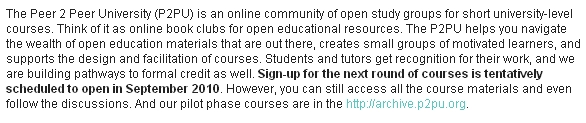
In talking with Stian we learned a great deal about the P2P University model beyond the initial blurb on the website:

Stian has posted the podcast on his blog, however some of the key points that interested me most have to do with the model of open education and how this concept can (and will) impact learners around the globe.

It will be interesting to see how this P2P U model will evolve beyond their one year of funding from the Hewlett group and Shuttleworth Foundation fellowship. It seems like a great deal of open education faculty/programs (#oer #ocw) like MIT Open Courseware, Open Ed at UBC and others are greatly involved in this project.

P2P U encourages learners and faculty alike to join in these participatory communities to share, connect, and learn. This group is really thinking about the bigger picture, and what learning will look like in the future with the sole purpose to engage others in online learning.  The plan is to continue P2P University course delivery through the support of donations, university partnerships and encouraging higher ed institutions to purchase access to their educational platform/services for instruction. I plan to stay tuned in to see what unfolds with the Peer 2 Peer University, and perhaps I’ll either pick up an online course for my PhD (for independent study or just self-interest) and/or propose a course of my own down the road.

Collaboration, Open Education, PLE

It’s Time for the Educational Remix…

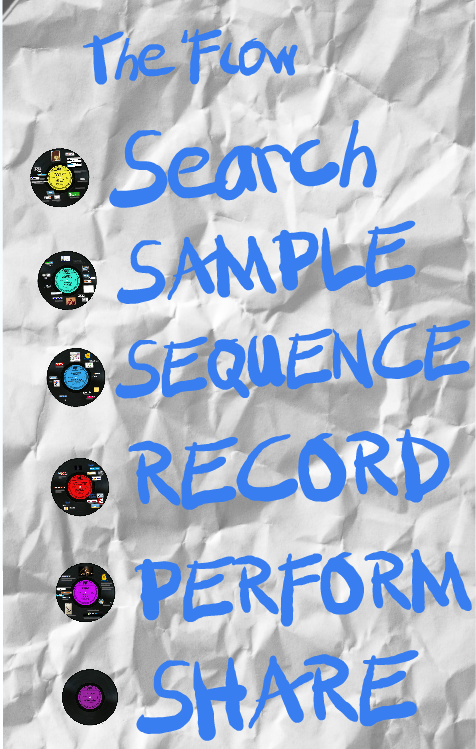
It’s time to catch up with some fantastic scholastic chats in #eci831… and there are a few weeks to share. During #eci831 Week 10Brian LambScott Leslie discussed their experience in remixing education. In reviewing some inspiring media savants, examples, and ideas for open, remixed educational resources.In a true network environment – the application logic is relied onto the machines and built into the network itself. The open education movement introduced large quantities of formal education resources into the pool of content that can be mashed up and remixed for learners. Networks have evolved to the point where learners are no longer bound by space or time, which allows learners to direct and choose their personal learning environment objectives. There is now a “mashup of learning” medium to best support content knowledge and skill acquisition for learners. The process of remixing education is simply extending the existing concept. Mashing OERs as an Instructor (or DJ) includes this sample DJ workflow applied to education:

Image from Mashing OER Wiki

More resources that inspire openness & remixing: