BreakDrink, CTCX, Learning Technologies, web 2.0

Nothing But Web

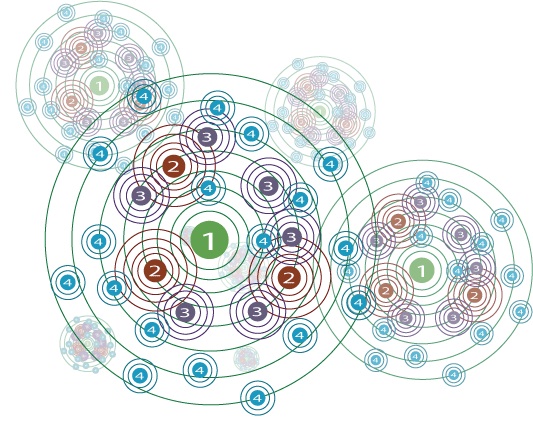
There are a systems of systems being created. Our data is detected to help up be more efficient and effective at what we do. An interesting video was released from IBM Social Media called The Internet of Things. This video looks at the complex set of relationships among all of these complex systems to see patterns in the data, information and knowledge to support innovation.

Google took great consideration in thinking about how they complex systems apply to the webapplications and extensions, as shared on the Google Channel. In considering how we work, play and interact online – the evolution of Google’s Chromebook appeared mid-June to support this online user. The Chromebook is a new alternative to using a notebook interact and engage online using new features & the Chrome OS. Here’s a quick synopsis via @googlechrome

Join us on Monday (6/27) at 7 pm CT as the BreakDrink Campus Tech Connection (#CTCX) talks LIVE about the Chromebook Samsung 5 and more tech tools reviews for higher education professionals. Join the #CTCX gang with your thoughts, questions, ideas or reviews: 

  • Listen to the show LIVE
  • Tweet your thoughts using the hashtag #CTCX 
  • Call or Skype during the show: (646) 652-2342 or breakdrink
astd, Learning Technologies, PLN, Professional Development, Social Media, Training

How Does Your Social Learning Garden Grow?

It is important to consider how your organization uses the social web for learning professionals. The American Society for Training & Development (ASTD) recently published INFOLINE: Social Learning for Learning Professionals initiated a review of social media engagement beyond knowledge workers (educators). Social learning is not competing with formal education, training, or employee development; instead it is a space to connect professionals and share ideas. Although social media learning is often compared to informal or e-learning, it distinguishes itself as learners search content, develop interpersonal engagements, and form shared communities of practice. 

The key Social Learning Technologies include:

  • Online Communities – personal learning networks & virtual learning environments
  • Media Sharing – sharing & tagging videos, images, photos and more!
  • Microsharing – 140 characters to highlight news, share trends, ask questions & link URLs
  • Collaboration Tools – wikis, shared documents & cloud computing platforms
  • Immersive Environments – virtual worlds, gaming, augmented reality & simulations
  • Social Learning at Events – IRL meetings to connect offline for shared interests & goals

More professionals value social media tools to enhance communication, improve knowledge sharing, find resources and connect to a broader learning network. Many social resources create a space to solve problems, mentor employees, scaffold training initiatives and support effective decision-making. Organizations that support social learning may not see traditional return-on-investment (ROI); however they do have the potential to enhance the following items in its organizational culture:

  • retaining institutional knowledge
  • attracting and retaining professionals
  • succession planning
  • connecting dispersed employees
  • collaboration to solve problems
  • integrated & holistic approach for staff development
Social learning groups are sometimes organic, and others are intentionally created with specific learning goals. Any organization interested utilizing social media in a training and development program might want to consider a few guidelines before proposing to the idea the senior leaders:
  1. Establish a purpose.
  2. Encourage participation.
  3. Encourage respectful communication.
  4. Identify a gardener.
  5. Outline limitations.
  6. Include troubleshooting information.
Reference:
Bingham, T. (2011, January). INFOLINE: Social Learning for Learning Professionals. ASTD Press, 1101, 1-16.
Learning Technologies, Needs Assessment, PLE, Social Media

The Measure of Social (Media) Learning

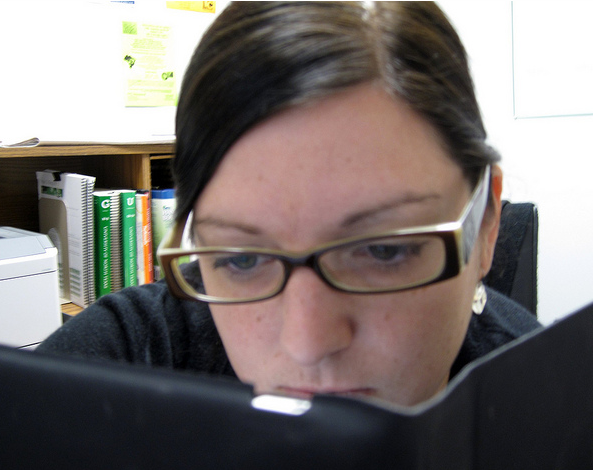
Online impact is more relevant as social web enters into digital learning environments. Both assessment and evaluation of digital resources is critical for supporting learning outcomes and instructional design. Before diving into any sort of online addition to your curriculum, be sure to review both your online content and learning goals.

Flickr photo c/o suavehouse113

It is okay to experiment and get acquainted with a few social media resources; however it is important to start with a needs assessment before implementing new technologies into a learning curriculum or program plan. Here are a few things to consider before as you begin the evaluation of social media tools for learning:

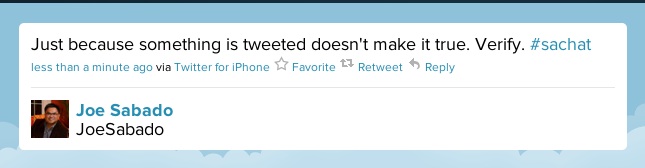
  • Credibility Check your online sources. Are you a critical learner with your social media tools? There is a great deal of sharing in the social web; however not all online content is reliable. Consider what mediums would be most appropriate for the subject, topic and learners. Encourage your learners to develop critical thinking skills on the web for effective methods of search, inquiry and information analysis.
  • Expertise – How many “social media experts” and #fauxperts have you seen online? It is the learning material, not the online tools that will best support your curriculum. The best expertise can be found with an instructional needs assessment and program implementation plan. Consider your learning objectives and planning your best expertise. I recommend the following educational technology associations and networks to support your instructional design and implementation needs: ISTE, AACE, AECT, The eLearning Guild,  and EDUCAUSE.
  • Trust – How do you build trust among learners in your online curriculum? What will help foster a sense of community? The social web creates spaces for online communities to grow and thrive. When building an online learning community it is important to consider communication channels, active participation opportunities, and collaborative networks for learners to find meaning.  
Flickr photo c/o Ev@ 😉
Learning Technologies, PLN, Social Media, web 2.0

Being Purposeful with Social Media

Earlier this week, Jeff Lail posted How I Use Social Media and Leslie Dare followed up with a blog post of her own on the same topic. This got me thinking about how I engage and interact with the social web. Last year I talked about what’s In My Toolbox as an educator, however I think I should share how I use these tools as an educator, professional, student… and then some.  

Flickr photo c/o Luke Mahan

I try to be Mindful with Social Media and how I use it. I strive to be intentional and purposeful when I engage with social media. I am the musician, these resources are my instruments – so here’s how I make my music on the social web:

  • To Blog, Or Not to Blog?: WordPress, specifically TechKNOWToolswas designed to be a reflective space of what I learn, research, read and more throughout my studies. I’m a transparent and open learner/educator. I hope that these posts help support my writing and nurture my research goals. TKT serves as a journal of my PhD & academia journey. Blogger was my first introduction to the blogging realm back in 2006 as I started my travel/work adventures in France & the UK on the Souvenirs of Canada blog. Many of my friends & family follow this to keep track of my happenings – and some asked that I keep sharing what is going on to stay in touch. I have two blogs because I have these different sets of readers. Most of my personal contacts prefer not the get all my research and geek info from TKT blog, and it helps to share more “off off the blog” info when we chat on the phone, Skype or IRL.
  • The NEW & Improved Home Phone: Skype – This VoIP service has not only allow me to maintain relationships far, far away – it has also allowed me advise students at a distance, present training sessions with the screenshare option and conference with colleagues new & old for a variety of projects.
  • Saying Cheese:  Photography has been a part of my life since I was little. Photos were always snapped during special occasions, on road trips, spending time outdoors and more with my family. For me photography captures memories, shares a narrative, and provides a perspective by someone or into the life of others. As a visual learner Flickr helps me to archive and catalog my experiences. I have used Flickr for a few professional conferences, however I first started using it to scrapbook my life and give both my Mom (and other friends/family) the latest and greatest “Laura happenings.”a I like photos in my blogs and I like snapping neat finds. I am pretty sure I was a curator in a previous life.
  • Customized Subscriptions: RSS and Google Reader is my friend. This is a key tool I use to follow news, blogs, podcasts and people, and trends. The convenience of accessing this information in one location and being able to read them on my computer or phone helps me stay engaged. I’m only as smart as the information I am connected to.
  • Micro-conversations & Micro-sharing: Twitter – I have to be honest – when I was first introduced to Twitter in Summer ’08 and I was somewhat skeptical. Why would I be interested in a personal update? What value would this bring to me personally/professionally? Over the last few years this #SM tool has grown on me both a professional in higher ed and doctoral student. With my experiences in open learning courses, conference backchannels, Twitter lists, hashtag communities, and a few of the many Twitter Chats I have participated in – I can now attest to its professional development and educational potential. To help me organize my Twitter streams and followers I want to give a shout out to Hootsuite & Seesmic, two third-party clients I use most on my computer and phone. 
  • I heart The Google: Beyond search, Google is a great productivity and learning tool for me to collaborate and connect to others. My favorite Google applications include: Gmail, Docs, Forms, Chat, Voice, Scholar, Calendar, Maps, Translate, Realtime… need I go on? This is a must have tool for any graduate student or professional. Are you still using Hotmail? That’s so 1990s. I recommend you switch to Gmail to kick-start your productivity resolutions and then other Google applications will follow. [Note: I may have a bias to Google as my phone is smart with the Android platform.]
  • Saving It for Later: Delicious, specifically My delicious, allows me to archive resources, articles and interesting finds online. When I share a URL on Twitter it automatically archives to my delicious via packrati.us  I later go into my account to add any notes or highlights that might be relevant – especially if there are articles I might use for a literature review or paper. I also value my Delicious Network contributors who save and share interesting links.
  • My Networks Have Always Been Social: For those of you who know me, I have always been a social person. The creation of online social networks just allows me to continue to be social when I live far away from friends, family and colleagues. I use Facebook primarily for my personal friends and family, however as of late more professionals from Student Affairs, NACADA and other networks have been connecting to me on here. I have created a few different lists to organize my friends on here. More of my sharing is personal & some professional/student information. I have begun to use this #SM tool a lot less as of late professionally – it’s more to stay in touch with far away friends & family. Other networks I use for more professional and academic networks include Twitter, LinkedIn and Mendeley. Depending on my social network, I choose to share different information. I tend to use LinkedIn for professional interactions, and Mendeley for research/publishing contributions, whereas Facebook would primarily be for personal updates, photo sharing and individual conversations. Twitter seems to be my “go to” for information sharing, knowledge consumption and trend watch for #highered, #edtech, #acadv, #phdchat, #sachat, and other lists I follow-with a few personal updates or location-based check-ins scattered in from time to time.
  • Establishing A Brand: To aggregate my many online spaces I have started using About.Me as my virtual card and personal website. I’ve opted to let my personal website URL go and use this and other FREE options to house all things social web and online for me. My digital identity exists already. I have developed my own Google Profile as well. Have you Googled yourself lately?
  • All Things Wiki: I am partial to PbWorks (since I first used it when it was PbWiki), however I have also accessed Wikispaces and Wetpaint for a group collaborations at the office, assessing vendor options with a group, training/learning seminars, professional association planning, pre-conference presentations, online community space, and doctoral research group meetings and publishing. The current wikis I’m clicked into are for my scholastic endeavours: ATPI Research Group and the #phdchat wiki. Future wiki plans: develop my dissertation proposal on a wiki to share with my faculty advisor/committee and design a wiki for an online course I’m instructing at the University of Manitoba this Fall.
  • Now Presenting: I stop by YouTube to watch an effective TED talk, Khan lesson or In Plain English video and more – then I “favorite” the good ones for presentations and/or course resources. As an instructor/trainer/speaker my key tools would be SlideShare and Prezi. I use my personal SlideShare account to share previous presentations, and also encouraged our UNT advising group, UCAN, to initiate their own account to store monthly meeting resources.
  • Checking In: I started playing around with Foursquare and Gowalla over the last year to find out what this location-based mobile application was all about. Some use it for education programs or marketing communication, I primarily use it to archive where I’ve been – restaurants, travel locations, historic locations and such with my personal network. I have also appreciated the location “tips” and discounts when I arrive at each spot. Yelp & TripAdvisor are a few other travel/location referral websites I frequent to read a restaurant review or plan a vacation. 
Phew! It seems like a lot – I know. But I use the above tools for different purposes AND at different times. Keep in mind that THESE ARE JUST TOOLS. During social media training workshops, I often recommend that participants new to the social web “try one or two on for size” to find out what works for them. The bottom line is – it has to serve a purpose, be used intentionally, and help you be a better you. If you don’t use, then you should probably loose it.
There have been a other social media tools I have tried out, but as you can see they haven’t made my frequent flier list. I suggest figuring out what is right for YOU and decide what YOU want to make time for. If you understand the what/purpose (content) and the where (social media application), you will be able to find your social web zen. Social web participation and engagement has to make sense. Be sure to ask yourself:

Are your social web interactions meeting your personal, professional and/or  learning needs? 

BreakDrink, CTCX, Learning Technologies, Podcast, Professional Development

iPads, Nooks & e-Readers… Oh My!

Digital literacy & e-textbooks have been on my mind… (for some time)

I have been pondering e-books, e-readers & online learning materials since the beginning of this academic semester. I am still contemplating a purchase of an e-reader or tablet before the year is out – so this is where my research & review takes me in the #edtech world. My main question is: What does it mean to take the tactile and make it digital for our learners?

Here are a few thoughts I shared during today’s webinar with Higher Ed Hero on just this topic:

A few questions and thoughts to ponder as e-books & e-readers enter our campus environments:

  • Will engagement in the digital material require new instructional methods?
  • Will our textbooks be dynamic & interactive?
  • How doe faculty connect and manage this transition?
  • How do learners retain information from real books vs. e-books?
  • Can faculty ‘win’ in the classroom & academic sphere with digital literacy?
  • How will higher motivate and impact this change?
  • Will there be control over content & learning materials?
  • How can faculty support students  more to make them comfortable with e-books for learning?

In my own research and article collection, I have managed to collected in a few resources in a Google Doc about the topics of e-readers, e-books & e-literacy and discussed it on latest edition of the Campus Tech Connection podcast #18 – E-Books & E-Readers with @jacksonj & @jefflail from BreakDrink. My quest for reading digitally continues…