EdTech, Higher Education

Digital Literacy and Information Fluency in Higher Ed

Consuming information online is no more than a click, scroll, or swipe these days. All searches are not created equal and rarely do we think about fact checking what we find on the Internet. I am not alone in thinking about how “…the Internet is actually changing the way we read the way we reason, and even the way we think, and all for the worse” (The Death of Expertise, Nicols, 2017, p. 111). In higher education, I think it is imperative we teach our learners and colleagues about what it means to participate and interact in digital spaces and places. How can our institutions help students, staff, and faculty “be” online and consider how both information and digital environments impact knowledge sharing and learning?

CC BY-NC via Intersection Consulting

Definition: Digital Literacy and Information Fluency

Digital literacy is multifaceted. The New Media Consortium provided a Digital Literacy Strategic Brief (Alexander, Adams Becker, & Cummins, 2016) to identify the role policy, practice, and curriculum can have on all facets of our campus. Alexander et al. (2016, p.1) defines digital literacy as “not just understanding how a tool works but also why it is useful in the real world and when to use it.” To improve our practices for improving this literacy we need to think broadly about strategic planning and the creation of standards at our campus. There are new opportunities to encourage learners to become content and media producers, identify technical competencies for the workforce with industry-education partnerships, and develop smart collaborations within the community entities, such as governments, libraries, museums, and cultural heritage organizations. This report offers insights across universal literacy, creative literacy, and literacy across disciplines by offering exemplars in practice at institutions that include digital literacy in program and curriculum design.

Beyond digital competencies, we need to develop media and information fluency in higher education. The Association of College and Research Libraries (2016) has updated their literacy competency standards by developing a Framework for Information Literacy for Higher Education to offer guidance “to locate, evaluate, and use effectively the needed information.” Scholarly inquiry requires analyzing information for credibility and understanding if an online resource is primary, secondary or irrelevant. Information is constructed in context to digital environments and is often created as a process of knowing, reflection, editing, and production online. Beyond this, the Institute of Museum and Library Services are offering suggestions for data information literacy to help us understand how we manage, curate, and design curriculum around data and information. To encourage both digital prowess and information awareness online, we need to develop skills around: outline critical thinking for research, encourage digital teaming, and identify privacy, security and data issues online.

Critical Thinking and Online Research

Much of what we want our students, and perhaps colleagues, to develop is a technical competency with information management in the digital realm. Digital literacy and information fluency help us improve our understanding and acquisition of knowledge to move beyond the #FakeNews fallacies and make meaning of what we are learning. In seeing how fast information travels with inaccurate content, I often wonder if my learners understand how the Internet works? Part of our responsibility, as educators, is to teach effective search processes online, to investigate databases, and examine scholarly repositories with our students and co-authors.

Additionally, as we encourage learners and peers to share presentations or develop projects it is critical to encourage citing and attribution of resources. Beyond using APA 6th edition format for referencing scholarly work, we also need to scaffold content curation and sharing, specifically with regards to copyright, fair use, and creative commons licensing. Work can be contributed to course materials (e.g. LTEC 4000 Course Wiki), textbook development (e.g. PM4ID), or perhaps even contributing to general knowledge on the Internet (e.g. Wiki Edu). Applying search skills in a course will help to hone and develop expertise beyond their degree and put into practice in their work and personal life. Here are a few examples of Information Literacy Activities or Resources you might include or apply in your course or program on campus.

Virtual Teaming: Collaboration & Problem-Solving

Part of being a member of a college or university community is the opportunity for discussion and discourse among peers. Scholarly inquiry and debate cannot and should not happen in a vacuum. Learning experiences should offer ways to evaluate information and to participate in civic online reasoning helps our learners beyond course discussions, class activities, and assigned projects. With the advent of the social web and networked communication platforms, there is an increasing opportunity to gather virtual teams or to support distributed group work. How can you enhance distributed collaboration for learners and support your peers online?

The new social learning helps us “join with others to make sense of and create new ideas…[it] is augmented with social media tools that bridge distance and time, enabling people to easily interact across the workplace, passion, curiosity, skill or need. It benefits from a diversity in types of intelligence and in the experiences of those learning” (Bingham & Connor, 2015, p.8). These digital environments need to be woven into our pedagogical considerations learning design and considered in context to support virtual teaming among scholars. Much of the creative problem solving, production development, and final products for learners can be self-directed via peers online. Some examples, I have used in practice and for instruction include shared documents for education, planning virtual group meetings, supporting hashtags for learning, and offering on-demand, online office hours. There are many ways to learn and work from a distance – decide what your purpose or goal is first, and then explore what digital platforms to use.

Digital Privacy, Security, and Data

To further this notion, we need to consider how we thrive in the digital age and this should start at our colleges and universities. The US Commission on Enhancing National Cybersecurity put out a Report on Securing and Growing the Digital Economy. As human behavior and technology are intertwined, it will be vital to secure our technologies, processes, and products online. As we “live” online and continue to get hacked online, we need to identify how we will operate in digital spaces and also prepare cybersecurity workforce capabilities online as outlined in this report. Higher education IT colleagues are continually thinking about ways to respond to cybersecurity attacks; however, prevention and awareness among campus stakeholders should be priorities at our institutions. I often have my students and peers think deeper about their privacy and security online by introducing them to ideas shared by WNYC’s Note To Self: Privacy Paradox 5-part series and the Privacy Paradox tip sheet, specifically to have all understand how to protect personal information and perhaps to take control back of their shared personal  data online. Beyond this short course, I often encourage colleagues and students to read recent news reports, or listen to podcasts, such as CBC Spark and Reply-All, to prompt discussions about current issues and events that apply to their own digital life to ask more about their own Terms of Service.

References

Alexander, B., Adams Becker, S., & Cummins, M. (2016). Digital Literacy: An NMC Horizon Project Strategic Brief. Volume 3.3, October 2016. Austin, Texas: The New Media Consortium.

Association of College and Research Libraries. (2016, January 11). Framework for Information Literacy for Higher Education. American Library Association. Retrieved from http://www.ala.org/acrl/standards/ilframework

Bingham, T., & Conner, M. (2015). The new social learning: Connect. Collaborate. Work., 2nd Edition. Alexandria, VA: ATD Press.

Hardin, G. (2016). White Paper: University of North Texas, Information Fluency Initiative. UNT Libraries. Retrieved from https://digital.library.unt.edu/ark:/67531/metadc944367/

Nichols, T. (2017). The death of expertise: The campaign against established knowledge and why it matters. New York, NY: Oxford University Press.

An edited version of this blog post was cross-posted on the Ed Tech Magazine: Focus on Higher Ed website. 
Higher Education, Social Media, SocioTech

Sociotechnical Stewardship: Guiding Social Media Policy and Practice in Higher Ed

In a previous blog post, I shared how I am visualizing scholarship via the Research Shorts YouTube Channel (Please SUBSCRIBE: http://bit.ly/researchshorts). If you have not viewed any of these papers, here’s a list of journal articles, that are now videos on this channel, compiled by George. As an open, digital scholar, I thought that producing videos of my own work might be a solid idea to share scholarship. So here I go…

Remember that “really big paper” known as a dissertation? It was on the topic of social media guidance and such? If not — check out the website on the topic here: https://socialmediaguidance.wordpress.com/ Well, I learned one is never really Ph-inishe-D with this research until the research is published in a peer-reviewed journal [More on this #AcWri process and experience in a future blog post… I promise!].

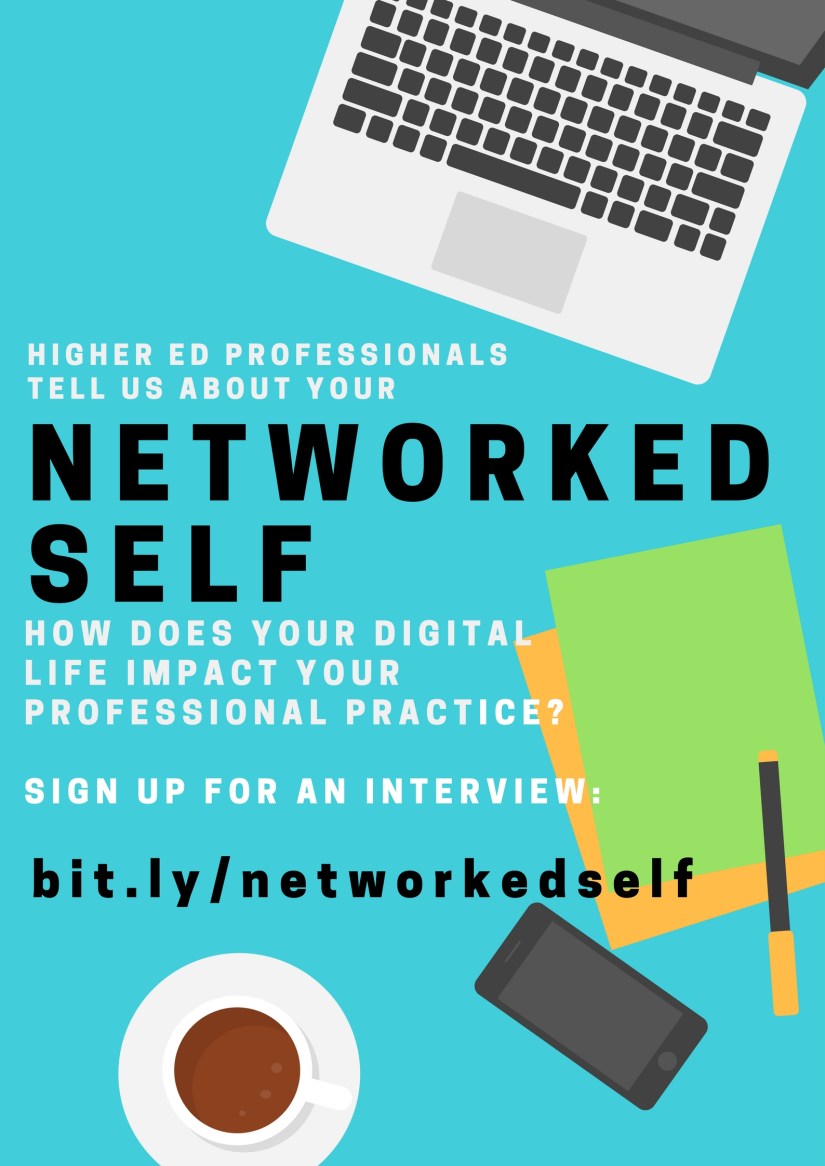
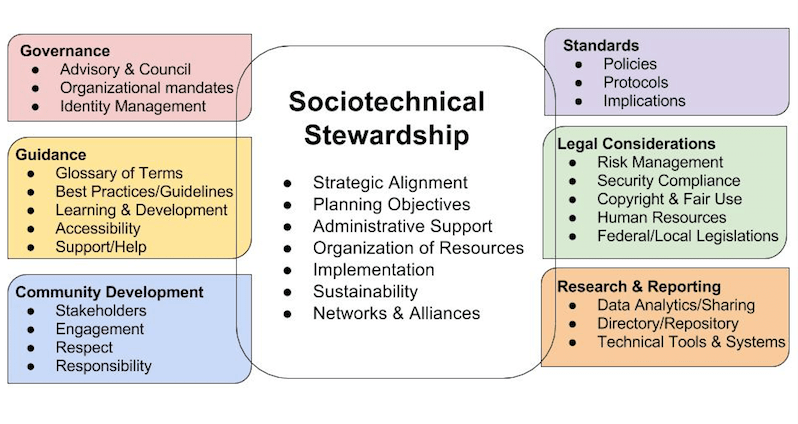
I am proud to say this research has been officially published! This blog post shares a quick video overview of the paperlink to the journal article/pre-print paper, and the database of over 250 social media policies from 10 countries analyzed within this study. Thanks to all who contributed to this research and to others who will continue to use this open data set and research to further work in this area. This sociotechnical stewardship framework is organized from the key themes found from text-mining the 24, 243 policy passages reviewed within this corpus. Here are a few things we need to consider when organizing and guiding sociotechnical systems in our organizations:I am continuing to understand how we best guide and support sociotechnical systems for higher education professionals as I interview participants for a current research project[Hint, hint: CONTRIBUTE to our current study that is “in progress” now: https://bit.ly/networkedself

I hope other scholars and practitioners further this research and apply these practices to effectively support campus stakeholders. Want to learn more about this study, here is a quick video summary (4:59 minutes):

Social media technologies transform how we share, communicate, and interact with one another. On our college and university campuses, new media applications and platforms are transforming how students, staff, faculty, and alumni engage with one another. As these social, emerging technologies impact teaching, learning, research, and work functions on campus, we need to understand how social media use and behaviors are being supported. To help higher education administrators and organizational leaders effectively guide social, emerging technologies, we prove a summary of 250 institutional policy documents and we offer a sociotechnical framework to help support strategic, long-term technology planning for organizations and their stakeholders.

Download this research paper:

The article is published in the Journal of Computing in Higher Education here or find the pre-print version of the original paper on my ResearchGate profile.

Download a csv file of the higher education social media policy database:

Pasquini, L. A. (2016). Social media policy document database. Figshare. doi:10.6084/m9.figshare.4003401. Retrieved from https://figshare.com/articles/Social_media_policy_document_database/4003401

Reference:

Pasquini, L. A., & Evangelopoulos, N. (2017). Sociotechnical stewardship in higher education: A field study of social media policy documents. Journal of Computing in Higher Education, 29(2), 218-239. doi: 10.1007/s12528-016-9130-0 Published Online November 21, 2016.


#3Wedu, Higher Education, wine, women

The #3Wedu Podcast No 16: #OLCinnovate 2017 Re-Cap

Hey squad [replacing “hey guys” one phrase at a timeThanks @alexpickett}. Listen up.

heysquad

The #3Wedu posse is hosting a happy hour podcast THIS Wednesday (4/26) at 5 pm CDT. Join us to for a chat with your cup of cheer and ideas here:

Laura Pasquini's avatarThe #3Wedu Community

On April 5, the women of #3Wedu traveled to New Orleans, Louisiana to facilitate roundtable discussions on ways to re-define education to support women in innovative contexts. If you haven’t heard about this, check out our last blog post about the #3Wedu Conversation at #OLCinnovate:

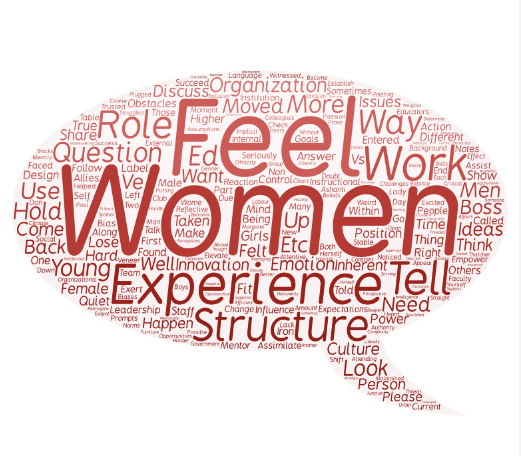
News, blogs, and panels are filled with horror stories from Silicon Valley, reflecting pay gaps, gender bias, and more. In our roundtable, we first asked, “what does it mean to be a woman in innovative education environments?” Next, we thought about how we might re-imagine the organizational structures of universities to be more supportive of women. Read and contribute to the #OLCinnovate discussion here: http://bit.ly/3weduinnovate17 

In the next episode of the #3Wedu podcast No. 16, we’ll reflect on the roundtable conversations further, to share who we met, what we heard, and ways we might move the conversation forward into action. Join us…

View original post 57 more words

Higher Education

On Expertise in Higher Ed

I have been thinking a lot about expertise in higher education — especially as more institutions look to a growing number of “experts” to help solve their institutional challenges and issues. No thanks to Martin‘s book suggestion on expertise, my blog rant on this topic will be informed and directed as this text unpacks the challenges that knowledge and expertise holds. In thinking about expertise, Nicols (2017) shares how “…experience helps to separate the credentialed from the incompetent ” (p. 33) and it “distinguish[es] between people who have a passing acquaintance with a subject and people whose knowledge is definitive” (p. 39). This idea of expertise, of course, can be applied to a number of situations or issues in society — but for now, I will stick with the domain I work in, higher education (also, Chapter #3 of this book).

Nicols’ (2017) central premise asserts that our post-secondary institutions are failing to provide students basic knowledge and skills that form expertise, that is, “critical thinking: the ability to examine new information and completing ideas dispassionately, logically, and without emotional or personal preconceptions” (p. 72). He continues to also identify issues in Ameican higher education around the topic of expertise, including the abundance of students and faculty (and institutions), the manufacturing of Ph.D.’s that surpasses the academic job market demands, over-reliance and over credentialing of masters degrees, the influence of the ‘helicopter parent’ on education clientele, social media as a communication equalizer that removes respectful interactions, and over promising what a 4-year degree can offer for today’s employment market — just to name a few ‘highlights’ from the chapter.

I do agree with Nicols that our learners need to be more involved in the learning process. Our students need to be part of their education and doing more than just observing or absorbing information. Where is the debate? How are we engaging inquiry? When do we challenge our students to solve problems or apply learning beyond a course? I would much rather encourage a flock of critical thinkers rather than choosy consumers or relentless criticizers. I think enlightenment and growth should come from the learners, rather than being directed by the instructor. How are we encouraging this type of self-directed learning, higher ed?

That being said solid research on any given topic takes TIME and EFFORT. I agree with Nicols’ (2017) that “…the Internet is actually changing the way we read the way we reason, and even the way we think, and all for the worse” (p. 111). A simple Google Search on a topic is not as it seems, and the accuracy of information is rarely analyzed as we seek the quick response [More about this in @BreakDrink Episode No. 5 with Chris Gilliard]. Digital fluency and information literacy are skills we could ALL tool-up on (including myself) to improve upon our knowledge and move beyond the #FakeNews fallacies. If a research board calls on your expertise to “learn about the current higher ed trends” or a survey has a number of research limitations, then you might not want to put so much emphasis on a whitepaper report or generalizability of these findings [I have experienced both recently]. For those of us who seek to build on empirical work, how often do we cite or refer to a source without taking into consideration the sample size, context, or research methods? Why are we not applying more of these evidence-based methods into our practice? Are we suffering from the Dunning-Kruger effect in higher ed, where ignorance is for dummies?

A recent Chronicle article identifies public intellectuals as “experts, often academics, who are well versed and well trained enough to comment on a wide range of issues [that is] professional secondhand dealers in ideas” (Drezner, 2017). Unlike these public intellectuals, we have also have thought leaders who “develop their own singular lens to explain the world, and then proselytize to anyone within earshot.” [This is perhaps why I cringe at being called a thought leader…]  One individual argues about everything that is right about their own idea (thought leaders) or wrong about others’ ideas (public intellectuals). It is easy to see why the thought leader has eclipsed the ideas owned by public intellectuals (Drezner, 2017) — as many of us do not want to hear criticism and would much rather learn about the optimism and great future that lies ahead. Right?

Sigh. It is the best and worst of times to have any expertise or knowledge in a given area. Based on Nichols’ (2017) view, the “public intellectual, that is, people who hold the middle ground” on issues to have their knowledge and ideas put forward. In practice, I think this might be true — take this recent conference session example: I was sharing some of the initial findings of what we are learning from the Networked Communities of Practice study and a couple of the attendees wanted specific answers and guidance on social and digital platforms for professional development for student affairs practitioners.  At the time, I could offer a few insights into uses of platforms and preliminary experiences; however, with this sort of research and SO MUCH DATA TO REVIEW — I could not tell them all they wanted to know.

Maybe this professional has only heard one (positive) perspective or has only heard similar ideas in a small echo chamber from the field on this topic. I was not surprised to learn practitioners and scholars are rarely found saying: “I don’t know” and “I want to know more before I give a definitive statement.”  No one wants to look incompetent or uninformed, right? Just maybe this assumption of expertise or authoritative knowledge, by title, role, or credential in higher ed, actually limits how much we ACTUALLY know and understand on any given topic. Perhaps it’s time for a few more of us from the knowledge working field to claim less expertise and continue to ask more questions. It might bring us somewhere interesting…

References:

Drezner, D. W. (2017, April 6). Triumph of the thought leader… and the eclipse of the public intellectual. The Chronicle of Higher Education. Retrieved from http://www.chronicle.com/article/Triumph-of-the-Thought-Leader/239691

Nichols, T. (2017). The death of expertise: The campaign against established knowledge and why it matters. Oxford University Press.

BreakDrink, Higher Education, Podcast

Committed To Talking About Mental Illness in Higher Ed: @BreakDrink No. 6 #HEdCommits

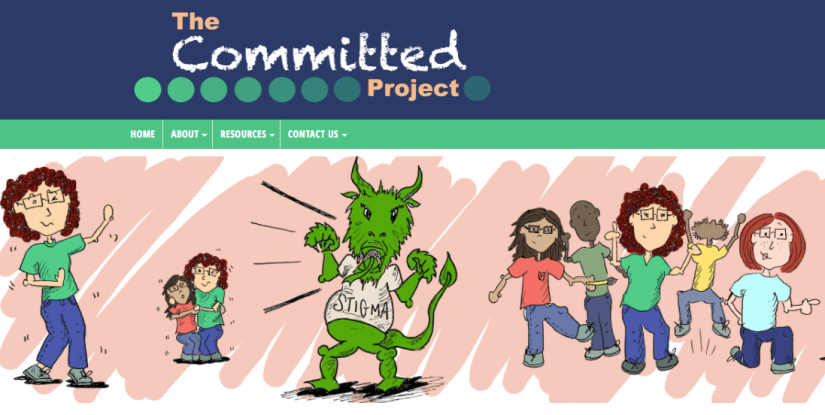
Are you hankering for more of the @BreakDrink podcast now that you’ve got a taste? No need to fear, Jeff & I are back! We recently caught up with our friends Sue Caulfield and Kristen Abell to discuss how mental illness impacts our colleagues who work in higher education and have them on the podcast to share about their work with The Committed Project  a.k.a.

Do you remember the @BreakDrink Daily Dose? It was a bi-weekly higher ed news podcast Sue produced/hosted with Sarah MaddoxShawn Brackett. Other updates since BD days: Sue got married, started drawing #suedle(s), started The Committed Project, and she podcasts with her #poopfriends on The Imposters podcast. Besides working as a kick-ass web developer and manager at her institution, Kristen has pushed all of us to think more about the impact mental illness has for colleagues in higher ed. If you haven’t seen her 2015 ACPA Convention PechaKucha Talk – Depression: A Love Story, you should — NOW!

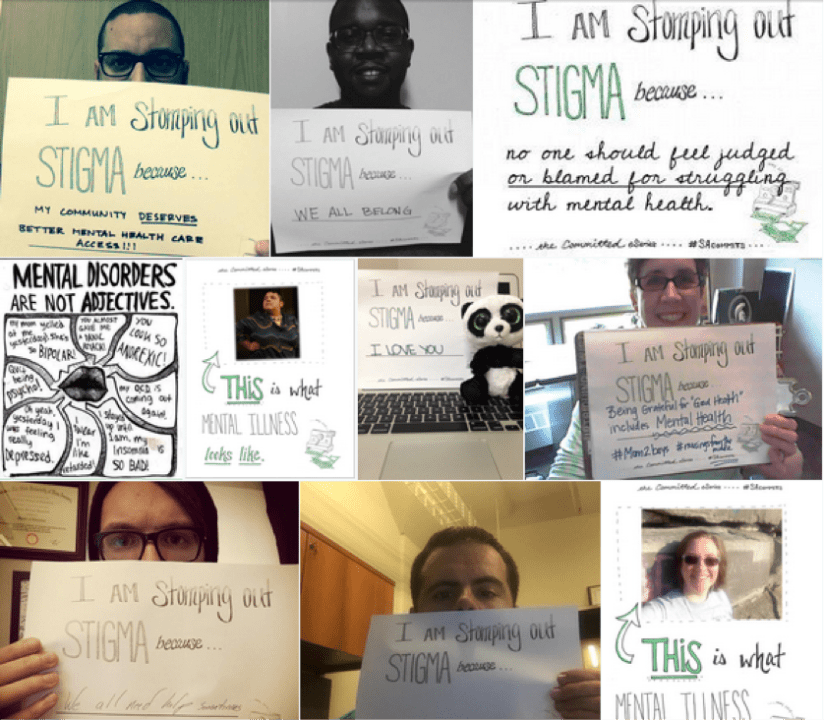
Also, props to her work with Committed’s campaign for #StompingOutStigma and getting more of us talking about mental illness (I gave a shout out to this in my #SAspeaks talk last month in San Antonio, TX – hola!):

#StompingOutStigma

If you have not heard about the book, Committed: The Stories of Mental Illness in Student Affairs, it is created to share narratives from higher ed practitioners dealing with mental illness accompanied by #suedle visuals. From this book project, Sue and Kristen’s work with mental health awareness led to developing the blog series into The Committed Project, an organization that advocates for and supports higher ed professionals experiencing mental illness. For the past few years, they have been sharing stories – mostly firsthand accounts – from other professionals in higher ed who experience mental illness. YOU ARE NOT ALONE.  Please read and share the stories of your peers who struggle with mental health in higher ed on The Committed Project Blog.

As usual, I learn so much from these @BreakDrink discussions and there is a wealth of information/resources shared by The Committed Project on their website (thanks, y’all!):

May is Mental Health Awareness Month. While The Committed Project will be sharing one person’s story of mental illness through many voices on the blog this month, the group would also like to hear from YOU about how it feels to experience mental illness – your own or a loved one’s. If you are so inclined, please share a short video clip of you or someone you know talking about one aspect of your experience with mental illness – whether at work, at home, at school, or wherever to The Committed Project. You can submit videos at admin@thecommittedproject.org

Take a listen here to episode no. 6 #HEdCommits:

@BreakDrink Podcast Shout Outs:

@BreakDrink Recommended Reading:

If you are in need of support or need help, please reach out to the National Suicide Prevention Hotline by calling 1-800-273-TALK (8255) where you will be connected to a skilled, trained counselor at a crisis center in your area, anytime 24/7.

If you have comments, questions, or feedback about this podcast episode, please feel free to post a comment below, or follow us on the following the “BreakDrink” podcast channels:

We welcome banter & comments there. If y’all listen to the podcast via iTunes, please consider leaving us a rating and review.