
Reflections, StudentAffairs

Finding our Strengths(Quest) with Alternative Spring Break #asbABQ13

MHP logo

This Spring Break, I will be accompanying 9 undergraduate students from University of North Texas (UNT) as we road trip west to work with the Mi Casa Es Su Casa – Metropolitan Homelessness Project in Albuquerque, NM (#asbABQ13). We are one of the many UNT Alternative Spring Break trips created for students who want to give back to their community and participate in a service learning project while away from academics. Our trip is a new location; however I believe that we will be primarily be working to set up new spaces for those who are without a home.

Part of our efforts before the trip has involved getting to know one another, and raise funds to support our groups trip.

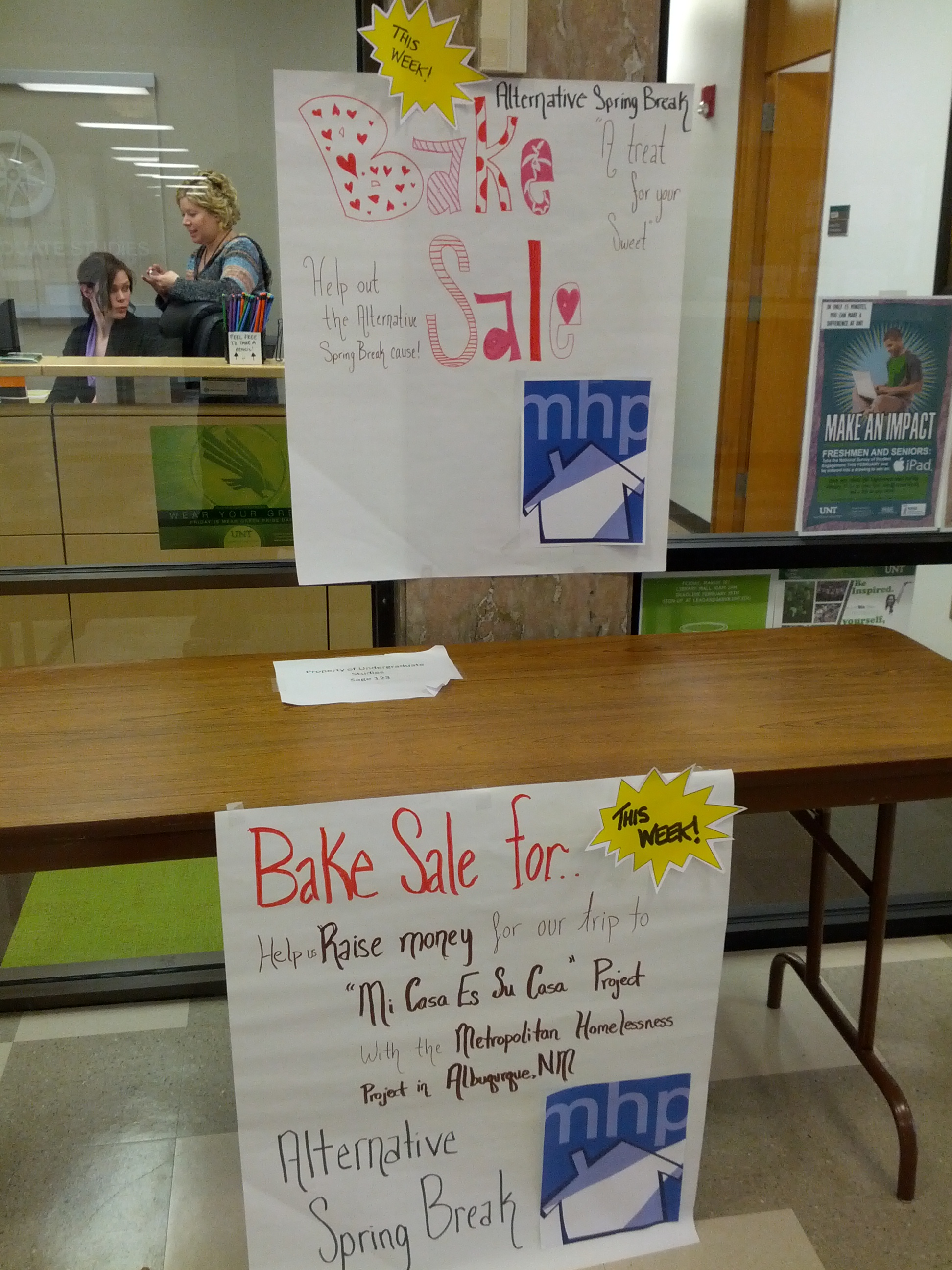
So far we had a moderately successful bake sale last week, selling “Treats for Your Sweet”… (yours truly even baked in her “spare” time)…
bake sale

And recently I encouraged the group to “LAUNCH” a Student Launcher website (formerly known as AlumniChoose), to crowd-source funds via their own social networks.
Screen Shot 2013-02-21 at 10.52.47 PM

If you would like to help fund part of the students’ travels, meals, or house-warming gifts for the new tentants, please feel free to contribute what you can to the launched #asbABQ13 funding raising site:  http://StudentLauncher.org/9cab 

Bonus: If you help fundraise, we ensure that you can follow along with our efforts and adventures. We promise to share photos and updates about our trip, and the progress we make with the Mi Casa Es Su Casa project.

Reviewing our Strengths

The last part of our trip prep has been about building our team and getting to know one another. Kudos to Irene & Becca, the #asbABQ13 site leaders, who have done a great job bringing everyone together and planning a large chunk of the trip. At our last group meeting, we debriefed about our top 5 strengths from StrengthsQuest during our last meeting. It was great to learn about what others will bring to our service project.
strengthsquest2

Here are my top 5 Strengths:

Input

“You are inquisitive. You collect things…because it interests you…to add more information to your archives…each new location offers novel artifacts and facts. So you keep acquiring and compiling and filing stuff away. It’s interesting. It keeps your mind fresh. And perhaps one day some of it will prove valuable.”

Dead on. I blame my academic background in history for my documentation, archival, recording, and research approach to things. Travel and adventures might also contribute to my desire to collect these memories and moments – I take photos, tweet, save, and then some.

Strategic

“…enables you to sort through the clutter and find the best route. It is not a skill that can be taught. It is a distinct way of thinking, a special perspective on the world at large…“What if?” Select. Strike.”

When you have a lot of things going on at the same time – you sort of have to be.

Individualization

…intrigued by the unique qualities of each person. You are impatient with generalizations or “types”…focus on the differences between individuals…a keen observer of other people’s strengths, you can draw out the best in each person…helps you build productive teams.

It’s true. I don’t like boxes, compartments, labels, or single identities. Everyone is a beautiful and unique snowflake, and I want to get to know them better. Blanket statements and group designations don’t fly with me.

Activator

“Only action can make things happen. Only action leads to performance. Once a decision is made, you cannot not act…action and thinking are not opposites…you believe that action is the best device for learning. You make a decision, you take action, you look at the result, and you learn…You must put yourself out there…you will be judged not by what you say, not by what you think, but by what you get done…”

This probably is connected to my Strategic strength. See my #oneword2013 => ACTION Need I say more. Less talk, more do. This #asbABQ13 is right up my alley.

Futuristic

“…The future fascinates you…it will always be inspirational to you…When the present proves too frustrating and the people around you too pragmatic, you conjure up your visions of the future and they energize you. They can energize others…often people look to you to describe your visions of the future…”

Am I alone on this one? I am guessing that my current research focus and scholarly work help to fuel the fire of this one. I am okay with that – who doesn’t want to have a crystal ball? Let’s take a look at my archives from my Input strength, and look to what is on the horizon. So far, I can predict a great Alternative Spring Break trip. 🙂
Higher Education, Social Media, StudentAffairs

Reflecting on Values & Identity from #Dalton13

Over the past few days at the 2013 Dalton Institute, I have been encouraged to think about the cross-section of how our cultural norms, use of technology, and institutional practices intersect to support students. Educational reform for higher education is not new; however it was refreshing to have a group of graduate students, faculty, scholars, and practitioners to be part of a thoughtful collective to think deeper about these challenges.

Although the institute’s focus was self-promotion, social media, and student development, it was great to hear a number of conversations emerge about the disruptive forces and potential opportunities to embrace change in Student Affairs. The philosophical narratives and analysis of technology’s impact on identity was enriched by listening to personal perspectives and such varied experiences.

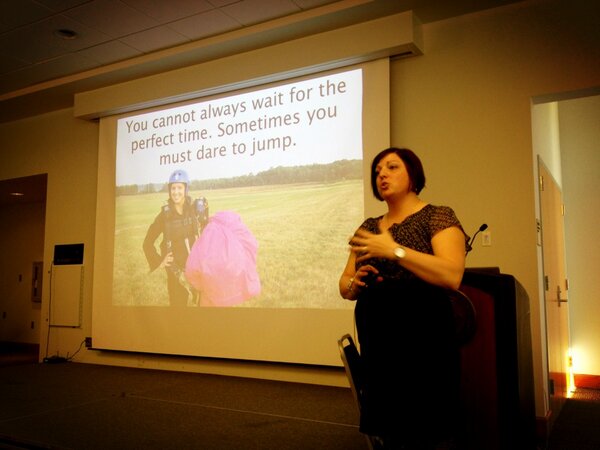
Dare to Jump

Photo c/o @DaltonInstitute {Thanks @vanessaballer!}

As the final keynote of the institute, I gave my “triple threat” perspective as a student, instructor, and professional in higher education. My goal was to share ideas and practices to develop a richer learning experiences; specifically ones that I have valued as an active scholar. So, doing my best to follow the amazing #dalton13 featured speakers – I shared my own narrative, critiques, and insights on how emerging technology can support and challenge student development. I gave some tangible examples and ideas of how to move beyond the gadget, application, or “next big tech thing” by considering ways educators can be actively pushing their learners. I talked about everything from exploration to collaboration, specifically by empowering students to be part of the solution to our institutional challenges.

My #Dalton13 Keynote – Notes & Then Some! (thanks for the photos & tweets #dalton13 backchannel!)

I appreciated the conversations (although some were far too brief!) around identity and student values that  I had with a number of #Dalton13 attendees, especially the FSU HESA graduate students. Although a number of ideas were shared at the institute, I am still left thinking and reflecting about these key questions:

  • How are student values demonstrated in a digital environment?
  • Can educators have an impact on the character development of learners?
  • Is student development really impacted by technology? How so?
  • Does there need to be a shift in how we support our student population on campus?
  • How can our graduate programs do a better job of challenging and supporting scholar-practitioners with “self-promotion” questions?
  • Will higher education cultural norms and institutional practices be changed, or will we be left behind?
Higher Education, Reflections, StudentAffairs

A Kinder Campus to Collaborate

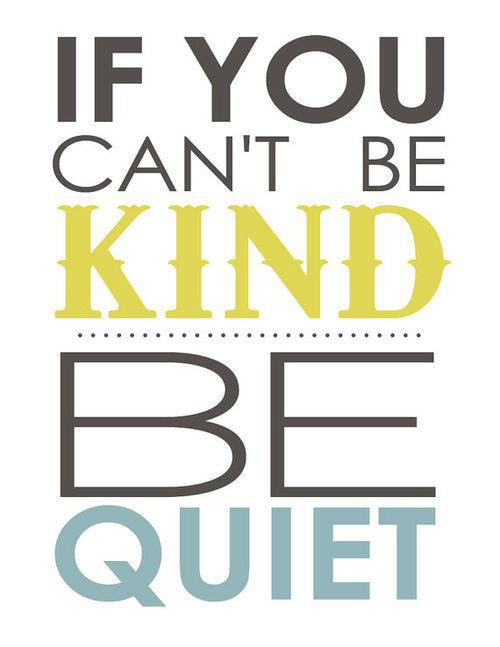
Be KindThere are a  number of students, staff, and faculty in my life who I have gotten to know along my academic and professional journey – as colleagues and as friends. I have been fortunate enough to experience college/university life as a student, professional, and instructor  at various types of institutions and in more than one country.  Each new experience has afforded me to work with insightful colleagues, learn about effective practices, understand a variety of student populations, and consider innovative ways to  support students, staff, and faculty.

In a recent Inside Higher Ed article I shared my thoughts on why our divisions in higher education need to think beyond their own areas. Some of the challenges ahead in higher education will require our departments/divisions to step our of their silos to collaborate and reach shared goals for our institutions. It does require some risk; however I think there are larger rewards for reaching out and conversing with others. In considering some of the opportunities and challenges in higher education – such as financial, legislative, staffing, and more – perhaps it is just the right time to sit down to chat and connect to others on campus. Institutional units will need to put their heads together to think creatively and collectively about some of these issues – if they are not doing so already. 

Over the last few weeks, I have been thinking about what a “kinder campus” means in higher education. I am currently participating in a Collaborative Learning Community (CLC) at UNT that brings students, staff, and faculty together to work towards a shared solution to a problem/challenge at our institution [more to be shared on this later]. Since we have diverse representation on this CLC, as the co-chair with another faculty member we have been considering the following needs to keep our group moving forward:

  • introductions are important – find out what everyone “does” on campus
  • use common language and define terms
  • establish purpose and goals for the CLC
  • share and distribute information/facts that are not known
  • establish a meeting time/day of the week
  • create agendas to guide, not limit the conversation/sharing
  • record meeting minutes for those who might be absent
  • online space for resource sharing 
  • flexibility and understanding for attendance is a must
  • define roles to guide actionable items & project initiatives
  • bringing food/treats is never a bad thing

Although cross-departmental meetings can be challenging, as it requires stepping outside our own domains and sharing across disciplinary boundaries, I have had some of the most productive conversations and ideas to emerge from these gatherings.


Are you part of a collaborative working group at your higher ed institution? What tips do you have to “be kind” and connect with colleagues outside your division/department?

Reflections, Social Media, StudentAffairs

#Dalton13 – Google + Interview & Keynote Teaser

Thanks so much to the Dalton Institute (@DaltonInsitute) coordinators, Jessica Dean (@j_deanSAys) & Emily Fox (@EmilyFox526), for hosting my Google + Interview on Tuesday (1/9). I appreciate the great questions from the both of them, and the #Dalton13 backchannel. Everyone really made me reflect and ponder my own technology and student development path – so thanks!


In watching the video recording (which I rarely do), it helped me think more about my talk and how to best shape the focus. Here’s a sneak peak at my #dalton13 keynote title and abstract, for those of you who will be attending the session on February 2nd:

Here is my 2013 Dalton Institute Character Clearinghouse Interview and a preview to my keynote next week:

Title: 

Student Development 2.0: Optimizing Social Media to Connect Your Campus

Abstract: Today’s college student operates in a world that is informal, networked, and filled with technology. Digital interactions are influencing both our students’ characters and values, with increasing access to information and continual contentedness  With the emergence of social web resources, student development professionals and faculty have the ability to engage in experiential and applied learning objectives for their campus environments. Social media creates a space where “everybody and anybody can share anything anywhere anytime” (Joosten, 2012, p.6). Educational paradigms are shifting to include new modes of online and collaborative learning and student-centered, active learning to challenge our students to connect curriculum with real life issues (Johnson, Adams & Cummins, 2012). As new generations of students create and share content on campus, college educators need to realize the potential social media has to construct a culture of participatory, open learning. Emerging technology platforms and devices are beginning to disrupt higher education as we know it. To co-evolve and positively impact our learners’ success, it is critical that we consider the influence and impact social media has on our student populations. This keynote plenary will share ideas and suggested practices to develop a richer learning experience to help students thrive in the changing digital frontier.

References

Johnson, L., Adams, S. & Cummins, M. (2012). The NMC Horizon Report: 2012 Higher Education Edition. Austin, TX: The New Media Consortium.

Joosten, T. (2012) Social media for educators. San Francisco: Jossey Bass.

Higher Education, Social Media, StudentAffairs

How Social Is YOUR Student Handbook, Higher Ed?

Today I contributed to a webinar about student handbooks in higher education for Paperclip Communications. In thinking about my own student experience and searching for other suggested practices, the key question I asked was…Where can I find YOUR student handbook?” Can you answer that question?

Often times college and university policies, procedures, responsibilities, and codes of conduct are buried on the institutional website, masked in “legalize,” and typically struggle to be shared with the target population – the students. I shared a few suggested practices for usability, access, web design, and using social (media) sharing for student codes of conduct. If you missed out, don’t worry – there’s an open & shared Google Doc for that:  http://bit.ly/studenthandbooks

 
I think our institutions need to consider compliance, codes of conduct, and informed legal practices – but more importantly, they need to put these student rights and responsibilities into action. Making our student handbooks social and engaging helps to educate our students, communicate to others at our institution (faculty, staff, etc), and it sets the tone for developing community standards on campus. I recommended involving students in the process of the student handbook development and getting their insight into sharing this information to understand what their needs are, where thy find information, and questions/challenges they have about your student handbook.

Here’s just one example of how UNT Housing & 720 is being proactive with the UNT student handbook information:


How do YOU share information, policy, and guidelines at your institution? Do you have a Facebook Page? Blog? Twitter Account? Please share HOW you share about student rights & responsibilities.