#phdchat, PhD, Virtual Communities

Organizational Learning Constructs

The nature of learning at the organizational level is a challenge to measure. Huber (1991) defines  organizational learning as the development of new knowledge or insights that have the potential to influence behavior.

There are a number of human resource development articles that reflect the individual learning experience and objectives. In considering the organizational learning process, I began to look at the organization level for learning in online communities of practice for an organizational science perspective.
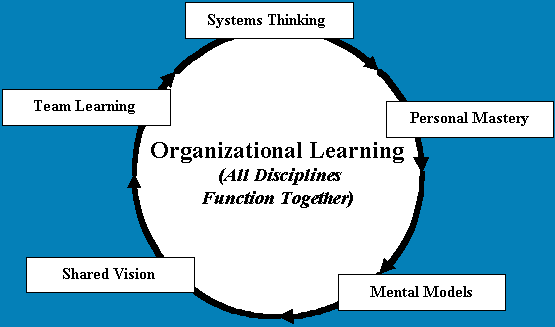
Image via Organizational Learning Software… <http://www.sqakki.com/LearningOrg/>

In researching and working on my final organizational theory paper, I began to assess how learning characteristics can be evaluated in online learning networks and communities of practice. There are a number of models and evaluation instruments to assess learning in organizations; however the constructs established by Yang, Watkins, and Marsick (2004) provide a solid framework for methodology and empirical assessment:

Systems Thinking – Senge (1990) identifies a learning organization as an organization that has the ability to creat alternative futures and possesses the following five disciplines: team learning, shared visions, mental models, personal mastery and system thinking. 

Learning Perspective – The learning organization is an “organization that facilitates the learning of all of its members and continuously transforms itself in order to meet its strategic goals” (Pedler, Burgoyne & Boydell, 1991). Eleven areas are identified through which this occurs: a learning approach to strategy, participative policymaking, informating, formative accounting and control,, internal exchange , reward flexibility, enabling structures, boundary workers as environmental scanners, inter-company learning, learning climate and self-development for all.

Strategic Perspective – a learning organization requires an understanding of the strategic internal drivers necessary for building learning capacity. Goh (1998) identifies five core strategics building blocks: clarity and support for mission and vision, shared leadership and involvement, a culture that encourages experimentation, the ability to transfer knowledge across organizational boundaries, and teamwork and cooperation.

Integrative Perspective – the concept of the learning organization is “on that learns continuously and transforms itself..Learning is continuous, strategically used process – integrated with and running parallel to work” (Watkins & Marsick, 1996).

These constructs will help define and lay the ground work to establishing a solid theoretical framework for assessment. I welcome any and other suggestions to reviewing online communities of practice with regards to organizational learning.

References

Huber, G.P. (1991). Organizational learning: The contributing processes and the literature. Organization Science, 2; 88-115.

Goh, S. C. (1998). Toward a learning organization: The strategic building blocks. S.A. M. Advanced Management Journal, 63(2); 15-20.

Peddler, M., Burgoyne, J., & Boydell, T. (1991). The learning company: A strategy for sustainable development. New York: McGraw-Hill.

Senge, P. M. (1990). The fifth discipline: The art and practice of the learning organization. New York: Random House

Watkins, K.E. & Marsick, V. J. (1996). In action: Creating the learning organization. Alexandria, VA: American Society for Training and Development.

Yang, B., Watkins, K. E., & Marsick, V.J.(2004). The construct of the learning organization: Dimensionsmeasurement, and validation. Human Resource Development Quarterly, 15(1); 31-55.
#phdchat, Open Education, PhD, PLN, Professional Development

10 “Lessons” in Digital Scholarship from @mweller

As a scholar who is lives digitally, connected & open, I have appreciated following along with Dr. Martin Weller’s as he tweets & blogs his ideas for similar philosophies. More recently he has published an open-access, creative commons book – The Digital Scholar.

I was just watching Martin’s recent talk with the LSE on how to engage in digital scholarship, i.e. scholarship that is open, networked and digital. Thanks to the Centre for Learning Technology at LSE for presenting the NetworkEd: Technology in Education Series, you can watch these “lessons” (a.k.a. general ideas and musings about how to be a connected & engaged scholar). @mweller has posted his 10 Digital Scholarship Lessons in 10 Videos to recap the presentation, slides and scoop it page as well:

  1. It’s not just for geeks
  2. Researchers are caught in a dilemma
  3. Interdisciplinary is the network
  4. We’re all broadcasters now
  5. We’re operating in an attention economy
  6. We can rethink research
  7. New skills will be required
  8. It’ll impact even if you ignore it
  9. It’s about alternatives
  10. Don’t focus just on risk

I think that Martin brings up some great ideas of what a digital scholar looks like – and there are many of them already out there. I hope to not only witness, but also be part of this academic revolution. The changing landscape of technology, information and communication is challenging higher education to rethink its approach to learning. Online resources are very social and collaborative, and I hope to see these emerging tools push the academic realm outside of the traditional boundaries and expectations. With current developments in educational technology, learning communities have the ability to enhance peer-to-peer connections, social learning, knowledge sharing, and critical thinking for researchers. When learners/researchers become creators, narrators and digital contributors of their own academic fields, many gain further in-depth meaning and purpose in the learning process.

PhD

Engaged Scholarship – Is It Possible?

While reading this week’s collection of  Organizational Theory seminar articles on the topic of “Multilevel and Methodological Issues” I found some interesting insights for research design methods and applications. In the social sciences, specifically for organizational research, theoretical principles and empirical effects for organizational scholarship has been criticized for not being applicable in practice.

McKelvey (2006) describes the dichotomy of Van de Ven and Johnson’s (2006) “engaged scholarship” as being intellectual agreement to create practical and meaningful research. The difficulty with the collaborative process between research and practice include the issues of bias, disciplines, and particularization. McKelvey (2006) indicates that it is necessary for scholars to consider how to make a better model for business school research, deal with the knowledge transfer problem, manage knowledge production via engaged scholarship, and identify theory and practice as distinct functions. Organizational development and issues for practitioners. If the results of research cannot be applied, then what is the point?

Grant and Wall (2009) provided a few recommendations for scholars who are interested in gaining access to organizations for quasi-experimental research, specifically for how to open doors and encourage collaboration from organizational practitioners:

  1. Build long-term relationships with organizations and their employees.
  2. Disseminate findings from past research to practitioners.
  3. Highlight expected benefits of quasi-experimentation.
  4. Ask question to learn about what practitioners value.
  5. Highlight potential benefits to the researcher (i.e. you).
  6. Highlight common goals and unique expertise.
  7. Find the right contacts.
  8. Translate jargon into language comfortable to practitioners.
  9. If all else fails, start with observational field research.

In considering my current research areas of interest, it is important to identify where potential bias and limitations lie. As both practitioner and scholar in the field of higher education and learning, I think I can establish an effective partnership between the academic and application of research.  

References:

Grant, A. M. & Wall, T. D. (2009) The Neglected Science and Art of Quasi-Experimentation: Why-to, When-to, and How-to Advice for Organizational Researchers. Organizational Research Methods, 12: 653-686.

McKelvey, B. (2006). Response: Van de Ven and Johnson’s “Engaged scholarship”: Nice try but…. Academy of Management Review, 31 (4): 822-829.

#phdchat, PhD, Professional Development, Reflections

Finding Thoughts and Ideas In [750] Words

After I finished my undergraduate degree from U of Guelph, I was ready to move forward and move fast. I had a few different options and I was accepted into a couple of professional /graduate schools; however I decided to take a break from academics to really sort out what I wanted to while living in an “unsemestered” world [too many options, and not sure where to go]. I spent some time in my quarter-century crisis (I think I was 22) learning more about my own interests through meeting new people, participating in the community, travelling to new places, learning new skills (visual design, reflexology, etc), and working some random odd jobs (sales/marketing, bartending, nanny, educational assistant, banquet serving, etc.).   Being an avid reader, I often picked up a book or two that even supported my self-exploration and career awareness, including such finds as  Do What You Are and  The Artist’s Way. [I think this is why I enjoy connecting with my undecided and exploring students in my current job.]

I suppose some of the self-help or self-awareness reads brought out some of my ideas and next steps. For example, The Artists Way provided a weekly approach to tapping into ones creativity and helped to establish personal/professional goals.  I appreciated the various exercises this text included; however the one that stood out was the morning pages. Each morning you were encourage to write 3 pages – not  to be creative but rather as a practice to clear your mind. Through the process of personal, stream-of-consciousnesses writing, you remove the “junk” in head which frees up some space for creative thoughts/ideas. I had left this practice behind and forgot all about it until I was reminded in @evalantsoght ‘s recent blog post –  The writer’s little helper. [Thanks!]

In thinking about all I want and need to accomplish this next year, I thought it might be wise to put some of this regular writing into practice. On campus I sometimes where all hats – student, staff and faculty – and sometimes I feel as though I loose focus between projects and deadlines. I think that daily writing will let me keep my stress levels in check and also allow me to process ideas and reading that I consume. Thanks to both #phdchat and Eva, I have welcomed the morning pages routine back into my life using the 750words. I have been using the 750words for just one week. So far, I have found this practice of personal, reflection quite calming. If you happen to connect with me on the social web, you will see that I am open and transparent learner/educator. This new space is an excellent, quiet location to place my private thoughts and meditate on my own.

In looking at my writing analytically (750words DOES provides stats), it is beneficial to learn what I am thinking about and understand my personal attitude each morning. Although I have not stumbled on any fantastic research gems or writing ideas just yet; I believe that this process will leave me with more space to connect the nodes. Overall, the 750words have left me feeling engaged and motivated to have a productive day.   Have you every wondered what your words/thoughts are saying? If so, you can try on these private,  online writing spaces:

750words

OhLife 

Penzu

LiveJournal

AcAdv, BreakDrink, Collaboration, Learning Technologies, PhD, PLN, Professional Development

Why Networked Anything Matters…

Time sure flies when you are catching up from conferences and travel! October has been a very productive academic and professional month for me, which has left little time for blogging here. Let me re-cap the conference fun that has been happening & that I might have mentioned on Conference Review/Preview BreakDrink #CTCX show last week.

October kicked off with a bang as I discussed in previous blog post about the #NACADA11 Conference. The altitude and momentum was quite high in Denver for the advising group and it left me wheeling with some new ideas in my new gig with the Office for Exploring Majors. More to come on that end soon…

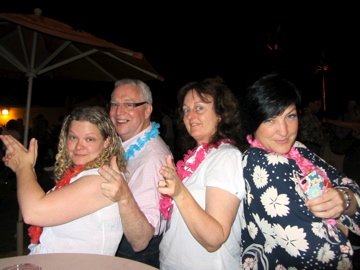
Mid-month I said aloha to a great group of advising/counseling professionals as I joined the University of Hawaii System Advising Workshop. This was my first keynote where I was wearing a lei, and I enjoyed discussing was the importance of holistic advising in order to support the needs of our students and the campus community.

Here the slides and the open Google doc http://bit.ly/UHAdvising2011 of resources I shared:

The goal of this workshop was to introduce technological and systematic changes happening across the UH system and discuss how they can continue to connect across the many islands as counselors/advisors to support their student needs. I want to send a very big mahalo to the amazing group of advising professionals who invited me to speak, and who I have learned a great deal from during the conference and beyond. The friendly and welcoming attitudes there just might have me visiting the gorgeous state of Hawaii again.

My first visit to the state of Hawaii could not be complete with a few sight-seeing trips. I joined a moped tour to see some of the best waves, beaches and of course some adventure:

I could not leave the island without another professional development opportunity – the AACE E-Learn 2011 #elearnconf. I spent the next week connecting and learning about research, models and instructional design ideas from a wide variety of colleagues from around the globe. A big shout out to my adopted Australian/Kiwi/Dutch #elearnconf family from Deakin University. I think that Bosely knows how to effectively with his angels, and I hope to meet up with you all someday in Melbourne. Did someone say the PLE Conference might be there in 2012?!?!

I presented two best practices sessions that discussed the alternative professional development opportunities from BreakDrink.com and the connected and informal blended learning environments of FYE courses. Both are current chapters I’m working on for the upcoming IGI Publication “Cases on Formal, Non-Formal, and Informational Online Learning: Opportunities and Practices” book that will hit the presses in the near future. Kudos for all the hard work put in by a few of my co-authors and researchers that I have been collaborating with as of late – Kevin Guidry, Melissa Johnson, Michelle Rodems, & Jeff Jackson. Thanks for your efforts and insights.

Finally, there was no better way to end the month than with the #NASPAtech conference last week. Unfortunately, my academic and professional obligations kept me grounded from being there IRL. I am grateful for the amazing backchannel of conversation and my excellent co-facilitators @jeffjacksonTX and @lesliedareNCSU to have me hangout in a couple of Unsessions via Google Plus Hangouts with extras.

I hope that both Unsession conversations about #AltProDev and #SAmobile [both open & shared Google docs] will continue long past this conference. I look forward to joining the next #NASPAtech, since I think this one sounded like it was such a success. High five @NASPAtweets & everyone who brought their #SAtech ideas/thoughts to the conference and backchannel.