dalmooc

Do You Want to Learn About Learning Analytics? #dalmooc

Last week, I attended the UTA LINK Lab talk presented by Dragan Gasevic (@dgasevic) on learning analytics and research. This discussion shared all the digital traces and learning that can be collected and measured in our various learning environments, and questions how we are best doing some of these analytics within our institutions. Although we have a number of statistics, data, and information on our learners – how can we offer actionable insight, summative feedback, and information about learner progress. Our post-secondary institutions seem to want to only deal with the “R” word = Retention. Often institutions are looking to identify students at risk, provide information about learning success, and understand how to enhance learning – but how can we effectively use data when often times our metrics only focus on single outcomes?

data-analytics-608x211

Photo c/o the #dalmooc edX Course Site

Instead, it is the process and context that our education institutions need to identify when looking at learning analytics, that is, the need to understand and optimize learning (Butler & Winne, 1995). Whether we apply the community of inquiry framework,  cognitive presence, which includes triggering events, exploration, integration and resolution (Garrison, Anderson & Archer, 2001), or the COPES (Conditions, Operations, Products, Evaluation, & Standards) model (Winnie, 1997) –  it is the meaningful data points for learning analytics that really need to be identified within our educational institutions.  As @dgasevic said, “Learning analytics is about LEARNING!” Often we assume the data collected from our courses and our systems will provide us with the answers; however if not identified in a purposeful way – why bother? What we really need to consider is, what does it mean to study and support the learning experience and not just the end results?

Here are a few areas of learning analytics and data evaluation need to be considered (just to name a few):

  • learner agency and self-regulation
  • interaction effect – external and internal conditions
  • formal and informal learning communities
  • instructional intervention methods
  • multimodal learning
  • emerging technology impact, i.e. mobile, wearable tech, etc.

Here are  questions our institutions need to consider when they want examine learning analytics:

  • What data we are collecting? And why?
  • How does the learner information we know contribute to the PROCESS of learning?
  • Who should be part of this learning analytic research for learning?
  • How can we best present and interact with the data? Can this be more immediate?
  • How can we encourage and support multidisciplinary teams to study learning analytics at our institutions?
  • Are we being being driven by questions of need, access, and availability for the learning data collection?
  • What ethical and privacy considerations should be considered when collecting data around learning?

Interested in learning more about learning analytics and data in education? Check out the paper in press by Gasevic, Dawson, and Siemens http://bit.ly/techtrends15  or better yet – join the 9-week Data Analytics & Learning MOOC that UTA & edX is hosting on this very topic starting Monday, October 20th: http://linkresearchlab.org/dalmooc/ or follow along with the conversation on Twitter #dalmooc.

References

Butler, D. L., & Winne, P. H. (1995). Feedback and self-regulated learning: A theoretical synthesis. Review of educational research, 65(3), 245-281.

Garrison, D. R., Anderson, T., & Archer, W. (2001). Critical thinking, cognitive presence, and computer conferencing in distance education. American Journal of Distance Education, 15(1), 7-23.

Gasevic, Dawson, Siemens (inpress). Let’s not forget: Learning analytics are about learning. TechTrends. http://bit.ly/techtrends15

Winne, P. H. (1997). Experimenting to bootstrap self-regulated learning. Journal of educational Psychology, 89(3), 397.


Social Media, SocioTech

#iConf14 Social Media Expo Winners!

I am just back from the 2014 iConference (#iConf14) hosted by Humboldt-Universität zu Berlin  in Berlin, Germany. The iSchools offer a stellar conference for scholars and researchers to share and discuss critical information issues that impact our society.

400 pounds

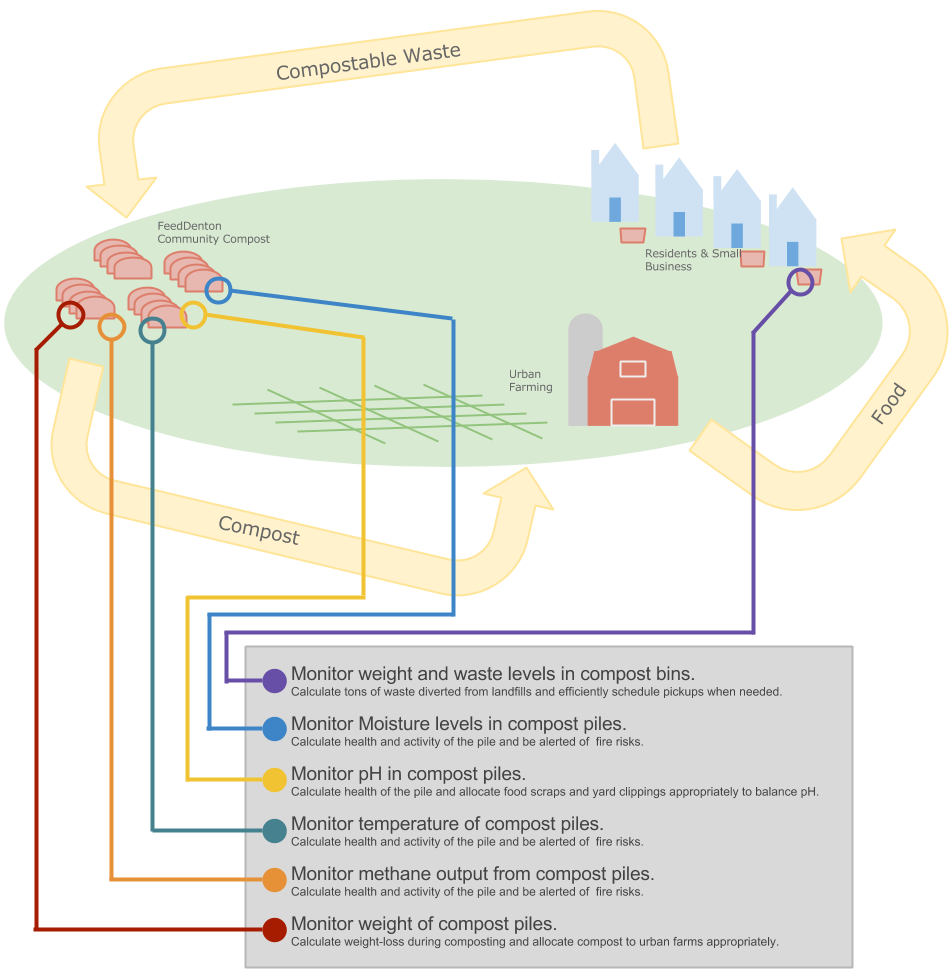
Let me give you the dirt (literally) on our collaborative project we completed for the 2nd Annual Social Media Expo: Community Systems, Sensor Monitoring, and the Internet of Things: A Case Study About Feed Denton Community Compost

compost_1

The University of North Texas team demonstrated how an interdisciplinary group from Decision Science, Computer Education Cognitive Science, Information Science, and Applied Technology & Performance Improvement can propose a design solution for a smart city/community for the iConference Social Media Expo. Our abstract paper and video for the competition outlined how social data, the Internet of Things, and smart design can improve sustainability in a community for Compost Denton.

SocialMediaExplo_ID_444_Figure_2

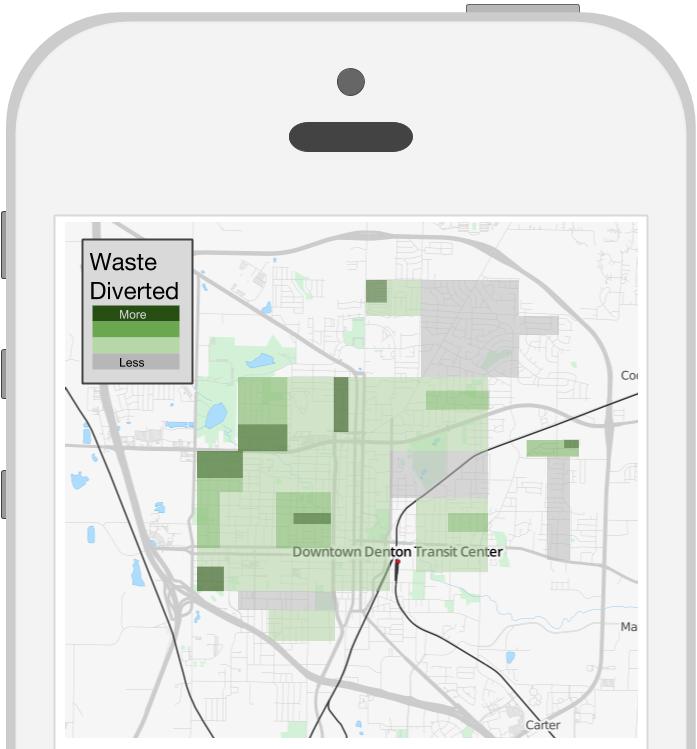
In thinking about information and how data is shared, our team proposed a unique design to make composting and data actionable. In conjunction with a pilot compost project in Denton, TX, our group suggested the use of augmenting this environmental start-up using Arduino sensors, smart technologies, data visualizations, and social media to encourage participation and inform the community about their ecological impacts. When data is socially shared, community members have the ability to see the larger picture for sustainable living by tracking individual and community composting progress.

gamification_loop

Thanks to the efforts made by local volunteers who initiated the Feed Denton Community compost pilot projects, we were able to consider how technological solutions can support and improve this model. Moving forward, we hope to support the business development plan and social media design to help scale and grow the Compost Denton initiative.

Here is the slide deck and our abstract that shares our proposed way to use social data for implementation and gamification for composting in a local community.

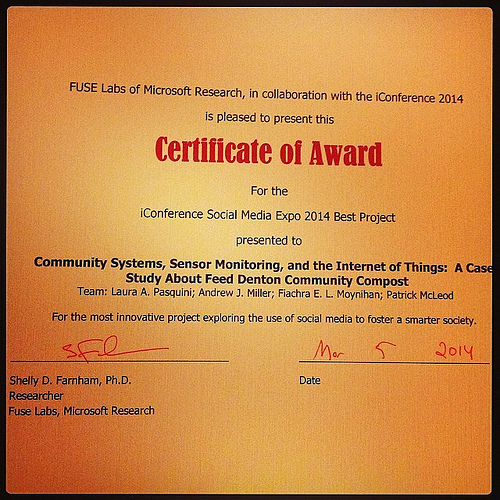
Guess who won? A message from the iConference 2014 daily news update:

“Congratulation also to the University of North Texas Social Media Expo team on
winning the 2014 Best Project Award. The winning entry was titled Community
Systems, Sensor Monitoring, and the Internet of Things: A Case Study About
Feed Denton Community Compost.
 It was authored by Laura A. Pasquini; Andrew J.
Miller; Fiachra E. L. Moynihan; Patrick McLeod. More at
http://ischools.org/the-iconference/awards/

Group Win Take1

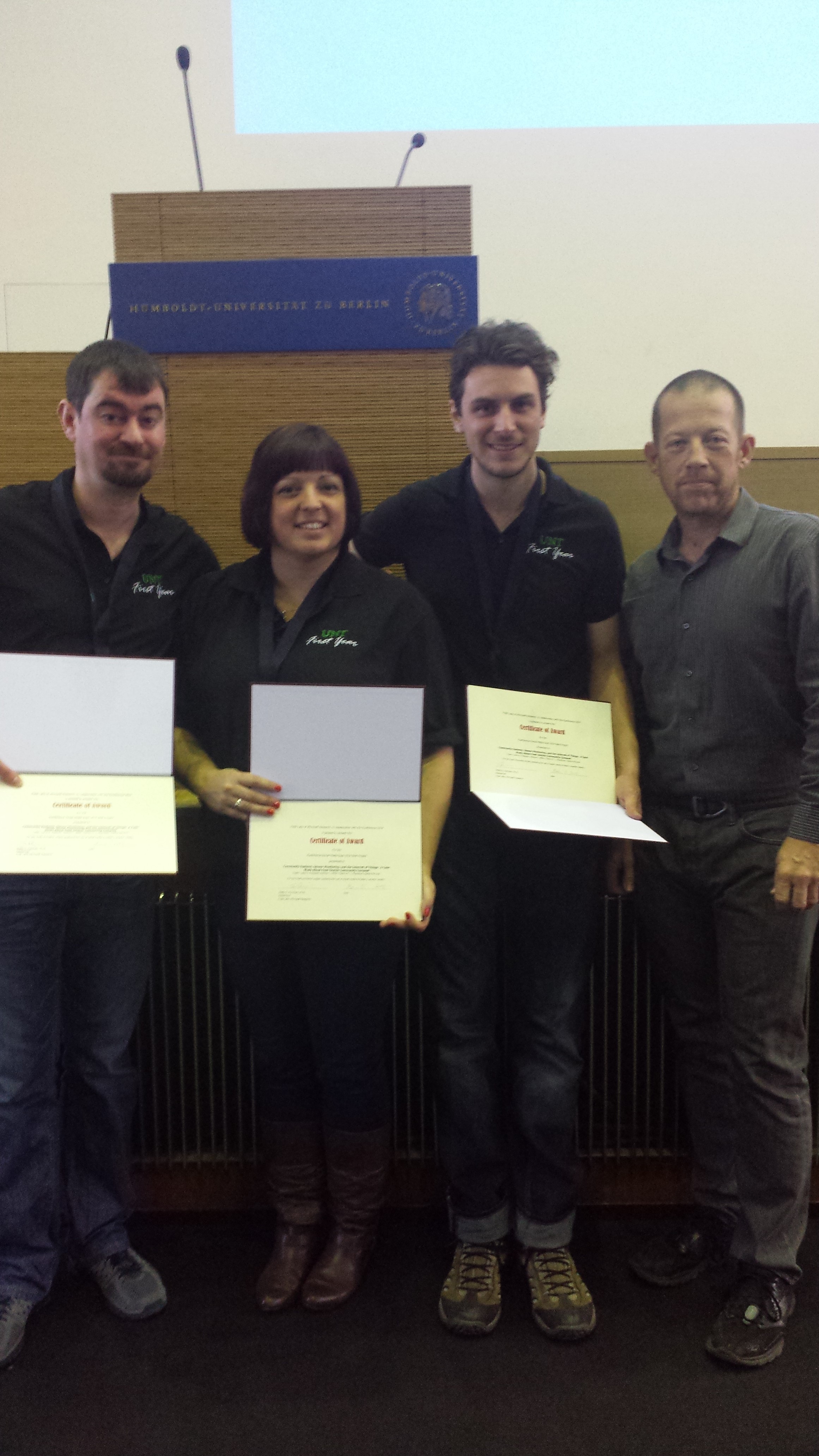
From L-R: Fiachra E. Moynihan (@FiachraM), Laura A. Pasquini (@laurapasquini), & Andrew J. Miller (@findandrew) with their College of Information faculty sponsor, Dr. Jeff M. Allen (@drjeffallen). Not in photo – Patrick McLeod (@misternaxal).

award

Guthen Tag.  Danke für das Kommen zu unserem Social-Media-Präsentation heute. Thank you for your support and this opportunity:

  • Dr. Jeff Allen, our faculty sponsor from Department of Learning Technologies in the College of Information at University of North Texas
  • Shelley Farnham, Organizer/Coordinator/Researcher of the Social Media Expo from FUSE Social Labs at Microsoft Research (along with others who reviewed/judged the expo abstracts)
  • Humbolt-Universitadt zu Berlin our iConference 2014 host with the most.


Abstract: This case study provides on the Feed Denton Community Compost Project. This ethnographic research will review how the collecting of social data and implementation of information communication technologies can provide a smart city infrastructure for this sustainable community of practice through sensor monitoring and the Internet of Things.
Keywords: social media; community of practice; Internet of Things; social data; sustainability
Copyright: Copyright is held by the authors.

Reference:

Pasquini, L. A., Miller, A. J., Moynihan, F. E., & McLeod, P. (2014). Community systems, sensor monitoring, and the Internet of Things: A case study about Feed Denton Community Compost. iConference 2014 proceedings.  (pp. 1-8). In M. Kindling & E. Greifendeder (Eds.) (2014). Berlin, Germany:  iSchools. DOI 10.9776/14010 Retrieved from https://www.ideals.illinois.edu/handle/2142/48831